
Blog
PCB fabrication, PCB assembly, PCB materials, DFM, SMT, HDI, ceramic PCB, and electronics manufacturing guides from QueenEMS.
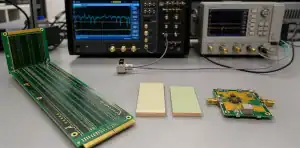
How to Choose Meteorwave 8000 vs 8300
Separate Meteorwave 8000 digital-channel needs from Meteorwave 8300 controlled-Dk RF needs using complete construction and qualification evidence….
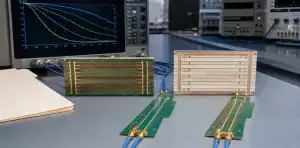
How to Choose TUC TU-933 vs TU-953Q
Choose the ThunderClad loss tier from a channel budget and a current grade-specific construction rather than archived values or product labels….
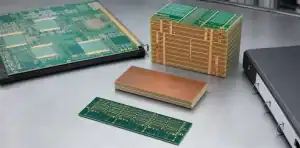
How to Verify Nelco N4000-13 EP SI Stackups
Recover and preserve the qualified N4000-13 EP SI construction while controlling modern sources, reorders, evidence, and replacement decisions….
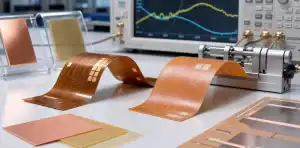
How to Choose Pyralux TK vs AP for RF Flex
Choose TK or AP as a complete flex material system by combining RF loss, copper, bondply, coverlay, bend duty, and process qualification….
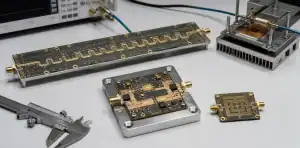
How to Choose RT/duroid 6002 vs 6035HTC
Choose 6002 for stability, 6035HTC for a defined thermal path, or 6010.2LM for justified RF miniaturization—and prove the construction….
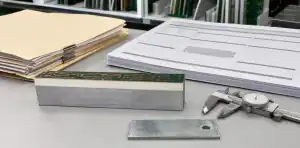
Bergquist PCB Material: Thermal Clad IMS Grades and RFQ
Resolve legacy Bergquist Thermal Clad callouts with current TCLAD material identity, complete IMS construction, comparable thermal data, substitution rules, and production evidence….
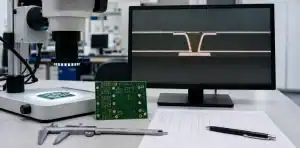
PCB Laser Drilling: How to Avoid Microvia Rejection
Define how laser-drilled microvias will be inspected and accepted before an HDI design reaches production, including geometry, residue, plating, coupons, and lot evidence….
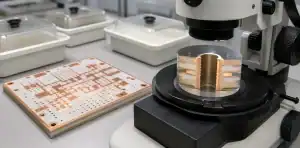
What Makes PTFE PCB Hole Preparation Reliable?
Specify the drilling, hole-wall activation, copper adhesion, microsection, and lot records needed when plated holes pass through PTFE or hybrid RF constructions….
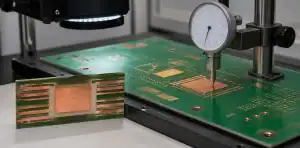
What Makes Embedded Copper Coin PCB Reliable in Production?
Translate an embedded copper coin concept into measurable fabrication requirements for fit, bonding, insulation, coplanarity, thermal contact, and lot acceptance….
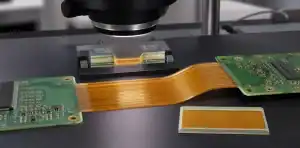
Is Rigid-Flex No-Flow Prepreg Really Reliable?
Control no-flow prepreg as a lamination material with measurable flow, fill, overlap, pressure, and evidence requirements rather than a generic rigid-flex callout….
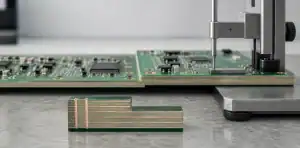
What Makes Stepped-Thickness PCB Reliable in Production?
Define every thickness zone, layer path, transition, tolerance, impedance condition, and inspection record required for a buildable stepped-thickness PCB….
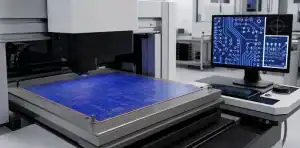
How to Use LDI PCB Imaging Evidence in an RFQ
Connect CAD artwork, material movement, dry-film behavior, LDI alignment, and inspection data so fine-line registration is controlled before CAM release….