
Blog
PCB fabrication, PCB assembly, PCB materials, DFM, SMT, HDI, ceramic PCB, and electronics manufacturing guides from QueenEMS.
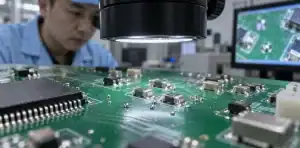
Solder Balls: How to Find Better Fixes and Avoid Mistakes
Prevent unwanted solder balls after PCB reflow by separating spattering from beading and checking paste, printing, placement and measured profiles….
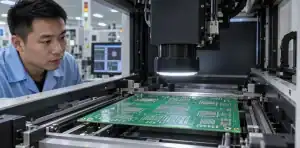
Solder Paste Inspection: How to Make Fewer Printing Mistakes
Learn what solder paste inspection measures, how to interpret 3D volume data, and which printing controls to specify before PCB reflow….

QR Code on PCB: Avoid These Mistakes for Better Scanning
Place a QR code on PCB with the right payload, full quiet zone, marking method and reader tests through assembly, cleaning and coating….
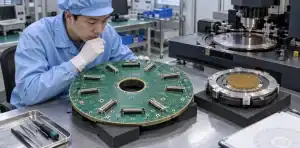
Probe Card Manufacturing: How to Specify the PCB
A practical RFQ guide for the PCB inside a wafer-test probe card, including scope boundaries, stackup inputs, materials, routing, planarity, release evidence, and supplier qualification….

PCB Manufacturing Steps From Files to Final Test
Follow the PCB manufacturing route from released data to final inspection, with the controls and evidence buyers should verify at every gate….

Single-Sided PCB or Double-Sided: How to Choose
Compare one- and two-layer PCB options by routing, return path, thermal load, assembly method, total cost, and prototype evidence….

PCB Fabrication for Harsh Environments: What to Specify
Turn heat, moisture, contamination, vibration, and life-cycle risks into a board specification and a qualification plan that can be verified….
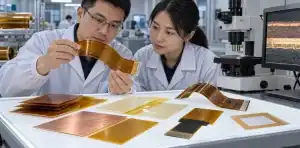
Flex PCB Adhesives for Bend, Heat, and Chemicals
Choose flex-circuit adhesive systems by interface, bend duty, thermal history, environment, lamination control, and validation evidence….

How to Choose a Transparent PCB for Optical Products
Define what must be transparent, then compare substrate, conductor, optical, thermal, bend, assembly, and prototype trade-offs before RFQ….
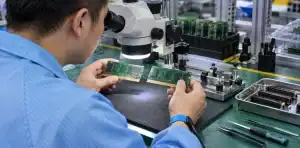
How to Choose PCB Gold Finger Repair or Replacement
A practical engineering decision path for damaged PCB edge contacts: capture evidence, separate contamination from wear or structural damage, choose repair or replacement, and verify the result….
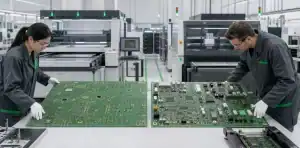
What Sets PCB Assembly Maximum Size Across a Line?
Compare bare-board and assembled process windows to find the station that actually limits an oversized PCB design….
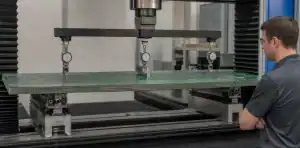
Large PCB Thickness Without New Manufacturing Risk
Choose large PCB thickness from unsupported span, load paths, interfaces and manufacturing constraints rather than board length alone….