
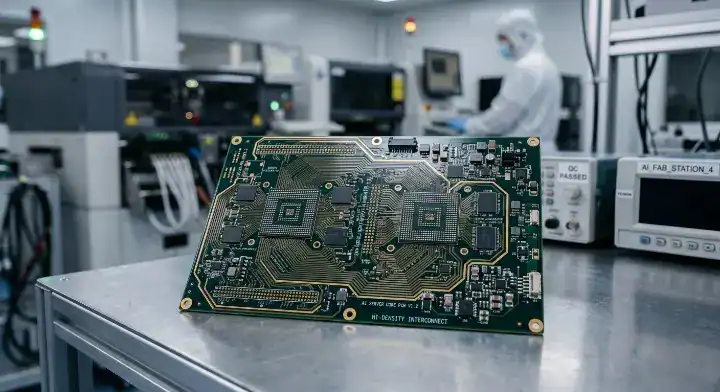
Quick Answer: Shengyi Technology is the world’s largest CCL manufacturer by volume, offering high-speed digital PCB laminates like Synamic 8GN (Df 0.0019) at M7-grade performance. These materials provide a 30–40% cost reduction compared to Japanese or American equivalents while maintaining standard FR-4 processing compatibility. Key takeaways:
For a broader comparison of laminate families, electrical properties, processing limits, and sourcing choices, see our PCB materials guide.
- Synamic 6N and 8GN match M7 performance for 400G/800G switches.
- Shengyi currently offers no publicly verified M8-grade material (Df ≤ 0.0015).
- Standard material lead times average 3-5 days in China versus 4-8 weeks for competing brands.
- The massive cost savings originate from production scale and domestic manufacturing advantages.
Are you constantly battling 8-week material lead times for your high-speed digital boards? Relying exclusively on Western or Japanese laminate brands often causes severe production bottlenecks for 400G switch and AI server designs. You can bypass these supply chain constraints by adopting Shengyi PCB material for your next build. This alternative delivers identical M7-grade electrical performance at a fraction of the cost, which means your project stays on schedule and under budget. To understand how these materials stack up against industry benchmarks, you can read our complete M8 CCL comparison with lead time analysis.
Table of Contents
- Why Is Shengyi the World’s Largest CCL Maker Most Engineers Can’t Name?
- How Does the Shengyi PCB Material Line Span from FR-4 to PTFE?
- What Separates Synamic 6N from Synamic 8GN in High-Speed Builds?
- Where Does Shengyi Actually Sit in the M4 to M8 Grade Ladder?
- Which Shengyi Product Matches Megtron 6, Megtron 7, or Tachyon 100G?
- Why Is Shengyi PCB Material 30-40% Cheaper Than Panasonic?
- Which AI Server and 5G Applications Run on Shengyi Materials Today?
- How Do Fabricators Process Synamic 6N and 8GN on Standard Lines?
- When Should You Choose Shengyi PCB Material Over Isola or Rogers?
- How Will Shengyi’s M8 and M9 Roadmap Reshape the CCL Landscape?
- FAQ
Why Is Shengyi the World’s Largest CCL Maker Most Engineers Can’t Name?
Shengyi Technology Co., Ltd. (SYTECH, 600183.SH), headquartered in Dongguan, China, operates as the world’s largest CCL manufacturer by production volume with facilities across Guangdong, Jiangsu, Jiangxi, and Shaanxi provinces. In 2024, the company generated roughly 18 billion RMB in revenue and captured approximately 15% of the global market share. Despite this massive scale, many Western hardware engineers remain unfamiliar with the brand because it primarily supplies domestic giants like Huawei, Baidu, and ByteDance.
What Drives Their Market Dominance?
Shengyi dominates the base material market because they execute high-volume manufacturing with exceptional consistency. Copper-Clad Laminate (CCL) is the foundational raw material for all printed circuit boards. Their ability to scale production drives down unit costs for fabricators worldwide.
Here is what you need to know about their market position:
- They function as the default supplier for standard and mid-speed production across Asian fabrication lines.
- Their vertical integration allows them to control the entire supply chain, resulting in highly stable pricing.
- Massive domestic demand from Chinese telecommunication companies fuels their continuous R&D investment.
Key Takeaway
Bottom line: Specifying Shengyi allows you to tap into the world’s largest PCB material supply chain, drastically reducing your lead times and raw material costs.
| Company Metric | 2024 Performance Data | Impact on Your PCB Project |
|---|---|---|
| Global Market Share | ~15% by volume | Guaranteed material availability |
| Headquarters Location | Dongguan, China | Direct proximity to major fab lines |
| Key Domestic Clients | Huawei, ZTE, Baidu | Verified reliability in enterprise hardware |
| Market data demonstrates Shengyi’s scale and operational capacity. |
How Does the Shengyi PCB Material Line Span from FR-4 to PTFE?
The Shengyi PCB material portfolio encompasses six major categories, ranging from standard S1141 FR-4 for consumer goods to mmWave77 PTFE for 77 GHz ADAS radar systems. Shengyi Technology’s complete product portfolio is registered under UL file number E109769, covering all CCL and prepreg variants from S1000 through Synamic series. This broad product matrix allows engineers to source entirely from one vendor across varying technology tiers.
What Are the Core Product Categories?
The product line scales logically as signal speed requirements increase. High-Tg FR-4 handles basic computing needs, while the Synamic series addresses ultra-low-loss transmission.
Consider these specific product families:
- High-Tg FR-4: S1000-2M provides a 170-180°C Tg, perfect for standard server and automotive HDI designs.
- Mid-Loss HSD: S7439 delivers a 3.80 Dk and 0.0068 Df, supporting PCIe Gen3 and Gen4 applications.
- RF Hydrocarbon: S7136H offers a 3.48 Dk and 0.003 Df, creating a highly stable environment for 5G sub-6 base stations.
Key Takeaway
Bottom line: You can cover 95% of your PCB material needs—from simple LED boards to 800G switch line cards—using exclusively Shengyi laminates.
| Category | Representative Product | Dk @ 10 GHz | Df @ 10 GHz | Tg (DSC) | Typical Application |
|---|---|---|---|---|---|
| High-Tg FR-4 | S1000-2 / S1000-2M | 4.2 | 0.018 | 170-180°C | Server, Automotive, HDI |
| Mid-Loss HSD | S7439 / S7439G | 3.80 | 0.0068 | 200°C | PCIe Gen3/4, 56G |
| Ultra-Low-Loss | Synamic 8G / 8GN | 3.68 / 3.28 | 0.0032 / 0.0019 | 190°C | 800G, AI Server |
| RF Hydrocarbon | S7136H | 3.48 | 0.003 | — | 5G sub-6 Base Station |
| This matrix outlines the primary specifications for Shengyi’s most requested materials. |
What Separates Synamic 6N from Synamic 8GN in High-Speed Builds?
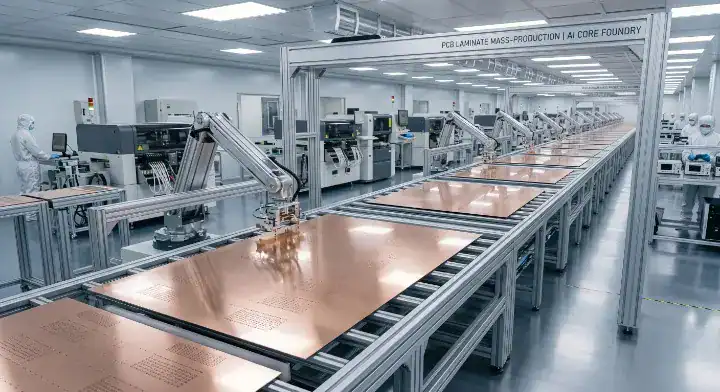
Per Shengyi Technology’s official High Speed Digital product documentation, Synamic 6N delivers Dk 3.35 and Df 0.0026 at 10 GHz using Low-Dk glass, while Synamic 8GN achieves Dk 3.28 and Df 0.0019 — both confirmed at M7-grade performance. Synamic 8GN offers 27% lower dielectric loss, which means it provides measurable channel margin improvement for 56G PAM4 signals. Conversely, Synamic 6N maintains a higher Tg of 205°C, resulting in superior thermal reliability during sequential lamination.
Real-World Processing Differences
In our production data, Synamic 6N and Synamic 8GN behave like siblings with different personalities. Synamic 6N runs slightly cooler during lamination — its higher Tg (205°C vs 190°C) means the prepreg flow window is wider, giving us more tolerance on press pressure variation. Synamic 8GN has 27% lower Df (0.0019 vs 0.0026) but tighter lamination parameters — we hold press pressure within ±3% versus ±5% for Synamic 6N.
On drill performance, both materials use the same PPE resin family and show similar drill bit life at approximately 2,300 hits — comparable to Isola Tachyon 100G and roughly 10% below Panasonic Megtron 7. Both materials undergo testing under rigorous IPC-4101E base material standards to verify these properties.
Direct Answer to Forum Question
(1) All About Circuits Forum: “Between Synamic 6N and Synamic 8GN, which should I use?” Choose Synamic 6N for designs running at 25-56G NRZ where thermal reliability matters more than absolute loss performance. If you are running 56G PAM4 or above, Synamic 8GN’s lower Df provides measurable margin improvement on long channels.
Key Takeaway
Bottom line: Synamic 8GN is the flagship choice for signal integrity on high-speed interfaces, while Synamic 6N offers a wider, more forgiving manufacturing window for standard server builds.
| Parameter | Synamic 6N | Synamic 8GN | Test Condition |
|---|---|---|---|
| Dk | 3.35 | 3.28 | @ 10 GHz |
| Df | 0.0026 | 0.0019 | @ 10 GHz |
| Tg (DSC) | 205°C | 190°C | IPC Method |
| Copper Type | VLP (2µm Rz) | HVLP (1.3µm Rz) | Surface Roughness |
| The Df and Tg values clearly differentiate the specific use cases for these two PPE laminates. |
Where Does Shengyi Actually Sit in the M4 to M8 Grade Ladder?
Shengyi’s highest publicly documented materials reach the M7 classification, specifically Synamic 8GN with a Df of 0.0019 and Synamic 6N with a Df of 0.0026. The manufacturer currently lists no public M8-grade products, which require a Df at or below 0.0015. While supply chain rumors occasionally mention “Shengyi M8-class” materials for domestic AI servers, actual data sheets confirm these boards rely on M7-grade capabilities.
Understanding the M-Grade Reality
Transparency is vital when selecting high-speed materials for critical infrastructure. You cannot engineer a 112G SerDes channel based on supply chain rumors.
Keep these grading facts in mind:
- Most standard high-speed Shengyi products, like S7439, fall firmly into the M4 category.
- Synamic 6 and Synamic 8G (standard E-glass versions) provide solid M6 performance.
- Synamic 6N and 8GN utilize Low-Dk glass, pushing their performance strictly into the M7 tier.
Direct Answer to Forum Question
(2) EEVBlog Forum: “Can Shengyi match Megtron 8 at M8 grade for AI server designs?” Not based on publicly documented products. If your project requires verified M8 performance, you must use a Panasonic Megtron 8 M8-grade manufacturing guide to source appropriate materials like Megtron 8 or EM-892K2.
Key Takeaway
Bottom line: Shengyi offers highly competitive, cost-effective options up to the M7 grade, but projects strictly demanding M8 performance must look to alternative vendors.
| Material Grade | Shengyi Product | Target Df | Competitor Equivalent |
|---|---|---|---|
| M4 Grade | S7439 | 0.0068 | Megtron 4 |
| M6 Grade | Synamic 6 | 0.0046 | Megtron 6 |
| M7 Grade | Synamic 8GN | 0.0019 | Megtron 7N |
| M8 Grade | None Public | ≤ 0.0015 | Megtron 8 |
| Shengyi accurately positions its highest-performing materials within the M7 classification tier. |
Which Shengyi Product Matches Megtron 6, Megtron 7, or Tachyon 100G?
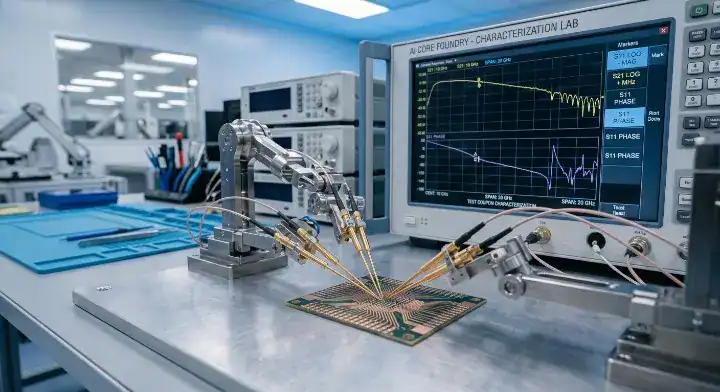
For direct cross-vendor equivalence, S7439 matches Megtron 4, Synamic 6 aligns with Megtron 6, and Synamic 6N serves as a direct alternative to Megtron 7N. Because these materials share similar resin chemistries, you can often substitute Shengyi into existing stackups, resulting in massive unit cost savings.
Mapping the Laminate Equivalents
Mapping equivalent materials allows you to beat allocation shortages and long lead times. If you are waiting weeks for Japanese materials, referencing an Isola Tachyon 100G ultra-low-loss specifications sheet will show that Synamic 6N offers highly comparable electrical properties.
Review these direct substitutions:
- Mid-Loss Alternative: S7439 perfectly replaces Isola I-Speed or EMC EM-355 in backplane designs.
- Low-Loss Substitution: Synamic 6 replaces Isola I-Tera MT40, offering a 30% price reduction.
- Ultra-Low-Loss Swap: Synamic 8GN approaches Megtron 7 specifications and Tachyon 100G comparison benchmarks, though with a marginally higher Df.
Direct Answer to Forum Question
(3) Electronics Stack Exchange: “Which Shengyi product is equivalent to Megtron 6 / Megtron 7 / Tachyon 100G?” Synamic 6 is your Megtron 6 equivalent. Synamic 6N and 8GN match Megtron 7N and Tachyon 100G, functioning as highly capable M7-grade substitutes. If you are unsure about mid-loss tiers, consult an I-Tera MT40 mid-loss decision guide to compare against Synamic 6.
Key Takeaway
Bottom line: Shengyi offers a functional equivalent for nearly every M4 to M7 material from Panasonic, Isola, or EMC, typically with slightly higher Df but significantly lower pricing.
| Shengyi Product | M-Grade | Panasonic Equivalent | Isola Equivalent | Cost Advantage |
|---|---|---|---|---|
| S7439 | M4 | Megtron 4 | I-Speed | 25-35% Lower |
| Synamic 6 | M6 | Megtron 6 | I-Tera MT40 | 30-40% Lower |
| Synamic 6N | M7 | Megtron 7N | Tachyon 100G | 30-40% Lower |
| Synamic 8GN | M7 | Megtron 7N | — | 30-40% Lower |
| This equivalence matrix helps engineers confidently substitute materials during supply shortages. |
Why Is Shengyi PCB Material 30-40% Cheaper Than Panasonic?
Shengyi achieves a 30–40% cost reduction through five distinct factors: global-leading production volume, lower manufacturing costs in mainland China, government subsidies for domestic semiconductor supply chains, vertical integration of copper foil, and extremely short logistics paths. This massive cost advantage stems from supply chain economics rather than any reduction in material quality or electrical consistency.
The True Source of Cost Savings
Many procurement teams mistakenly assume that cheaper materials indicate inferior quality. In reality, Shengyi’s pricing reflects their operational structure and geographic advantages.
Consider the economic factors at play:
- Production Scale: As the largest global producer by volume, they secure the lowest possible raw material pricing.
- Logistics Network: Since roughly 55% of global PCB capacity exists in China, domestic shipping costs are nearly eliminated.
- Vertical Integration: Shengyi operates joint ventures to produce their own copper foil, shielding them from external price spikes.
Direct Answer to Forum Question
(4) Reddit (r/PrintedCircuitBoard): “Why is Shengyi 30-40% cheaper than Panasonic or Isola?” The cost difference is driven by economy of scale and proximity. Shengyi manufactures in mainland China right next to the world’s largest PCB fabricators, receives subsidies for domestic technology development, and produces its own copper foil.
Key Takeaway
Bottom line: Shengyi’s lower price tag is the direct result of massive manufacturing scale and localized supply chains, not compromised chemical quality.
| Economic Factor | Competitor Disadvantage | Shengyi Advantage | Cost Impact |
|---|---|---|---|
| Manufacturing Location | High-cost (Japan/US) | Low-cost (Mainland China) | High |
| Raw Material Volume | Moderate purchasing power | Highest global purchasing power | High |
| Copper Foil Supply | Third-party vendors | Vertically integrated joint venture | Moderate |
| These structural advantages allow Shengyi to persistently undercut Western and Japanese material prices. |
Which AI Server and 5G Applications Run on Shengyi Materials Today?
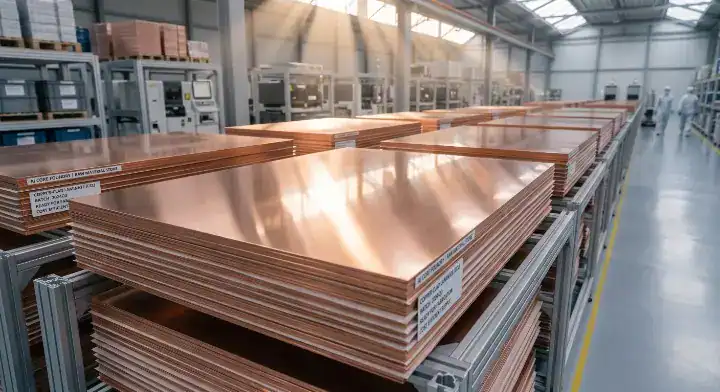
Chinese domestic AI servers heavily utilize Synamic 8GN for compute nodes, while 5G sub-6 GHz base stations frequently adopt S7136H as a lower-cost alternative to traditional hydrocarbon ceramics. Because tech giants prioritize supply chain security, they actively mandate these domestic laminates, which means Shengyi effectively drives the hardware infrastructure across the Asian market.
A Real-World AI Server Case Study
A recent 24-layer AI inference server board we built for a Chinese cloud computing customer used Synamic 8GN on 14 high-speed signal layers carrying 56 Gbps PAM4 SerDes and PCIe Gen5 interfaces, Synamic 6 on 4 secondary routing layers, and S1000-2M on 6 power and ground planes. The customer explicitly required all-Shengyi construction — no Panasonic or Isola materials — for supply chain security reasons.
Insertion loss on the Synamic 8GN layers measured 0.72 dB/inch at 28 GHz on 4 mil stripline with HVLP copper — roughly 15% higher than what we measure on equivalent Megtron 7N construction. On the customer’s longest 56G PAM4 channel at 14 inches, total channel loss was 10.1 dB against a 14 dB budget. Material cost came in at approximately 35% below Megtron 7N, and the customer happily accepted the slight loss penalty for the cost saving and 5-day lead time. If you need RF characteristics for similar builds, checking Rogers RO4350B Dk trap avoidance and specifications will help you benchmark the S7136H alternative.
Key Takeaway
Bottom line: Shengyi materials are currently powering the most advanced domestic AI computing platforms and 5G telecommunications networks in the world.
| Application Scenario | Recommended Shengyi Product | Industry Standard Equivalent |
|---|---|---|
| PCIe Gen4/5 Server | S7439G | Megtron 4 |
| Chinese Domestic AI Server | Synamic 8GN | Megtron 7N (Similar spec) |
| 5G sub-6 Base Station RF | S7136H | RO4350B |
| 77 GHz Automotive Radar | mmWave77 | RO3003 |
| Engineers across various high-tech sectors actively deploy these specific Shengyi solutions. |
How Do Fabricators Process Synamic 6N and 8GN on Standard Lines?
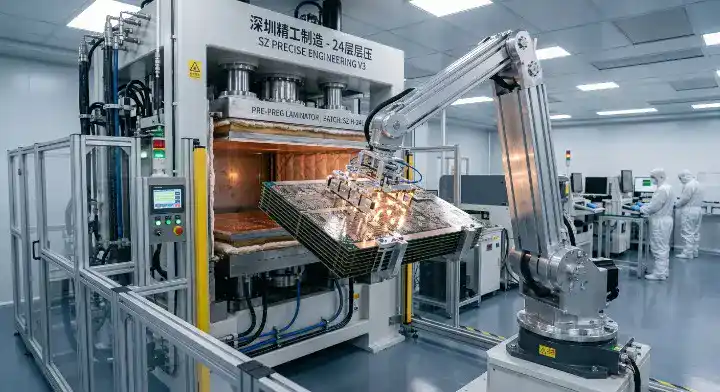
Synamic 6N and 8GN process similarly to other PPE-based laminates, using standard 200°C lamination for 60 minutes and routine permanganate desmear. Drill parameters require roughly a 12% chipload reduction compared to standard FR-4 baselines, resulting in extended drill bit life when managed correctly. Most modern multilayer PCB fabrication for high-layer-count designs handle these materials without requiring specialized equipment.
Factory Processing Experience
As a Shenzhen-based fabricator, Shengyi is our default material supplier for standard and mid-speed production — our facility is less than one hour from Shengyi’s Dongguan headquarters. We process Shengyi S1000-2M on roughly 60% of our high-Tg production volume and Synamic 6N on approximately 25% of our high-speed boards. The processing behavior is predictable: S1000-2M runs on the same press recipe as any high-Tg FR-4.
Synamic 6N requires a modest chipload reduction, comparable to what we run on Isola I-Tera MT40. First-pass yield on Synamic 6N across our last 200 panels averaged 95.2% — within 1% of our I-Tera MT40 yield on equivalent constructions. However, fabricators must never mix Shengyi prepreg with Panasonic core laminate in the same stackup, because their specific resin flow characteristics conflict and cause impedance variations.
Direct Answer to Forum Question
(5) SierraConnect: “Does Shengyi material process the same as Panasonic or Isola on a standard fab line?” Yes, the Synamic series uses the same underlying PPE resin family as Megtron 6 and 7. If your fabrication partner can successfully laminate and drill Megtron, they can process Synamic 6N and 8GN without adding complex new tooling.
Key Takeaway
Bottom line: Shengyi’s high-speed materials plug directly into standard PPE processing lines, ensuring high manufacturing yields without requiring heavy factory re-tooling.
| Processing Parameter | Synamic 6N / 8GN | Standard FR-4 | Difference |
|---|---|---|---|
| Lamination Temperature | 200°C | 180-190°C | Higher thermal requirement |
| Desmear Chemistry | Permanganate | Permanganate | Identical |
| Drill Chipload | Reduced by ~12% | Baseline (100%) | Slower plunge rate needed |
| The processing profile for Synamic materials closely mirrors established industry practices for low-loss laminates. |
When Should You Choose Shengyi PCB Material Over Isola or Rogers?
You should select Shengyi PCB material when your project requires M4 to M7 electrical performance combined with aggressive cost reduction and rapid 3-5 day material lead times. Conversely, you should stick with competitors like Rogers or Panasonic only when verified M8 performance or strict Western supply chain compliance is mandatory for your specific client.
Making the Final Vendor Decision
Choosing the right laminate vendor ultimately comes down to balancing lead time, cost, and absolute electrical margin. Shengyi completely disrupts the traditional supply chain model by eliminating allocation wait times.
Evaluate your project against these criteria:
- Choose Shengyi if your fab is in China and you need to cut raw material costs by 30%.
- Choose Shengyi if a 5-day material lead time saves your prototyping schedule.
- Avoid Shengyi if your customer strictly forbids Chinese-origin materials due to defense regulations.
Key Takeaway
Bottom line: Shengyi is the undisputed champion of cost-to-performance ratio for commercial and enterprise hardware up to the M7 classification tier.
| Decision Driver | Favor Shengyi | Favor Competitor (Panasonic/Isola) |
|---|---|---|
| Material Cost Target | Aggressive (30% reduction needed) | Flexible (Premium accepted) |
| Lead Time Tolerance | Critical (Needs material in days) | Relaxed (Can wait 4-8 weeks) |
| Electrical Tier | M4, M6, M7 (400G switches) | Verified M8 (112G SerDes minimum) |
| Align your vendor selection directly with your most critical project constraints. |
How Will Shengyi’s M8 and M9 Roadmap Reshape the CCL Landscape?
While Shengyi currently dominates the M4 to M7 tiers, their active R&D pipeline targets verified M8 and M9 materials to compete directly with next-generation NVIDIA Blackwell architectures. Releasing a verified Df ≤ 0.0015 material will allow them to fully penetrate the highest echelons of AI computing, which means Western laminate suppliers will face unprecedented pricing pressure.
The Future of High-Speed Laminates
The telecommunications market cannot sustain the current premium pricing of ultra-low-loss materials indefinitely. Shengyi’s aggressive push into higher tiers signals a coming commoditization of advanced laminates.
Watch for these industry shifts:
- Shengyi will likely release a public M8 equivalent within the next 18 months.
- Domestic AI server designs will transition entirely away from imported laminates.
- Global PCB pricing for 800G and 1.6T infrastructure will drop significantly.
Key Takeaway
Bottom line: Shengyi’s impending expansion into M8 and M9 grades will force legacy material suppliers to either lower their prices or accelerate their own innovation cycles.
| Roadmap Tier | Current Status | Industry Impact Upon Release |
|---|---|---|
| M7 (Df ~0.002) | Fully Mature (Synamic 8GN) | Dominates Chinese domestic AI market |
| M8 (Df ≤ 0.0015) | In Development / NDA | Will crash premium competitor pricing |
| M9 (Df ≤ 0.0010) | Early Research Phase | Will support next-gen 1.6T networking |
| The CCL market will experience massive disruption once Shengyi publicly releases verified M8 materials. |

Conclusion
Shengyi Technology proves that economy of scale does not require sacrificing electrical performance. By leveraging the S1000 through Synamic product lines, you can drastically reduce both your material spend and production wait times for everything from standard consumer boards to M7-grade AI servers. While they may not yet offer a public M8 datasheet, their current ultra-low-loss offerings provide more than enough channel margin for the vast majority of 400G and 800G infrastructure projects. If you are ready to transition your stackups to a more efficient supply chain, contact us today for a comprehensive DFM and material substitution review.
FAQ
Can Shengyi match Megtron 8 at M8 grade? No, not based on publicly documented products. Shengyi’s highest-performing HSD materials are Synamic 8GN at Df 0.0019 and Synamic 6N at Df 0.0026, which sit at M7 grade. Because M8 requires Df at or below 0.0015, you must use Megtron 8 or EM-892K2 for verified M8 performance.
Which Shengyi product is equivalent to Megtron 7 or Tachyon 100G? Synamic 6N and Synamic 8GN are both M7-grade equivalents that directly compete with Megtron 7N and Tachyon 100G. Synamic 8GN features a lower Df, making it slightly closer to Megtron 7N performance, resulting in better signal integrity for long channels.
Why is Shengyi 30-40% cheaper than Panasonic or Isola? This cost reduction happens because Shengyi operates with world-leading production volume, creating massive material purchasing scale. Furthermore, their manufacturing base in mainland China provides lower operating costs, government subsidies, and distinct logistics advantages for local fabricators.
Should I choose Synamic 6N or Synamic 8GN? Choose Synamic 6N for designs running at 25-56G NRZ because its higher Tg of 205°C provides a wider, more reliable lamination process window. Choose Synamic 8GN for 56G PAM4 and above, because the 27% lower Df (0.0019 vs 0.0026) provides measurable channel margin improvement.
Does Shengyi material process the same as Megtron on a standard fab line? Yes, Synamic 6N and 8GN use the exact same PPE resin family as Megtron 6 and 7. Lamination runs consistently at 200°C for 60 minutes with standard permanganate desmear, which means any capable fabrication partner can transition to Shengyi without acquiring new processing equipment.
Written by the QueenEMS Engineering Team
Upload your files today · Free DFM check before production · Ship worldwide
Get your PCB prototypes in as fast as 24 hours. We handle FR4, Rogers, and Flex up to 60 layers — free prototypes for 2–4 layer boards, no minimum order.
Just upload your Gerber + BOM — we source every part, assemble, and inspect (AOI + X‑Ray) so you don't have to chase suppliers. Boards ship in as fast as 24 hours.