
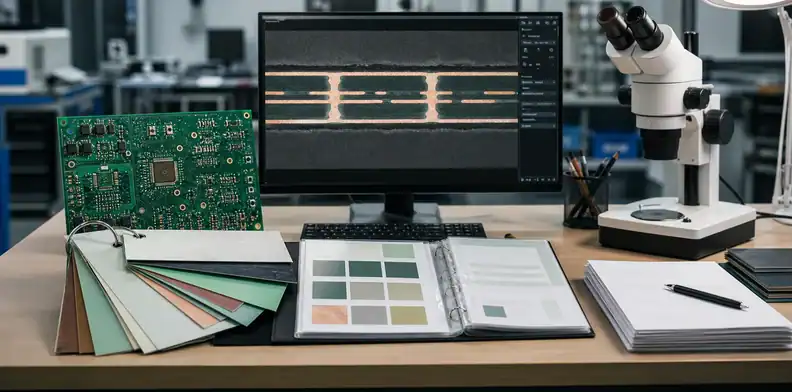
Quick Answer: Ventec VT-441 PCB material is best treated as a halogen-free, mid-Tg FR4.1 entry point for consumer-electronics-grade PCB builds, not as a universal high-reliability laminate and not as a “cheap low-end FR-4” label. The buyer decision is whether VT-441, VT-441C, VT-441V, or a higher Ventec grade such as VT-47 or VT-447 better matches the product’s thermal, compliance, desmear, CTI, and reliability requirements.
For the wider material-selection picture across performance, fabrication, and sourcing, refer to the full PCB materials guide.
Key takeaways
– VT-441 is a positive entry-point choice for halogen-free consumer electronics when the datasheet limits fit.
– Do not treat VT-441, VT-441C, VT-441C(G1), and VT-441V as interchangeable suffixes.
– Ventec’s page states VT-441 desmears more slowly than conventional FR-4, so fabrication settings must be reviewed.
– Upgrade when the board needs industrial, automotive, high-temperature, or stronger reliability margin.
Ventec VT-441 PCB material appears simple in many RFQs: one halogen-free FR-4 name, one supplier, one cost-sensitive board. In practice, the suffix, FR4.1 wording, consumer-electronics positioning, and desmear behavior can all change how the board should be quoted and released.
This article focuses on VT-441 as a material decision, not a Ventec product-line encyclopedia. If the project only needs a broader halogen-free rule, start with the QueenEMS halogen-free PCB specification guide. If the customer drawing names VT-441 or an equivalent, use the sections below to decide what evidence belongs in the RFQ.
Table of Contents
- What Is VT-441’s Real Position?
- Which VT-441 Variant Is the Drawing Naming?
- What Does Ventec FR4.1 Mean in Practice?
- How Should VT-441 Compare With Other Base Materials?
- When Should You Upgrade to VT-47 or VT-447?
- What Does the Desmear Warning Change?
- Where Is VT-441 a Practical Fit?
- How Should You Quote VT-441 or Equivalent?
What Is VT-441’s Real Position?
VT-441 is a halogen-free, phenolic-cured, mid-Tg FR4.1 laminate and prepreg family positioned for consumer-electronics applications. Ventec’s VT-441 page lists general features including halogen-free chemistry, UV blocking, CAF resistance, low Z-axis CTE, and excellent thermal reliability, with applications such as mobile phones, smart phones, computers, instrumentation, communication equipment, game machines, and VCR-type electronics.
That makes VT-441 an entry point in the good sense: it is the first practical level when the product needs a halogen-free Ventec material but does not need a higher-reliability industrial or polyimide class. The wrong wording is “low-end FR-4.” The better wording is “consumer-electronics-grade halogen-free entry point.”
Which numbers define the baseline?
Use the current Ventec page, not distributor snippets, as the starting evidence.
- Tg: DSC 152°C typical, TMA 158°C typical on the VT-441 page.
- Td: 385°C typical by ASTM D3850.
- T260: >60 minutes typical.
- T288: >30 minutes typical.
- Dk: 4.4 typical at 1GHz, RC 50%.
- Df: 0.014 typical at 1GHz, RC 50%.
These values are useful only when tied to the exact variant, test method, resin content, glass style, copper, and current documentation. For broader material screening, the QueenEMS PCB material selector is a better place to organize Tg, Td, Dk, Df, CTI, and compliance requirements before an RFQ.
The position is therefore not “use VT-441 whenever halogen-free appears.” It is “use VT-441 when the product’s thermal exposure, electrical speed, compliance scope, and reliability class fit this entry-point Ventec path.” That framing protects both cost and credibility.
Which VT-441 Variant Is the Drawing Naming?
The drawing should identify the exact VT-441 variant because VT-441, VT-441C, VT-441C(G1), and VT-441V should not be treated as interchangeable names. Ventec publishes separate pages for VT-441, VT-441C, and VT-441V; the checked VT-441C(G1) URL was not accessible during this review, so its details should be verified through Ventec or the fabricator before any controlled release.
The variant decision affects more than naming. VT-441C and VT-441V pages show different application notes, availability, CTI/MOT references, and desmear wording. A purchasing team that trims the suffix can accidentally approve a different stackup or compliance path.
What is the safe variant map?
Use a conservative map until supplier evidence is in hand.
| Variant | Safe interpretation | Buyer action |
|---|---|---|
| VT-441 | Base halogen-free mid-Tg FR4.1 path | Use as baseline if consumer-electronics requirements fit |
| VT-441C | Separate Ventec variant with its own page and process notes | Verify CTI, MOT, desmear, glass/copper, and current datasheet |
| VT-441C(G1) | Named sub-variant in search intent but not confirmed from accessible official page | Do not quote as interchangeable without supplier document |
| VT-441V | Variant with high-Td/mid-Tg and broader listed applications | Verify whether V path is required by customer spec |
The safest RFQ wording is “Ventec VT-441 [exact suffix], current datasheet revision, or engineering-approved equivalent.” That single sentence prevents a surprising amount of rework.
If a customer drawing names only “VT-441 series,” ask whether the exact suffix is controlled by the customer AVL or can be selected by the fabricator. The answer changes whether the supplier is quoting a fixed material or proposing an engineering choice.
What Does Ventec FR4.1 Mean in Practice?
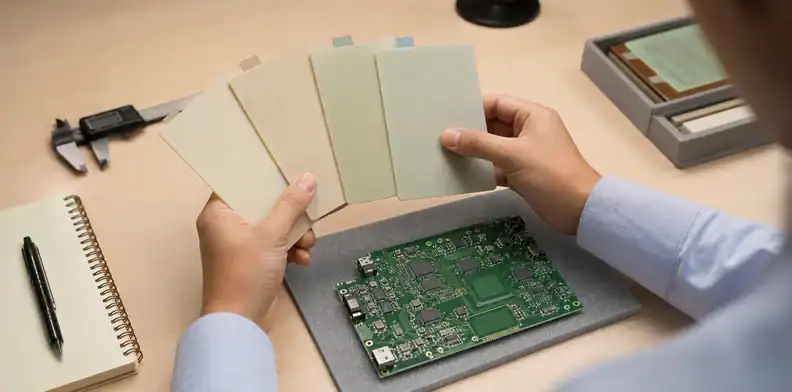
FR4.1 is Ventec’s material-system naming around halogen-free FR-4-style laminates, not a generic IPC phrase that every supplier uses the same way. In VT-441’s case, it signals that the board is still in an FR-4-type fabrication and application space while using a halogen-free chemistry and Ventec-specific documentation.
The practical result is that the buyer must ask for documents, not assumptions. A board can be “FR-4-like” mechanically and still need different curing, desmear, baking, compliance, or stackup review from a conventional brominated FR-4.
Which documents prove the claim?
Collect the evidence before purchase order release.
- Ventec datasheet or product page for the exact variant.
- UL approval/file evidence for the variant and construction.
- Halogen-free declaration or restricted-substance package when required.
- RoHS/REACH evidence according to the customer definition.
- Stackup drawing with core/prepreg identity and copper type.
- Fabricator process notes for drilling and desmear.
Do not rely on the material name alone. If the end customer has its own halogen-free definition, that definition controls the quotation package.
This is especially important for European and North American programs, where a buyer may use “halogen-free” as a procurement shorthand while the engineering specification defines different reporting thresholds, document formats, or customer-approved material lists.
How Should VT-441 Compare With Other Base Materials?
VT-441 should be compared with other halogen-free base FR-4 choices by the actual requirement: Tg method, Td, Dk/Df, CTI, availability, customer AVL status, fabrication behavior, and compliance evidence. It is not enough to say “Ventec vs Nanya vs Kingboard vs Shengyi” because each family has multiple grades and revisions.
QueenEMS already has useful support pages for several adjacent materials. The S1150G halogen-free Tg150 article gives one Shengyi comparison point, and the KB-6160 PCB material article covers a Kingboard path. Use them as boundaries, not as automatic substitutes.
| Decision field | VT-441 question | Substitute question |
|---|---|---|
| Compliance | Does the exact VT-441 variant satisfy the customer definition? | Does the alternative provide matching halogen-free evidence? |
| Thermal | Are Tg/Td/T288 values enough for assembly and end use? | Are methods and revision dates comparable? |
| Electrical | Is Dk/Df acceptable for the design speed? | Does the stackup need recalculation? |
| Fabrication | Can the shop control slower desmear? | Does the alternative change drill/desmear behavior? |
The correct alternative is the one that satisfies the same controlled requirement, not the one that shares the nearest marketing category.
For a cost-down project, compare the finished board price rather than laminate price alone. A substitute that saves material cost but causes extra DFM review, delayed approval, or a new microsection requirement may not be cheaper by the time the first production batch ships.
When Should You Upgrade to VT-47 or VT-447?
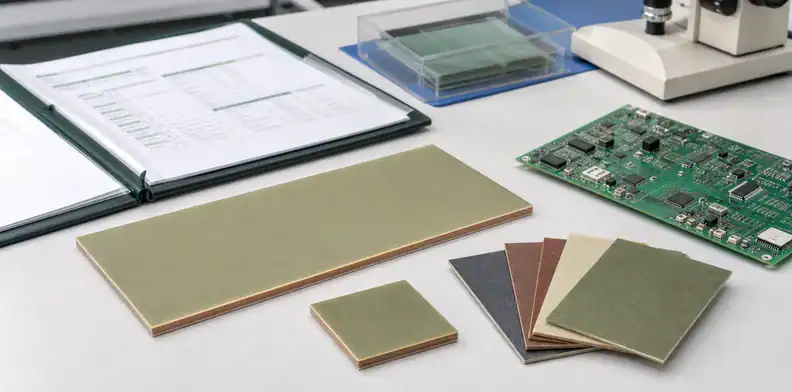
Upgrade from VT-441 when the application moves beyond consumer-electronics-grade halogen-free needs into industrial reliability, higher thermal margin, tougher customer specifications, or documented long-life service conditions. VT-441 can be the right entry point, but an entry point is not a universal ceiling.
VT-47 and VT-447 belong in a different decision conversation. VT-47 is often evaluated when a higher-Tg Ventec FR-4 route is required, while VT-447 is a halogen-free higher-Tg option in the Ventec ladder. VT-901 is a much higher polyimide-class discussion and should not be confused with a simple VT-441 upgrade.
What triggers the upgrade?
Use requirement triggers, not fear.
- Higher assembly thermal exposure or repeated rework.
- Industrial, automotive, high-power, or high-temperature environment.
- Customer specification names VT-47, VT-447, or a higher Tg class.
- CTI, CAF, MOT, or long-term reliability requirement exceeds the VT-441 basis.
- Fabricator recommends a higher grade after stackup and process review.
The QueenEMS VT-47 PCB material article and VT-901 polyimide material article help set those upper boundaries. Decision rule: stay with VT-441 only when the actual end-use and assembly profile fit the entry-point material evidence.
Do not use the upgrade path as a sales reflex. A simple consumer electronics board may not need the extra cost or qualification work of a higher grade. The upgrade is justified only when a requirement, failure mode, or customer document asks for it.
What Does the Desmear Warning Change?
Ventec’s VT-441 page states that VT-441 desmear rate is less than conventional FR-4 and that process adjustments are necessary for lead-free materials. That should be read as a fabrication control warning, not as a minor footnote.
Slow desmear can affect plated-through-hole quality if the shop uses a default FR-4 recipe. The result may be resin residue, poor hole-wall condition, unreliable copper plating, or microsection findings that force a CAM hold after the quote has already been accepted.
What should the fabricator review?
The factory should convert the warning into process instructions.
- Drill parameters for the selected thickness and hole size.
- Desmear chemistry, time, temperature, and supplier recommendation.
- Microsection or hole-wall inspection requirements.
- Lead-free assembly exposure and baking plan.
- Storage and moisture-control instructions.
- Whether VT-441C or VT-441V requires different desmear settings.
QueenEMS can check Gerber files, stackup, hole sizes, copper weights, and assembly exposure through a free PCB DFM check before the material is released. Decision rule: if the shop cannot explain the desmear adjustment, do not treat VT-441 as an ordinary FR-4 drop-in.
The desmear point is also a communication test. A strong fabricator will not simply answer “yes, we can make VT-441”; it will identify whether the selected suffix, hole structure, copper thickness, and lead-free exposure require changes to the traveler.
Where Is VT-441 a Practical Fit?
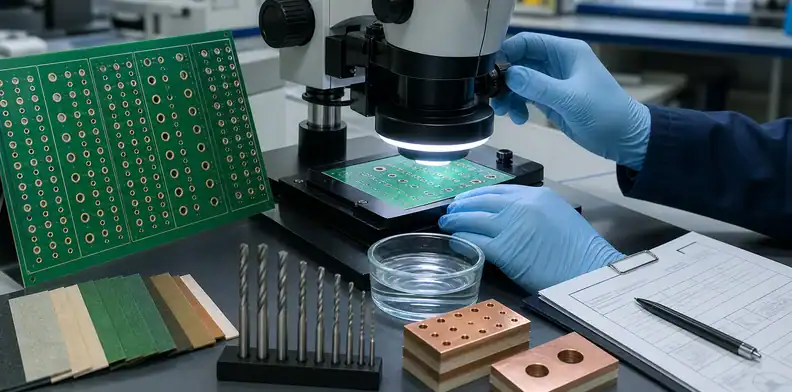
VT-441 is a practical fit for consumer electronics, communication equipment, instrumentation, computer boards, game-related electronics, and similar products where halogen-free compliance is required and the published mid-Tg properties provide enough manufacturing and end-use margin. It is not the first answer for every industrial, automotive, high-power, or high-reliability board.
The fit depends on the weakest requirement in the package. A simple consumer board may fit VT-441 well. A compact power board with high thermal cycling, heavy copper, or strict CTI requirements may require VT-441V, VT-47, VT-447, or another controlled material.
What does a good-fit RFQ look like?
A good VT-441 RFQ is specific and boring in the best way.
- Exact material variant and current source document.
- Layer count, thickness, copper weight, and impedance if applicable.
- Lead-free reflow profile and maximum rework exposure.
- Halogen-free, RoHS, REACH, UL, CTI, and MOT requirements.
- Drilling, desmear, and microsection expectations.
- Approved-equivalent rule and who signs off.
If those fields are unknown, the material name alone cannot protect the design. The RFQ should make the application fit visible before the quote becomes a production commitment.
This is where VT-441 often wins: it can keep a halogen-free consumer board economical when the requirements are honestly within range. The risk appears when the same material is stretched into a harsher environment without writing down why it still has margin.
How Should You Quote VT-441 or Equivalent?
“Ventec VT-441 PCB material or equivalent” should permit only a documented equivalent that matches the exact variant’s thermal, electrical, compliance, fabrication, and availability requirements. It should not let a supplier swap in any halogen-free Tg150-class sheet without engineering review.
Equivalent language is especially important for cost-sensitive consumer electronics because several brands may look close at first glance. A clean approval matrix keeps sourcing flexibility without hiding material drift.
What should the final quote package include?
Send enough information for suppliers to quote the same board.
| RFQ field | Why it matters |
|---|---|
| Exact VT-441 suffix | Prevents VT-441, C, G1, and V confusion |
| Datasheet revision | Stops old mirror data from controlling the quote |
| Compliance scope | Defines halogen-free, RoHS, REACH, UL, CTI, MOT evidence |
| Stackup and copper | Controls thickness, impedance, plating, and process route |
| Desmear requirement | Converts Ventec’s warning into inspection evidence |
| Equivalent owner | Makes engineering approval mandatory |
For quotation, send Gerber or ODB++, stackup, BOM compliance notes, assembly profile, target quantity, delivery destination, and any approved material list through the QueenEMS contact page. Decision rule: use VT-441 for the right entry-level job, but make the suffix, evidence, and equivalent rule explicit.
If you want two quote options, request them explicitly: one exact-VT-441 quote and one approved-equivalent proposal with a comparison matrix. That keeps the cost discussion useful without blurring the controlled material record.
FAQ
Is VT-441 a low-end FR-4?
No. A better description is consumer-electronics-grade halogen-free entry-point FR4.1. It is lower in the Ventec ladder than high-reliability grades, but that does not make it an engineering insult.
Can I replace VT-441 with VT-47?
Yes, only after stackup, cost, availability, and customer approval are reviewed. VT-47 may provide a different thermal/reliability path, but it is not a suffix-only substitution.
Does VT-441 work for lead-free assembly?
Yes, Ventec’s VT-441 page includes lead-free process-related notes, but the fabricator must still control baking, reflow exposure, drilling, and desmear.
Is VT-441C(G1) confirmed by the official page?
Not from the accessible page checked in this review. Treat VT-441C(G1) as a named sub-variant that needs current supplier evidence before use.
Sources
Written by the QueenEMS Engineering Team
Upload your files today · Free DFM check before production · Ship worldwide
Get your PCB prototypes in as fast as 24 hours. We handle FR4, Rogers, and Flex up to 60 layers — free prototypes for 2–4 layer boards, no minimum order.
Just upload your Gerber + BOM — we source every part, assemble, and inspect (AOI + X‑Ray) so you don't have to chase suppliers. Boards ship in as fast as 24 hours.