

Quick Answer: PCB material substitution approval is the buyer-controlled process for deciding whether a proposed laminate or prepreg can replace the material named on the drawing. A useful approval compares at least 8 areas: IPC slash sheet, Tg/Td, Dk/Df, CTE, thickness, copper system, UL/halogen status, and application risk.
Key takeaways – Matching Tg alone is not enough for high-reliability, impedance, RF, or lead-free builds. – The drawing should state whether substitutes are allowed, forbidden, or allowed only with written approval. – Ask for manufacturer data sheets, IPC slash-sheet basis, stack-up impact, and impedance impact before accepting a change. – A material change after quote release should be handled like a controlled engineering decision, not a purchasing shortcut.
PCB material substitution approval matters because a cheaper or more available laminate can still change electrical, thermal, mechanical, or compliance behavior.
For a broader comparison of laminate families, electrical properties, processing limits, and sourcing choices, see our PCB materials guide.
When a supplier says “equivalent material,” the buyer should not only ask whether the board can be fabricated. The better question is whether the replacement preserves the design assumptions that made the board acceptable in the first place.
This article shows what to compare, when to reject a substitute, and what to send QueenEMS when you need a reviewed fabrication quote with controlled material rules.
Table of Contents
- What Does Material Substitution Approval Decide?
- When Can a PCB Supplier Suggest an Equivalent?
- Which Properties Must Match Before Approval?
- Is Matching Tg Enough for FR-4 Equivalents?
- How Do Dk and Df Affect Substitution Risk?
- What Should the Fabrication Drawing Say?
- Which Evidence Should the Supplier Provide?
- When Should You Reject a Proposed Substitute?
- How Should Changes Be Controlled After Approval?
- What Should You Send for a Material Review?
What Does Material Substitution Approval Decide?
Material substitution approval decides whether a proposed laminate, prepreg, copper foil, or stack-up change can be used without breaking the board requirement.
It is not a generic permission to use any available FR-4. The approval should connect the substitute to the actual board: layer count, impedance, thickness, reflow exposure, operating temperature, reliability class, and customer restrictions. A commodity two-layer board and a high-speed impedance board do not carry the same substitution risk.
For purchasing, the output should be clear: approved, approved only for prototypes, engineering review required, or no substitution allowed.
When Can a PCB Supplier Suggest an Equivalent?
A supplier can suggest an equivalent when the named material is unavailable, expensive, over-specified, obsolete, or not normally stocked for that production route.
That suggestion is normal, but it should be transparent. The supplier should explain whether the change is driven by availability, cost, lead time, panel yield, press-cycle compatibility, impedance modeling, or UL/halogen-free status. A substitute proposed before quoting is easier to review than a surprise after the PO.
If the substitute changes the assumptions behind the quote, connect the decision to the QueenEMS guide on PCB quote changes.
Which Properties Must Match Before Approval?
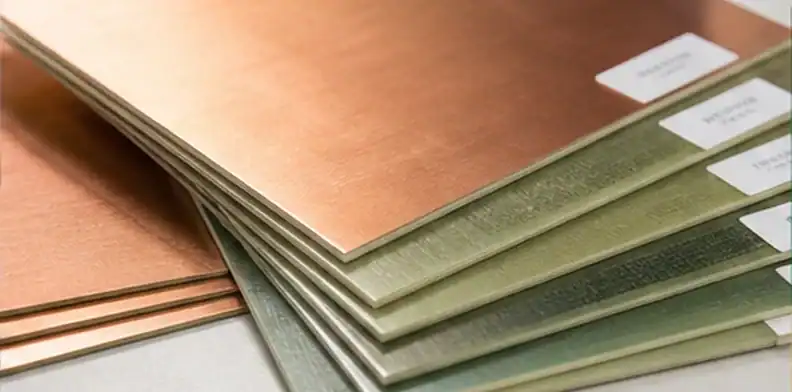
The minimum comparison should cover the properties that affect the board in use and in manufacturing.
For real laminate examples, compare the approval criteria against a material-family page such as the QueenEMS Rogers RO4000 laminate family guide before accepting a broad “equivalent” label.
| Approval area | Why it matters |
|---|---|
| IPC slash sheet or material family | Shows the broad base-material class |
| Tg and Td | Relates to thermal transition and decomposition behavior |
| Dk and Df | Affects impedance and high-speed/RF loss |
| CTE and Z-axis expansion | Affects plated-hole and thermal-cycle stress |
| Thickness and resin content | Changes stack-up and finished thickness |
| Copper foil and peel strength | Affects fabrication and reliability |
| UL, halogen-free, RoHS, or customer clauses | Controls compliance evidence |
| Availability and lot traceability | Determines repeat-order risk |
Use the table as a decision map, not a checkbox ritual. If a property is important to the product, it must be matched or consciously requalified.
Is Matching Tg Enough for FR-4 Equivalents?
No, matching Tg is not enough for a real FR-4 substitution decision.
Tg describes the glass transition region, but it does not prove the substitute has the same decomposition temperature, CTE, moisture behavior, Dk, Df, copper adhesion, CAF resistance, or lead-free assembly robustness. Two materials with similar Tg can behave differently under reflow, thermal cycling, or high-speed signaling.
For general Tg education, link the decision to the relevant FR-4 material owner rather than turning this page into a material catalogue.
How Do Dk and Df Affect Substitution Risk?
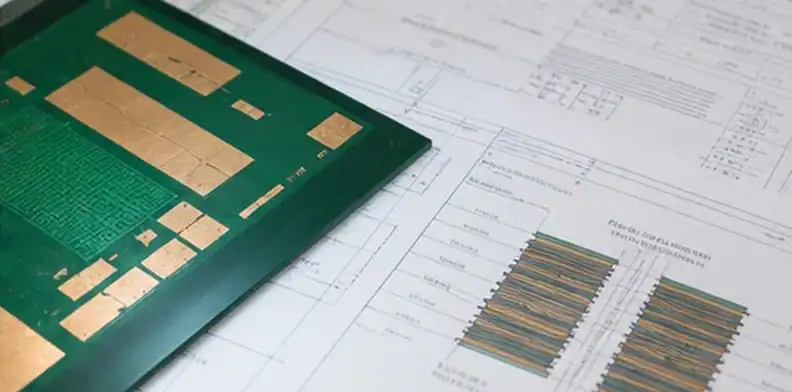
Dk and Df affect substitution risk because controlled impedance and signal loss depend on dielectric behavior, frequency, resin system, glass style, and test method.
Isola’s dielectric-property guidance notes that data-sheet values are comparison tools, not a complete design model. In practice, a substitute can require stack-up changes or trace-width changes to maintain the same impedance. If the layout is already released, those changes may require buyer approval.
For high-speed or RF boards, ask the supplier to show the modeled stack-up impact before approving the material.
What Should the Fabrication Drawing Say?
The fabrication drawing should say whether substitution is forbidden, allowed only with approval, or allowed within a named material family and performance boundary.
If the board is multilayer, connect the drawing note to the practical build scope on the QueenEMS multilayer PCB manufacturing page so the supplier checks material, stack-up, and controlled impedance together.
Useful notes include the preferred material, accepted alternates, slash-sheet basis, halogen-free requirement, UL requirement, impedance tolerance, and whether the manufacturer may adjust stack-up for impedance. Do not hide material rules in email threads that will not travel with the released data package.
If the drawing is unclear, update the drawing before release rather than relying on a buyer memory of what was discussed.

Which Evidence Should the Supplier Provide?
Ask for evidence that lets engineering and quality review the substitute without guessing.
When a proposed substitute creates DFM concerns, the QueenEMS PCB DFM case study is a useful reference for turning engineering questions into documented manufacturing feedback.
Useful evidence includes the proposed material data sheet, IPC-4101 slash-sheet basis when applicable, stack-up comparison, impedance model impact, finished thickness impact, UL or halogen-free status when required, and whether the same substitute will be available for repeat orders. The supplier should also state whether the quote, lead time, or qualification evidence changes.
For a board-specific pre-check, connect the material decision to a PCB manufacturer capability check. Material approval is strongest when it is tied to the exact board, not only a generic laminate table.
When Should You Reject a Proposed Substitute?
Reject a proposed substitute when it changes a controlled requirement, hides unavailable data, creates impedance uncertainty, or conflicts with a customer, safety, environmental, or qualification requirement.
Also reject it when the supplier cannot identify the exact product, manufacturer, thickness family, or repeat-order plan. A vague phrase like “same grade FR-4” is not enough for a board with impedance, high temperature, high voltage, RF, medical, automotive, or industrial reliability risk.
If the substitute is necessary, the safer path may be a controlled engineering change or a new qualification order.
How Should Changes Be Controlled After Approval?
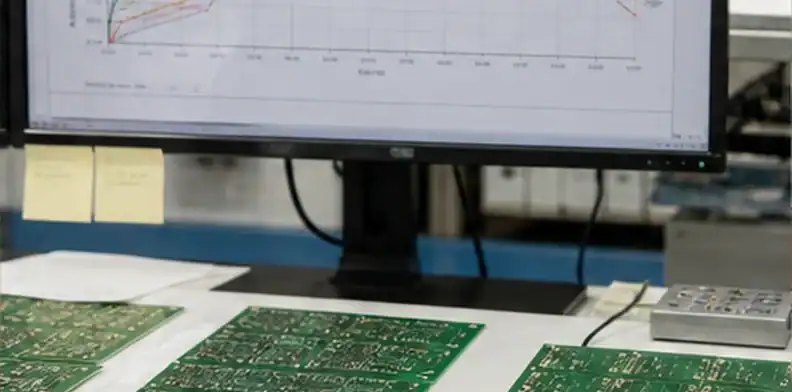
After approval, treat the material decision as a controlled change tied to the board revision or purchasing note.
Record the original material, approved substitute, approval date, approving owner, allowed build stage, and whether the substitute is allowed for repeat orders. If the supplier later wants to change again, the previous approval should not automatically cover the new material.
Use the QueenEMS engineering change notice guide when the material change affects released production.
What Should You Send for a Material Review?
For a material review, send the controlled fabrication files, drawing, stack-up, impedance targets, required material or alternates, operating environment, assembly profile, compliance limits, and production quantity.
If the substitute is supplier-proposed, include the supplier’s proposed data sheet and the reason for the change. If the board has assembly requirements, include the PCBA reflow and reliability context so the decision is not made on bare-board data alone.
Send QueenEMS the material requirement and your allowed-substitution rule with the PCB fabrication quote files package so the quote can identify material assumptions before fabrication.
Related QueenEMS resources
- Material-family examples
- Controlled PCB quote files
- PCB manufacturer capability check
FAQ
Can a PCB manufacturer replace my laminate without approval?
No, not when the material is named on the drawing or affects impedance, reliability, compliance, or qualification. The supplier should request approval before changing a controlled material.
Is an IPC slash sheet enough to prove equivalence?
No, it is a useful starting point, but it does not prove every electrical, thermal, mechanical, or compliance property matches your board requirement.
Should I allow substitutes on prototype builds?
Sometimes. If the prototype is only for circuit bring-up, a substitute may be acceptable; if it qualifies the supplier or production stack-up, use the final material rule.
What if my specified material is unavailable?
Ask for a documented alternative with data sheet, stack-up impact, impedance impact, lead-time impact, and written approval before fabrication.
Does material substitution require a new quote?
Often yes, because laminate availability, press cycle, impedance modeling, UL status, and qualification evidence can change cost or lead time.
Sources
Written by the QueenEMS Engineering Team
Upload your files today · Free DFM check before production · Ship worldwide
Get your PCB prototypes in as fast as 24 hours. We handle FR4, Rogers, and Flex up to 60 layers — free prototypes for 2–4 layer boards, no minimum order.
Just upload your Gerber + BOM — we source every part, assemble, and inspect (AOI + X‑Ray) so you don't have to chase suppliers. Boards ship in as fast as 24 hours.