
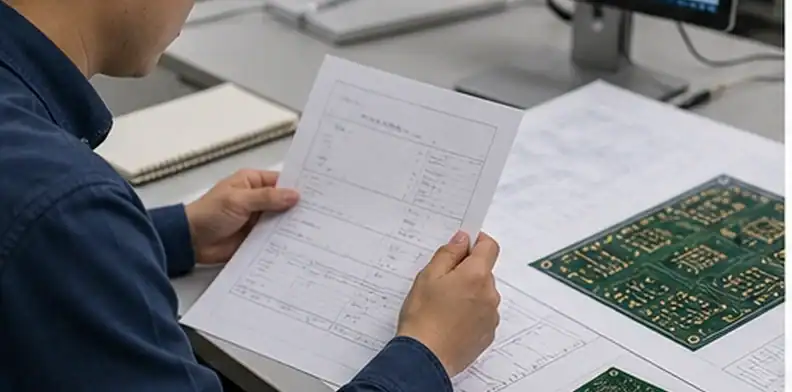
Quick Answer: PCB quote validity defines how long the quoted price, lead time, technical scope, and delivery assumptions can be used before the supplier must recheck them. Before issuing a PO, buyers should recheck file revision, quantity, material, copper, finish, testing, reports, delivery date, Incoterm, and quote expiration. An expired or scope-changed quote should be refreshed before production release.
Key takeaways – Validity covers assumptions, not just a calendar date. – File, quantity, material, freight, and evidence changes can trigger requote. – A firm quote should state what is included and what can change. – Freeze the approved quote together with the released file package.
PCB quote validity is easy to overlook when a project is moving quickly. A buyer may receive a quote, wait for engineering approval, change a drawing note, adjust quantity, and then issue a PO weeks later. By that time, the quote may no longer match the build.
This page explains what to recheck before PO release.
Table of Contents
- What does quote validity actually cover?
- Why do PCB quotes expire?
- Which file changes trigger requote?
- Does quantity or panelization change validity?
- Can material availability shorten validity?
- How do delivery date and Incoterms affect validity?
- What assumptions belong on a firm quote?
- What should you send before placing the PO?
What does quote validity actually cover?
PCB quote validity covers the supplier’s ability to hold price, lead time, and scope for a defined period under the stated assumptions. It is not a promise that any later revision, quantity, material, or delivery request will keep the same price.
A useful quote should name the valid-through date and the scope basis. That means file revision, quantity, material, finish, test evidence, delivery term, and any special one-time charges.
If a buyer cannot tell what the quote was based on, validity is weak even before the date expires.
Validity should be read as a boundary around a specific decision. A 30-day quote for revision A at 100 pieces does not automatically hold for revision B at 500 pieces. The buyer can still ask the supplier to honor the old number, but the supplier needs a chance to confirm whether the scope still matches.
Why do PCB quotes expire?
PCB quotes expire because material cost, copper price, production capacity, freight, labor planning, and component availability can change. Special laminates, HDI processes, heavy copper, controlled impedance, and assembly parts can shorten the practical validity window.
Expiration also protects the buyer from stale assumptions. A quote that is too old may no longer reflect material availability or realistic lead time. Refreshing the quote before PO can prevent a late price change after the order is already urgent.
The buyer should treat quote refresh as a control step, not as a supplier inconvenience.
This matters most when the quote is used for internal budget approval. A team may receive management approval based on an early number, then return weeks later with changed files. If purchasing does not refresh the quote, the supplier’s correction can look like a surprise increase even though the original scope moved.
Which file changes trigger requote?
File changes trigger requote when they affect manufacturability, yield, material, process, inspection, or delivery. Examples include layer count, board outline, drill sizes, annular ring, controlled impedance, copper weight, surface finish, stackup, tolerances, panelization, or quality notes.
Even small drawing edits can change the quote if they add a report, tighten a tolerance, or require customer approval. A supplier cannot safely hold the old price when the manufacturing scope has changed.
Before PO, send the supplier the final file package and ask: “Does this match the quoted revision?” That one question catches many avoidable disputes.
A useful supplier answer should be specific. “Same files” is weaker than “quote Q123 was based on revision C dated August 8; the PO package received August 25 matches those files except for drawing note 6.” The second answer gives purchasing something that can be stored with the PO.
Does quantity or panelization change validity?
Quantity and panelization can change quote validity because fixed costs and panel utilization depend on the ordered lot. A quote for 20 pieces may not apply to 200 pieces. A quote for loose boards may not apply to customer-specified arrays.
Panel changes can affect yield, tooling, electrical test, packing, assembly handling, and shipping volume. If the buyer changes from prototype pieces to production arrays, the supplier should recheck the quote.
For quantity economics, QueenEMS’ PCB minimum order quantity cost article supports the price-break review.
Quantity changes can also affect evidence. A prototype quantity may include simple electrical test and final inspection. A production quantity may require stronger documentation, sample retention, serialization, packaging labels, or customer-specific records. Those additions should be priced before the PO.
Can material availability shorten validity?
Material availability can shorten quote validity when the board uses special laminate, unusual thickness, high copper, controlled impedance structure, or customer-approved material. A quote may be valid only while the supplier can source the assumed material at the assumed cost and schedule.
Ask whether the supplier has reserved material or only checked availability. Those are different promises. A material check can become stale; a reserved lot may have its own payment, cancellation, or validity condition.
If alternates are allowed, the quote should name the approval rule. If alternates are not allowed, the buyer should expect validity to depend more heavily on the exact material supply.
Material validity should also cover prepreg and copper assumptions, not only laminate brand. For controlled impedance or RF work, changing dielectric thickness or copper profile can affect the same electrical requirement that made the quote acceptable. Ask the supplier whether the priced stackup remains available.
How do delivery date and Incoterms affect validity?
Delivery date and Incoterms affect validity because freight, export handling, customs responsibility, and local delivery can change after the quote. A quote based on DAP may not match a later DDP request. A planned shipment quote may not match urgent air freight.
Ask the supplier to confirm named destination, Incoterm, freight method, shipment documents, and whether delivery charges are included. If any of those change, the landed-cost portion should be refreshed.
For delivery-term comparison, use QueenEMS’ DDP vs DAP PCB shipping article before treating price as final.
Delivery urgency should be rechecked too. A quote based on normal production and planned freight may not support an urgent ship date. Rush fabrication, weekend handling, premium freight, and split shipments can all move the final cost even when the PCB files are unchanged.
What assumptions belong on a firm quote?
A firm quote should state the assumptions that make the price usable. At minimum, include file revision, quantity, board specification, material, finish, lead time, delivery term, evidence package, quote validity date, one-time charges, and exclusions.
| Quote field | What to check | Requote trigger |
|---|---|---|
| Revision | Quoted files match PO files | New Gerber, drill, drawing, or BOM |
| Quantity | Price break matches order | Quantity or panel format changes |
| Material | Grade and thickness are still available | Substitute or availability change |
| Evidence | Reports and tests are included or excluded | New certificate, TDR, FAI, or test need |
| Delivery | Incoterm and destination match | Freight method or destination changes |
| Validity date | Quote still inside valid period | Expired date or stale assumptions |
This table should be reviewed before the PO is sent, not after the supplier asks for a price change.
The quote should also say what is excluded. Exclusions are not always bad; they make the boundary visible. Examples include no impedance report, no special certificate, no tooling reuse guarantee, no expedited freight, or no component price hold for PCBA. Hidden exclusions are the problem.
What should you send before placing the PO?
Send QueenEMS the supplier quote, final release package, quantity, required delivery date, Incoterm, destination, evidence requirements, and any changes since the quote was issued. Mark whether the PO must match the old quote exactly or whether the supplier may refresh assumptions.
The review should identify stale assumptions, requote triggers, missing exclusions, and evidence gaps. That gives purchasing a cleaner release record.
For a quote-validity check, send the quote and final file set through the QueenEMS contact page. We can help confirm whether the PCB quote validity is still safe for PO release.
FAQ
Is an expired PCB quote always invalid?
Not always, but it should be reconfirmed. The supplier may hold the price, or they may need to update material, freight, capacity, or lead-time assumptions.
Can I issue a PO after changing only the quantity?
Only after confirming the price break and panel assumptions still apply. Quantity changes can affect unit price, setup allocation, and lead time.
Does a drawing revision always require a new quote?
Not always. A harmless text correction may not affect price, but any change to material, geometry, tolerance, finish, test, or evidence should be reviewed.
What is the safest PO wording?
State that the PO is released against a named quote number, date, revision package, quantity, evidence package, delivery term, and accepted assumptions.
Written by the QueenEMS Engineering Team
Upload your files today · Free DFM check before production · Ship worldwide
Get your PCB prototypes in as fast as 24 hours. We handle FR4, Rogers, and Flex up to 60 layers — free prototypes for 2–4 layer boards, no minimum order.
Just upload your Gerber + BOM — we source every part, assemble, and inspect (AOI + X‑Ray) so you don't have to chase suppliers. Boards ship in as fast as 24 hours.