
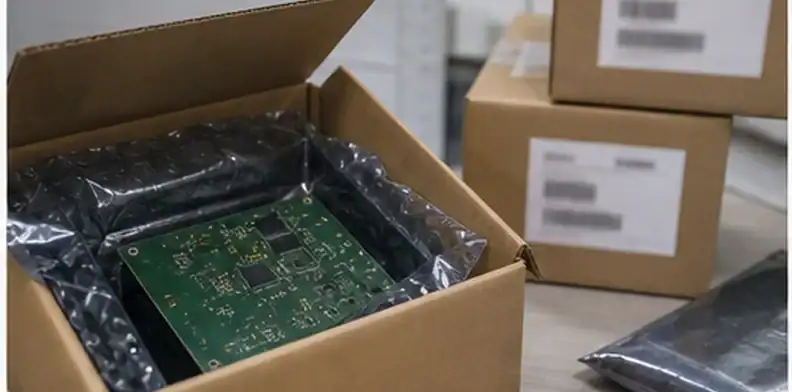
Quick Answer: DDP vs DAP PCB shipping decides who manages import clearance, duties, taxes, and delivery risk after an overseas PCB order ships. In simple terms, DDP aims to give the buyer a landed price, while DAP usually leaves import clearance and duty/tax payment to the buyer.
Key takeaways – Incoterms define cost, task, and risk responsibilities; they are not a substitute for a customs classification review. – A DDP quote is only useful if it states what duties, taxes, brokerage, and delivery point are included. – DAP can be better for buyers who already have a broker and want customs control. – For the United States, Canada, and Mexico, confirm importer responsibility and local tax/duty treatment before comparing quotes.
DDP vs DAP PCB shipping affects whether your overseas PCB quote is a true landed-cost number or only a factory-plus-freight estimate.
The risk is not only freight price. Customs documents, importer-of-record responsibility, duty, taxes, broker fees, and delivery exceptions can change the real cost after the boards leave the factory.
This guide explains how to compare DDP and DAP for PCB and PCBA orders without pretending one term is always safer for every buyer.
Table of Contents
- What Do DDP and DAP Actually Decide?
- Why Do PCB Buyers Misread Shipping Quotes?
- Who Is Responsible for Import Clearance?
- What Costs Should a DDP Quote Include?
- When Is DAP Better for a PCB Buyer?
- How Do Duties and Taxes Affect the Decision?
- What Documents Should Be Checked Before Shipping?
- What Red Flags Make a DDP Quote Risky?
- How Should U.S., Canada, and Mexico Buyers Compare?
- What Should You Send for a Landed-Cost Quote?
What Do DDP and DAP Actually Decide?
DDP and DAP decide task, cost, and risk allocation for delivery, customs handling, and import-related payment.
The U.S. International Trade Administration explains that Incoterms define responsibilities for shipment, insurance, documentation, customs clearance, and logistics activities. Under DDP, the seller takes more responsibility for delivering to the named place with duties paid. Under DAP, the seller delivers to the named place, but import clearance and duties are normally the buyer’s responsibility.
The named place matters; DDP your door and DDP airport are not the same commercial promise.
Why Do PCB Buyers Misread Shipping Quotes?
PCB buyers misread shipping quotes when they compare a DAP factory quote with a DDP landed quote.
If the logistics quote is mixed with production timing, compare it with the QueenEMS guide to PCB assembly lead time planning so freight time is not confused with build time.
A DAP quote may look cheaper because import duty, taxes, brokerage, bond, customs delay, and final delivery exceptions are outside the supplier price. A DDP quote may look higher because those costs are already included. The correct comparison is total landed cost and responsibility, not the smallest number on the quote.
If the quote does not state Incoterm and named place, treat it as incomplete.

Who Is Responsible for Import Clearance?
Import clearance responsibility depends on the Incoterm, local law, and whether the seller can legally act as importer or use an appropriate party.
For many buyers, DDP is attractive because it reduces customs surprises. But in some countries or product categories, the overseas seller may not be able to act as importer of record in a straightforward way. DAP can be cleaner when the buyer already has a customs broker and wants classification control.
For U.S. buyers, CBP’s reasonable-care guidance makes importer accuracy a serious responsibility.
What Costs Should a DDP Quote Include?
A DDP PCB quote should say exactly what is included.
| DDP line item | Why it matters |
|---|---|
| Named delivery place | Defines the endpoint |
| Freight mode | Affects time, handling, and cost |
| Import duty and taxes | Prevents surprise charges |
| Brokerage and clearance | Shows who handles customs |
| HS code basis | Supports classification review |
| Insurance, if included | Controls loss/damage expectations |
| Remote-area or address surcharge | Avoids last-mile disputes |
| Exclusions | Shows what the buyer may still pay |
If these items are missing, the quote may be “DDP” in name but not reliable enough for budgeting.

When Is DAP Better for a PCB Buyer?
DAP can be better when the buyer has a broker, wants to control HS classification, can reclaim taxes, or needs consistent import records.
A Canadian OEM or U.S. importer with an established broker may prefer DAP because it keeps customs responsibility under its own compliance process. DAP also helps when the buyer needs direct customs documentation for accounting, warranty, or regulated product files.
DAP is not worse; it is just less hands-off.
How Do Duties and Taxes Affect the Decision?
Duties and taxes affect the decision because PCB, PCBA, and finished products can have different classification and valuation issues.
For U.S. duty exposure, read the QueenEMS PCB tariff planning guide before asking a supplier to quote DDP as a single all-in number.
Do not ask a PCB factory to guess your final import treatment without reviewing the product function, commercial invoice, country of origin, and destination rules. A DDP quote should not be accepted if the supplier cannot explain the basis for duties and taxes.
For tariff-sensitive products, compare DDP and DAP with your customs broker before releasing production.

What Documents Should Be Checked Before Shipping?
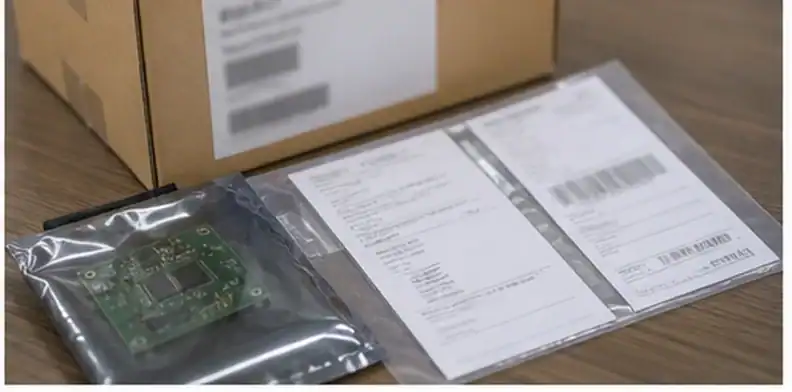
Before shipping, check the commercial invoice, packing list, HS code basis, declared value, origin statement, consignee, delivery address, Incoterm, and contact details.
When the shipment includes assembly, pair the logistics documents with a clear PCB assembly RFQ for production so the invoice description matches the actual scope.
For PCBA, the invoice description should match the product function and buyer documentation. For bare PCBs, the description should not be vague. If the paperwork says only “electronic parts,” customs questions become more likely.
Consistent documents protect both delivery timing and accounting.
What Red Flags Make a DDP Quote Risky?
A risky DDP quote hides exclusions, uses vague customs descriptions, offers unrealistically low freight, or cannot identify who handles import clearance.
Other red flags include refusing to name the delivery place, excluding duties in fine print, changing terms after payment, or mixing DDP language with buyer-paid customs charges. Cheap DDP that becomes DAP at arrival is not a landed-cost solution.
Ask for a written scope before choosing the quote.

How Should U.S., Canada, and Mexico Buyers Compare?
U.S., Canada, and Mexico buyers should compare DDP and DAP by landed cost, importer responsibility, tax recoverability, broker control, delivery timing, and documentation needs.
A U.S. startup may prefer DDP for prototypes to avoid customs surprises. A Canadian OEM with a broker may prefer DAP for GST/import accounting control. A Mexico buyer may need extra care around customs broker coordination, delivery city, and tax documentation.
The safest term is the one your team can actually manage.
What Should You Send for a Landed-Cost Quote?
For a landed-cost quote, send board type, quantity, value basis, destination address, delivery deadline, preferred Incoterm, product function, and whether you need bare PCB or PCBA.
If the destination, Incoterm, or customs scope is still unclear, send the package through the QueenEMS contact page so the quote can separate manufacturing and logistics assumptions.
For quick builds that still need controlled delivery terms, the QueenEMS quick-turn PCB assembly service page helps define whether the request is prototype, assembly, or shipment-led.
If you want both DDP and DAP, ask for the same manufacturing scope with separate logistics lines. QueenEMS can then separate fabrication/assembly cost from freight, duty, tax, brokerage, and delivery assumptions.
Use the PCB fabrication quote files guide when the shipment is bare-board only and the PCB assembly RFQ checklist when PCBA is included.
Related QueenEMS resources
- PCB tariff planning guide
- PCB assembly lead time planning
- Production RFQ preparation
FAQ
Is DDP always better than DAP for PCB orders?
No. DDP is simpler for many small buyers, but DAP can be better when the buyer has a broker and wants customs control.
Does DDP include all taxes?
It should, but only if the quote explicitly includes duties, taxes, brokerage, and the named delivery place.
Who is importer of record under DAP?
Usually the buyer or buyer-appointed party handles import clearance and duty/tax payment under DAP.
Can I compare a DAP quote to a DDP quote directly?
No. Add duties, taxes, broker fees, and final delivery costs to the DAP quote first.
Should prototype shipments use DDP?
Often yes for convenience, but production shipments may need a broker-led comparison before choosing.
Sources
- International Trade Administration Incoterms guide
- U.S. CBP Reasonable Care
- CBP Informed Compliance Publications
Written by the QueenEMS Engineering Team
Upload your files today · Free DFM check before production · Ship worldwide
Get your PCB prototypes in as fast as 24 hours. We handle FR4, Rogers, and Flex up to 60 layers — free prototypes for 2–4 layer boards, no minimum order.
Just upload your Gerber + BOM — we source every part, assemble, and inspect (AOI + X‑Ray) so you don't have to chase suppliers. Boards ship in as fast as 24 hours.