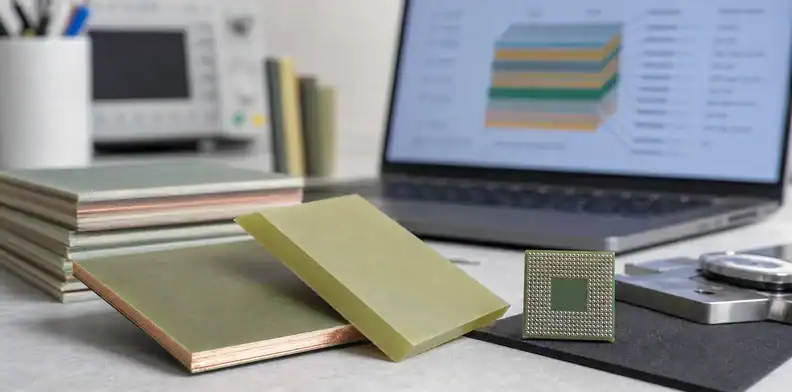
Quick Answer: A BT PCB uses bismaleimide triazine resin, usually in a BT-epoxy laminate system, when a project needs higher Tg, lower moisture absorption, and better dimensional stability than standard FR-4. BT is not chosen because it conducts heat like ceramic; it is chosen because its thermal, electrical, and package-substrate behavior fits BGA, CSP, memory, RF module, and substrate-like board work.
Key takeaways
- BT stands for bismaleimide triazine, a thermoset resin system strongly associated with semiconductor package substrates.
- Typical BT values used for early screening include Tg around 180-210 deg C, Dk near 4.0, Df around 0.01-0.015, and moisture absorption below 0.3%.
- BT sits between FR-4 and more specialized materials: stronger than ordinary FR-4 for package-style work, but not a ceramic thermal conductor.
- Do not release a BT build by material name alone; lock the stackup, construction, surface finish, line rules, and supplier evidence.
Table of Contents
- What is BT PCB material?
- What is BT resin made of?
- BT substrate key properties at a glance
- How does BT compare to FR-4?
- What applications actually use BT substrate?
- Is BT PCB the same as HDI or IC substrate?
- When should you choose BT for your project?
What is BT PCB material?
BT PCB material is a laminate system based on bismaleimide triazine resin, often blended with epoxy for processability. MGC describes BT laminate as a thermoset bismaleimide triazine resin material used in printed wiring board and chip-package substrates. For a buyer, the practical definition is simple: BT is a higher-performance organic substrate material, not a ceramic and not an ordinary FR-4 grade.
A BT callout should lead to a stackup review. The supplier still needs to identify the laminate family, glass style, copper thickness, dielectric thickness, surface finish, and any impedance or package evidence. The phrase BT PCB by itself is not enough to release fabrication.
In a definition article, the useful starting point is the gap between a material name and a manufacturable construction. A drawing that only says BT has not yet fixed the laminate family, glass reinforcement, dielectric thickness, copper, finish, or evidence package. Early samples can carry those questions as open engineering notes; repeat builds need the build record to say which construction was approved and what requires another review.
A cleaner definition separates the material callout from the build release. Engineering should decide whether the board belongs in the BT family, then purchasing can compare suppliers against the same stackup, finish, construction notes, and proof requirements.
Buyer call: A BT definition becomes quote-ready only when it points to a construction, not just a resin acronym.
The definition also helps prevent over-specification. Some boards only need high-Tg FR-4, some need an RF laminate, and some need ceramic for heat transfer. BT belongs in the middle space where organic substrate behavior, package reliability, moisture control, and dimensional stability matter. Naming that role early keeps the buyer from paying for BT when another material solves the actual constraint more cleanly. For the wider topic map, the BT PCB guide connects this point to specifications, applications, sourcing, and quote preparation.
What is BT resin made of?
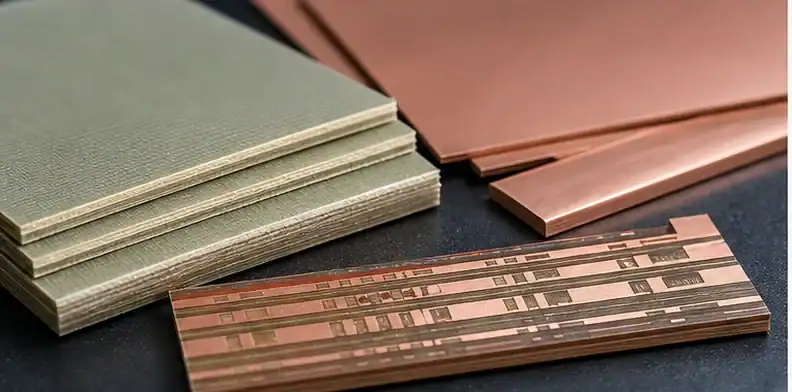
BT resin is commonly understood as a bismaleimide and triazine resin system. The chemistry matters to sourcing only at the decision boundary: it gives BT higher heat resistance and lower moisture uptake than many standard epoxy systems, while keeping it in the organic laminate family.
Avoid turning the RFQ into a chemistry paper. Engineering should ask for controlled supplier data: Tg method, CTE direction, Dk/Df frequency, moisture absorption method, drill or laser behavior, and any reliability coupons. Purchasing should ask whether the supplier is quoting a true BT construction, a BT-modified FR-4, or an equivalent material route.
Evidence for a BT definition should be practical: material family, construction notes, lamination approach, and the documents that will ship with the lot. The buyer does not need the supplier’s private purchasing terms, but the build route cannot stay hidden behind the acronym.
For a definition-stage RFQ, proof should stay close to construction language. Ask the supplier to identify the BT laminate family, reinforcement style, copper build, dielectric targets, surface finish, and the document that will confirm the shipped lot. That is enough to turn a broad material name into a buildable description without turning the quote into a chemistry audit.
A short reply may be enough for budget screening, but it should not release fabrication. Fill the missing construction fields before the BT label becomes a buying decision.
Proof rule: The BT acronym is usable in an RFQ only after the material family and build construction are written down.
BT substrate key properties at a glance
| Property | Typical BT screening value | Buyer meaning |
|---|---|---|
| Tg | 180-210 deg C | Better lead-free assembly margin than standard FR-4 |
| CTE | 13-17 ppm/deg C overall screening range | More stable package behavior than ordinary FR-4 |
| Thermal conductivity | 0.2-0.4 W/mK | Not a heat-spreading ceramic substitute |
| Dk | About 4.0 | Useful for compact package and RF-module design review |
| Df | About 0.01-0.015 | Lower loss than many standard FR-4 systems |
| Moisture absorption | Below 0.3% | Better package reliability and storage behavior |
Decision rule: Use the values for screening, then make the supplier state the exact grade and test conditions before release.
BT property numbers are screening values, not release values. Tg, Dk, Df, CTE, and moisture absorption shift with grade, resin blend, glass reinforcement, and test method, so the drawing should point to the supplier’s controlled data instead of a generic internet table.
Read the property numbers as a material map. Tg points to assembly margin, Dk and Df point to electrical modeling, CTE points to package stress, and moisture absorption points to storage plus reflow behavior. A definition page should leave the buyer with one habit: name the property that drove the BT callout before asking a supplier to quote it.
Read each property as a controlled assumption. Tg needs the stated test method; Dk and Df need frequency; CTE needs direction and temperature span; moisture data needs the storage or bake context. The release record should point to the supplier datasheet revision actually used for that build.
Release rule: Use generic BT properties for triage, then release the order against supplier-controlled material data.
How does BT compare to FR-4?
BT is usually considered when standard FR-4 cannot give enough Tg, moisture, CTE, or package-substrate margin. High-Tg FR-4 can close part of the thermal gap, but it is not automatically the same as a true BT substrate construction.
For FR-4 basics, use the QueenEMS article on FR-4 grade and Tg selection. For a direct material decision, the companion page on how BT substrate compares to FR-4 should own the deeper comparison.
A common definition-stage problem appears when the drawing says only BT while the Gerbers imply a package-like build. CAM can quote a feasible route, but engineering still has to decide whether the laminate, finish, and test evidence match the device behavior being validated.
A good drawing note is short: name the intended BT construction, reference the stackup revision, and require engineering review for material or finish changes. That gives definition-stage language a production meaning.
Decision signal: A strong supplier explains what BT means in the build before asking the buyer to approve price.
What applications actually use BT substrate?
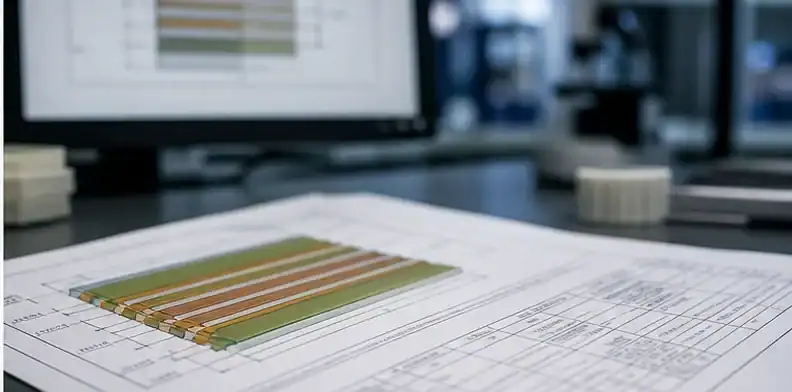
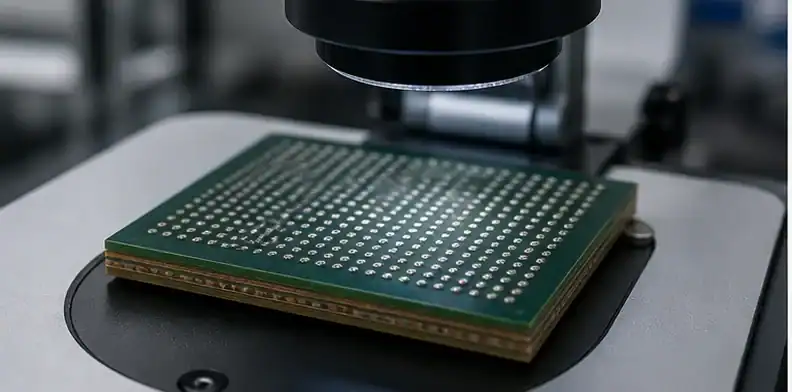
BT appears most often in package-like and density-driven electronics rather than ordinary low-cost control boards. Common application families include IC package substrates, BGA and CSP substrates, memory packages, RF modules, chip LED packages, and substrate-like PCB work.
That application list does not mean every BGA board needs BT. A normal BGA on a multilayer FR-4 board may only need good escape routing and assembly control. A package substrate or very compact module may need BT because the laminate becomes part of the device package rather than just the carrier board.
For a definition page, cost belongs after construction. A cheaper BT quote may be a genuine fabrication advantage, or it may describe a different laminate, finish, geometry, or evidence level than the buyer intended.
Cost belongs in this definition only as a positioning note: BT usually sits above ordinary FR-4 and below many PI, PTFE/RF, or ceramic routes. The detailed budget discussion belongs on the cluster page about what drives BT cost, because price depends on geometry, grade, finish, allocation, and test evidence.
Price rule: Compare BT quotes only after the build meaning of BT is the same in each offer.
Is BT PCB the same as HDI or IC substrate?
No. BT is a material system; HDI is an interconnect and fabrication approach. An HDI stackup can use FR-4, high-speed laminate, RCC, ABF, or BT depending on density and performance. The separate QueenEMS page on HDI PCB build capabilities explains the process side.
The useful RFQ question is not ‘BT or HDI?’ It is: which material should be used inside the HDI or substrate-like construction, and what line, via, lamination, and reliability limits apply? The cluster page on the difference between BT material and HDI process expands this boundary.
The approval boundary should follow the definition. Engineering controls what BT means in the stackup, purchasing controls supplier comparison, quality checks the received evidence, and the supplier identifies manufacturability exceptions.
The risk in a definition-only release is that each team may read BT differently: engineering sees a controlled laminate choice, purchasing sees a price line, and the factory sees room to pick a workable material. Put the approval owner on the same line as the construction, so a supplier suggestion becomes a review item rather than a silent build change.
Responsibility is simple on a definition page: engineering defines what BT means in the stackup, purchasing compares offers only after that meaning is fixed, quality checks received certificates against the approved route, and the supplier flags any route that does not match the drawing note.
Approval rule: A BT definition is released only when material, stackup, finish, and evidence requirements share the same revision.
When should you choose BT for your project?
Choose BT when the project is package-like, moisture-sensitive, thermally exposed during assembly, or dimensionally demanding enough that ordinary FR-4 creates risk. Stay with FR-4 when the design is a normal multilayer PCB and the exact FR-4 construction already meets assembly, electrical, and reliability margin. Move toward ceramic when heat spreading or silicon CTE matching dominates; see QueenEMS ceramic substrate options for that branch. For budget framing, BT normally prices above standard FR-4 and below many PI, PTFE/RF, or ceramic routes; the detailed breakdown belongs in what drives BT cost.
RFQ signal: A serious BT request should include Gerber or ODB++ data, stackup target, line/space, copper, finish, BGA or package details, temperature exposure, quantity, and reliability expectations.
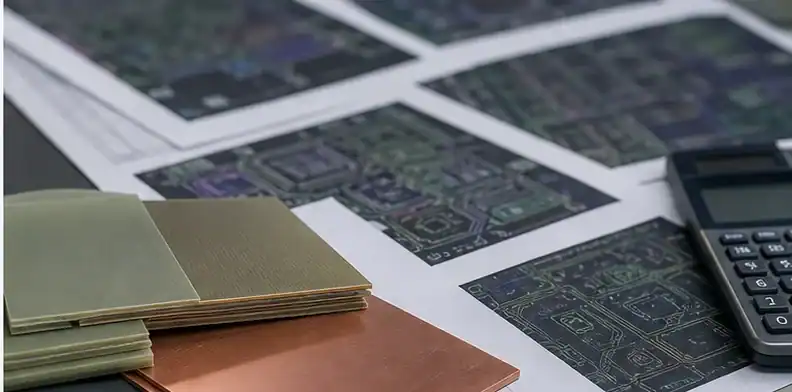
A useful way to understand BT is to separate the resin system from the finished board. The resin provides the heat-resistant matrix; the glass cloth, filler package, copper foil, prepreg flow, and lamination cycle turn that chemistry into a manufacturable substrate. Two BT materials from different laminate families can both be called BT while behaving differently in drill smear, copper adhesion, z-axis expansion, moisture uptake, and solder-float survival.
For engineers reading a datasheet, Tg is only the first checkpoint. The more practical questions are whether the material holds dimensional stability after multiple solder cycles, whether the dielectric values are measured at the frequency range used by the design, and whether the supplier can process the same laminate family at the line width and via pitch shown in the files. A BGA fanout that looks safe on a generic drawing can become sensitive when the substrate uses tight registration, thin cores, or very fine solder mask dams.
The application map also matters. BT is common around chip packages, compact modules, memory devices, and dense interconnect boards because it sits between commodity FR-4 and more specialized high-temperature or ceramic systems. It is not chosen only because one number is higher. It is chosen when the whole stack of thermal cycling, moisture control, electrical performance, and package geometry points in the same direction.
For small and medium builds, the safest first review is not a material-name check. Send the stackup, BGA pitch, target finish, soldering profile, impedance needs, and package drawing together. That lets fabrication engineering decide whether the project is a normal BT PCB, a package-substrate-style job, or an HDI board that happens to need a BT-based laminate.
One useful definition test is the assembly note. If the board uses ordinary component placement, broad pitch, and no package-driven reliability concern, the BT callout may be excessive. If the assembly note mentions fine-pitch arrays, repeated lead-free reflow, package coplanarity, or moisture-sensitive storage, the material name has a clearer engineering reason.
FAQ
What does BT stand for in PCB?
BT stands for bismaleimide triazine. In PCB and package-substrate sourcing it usually means a laminate system based on BT resin, often blended with epoxy.
Is BT better than FR-4?
BT is better for some package-style and moisture-sensitive designs, but it is not automatically better for every board. FR-4 remains the cost-effective default when it meets the requirements.
Can BT be used for flexible boards?
BT is treated as a rigid organic substrate material. Flexible zones normally use polyimide, while BT may appear in a rigid area of a more complex construction only after stackup approval.
Is BT a thermal material like ceramic?
No. BT thermal conductivity is close to organic laminate behavior. Ceramic is the branch for high heat spreading; BT is mainly a stability, package, and electrical-performance choice.
Send QueenEMS a BT substrate review package
For a BT definition check, send the Gerber or ODB++ package, proposed stackup, BGA or module outline, copper weight, finish, and the material note you plan to put on the drawing via the QueenEMS contact page. QueenEMS can review whether the design should stay with FR-4, move to BT substrate route, use HDI support, or take a ceramic thermal route.
Sources
Written by the QueenEMS Engineering Team
Upload your files today · Free DFM check before production · Ship worldwide
Get your PCB prototypes in as fast as 24 hours. We handle FR4, Rogers, and Flex up to 60 layers — free prototypes for 2–4 layer boards, no minimum order.
Just upload your Gerber + BOM — we source every part, assemble, and inspect (AOI + X‑Ray) so you don't have to chase suppliers. Boards ship in as fast as 24 hours.