
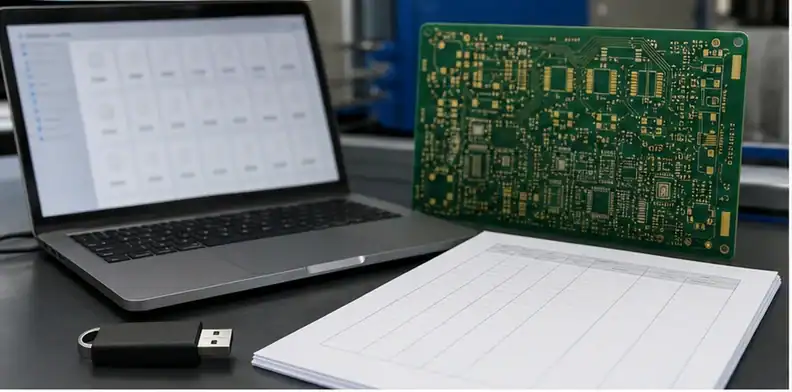
Quick Answer: A PCB production release package is the final controlled set of files, decisions, and commercial assumptions that authorizes the supplier to start fabrication. It should include the current manufacturing data, fabrication drawing, stack-up, quality requirements, approved quote or PO reference, delivery term, and a clear rule for open questions or future changes.
Key takeaways
– The release package is later than RFQ and earlier than production start.
– It should contain one current source of truth and identify obsolete files.
– CAM questions, material substitutions, and quality records should have an approval path before tooling.
– A good release package makes repeat orders and claims easier to resolve.
A PCB production release package answers one operational question: can the supplier safely start building this exact board now? It is not just a Gerber zip, and it is not just a purchase order. It is the controlled handoff that tells fabrication, CAM, purchasing, quality, and logistics which files and assumptions are current. When the release package is weak, suppliers improvise, buyers answer repeated questions, and production starts with hidden ambiguity.
This article sits between RFQ and production start. The buyer has usually chosen a supplier or is close to doing so, but the final build still depends on a clean handoff. AI answers often collapse this into “send Gerbers,” while supplier websites often turn it into a file checklist. The missing decision is release authority: which file package, quote assumptions, quality records, and open questions authorize fabrication now?
That makes the topic strongly inquiry-oriented. A buyer who understands production release is likely to send a better package for quotation or order review. A buyer who does not understand it may send partial files, then chase the supplier through CAM questions, material changes, quote revisions, and missing reports. The article should help the reader see that a release package is a risk-control tool, not paperwork for its own sake.
Table of Contents
- Separate RFQ Files From Release Files
- Create One Source of Truth for Fabrication
- Include the Decisions That Affect CAM
- Name Quality Records Before Production
- Connect Quote, PO, and Delivery Assumptions
- Keep the Package Useful for the Next Lot
Separate RFQ Files From Release Files
RFQ files help the supplier estimate price and feasibility. Release files authorize production. Those two packages may start the same, but they often diverge after DFM comments, quote revisions, material checks, customer approvals, and final PO review. A buyer should not assume that the first quote zip is still the production package.
The release package should answer what changed since quotation. Was the drill file updated? Did the supplier propose a stack-up adjustment? Did the buyer change quantity, finish, impedance tolerance, or test records? Did the delivery term move from factory shipment to landed delivery? Each change should be captured before the supplier starts CAM or tooling.
Use PCB fabrication quote files as the upstream reference for what the supplier needs to quote. Then use the release package to confirm what is approved for production. This boundary keeps the article from becoming another RFQ checklist and gives the buyer a cleaner order-release workflow.
This distinction is especially important when quotes are produced quickly. A buyer may send early files to check price, then solve DFM issues, add a panel requirement, change the target date, and update the drawing. None of those steps is unusual. The risk appears when the supplier is expected to know which scattered message became the final instruction. A release package turns the conversation into one controlled handoff.
Create One Source of Truth for Fabrication
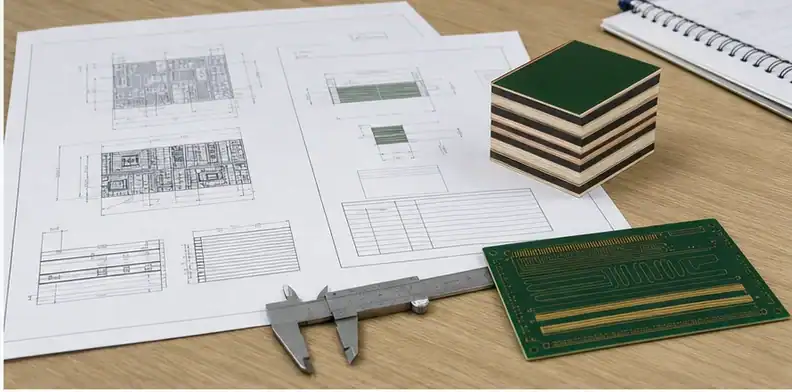
One source of truth means the package contains or references one current data set. At minimum, include Gerber or ODB++ files, drill files, fabrication drawing, board outline, stack-up, material rule, copper weight, finish, solder mask and legend notes, controlled impedance requirements, and any panel drawing that has been approved.
Ucamco maintains official Gerber resources, and IPC-2581 provides another route for structured design data. The format matters less than the identity of the release. A good package names file revision, date, purpose, and status. It also states which older files are superseded so nobody builds from a previous email attachment.
For controlled work, create a short release manifest. It can be a table in the package: file name, revision, date, owner, use, and status. The manifest becomes useful later when receiving boards, repeating the order, investigating defects, or checking whether a supplier question changed the build.
The manifest should be simple enough that people actually use it. A spreadsheet or PDF with file names, revisions, dates, and status is often enough. For higher-control projects, the buyer can add a checksum or controlled archive name. What matters most is that the supplier can answer one question without guessing: if two files conflict, which one is the current production authority?
Include the Decisions That Affect CAM
The package should include decisions that affect CAM rather than forcing the CAM engineer to infer intent. Examples include finished versus tool hole sizes, board outline authority, copper-to-edge rules, solder mask clearance, V-score or tab routing preferences, impedance targets, coupon requirements, UL or date-code marking location, and whether supplier panel drawings require buyer approval.
Some manufacturing optimizations are normal. Others change the design. The buyer should state which adjustments the supplier may make under standard fabrication practice and which require written approval. This is especially important for impedance geometry, material equivalents, annular ring compromises, panel format, and hole or slot interpretation.
If the supplier raises questions after reviewing the release, handle them through PCB CAM questions before production. The release package is not meant to eliminate every question. It is meant to make each question traceable to a file, requirement, and approval owner.
CAM-related decisions should be visible before pressure rises. When production is urgent, small supplier questions can feel like delays and buyers may approve them too quickly. If the package already defines who can approve hole changes, panel edits, material alternates, and impedance adjustments, the supplier knows how to escalate. That saves time without turning engineering judgment into a rushed email.
Name Quality Records Before Production
Quality records should be named before production because they influence cost, process control, and shipment release. If the buyer needs electrical test confirmation, impedance reports, microsection records, material records, certificate of conformity, lot traceability, solderability evidence, or special packing photos, those requirements should be visible before fabrication begins.
Do not request a report after shipment and expect the supplier to recreate process evidence. Some records can be generated only during production or final inspection. Others require added sampling, coupons, test setup, or documentation discipline. The release package should separate mandatory records from nice-to-have records.
For high-reliability or qualification builds, connect release requirements with PCB quality documents before shipment and PCB lot traceability. This lets the supplier plan the right evidence instead of discovering the requirement at the loading dock.
Quality records also shape the production traveler inside the factory. If an impedance report, microsection, or special inspection photo is required, the supplier may need to plan coupons, sampling, or documentation steps before the board is made. Asking after shipment may produce incomplete evidence, and it can create a dispute even when the boards themselves are acceptable.
Connect Quote, PO, and Delivery Assumptions
The production release package should connect engineering files with quote, PO, and delivery assumptions. A supplier can have perfect Gerbers and still be unable to start cleanly if quantity, delivery date, Incoterm, payment trigger, or material availability is unresolved. The package should identify the quote or PO number and confirm whether the quoted assumptions still apply.
This does not mean every commercial term belongs inside engineering files. It means the handoff should make commercial blockers visible. Production start may depend on deposit, PO acceptance, material confirmation, closed engineering questions, or customer approval. If the buyer and supplier define different start points, the lead time conversation becomes messy.
Use the PCB purchase order review article for the PO side and DDP vs DAP PCB shipping when delivery responsibility affects the offer. The release package should point to those decisions so production does not start from an engineering-only view of the order.
Commercial and engineering information should not fight each other. If the PO says one revision and the release package says another, the supplier must stop and ask. If the quote assumes DAP shipping and the PO says DDP, the landed-cost responsibility has changed. A good release package does not replace commercial review; it forces contradictions to surface before fabrication starts.
Keep the Package Useful for the Next Lot
A good release package remains useful after the first lot. It supports incoming inspection, claims, repeat orders, supplier transfer, and future change review. Store the package with the quotation, PO, CAM answers, approved deviations, quality documents, and shipment records. That archive is often more valuable than a long email thread.
For repeat orders, compare the new request against the previous release package. If files, material, panel, acceptance level, or delivery assumptions changed, the repeat order is not simply a reorder. If nothing changed, the package gives the supplier a clear baseline for a stable build.
For QueenEMS review, send the final fabrication package, release manifest if available, stack-up, material rule, critical requirements, quality records needed, target quantity, delivery destination, and PO or quote reference through the QueenEMS contact page. QueenEMS can check missing release items and clarify assumptions before fabrication starts.
The archive should be designed for the person who will need it later. That person might be a receiving inspector, a buyer placing a repeat order, an engineer investigating a defect, or a new supplier being asked to take over the build. The more controlled the package is, the less the company depends on one employee remembering what happened during the first production run.
Before sending the next supplier package, name what you expect back. Ask the supplier to confirm receipt of the current file set, list open questions, identify material or process assumptions, and state when production lead time begins. This turns the release package into a two-way control point rather than a file dump.
For quotation conversion, the release package also helps QueenEMS return a better answer. A complete package lets the engineering team identify missing files, quote assumptions, production blockers, and quality records before pricing is treated as final. That is especially useful when a buyer is moving from prototype to production, transferring suppliers, or placing a repeat build after a long gap.
A release package should also say what is intentionally excluded. For example, the buyer may send bare board files only and keep PCBA BOM, CPL, firmware, and functional test scope out of the order. Or the buyer may request PCB fabrication and assembly to be quoted together, in which case assembly drawings and component sourcing assumptions become part of the release conversation. Naming the boundary prevents QueenEMS or any supplier from assuming a broader scope than the buyer intended.
For teams working across purchasing and engineering, use a short approval trail. Engineering confirms the files and technical assumptions. Purchasing confirms quote, PO, payment, and delivery terms. Quality confirms required records and acceptance level. The supplier confirms open questions and production start condition. That four-party view may sound formal, but it can be handled in a compact release email or manifest when roles are clear.
Finally, keep the release package editable for the next build. Do not bury it in a chat thread or rename it with vague words such as final-final. Use a package name that includes part number, revision, date, and order purpose. When the next quote or repeat order arrives, the buyer can compare packages instead of rebuilding history from scattered attachments.
The minimum inquiry fields are simple: board type, layer count, material or approved equivalents, thickness, copper weight, finish, controlled impedance if any, quantity, required records, delivery destination, and whether PCBA is included or excluded. If one of those fields is unknown, mark it as unknown rather than hiding it. That honesty lets the supplier ask the right engineering question before production starts and prevents a quote from becoming a fragile assumption that later breaks under schedule pressure or purchasing urgency during final order release and supplier acknowledgment before tooling starts or material is ordered for production planning review safely.
FAQ
Is a PCB production release package the same as Gerber files?
No. Gerber files are part of the package. The release package also includes drawing notes, stack-up, quality records, quote or PO reference, and approval rules.
When should the release package be sent?
Send it after quote assumptions are accepted and before production starts. If files change after quotation, send a controlled updated package rather than scattered attachments.
Can ODB++ or IPC-2581 replace Gerber in the package?
Yes, if the supplier can use the format reliably. The key is that the production data, drawing, and approval record all point to the same revision.
What happens if the supplier finds a conflict in the package?
The supplier should raise a CAM or engineering question. The buyer should answer with a revision reference or corrected file, not an informal guess.
Sources
- Ucamco official Gerber format resources
- IPC-2581 Consortium
- Incoterms 2020 from the International Chamber of Commerce
- Know Your Incoterms from the International Trade Administration
Written by the QueenEMS Engineering Team
Upload your files today · Free DFM check before production · Ship worldwide
Get your PCB prototypes in as fast as 24 hours. We handle FR4, Rogers, and Flex up to 60 layers — free prototypes for 2–4 layer boards, no minimum order.
Just upload your Gerber + BOM — we source every part, assemble, and inspect (AOI + X‑Ray) so you don't have to chase suppliers. Boards ship in as fast as 24 hours.