Quick Answer: Choose ENEPIG for BT PCB packaging when the substrate needs gold wire bonding, mixed soldering and bonding, stronger nickel diffusion control, or a customer-approved package finish. Choose ENIG when the BT build is solder-only, cost-sensitive, and the black-pad and bondability risks are controlled by the supplier’s process and acceptance evidence.
Key takeaways
- ENEPIG is usually the safer BT package finish for wire-bond pads because the palladium layer supports bonding and helps protect nickel.
- ENIG is often enough for solder-only BGA, LGA, or SMT attach when the customer does not require bonding.
- OSP can fit some cost-sensitive solder-only cases, but it is not a drop-in package finish for every BT substrate.
- The RFQ should state pad function, attachment method, finish standard, thickness evidence, shelf-life expectation, and inspection method.
Surface finish is a small line item that can decide whether a BT package is buildable. A finish that is fine for soldering may fail wire bonding; a premium finish may waste cost on a solder-only module. This article compares ENIG and ENEPIG for BT package substrates, with OSP mentioned only where it belongs. For adjacent questions on specifications, package use cases, cost, and supplier review, the BT PCB knowledge hub gives the broader context.
| Finish | Best BT package use | Watch point |
|---|---|---|
| ENEPIG | Wire bond or mixed attach | Higher cost and thickness evidence |
| ENIG | Solder-only pads | Black-pad control |
| OSP | Short-storage solder-only work | Shelf life and handling |
| Pad function | Finish decision driver | Evidence |
|---|---|---|
| Bond finger | Bondability | ENEPIG thickness and cleanliness |
| BGA pad | Solderability | ENIG or approved finish record |
| Contact pad | Wear or probe behavior | Customer-specific approval |
Table of Contents
- ENIG or ENEPIG for BT substrates?
- Why ENEPIG is preferred for wire bonding
- When ENIG is enough for BT
- How black pad risk factors into the decision
- Where OSP fits for cost-sensitive BT
- How ENIG and ENEPIG compare on cost and evidence
- What to specify in a BT finish RFQ
- How to compare BT finish quotes
- How to lock the finish choice for repeat orders
ENIG or ENEPIG for BT substrates?
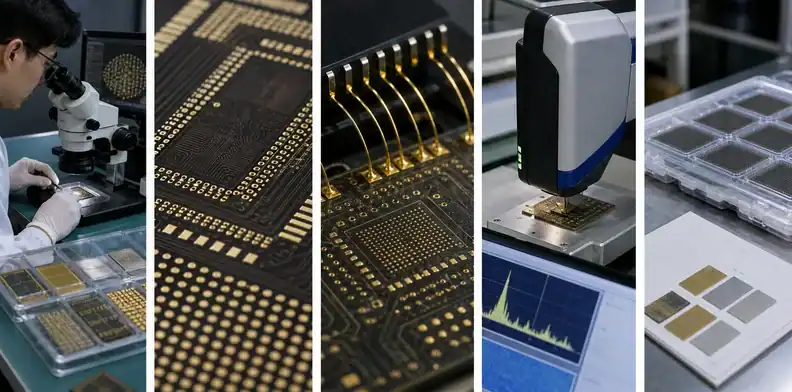
Choose ENEPIG when the BT substrate has wire-bond pads or must support both soldering and bonding. Choose ENIG when the BT substrate is solder-only and the customer accepts ENIG for the package. IPC-4552 covers ENIG deposit requirements, and IPC-4556 covers ENEPIG deposit requirements for applications including soldering and wire bonding. Decision anchor: Wire bonding points to ENEPIG; solder-only BT can often use ENIG when process evidence is acceptable.
Why ENEPIG is preferred for wire bonding
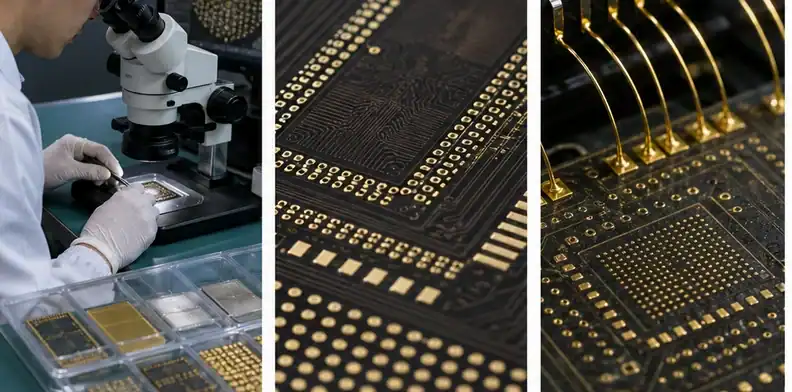
ENEPIG is preferred for wire bonding because the palladium layer acts as a barrier and supports a surface suitable for gold wire bonding while still allowing soldering. IPC’s ENEPIG table-of-contents document states that the specification covers ENEPIG deposit thicknesses for soldering, wire bonding, and contact finish applications. Bonding rule: ENEPIG is the normal quote baseline when BT pads must accept gold wire bonding.
When ENIG is enough for BT
ENIG is enough for many BT substrates that only need soldering. BGA balls, LGA pads, SMT passives, and module attachment can often use ENIG when solderability, storage, and nickel corrosion control are acceptable. For package context, see selecting BT for memory. Cost call: ENIG is a good solder-only finish choice when the buyer does not need bondable pads.
How black pad risk factors into the decision
Black pad risk is one reason buyers ask more questions about ENIG. The issue is linked to nickel corrosion and poor solder joint reliability when the ENIG process is not controlled. QueenEMS’ ENIG and black pad prevention article covers that subject in depth. Risk rule: If ENIG is selected for BT, request thickness and process evidence instead of relying on the finish name.
Where OSP fits for cost-sensitive BT
OSP can fit cost-sensitive BT builds when the substrate is solder-only, has a short storage window, and does not require wire bonding or long shelf life. It may reduce finish cost, but it also changes handling, storage, and assembly timing. Finish boundary: OSP belongs in the conversation only when the BT build is solder-only and the storage window is controlled.
How ENIG and ENEPIG compare on cost and evidence
ENEPIG usually costs more than ENIG because it adds palladium chemistry, additional process control, and measurement requirements. The cost premium can be justified when it avoids wire-bond risk, mixed-attach uncertainty, or customer rejection. For RFQ structure, use surface finish in your RFQ and the BT manufacturing process. Price rule: The cheaper finish is only cheaper when it supports the required attach method without extra approval risk.
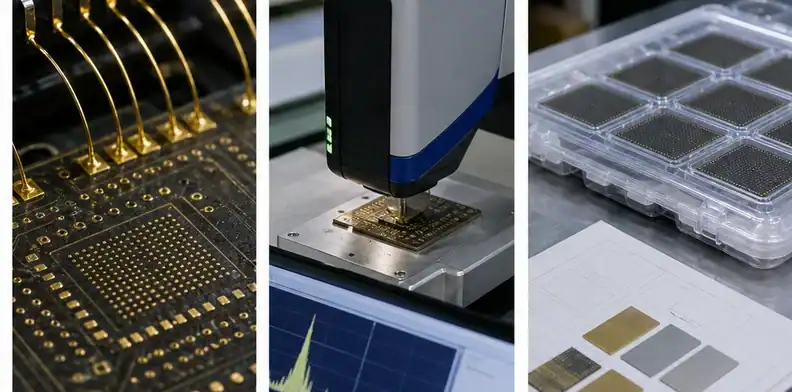
What to specify in a BT finish RFQ
Specify the finish type, pad function, finish standard, thickness requirement if controlled, bonding or soldering process, shelf-life expectation, packaging condition, and inspection evidence. Mark wire-bond pads separately from solder pads when the package uses both. Keep the finish note linked to pad function so a later quote does not silently treat bond fingers, solder pads, and probe pads as equivalent.
Extra buyer notes for finish evidence
Finish evidence should be tied to pad function. A thickness report on a test coupon may be useful, but it does not automatically prove that every critical bond finger, BGA pad, or contact pad is suitable. Ask where the measurement is taken and whether the supplier can provide evidence for the pad type that carries the risk.
Shelf life is another hidden finish decision. ENIG and ENEPIG can support longer storage than many organic solderability coatings, but the actual shelf life depends on packaging, storage condition, contamination control, and customer acceptance. If the substrate will travel internationally or wait for component availability, finish choice should include the storage plan.
Wire-bond validation should involve the assembly owner. The substrate supplier can provide ENEPIG thickness and cleanliness evidence, but bonding force, wire type, plasma cleaning, and pull test belong to the assembly process. A buyer should not treat a finish certificate as the same thing as a qualified bond process.
When cost pressure is high, ask for two finish paths only if the design can support both. A solder-only module may compare ENIG and OSP. A wire-bond package should not treat OSP as a real alternate. Keeping the alternates technically valid prevents a low quote from wasting engineering time.
Finish thickness should be stated carefully. Some buyers copy a general PCB finish note into a package-substrate drawing, then discover that the bonding or soldering process expected a different range. If a customer drawing controls nickel, palladium, or gold thickness, send that requirement with the RFQ and ask the supplier to confirm the measurement method.
Mixed-function pads deserve a map. A BT substrate may include solder pads, wire-bond pads, probe pads, and connector or contact pads in one design. The finish that works for one pad type may be unnecessary or risky for another. Marking pad function helps the supplier decide whether one finish is enough or whether the package needs a more specific finish plan.
Cleaning and handling can damage the value of a good finish. Fingerprints, packaging residue, poor storage, or uncontrolled bake can affect solderability and bonding. For overseas shipments, ask how substrates are packed, labeled, and protected before assembly. Finish choice and logistics are linked.
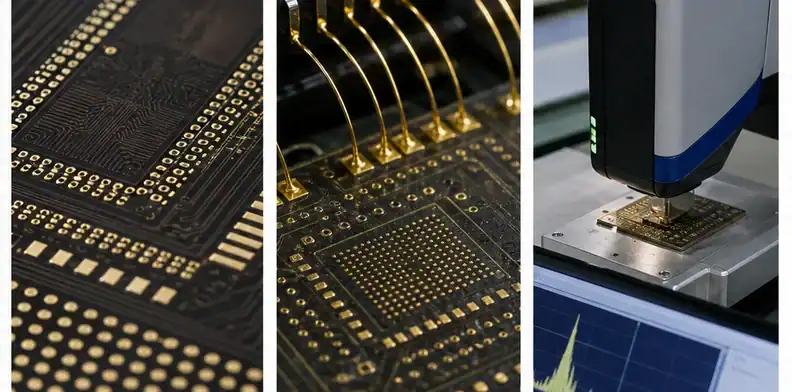
Incoming inspection should not rely only on color or surface appearance. For ENIG and ENEPIG, ask what thickness or process certificate is available and whether the supplier can support XRF measurement or other evidence. For bondable pads, the assembly owner may also request bond pull or shear data after process validation.
The finish decision should be frozen before the first article is accepted. Changing ENIG to ENEPIG later can affect price, lead time, pad behavior, and customer documents. Changing ENEPIG to ENIG can remove bondability margin. Either direction should be treated as an engineering change, not a purchasing shortcut.
Finish decision examples for BT packages
A wire-bond memory or sensor package should normally begin with ENEPIG unless the assembly owner has validated another bondable surface. The palladium layer helps support bonding and protects the nickel interface, which is why ENEPIG is common in package-substrate discussions. The RFQ should still state wire type, pad function, and any customer finish requirement.
A solder-only BGA or LGA carrier often starts with ENIG because it gives a flat solderable surface at lower cost than ENEPIG. In that case, the buyer should focus on ENIG process control, nickel condition, gold thickness, storage, and black-pad prevention. The supplier should confirm that the finish is intended for soldering, not bonding.
A cost-sensitive module may consider OSP when storage is short and assembly happens quickly. OSP is not a good alternate for wire-bond pads and may not fit long overseas logistics. If OSP is quoted, ask the supplier to state shelf life, packaging, and assembler acceptance.
Mixed-attach packages need the clearest drawing notes. Some pads may be wire bonded, others soldered, and others probed or used as contacts. If all pads are treated the same in the drawing, the supplier may choose a finish that is acceptable for one operation and weak for another.
The final quote should include finish standard and inspection evidence. For ENIG, IPC-4552 is a relevant reference. For ENEPIG, IPC-4556 is the key specification family. The buyer should ask whether the supplier reports thickness by XRF or another method and whether the evidence is included or optional.
Finish wording that prevents wrong quotes
A BT drawing should not only say ENIG or ENEPIG in a corner note. It should identify pad functions: solder-ball pads, wire-bond fingers, test pads, connector contacts, or mixed-use pads. The finish decision follows those functions.
For ENEPIG, ask whether the quoted process is intended for wire bonding and soldering or only for soldering. The specification family supports both, but the actual process and cleanliness controls still have to match the assembly owner’s need.
For ENIG, ask how the supplier controls nickel corrosion and thickness. A low-cost ENIG quote can be fine for solder-only pads, but it needs process evidence when the package has small lands or high reliability expectations.
For OSP, ask whether the assembler accepts it and whether the shipping schedule fits the shelf-life window. OSP can be a sensible cost route in fast solder-only builds, but it becomes risky when parts wait in storage before assembly.
The best supplier answer ties finish to the assembly method. That makes the quote easier to approve and prevents late-stage arguments between fabrication, assembly, and purchasing.
What to check before approving the finish
Before approving ENIG or ENEPIG, check whether the finish is named in the customer drawing, package assembly instruction, or supplier recommendation. If those three do not match, pause the quote and resolve the conflict. A finish conflict discovered after fabrication usually means delay, scrap, or assembly trial work.
The buyer should also ask whether finish thickness evidence is included in the standard quote. Some suppliers include it for package substrates; others treat it as an extra report. Knowing this upfront prevents a shipment from arriving without the proof the assembler expected.
For wire-bond packages, request confirmation from the bonding owner before the substrate order is released. ENEPIG is a strong default, but the actual process still depends on wire material, bond tool, cleaning, and pull-test criteria. The finish decision should support that process, not replace it.
For solder-only modules, avoid paying for ENEPIG only because it sounds safer. ENIG may be the cleaner choice when the supplier controls black-pad risk and the assembler accepts the finish. The right finish is the one that matches the joining method and evidence requirement.
The final finish approval should be written into the released drawing or purchase package. Email approval alone is easy to lose when the order repeats. State whether ENIG, ENEPIG, or OSP is approved, which pads the finish applies to, and what evidence the supplier must provide. That short note prevents a later buyer from switching finish only to reduce price.
For repeat orders, keep finish and storage requirements attached to the part number. Package substrates may wait for die, components, or customer release. If the storage window changes, the finish decision may need review even when the copper design is unchanged.
A final receiving check is useful when finish drives assembly yield. Receiving can confirm label, finish type, shelf-life date, and whether the supplier included the promised thickness evidence. That check is small, but it catches mismatches before substrates reach bonding or soldering.
If the buyer is unsure, the safest question is simple: which joining process will touch this pad first? The answer usually decides whether solderability, bondability, contact wear, or storage should control the finish.
How to compare BT finish quotes
Compare BT finish quotes by pad function, attachment method, standard reference, thickness evidence, and storage condition. ENEPIG and ENIG quotes are only comparable when both support the same package requirement.
How to lock the finish choice for repeat orders
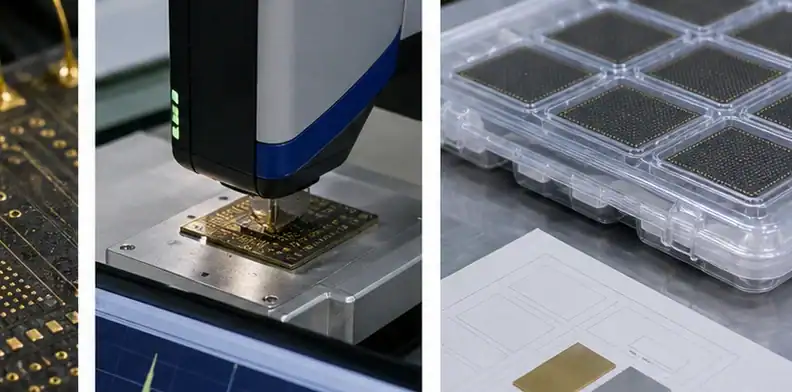
Lock the finish choice by tying ENIG, ENEPIG, or OSP to pad function and storage condition in the released drawing. A repeat quote should not switch finish to reduce price unless engineering confirms the same bonding, soldering, and shelf-life assumptions still apply. Repeat order rule: Treat a finish substitution as an engineering decision when bonding, soldering, or shelf life controls yield.
Finish decisions move faster when the finish callout, pad-function map, bonding or soldering process, storage window, thickness evidence request, and lot quantity arrive through QueenEMS contact. QueenEMS can compare BT finish selection support options without treating ENIG, ENEPIG, and OSP as interchangeable labels.
FAQ
ENIG or ENEPIG for BT substrates?
Use ENEPIG for wire bonding or mixed soldering and bonding. Use ENIG for many solder-only BT builds when the customer accepts it.
Is ENIG acceptable for BGA balls?
Yes, ENIG is commonly acceptable for solder-ball or solder-only attachment when the process is controlled and black-pad risk is managed.
Why does ENEPIG cost more?
ENEPIG adds palladium and additional process control, which increases chemistry, inspection, and supplier cost.
Can OSP be used on BT?
OSP can be used in selected solder-only, short-storage cases, but it is not a universal package finish.
Sources
- Mitsubishi Gas Chemical, Low-CTE BT resin laminate lineup
- Global Electronics Association, IPC-6921 organic IC substrate standard
Written by the QueenEMS Engineering Team
Upload your files today · Free DFM check before production · Ship worldwide
Get your PCB prototypes in as fast as 24 hours. We handle FR4, Rogers, and Flex up to 60 layers — free prototypes for 2–4 layer boards, no minimum order.
Just upload your Gerber + BOM — we source every part, assemble, and inspect (AOI + X‑Ray) so you don't have to chase suppliers. Boards ship in as fast as 24 hours.