Quick Answer: ENEPIG PCB finish adds palladium between nickel and gold, making it a candidate when one board needs both soldering and a qualified wire-bond route. ENIG is often simpler for solder-only designs, but neither finish should be chosen by name alone. Compare the intended pads, bond process, finish-layer evidence, supplier capability and cost before approving an RFQ.
ENEPIG PCB finish is often selected because one board must support soldering, bonding, or contact requirements that a simpler finish may not cover. The risk is not only finish cost; it is whether the supplier returns evidence that the nickel, palladium, and gold deposit is controlled for the actual application. This page is written for RFQ and release review. It does not claim one finish is always better; it helps buyers define why ENEPIG is required and how that requirement should be verified.
Table of Contents
- When does ENEPIG need its own RFQ note?
- What deposit information should the supplier return?
- How should XRF evidence be read?
- Where do soldering and bonding requirements diverge?
- How should ENEPIG substitutions be controlled?
- What shipment documents should be included?
- How should buyers compare ENEPIG quotes?
- What should QueenEMS receive for ENEPIG review?
- ENIG vs ENEPIG: when is the palladium layer worth it?
When does ENEPIG need its own RFQ note?
ENEPIG needs its own RFQ note when the finish is tied to bonding, solderability, contact reliability, storage, customer specification, or mixed assembly requirements. A short finish name is too easy to misread when the supplier must decide deposit control and report scope.
Use ENIG versus hard gold finish selection for the broader finish decision. This page starts after ENEPIG is the intended finish and asks what evidence proves it.
Finish rule: state the ENEPIG use case before comparing finish price.
What deposit information should the supplier return?
The supplier should return the finish standard or customer requirement, controlled areas, intended measurement approach, and evidence format. The quote should make clear that ENEPIG is a nickel-palladium-gold system, not a generic gold finish.
A buyer does not need to write the plating bath recipe. The buyer does need to know whether the supplier can provide lot-level thickness evidence and whether the report connects to the controlled pad or bonding area.
Quote signal: the supplier response should name ENEPIG deposit evidence, not only confirm the finish label.
| Feature group | ENEPIG reason | RFQ control |
|---|---|---|
| Wire-bond pads | Bondability and finish consistency | Mark the exact pad set on the drawing |
| Solder pads | Solderability and shelf-life decision | Separate from bond-pad evidence when needed |
| Test or exposed pads | Contact reliability or customer requirement | State whether evidence is required or optional |
How should XRF evidence be read?
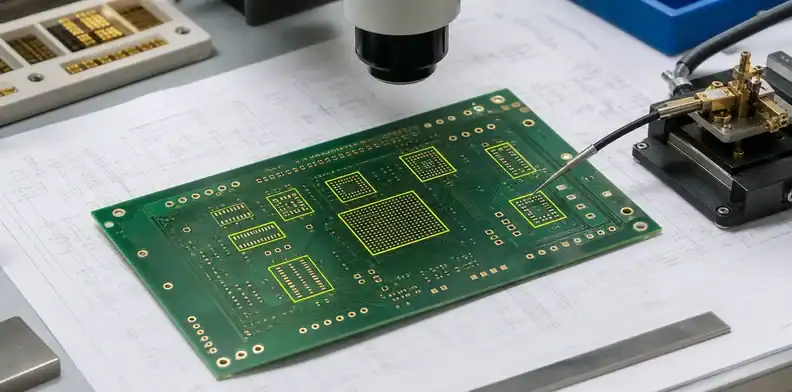
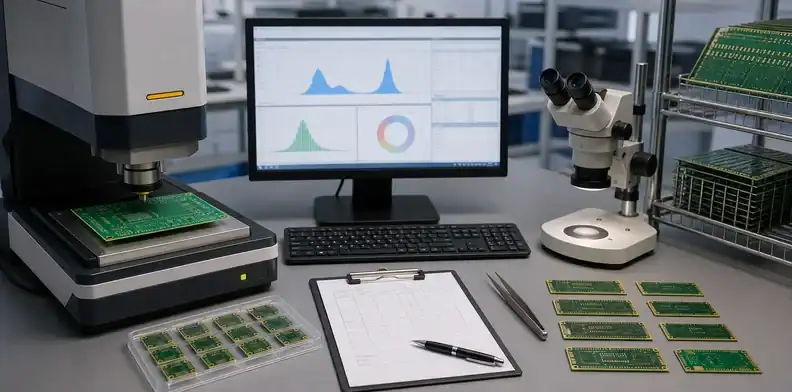
XRF evidence is useful when the measured locations and acceptance basis are clear. A report without pad location, lot identity, or measurement rule is weak proof for a controlled finish.
The broader surface finish thickness requirements article explains finish reporting. For ENEPIG, ask whether the report separates nickel, palladium, and gold and whether the measured area represents the application feature.
Proof rule: finish evidence should connect the measured deposit to the board feature that needs ENEPIG.
Where do soldering and bonding requirements diverge?
Soldering and bonding can drive different finish concerns. A board intended only for soldering may be judged by solderability and finish thickness evidence, while a wire-bonding pad may need tighter attention to deposit consistency, cleanliness, and customer acceptance.
If solderability is the only question, connect the RFQ to PCB solderability test for bare boards. If bonding is involved, make the bonding area and customer requirement visible before release.
Application call: do not use one ENEPIG evidence rule for every pad when bonding and soldering needs differ.
How should ENEPIG substitutions be controlled?
A supplier may propose ENIG, hard gold, soft gold, OSP, or another finish for cost or lead time. That proposal should be treated as an engineering change when ENEPIG was selected for bonding, contact behavior, customer specification, or shelf-life reasons.
Record the decision with PCB supplier stackup signoff or another release note so purchasing does not approve a finish substitution without engineering input.
Substitution boundary: ENEPIG replacement needs approval from the owner of the finish requirement.
| Report item | What it proves | Buyer check |
|---|---|---|
| Nickel layer result | Base finish build is within supplier control | Lot identity should match the order |
| Palladium layer result | ENEPIG-specific barrier evidence | Confirm the measured features are the controlled pads |
| Gold layer result | Final surface presence and release basis | Keep with the revision and shipment record |
What shipment documents should be included?
Shipment documents can include certificate of conformance, finish thickness report, solderability or customer-required test record, and lot traceability. The buyer should define which documents are needed before the supplier quotes the job.
Use PCB quality documents before shipment for the general document package. ENEPIG adds finish-specific evidence when the finish is part of product acceptance.
Document rule: do not ask for ENEPIG evidence after shipment if it was not part of the quotation package.
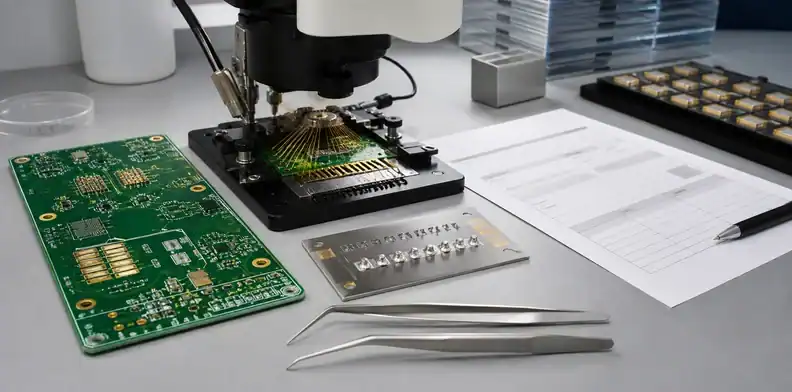
How should buyers compare ENEPIG quotes?
Compare ENEPIG quotes by finish scope, measured layers, report format, controlled features, substitution rules, and lead time. A lower price may omit report detail or assume a different finish where the buyer expected ENEPIG.
Ask each supplier to identify what finish evidence is included and what costs extra. That keeps the comparison technical rather than only commercial.
Price rule: compare finish evidence before deciding one ENEPIG quote is cheaper.
What should QueenEMS receive for ENEPIG review?
QueenEMS should receive Gerber or ODB++ files, finish note, controlled pad list, bonding or soldering requirement, customer specification if applicable, quantity, and required report format. Send the file set through the QueenEMS contact page so the review can separate finish-selection questions, deposit evidence, substitution risk, and shipment-document gaps.
The strongest RFQ makes the ENEPIG requirement traceable from drawing note to supplier report, so the finish does not become an after-delivery argument.
RFQ close: quote ENEPIG as a controlled evidence requirement, not only as a surface-finish word.
ENEPIG evidence should stay with the product revision because finish decisions are easy to lose during repeat ordering. The accepted record should state why ENEPIG was chosen, which pads or surfaces depend on it, what report is required, and who may approve a substitution. Without that record, purchasing may later treat the finish as a negotiable cost line.
A useful RFQ sentence is: “Quote ENEPIG PCB finish for the controlled soldering or bonding areas shown in the released data. Provide lot-level finish evidence separating nickel, palladium, and gold where required, identify measured locations or representative rule, and report any proposed finish substitution before CAM release.” This tells the supplier that ENEPIG is not a casual finish label.
The supplier should explain whether ENEPIG applies to the entire board or only selected features. Selective finish decisions can affect masking, cost, lead time, and evidence. If the board also has hard-gold fingers or another finish, the quote should clearly separate areas so the buyer does not receive one blended finish assumption.
For bonding applications, ask the product owner what evidence the customer expects. Solderability evidence alone may not satisfy a bonding requirement. The RFQ should identify bonding pads, pad size constraints, cleanliness expectations, and whether the customer requires a specific standard or report format.
For soldering-only applications, the buyer may not need the same evidence burden. ENEPIG can still be requested for shelf life, mixed assembly, or customer specification, but the report should match the acceptance risk. A broad document package that no one reads is less useful than a focused finish report tied to the controlled pad group.
Substitution control is the most common hidden risk. ENIG, hard gold, soft gold, OSP, immersion silver, or HASL may all appear in supplier alternatives, but they are not interchangeable when the design needs ENEPIG for a specific reason. A supplier may have a good reason to propose a change, but engineering should approve it with the application in mind.
Receiving inspection should compare the shipment documents against the purchase requirement. If ENEPIG evidence was required, the receiving file should include the report and the report should reference the lot or order. If the report is missing, the issue should be resolved before the boards are released to assembly or customer shipment.
For repeat builds, keep a short finish baseline: finish name, controlled areas, report type, measurement rule, customer requirement, accepted alternates, and approval owner. That baseline lets purchasing quote the next lot without rediscovering why ENEPIG was specified in the first place.
The strongest ENEPIG RFQ is therefore a traceable finish decision. It connects drawing note, supplier quote, finish report, and receiving acceptance so the finish cannot drift silently between prototype and production.
ENEPIG should also be connected to assembly sequence. A board used for soldering, bonding, and later coating may need different handling from a board used only for SMT. The RFQ should say whether the finish must support wire bonding, soldering, pressure contact, long storage, or customer-mandated documentation. That prevents the supplier from pricing the finish without understanding the acceptance path.
For customer-driven ENEPIG requirements, attach the customer finish note or specification reference when allowed. If the requirement is confidential, summarize the controlled fields: finish type, report requirement, pad group, and approval owner. The supplier does not need the customer’s commercial data, but they need the finish boundary.
The buyer should also decide how to handle partial evidence. A supplier may provide a certificate but not measured values, or measured values without clear location. Decide before production whether that evidence is acceptable. If the order requires a measured deposit report, the purchase record should say so clearly.
ENEPIG cost comparison can be misleading when report scope differs. One supplier may include finish evidence, another may quote only the process, and a third may recommend ENIG. A quote-comparison note should state whether each supplier is quoting the same finish, same evidence, and same controlled pad scope.
If boards are stored before assembly, keep the finish evidence with the storage record. Surface finish, packaging, humidity control, and shelf-life decisions meet at receiving. If a customer later asks why ENEPIG was accepted, the buyer should be able to show both the supplier report and the storage condition.
For recurring production, review finish data trends only when the supplier provides comparable reports. Do not overreact to numbers from different measurement locations or methods. The goal is not to run the plating line; the goal is to catch a missing, substituted, or unsupported finish before it reaches the customer.
If ENEPIG is selected for a customer requirement, the buyer should also control how the supplier writes the certificate. A certificate that only repeats the finish name may not satisfy a customer who expects measured deposit evidence. Ask whether the certificate, XRF report, and traceability record are separate documents or one combined package.
For bonding programs, include packaging and handling expectations. A finish can meet thickness requirements and still be compromised by contamination or poor handling before bonding. If the bonding surface is critical, ask the supplier to identify how finished boards are protected after final inspection.
For cost review, do not remove ENEPIG only because another finish is cheaper. First identify the function ENEPIG was serving. If the function was only general solderability, substitution may be possible. If the function was bonding, customer approval, or mixed-contact performance, the change should trigger engineering review and possibly customer approval.
A final ENEPIG review should also check whether all exposed pads really need the same evidence. Bonding pads, solder pads, test pads, and cosmetic exposed copper may not share the same acceptance burden. Separating the pad groups can reduce cost and make the report easier to read.
If the customer requires traceability, connect the finish report to the board lot and shipment. A standalone plating report without order identity may be difficult to defend later. The buyer should know whether the supplier’s document names the order, date, lot, or panel batch.
For engineering changes, record whether ENEPIG is tied to a part number revision. If the finish is changed, the revision may need to change too. That prevents a future purchase order from using the same revision while silently buying a different surface finish.
If ENEPIG is used only on selected features, require the quote to show how those features are identified. A board with ENEPIG bond pads and another finish elsewhere can become confusing if the fabricator, assembler, and buyer use different feature names. A small marked drawing solves that problem faster than a long email chain.
The buyer should also decide whether finish evidence is reviewed by purchasing, engineering, quality, or the customer. If no owner is named, the report may arrive and sit unread. Assigning the owner before quotation makes ENEPIG evidence a release control instead of a folder attachment.
ENEPIG also needs a clean boundary when assembly and wire bonding are handled by different parties. The fabricator may provide finish evidence, the assembler may own solderability feedback, and the bonding supplier may own bond pull or process qualification. The buyer should decide which evidence is needed before PCB release and which evidence belongs to the downstream assembly or package qualification step.
The RFQ should avoid a vague note such as “ENEPIG where required.” Marked features, controlled finish callout, and the reason for the finish make the supplier’s review sharper. If the finish is chosen for wire bonding, say so. If it is chosen for solderability plus shelf-life control, say that instead. The same coating name can lead to different evidence expectations depending on the real use.
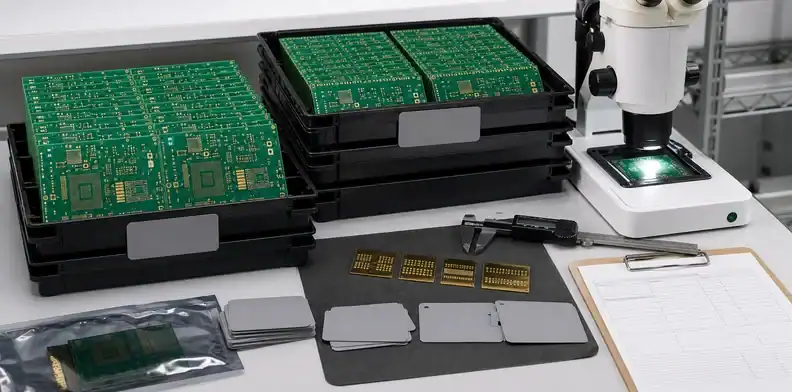
ENIG vs ENEPIG: when is the palladium layer worth it?
ENIG builds an electroless nickel layer and an immersion-gold surface. ENEPIG adds an electroless palladium layer between nickel and gold. Both can provide a flat solderable PCB finish, but the extra palladium is the key reason to evaluate ENEPIG for designs that must combine soldering with a qualified wire-bond process. Do not assume that every ENIG process is wire-bondable or that every ENEPIG quote includes the same bondability evidence.
| Requirement | ENIG decision | ENEPIG decision |
|---|---|---|
| SMT soldering only | Often a simpler finish to evaluate | May add cost without a needed function |
| Soldering plus wire bonding | Needs explicit process qualification; do not infer from the name | Strong candidate when the specified bond wire and process are qualified |
| Finish thickness evidence | Request nickel and gold results on controlled features | Request nickel, palladium and gold results on controlled features |
| Substitution | Cannot silently replace an ENEPIG callout | Cannot silently replace ENIG if assembly, bond or cost assumptions change |
| Cost | Usually fewer deposited layers | Extra chemistry and control require a separate quote |
Ask the supplier to identify which pads are soldered, bonded, or used as contacts; name the wire material and bonding process if applicable; and return the finish stack, measurement method, lot traceability and acceptance basis. Confirm the actual fabricator and assembler capability instead of turning a generic published thickness range into an unverified QueenEMS promise. Electroplated hard gold remains a different selection for repeated mating contacts.
FAQ
Is ENEPIG always better than ENIG?
No. ENEPIG can be useful for bonding or mixed requirements, but ENIG may be enough for many soldering-only boards. The finish should follow the application and evidence requirement.
Should every ENEPIG order include an XRF report?
Ask for one when finish thickness is part of customer acceptance, bonding, contact reliability, or shipment evidence. For lower-risk jobs, define the document package before quotation instead of adding it after shipment.
Can ENEPIG be changed to hard gold?
Only after engineering approves the finish function, wear requirement, and evidence change. Hard gold may solve contact wear but does not automatically replace ENEPIG for bonding or soldering needs.
Sources
- IPC, IPC-4556A Specification for ENEPIG Plating for Printed Boards
- IPC, IPC-4552B Specification for Electroless Nickel/Immersion Gold
- Technic Inc., ENIG and ENEPIG fabrication and assembly processes
Written by the QueenEMS Engineering Team
Upload your files today · Free DFM check before production · Ship worldwide
Get your PCB prototypes in as fast as 24 hours. We handle FR4, Rogers, and hybrid boards up to 40 layers in volume production, with advanced builds subject to engineering review — free prototypes for 2–4 layer FR-4 boards, no minimum order.
Just upload your Gerber + BOM — we source every part, assemble, and inspect (AOI + X‑Ray) so you don't have to chase suppliers. Boards ship in as fast as 24 hours.