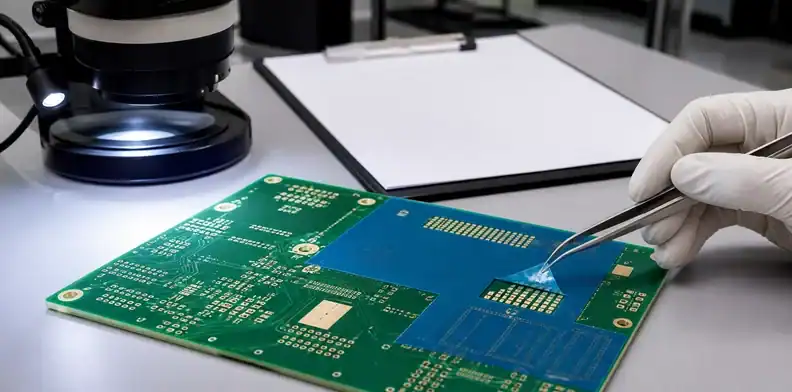
Quick Answer: Peelable solder mask acceptance should define where temporary protection is applied, when it is removed, what residue or pad damage is unacceptable, and what inspection evidence closes the lot. Buyers should treat peelable mask as a temporary process feature, not as ordinary solder mask.
Peelable solder mask can protect pads, holes, or contacts during soldering or processing, but the acceptance risk appears when it is removed. Residue, lifted finish, torn mask edges, trapped contamination, and pad damage can turn a useful process aid into a receiving dispute. This article focuses on removal acceptance. The older requirements page remains the place for drawing setup; here the question is how the buyer proves the temporary material did not damage the board.
Table of Contents
- What does peelable mask acceptance need to say?
- Which features are most sensitive to residue?
- How should removal timing be controlled?
- When should cleanliness testing be considered?
- What inspection evidence should be requested?
- How should pad or finish damage be handled?
- How should supplier alternatives be approved?
- What should QueenEMS receive for peelable-mask review?
What does peelable mask acceptance need to say?
Acceptance needs to say where peelable mask is applied, why it is used, who removes it, when it is removed, and what condition must remain afterward. Without those details, a supplier can meet the application note while leaving the buyer with removal risk.
Start with peelable solder mask requirements for the base drawing note. This article adds the evidence needed when removal condition affects shipment or assembly.
Acceptance rule: define the board condition after peelable mask removal, not only the protected area before processing.
Which features are most sensitive to residue?
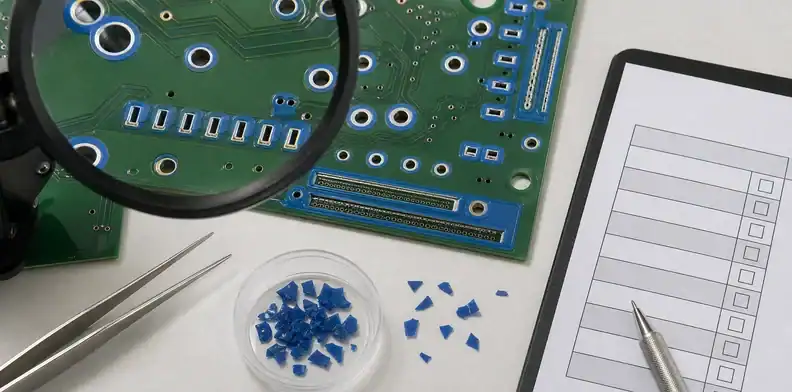
Residue matters most around solder pads, test pads, contact fingers, press-fit holes, connectors, fine-pitch pads, and areas later covered by coating or adhesive. A small residue outside a functional area may not carry the same risk as residue on a contact surface.
Pair the review with PCB solder mask opening requirements when peelable material sits near exposed copper or fine openings.
Residue call: inspect the protected feature that must function after removal.
| Protected feature | Why it may need peelable mask | RFQ control |
|---|---|---|
| Connector pads | Keeps process contamination away | Mark the coverage edge clearly |
| Through holes | Protects selected solder or press-fit areas | Ask how trapped material is checked |
| Fixture contacts | Keeps temporary contact surfaces clean | Define removal timing before assembly |
How should removal timing be controlled?
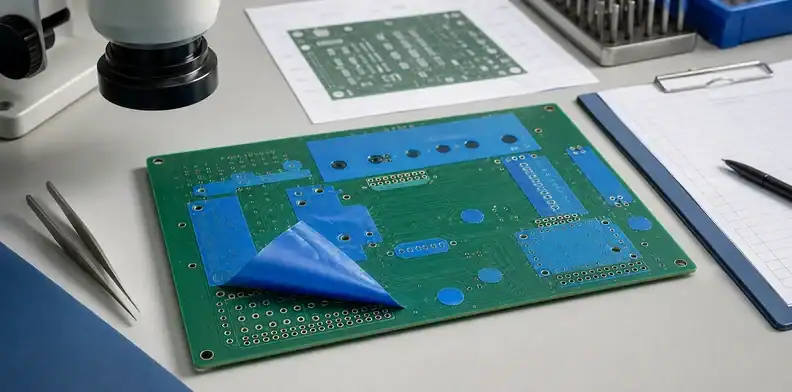
Removal timing should be linked to the process stage. Some peelable mask is removed by the board supplier before shipment; some remains for assembly; some protects areas during wave solder and is removed afterward. Each route changes evidence ownership.
If QueenEMS or another assembler removes the material, the fabrication quote should still define the temporary mask type, coverage, and expected removal condition. Otherwise assembly inherits a process feature it did not approve.
Ownership rule: state who removes peelable mask before assigning acceptance responsibility.
When should cleanliness testing be considered?
Cleanliness testing should be considered when residue or ionic contamination could affect leakage, high impedance circuits, coating adhesion, or customer acceptance. It is not always required, but the RFQ should identify whether the protected area needs extra cleanliness evidence.
Use PCB ionic cleanliness testing for the test decision. Peelable mask acceptance should state whether visual inspection is enough or whether residue-sensitive products need testing.
Cleanliness signal: request test evidence only when residue risk affects the product, not as a generic paperwork demand.
What inspection evidence should be requested?
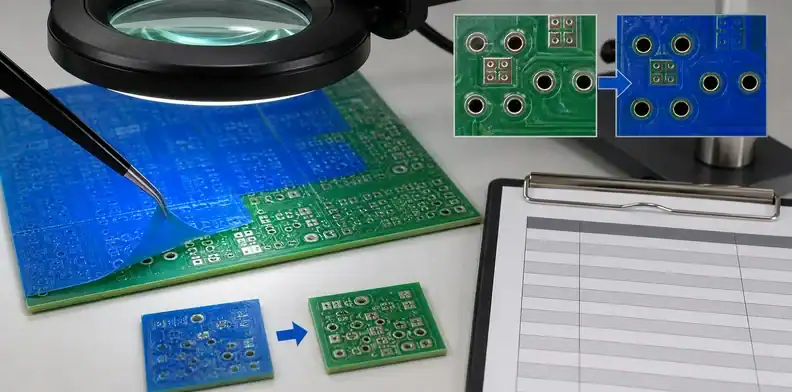
Evidence can include first-article photos before and after removal, visual inspection criteria, residue check at named features, and quality documents showing the temporary protection was applied as agreed. The evidence should match the protected area.
For the general outgoing package, use PCB quality documents before shipment. Peelable mask adds a feature-specific before/after expectation when removal condition matters.
Proof rule: ask for before-and-after evidence when peelable mask is critical to acceptance.
| Check point | Failure risk | Acceptance evidence |
|---|---|---|
| Residue on pads | Solderability or contact issue | After-removal photo or visual note |
| Torn material in holes | Assembly obstruction | Angled inspection or first-article sample |
| Missing coverage | Unprotected process exposure | Before-removal coverage photo |
How should pad or finish damage be handled?
Pad or finish damage should be treated as a functional issue when it affects solderability, contact reliability, bonding, or appearance criteria. The buyer should define whether lifted finish, scratched pads, exposed copper, or torn solder mask edges are rejectable.
Receiving can follow PCB incoming inspection but should add a peelable-mask removal check at the protected features.
Damage rule: judge removal damage at the protected feature, not only by overall board appearance.
How should supplier alternatives be approved?
Suppliers may propose a different peelable material, coverage shape, curing condition, or removal route. That can be acceptable when the post-removal condition remains controlled, but the change should be visible before production.
Ask for a small sample or first-article confirmation when a new material or coverage pattern protects a sensitive area. This is faster than discovering residue after the entire lot arrives.
Approval boundary: material or coverage changes need review when removal condition is part of acceptance.
What should QueenEMS receive for peelable-mask review?
QueenEMS should receive fabrication data, peelable-mask layer or marked drawing, reason for temporary protection, removal owner, sensitive features, cleanliness requirement, and any previous residue photos. Send the package through the QueenEMS contact page so the review can identify removal risks, evidence needs, and assembly ownership before quotation.
The useful output is a clear acceptance plan: where the temporary material goes, when it leaves, and what the board must look like afterward.
RFQ close: quote peelable mask together with removal acceptance, not as a loose process note.
A peelable-mask record should state why the material was applied, who removes it, what the board must look like afterward, and what evidence proves the protected feature. That record matters because temporary material can be handled by fabrication, assembly, or receiving depending on the order path.
A practical RFQ sentence is: “Peelable solder mask is temporary protection on the marked features. Supplier must confirm coverage, removal owner, expected post-removal surface condition, residue criteria, and any required before/after evidence before production release.” This wording prevents the feature from being treated as ordinary permanent solder mask.
The buyer should identify the protected function. A wave-solder protection area, a test pad, a contact surface, a connector keepout, and a coating-free region have different post-removal risks. If the reason is not stated, the supplier may apply material correctly but fail the actual acceptance condition.
Removal ownership should be explicit. If the supplier removes the mask before shipment, receiving should inspect the exposed feature. If the assembler removes it after soldering, the assembly work instruction should mention the material and the acceptance rule. If the customer removes it, packaging and instructions may matter.
Residue criteria should be realistic. Some features may tolerate minor nonfunctional residue; others cannot. High-impedance circuits, contact pads, coating areas, bonding surfaces, and solderable pads need clearer limits. The RFQ should define which areas are sensitive instead of demanding perfect residue-free surfaces everywhere.
Cleanliness evidence should be requested only when it answers a real risk. If the protected feature later carries high impedance, coating, or safety-related insulation, ionic cleanliness or another cleanliness check may be worth discussing. For a simple temporary solder shield, visual evidence may be enough.
Pad damage and finish damage should be judged at the protected feature. Scratches outside a keepout may be cosmetic, while lifted finish on a protected pad can block assembly. Receiving inspection should know the difference before rejecting or accepting a lot.
Supplier alternatives should be controlled. A different peelable material, coverage shape, cure profile, or removal sequence can change residue and removal force. Ask for a first-article check when the feature is new, the product is sensitive, or the supplier changes material from the previous lot.
For repeat orders, keep photos or a simple acceptance note. The next buyer should see where peelable mask was applied, who removed it, what evidence was accepted, and what defect would stop release. That keeps a temporary process aid from becoming a recurring hidden risk.
The RFQ should also define whether peelable mask is allowed near labels, fiducials, test points, or optical inspection features. Temporary material that protects one region can block another operation if the coverage is not controlled. Ask the supplier to mark the coverage when the feature is close to inspection or assembly references.
If the mask remains through assembly, the assembler needs a removal instruction. The instruction should say when to remove it, what tool or handling method is allowed, and what surface condition is acceptable after removal. A process aid that arrives without removal ownership can slow the line and create avoidable handling damage.
For prototype builds, a buyer may accept manual removal and photo evidence. For production, the same manual assumption may become a repeatability risk. Decide whether the process needs a first-article check, operator instruction, or post-removal inspection point before the job scales.
Peelable material can also affect packaging. If it remains on the board during shipment, packaging should prevent it from lifting, trapping debris, or sticking to separators. If it is removed before shipment, packaging should protect the newly exposed feature. The acceptance plan should match the chosen route.
When residue appears, the response should separate cause and disposition. Was the material wrong, the cure condition poor, the removal timing late, or the surface incompatible? The supplier may need to provide a re-cleaning proposal, sample evidence, or a remake decision depending on the feature affected.
For repeat orders, make the record visual. A marked image showing coverage and a short note explaining removal ownership are often enough. That simple record prevents future buyers from deleting peelable mask as an apparent cost item without realizing what it protected.
If the protected feature will be soldered later, the buyer should define whether solderability evidence is needed after removal. Some jobs only need visual cleanliness, while others need confidence that the temporary material did not contaminate the solderable surface. Decide this before shipment, not after assembly finds poor wetting.
For supplier comparison, ask whether peelable mask is included in the unit price, charged as a process option, or treated as an engineering add-on. A quote that excludes application and removal evidence may look cheaper but leave the buyer with manual inspection risk.
For repeat lots, remove outdated coverage notes. Peelable mask is sometimes added during prototype troubleshooting and forgotten after the design changes. Before production, confirm the protected feature still needs temporary coverage and that the removal plan still matches the assembly route.
A final peelable-mask check should also ask how the feature is identified on the manufacturing drawing. If the coverage is only implied by a color layer name, the supplier may miss it during quote review. A clear note should say which layer or marked region represents temporary peelable material.
When the order includes both bare PCB fabrication and assembly, decide whether peelable mask belongs in the PCB quote, the PCBA work instruction, or both. The same temporary material can cross that boundary. If the assembler removes it, the assembly quote should include the labor and inspection assumption.
For customer complaints, the record should distinguish residue from board contamination. Residue from peelable material, flux residue, packaging debris, and handling contamination may look similar to a non-specialist. Keeping before/after photos and removal ownership makes later root-cause review much easier.
If peelable mask protects a through hole or connector area, ask whether removal can leave material inside the feature. Surface photos may not show trapped material in a hole, slot, or recess. For those features, the buyer may need a visual check from the correct angle or a first-article removal sample.
For production planning, decide whether the feature is a permanent drawing requirement or only a temporary support for one build stage. Temporary support should be reviewed at every revision change. Otherwise the buyer may keep paying for peelable mask after the design no longer needs it, or remove it while the assembly process still depends on it.
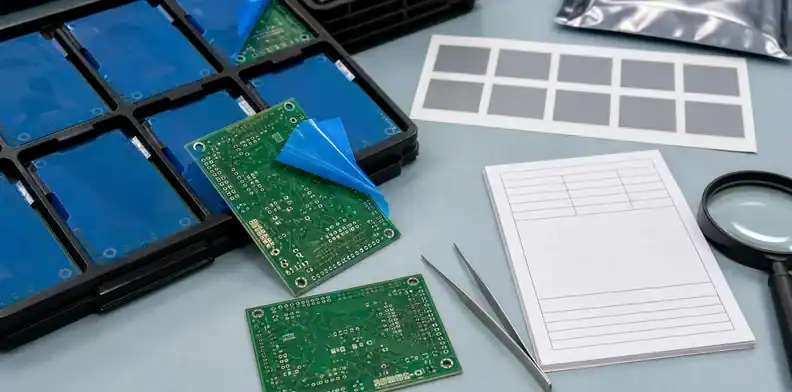
The practical acceptance issue is often not whether peelable mask was printed, but whether the protected feature is usable after removal. A connector pad, press-fit hole, fixture contact, or selective-solder keepout can fail because of residue, torn material, or missing coverage at one corner. The RFQ should therefore request before-removal and after-removal evidence when the protected area is functional.
Peelable mask also changes how buyer and supplier discuss rework. If the material lifts traces, traps residue, or contaminates a solderable surface, the buyer needs a clear disposition path: clean and re-inspect, scrap the board, or ask engineering for a deviation. That path should be agreed before production, especially when the assembly schedule leaves little time for sorting.
The buyer should also decide whether peelable mask is inspected by PCB quality, assembly quality, or incoming inspection. Each team sees a different moment in the process. PCB quality can confirm coverage before shipment, assembly can confirm removal before soldering, and incoming inspection can catch obvious shipping damage. Naming the owner avoids a common gap where every party assumes another team checked the temporary mask feature.
For repeat orders, keep one approved photo set with the drawing. The photo does not replace the drawing note, but it helps purchasing, CAM, and receiving recognize the expected coverage area. That visual reference is especially helpful when the peelable region is irregular or partly hidden by nearby pads.
FAQ
Is peelable solder mask the same as permanent solder mask?
No. Peelable mask is temporary protection and should be judged by both application and removal condition. Permanent solder mask is part of the finished board surface.
Should the supplier remove peelable mask before shipment?
That depends on why it is used. The RFQ should state whether fabrication, assembly, or the customer owns removal and what condition must remain afterward.
Is residue always a rejection?
No. It becomes a rejection when it affects a controlled feature, cleanliness rule, solderability, contact performance, coating adhesion, or customer criterion.
Sources
- IPC, IPC-2221C Generic Standard on Printed Board Design
- IPC, IPC-6012 Qualification and Performance Specification for Rigid Printed Boards
Written by the QueenEMS Engineering Team
Upload your files today · Free DFM check before production · Ship worldwide
Get your PCB prototypes in as fast as 24 hours. We handle FR4, Rogers, and hybrid boards up to 40 layers in volume production, with advanced builds subject to engineering review — free prototypes for 2–4 layer FR-4 boards, no minimum order.
Just upload your Gerber + BOM — we source every part, assemble, and inspect (AOI + X‑Ray) so you don't have to chase suppliers. Boards ship in as fast as 24 hours.