
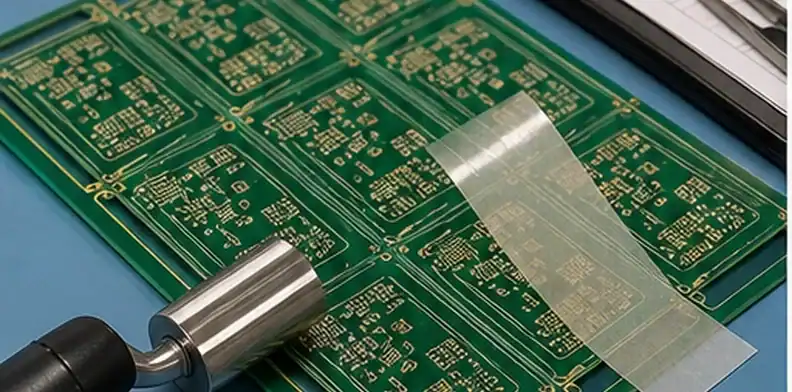
Quick Answer: PCB solder mask adhesion is acceptable only when the permanent mask stays bonded through the board’s expected fabrication, storage, and assembly handling. Buyers should connect mask material, surface preparation, cure, reflow exposure, tape or cross-hatch evidence, and lot disposition before releasing boards to assembly.
Key takeaways
- Adhesion review is different from checking solder mask bridge width or opening size.
- Poor cure, contamination, rough handling, and aggressive rework can make an otherwise good layout fail at assembly.
- The RFQ should say whether special adhesion evidence is required for the first lot or only for disputes.
- Receiving should separate cosmetic mask marks from adhesion defects that can expose copper or contaminate assembly.
PCB solder mask adhesion problems usually appear at the worst time: during incoming inspection, after a reflow trial, or when a fixture pulls tape, label, or residue across the board. The board may pass electrical test, yet loose mask near pads, vias, or routed edges can still create assembly and reliability concerns.
This article is not about mask dams, openings, or bridge geometry. For layout clearance issues, use the solder mask bridge requirements page. Here the buyer decision is whether the mask has been prepared, cured, handled, and documented well enough to release the lot.
Table of Contents
- Separate adhesion from mask geometry
- Check surface preparation and cure assumptions
- Decide which test evidence is needed
- Review high-risk areas before assembly
- Classify cosmetic marks versus release defects
- Control supplier changes to mask process
- Build a receiving response for suspect lots
- Send QueenEMS the mask-risk evidence
Separate adhesion from mask geometry
Solder mask geometry answers where the mask should be. Adhesion answers whether the mask stays attached after fabrication and assembly exposure. A board can have perfect openings and still fail adhesion if copper preparation, coating thickness, cure, or handling is wrong.
Keep those decisions separate in the RFQ. Geometry belongs to CAM review, pad clearance, tenting choice, and fine-pitch assembly. Adhesion belongs to material selection, surface cleanliness, cure, thermal exposure, and lot evidence. Mixing the two makes supplier replies vague because “mask issue” can mean several different problems.
Ask the supplier to state whether the quote assumes a standard permanent solder mask process or a special mask system. The buyer should also identify unusual assembly exposure such as multiple reflow cycles, selective solder, conformal coating, harsh cleaning, or label removal.
Acceptance rule: Treat PCB solder mask adhesion as a release condition only when the board’s assembly exposure has been named.
This boundary also keeps the article from competing with mask-opening pages. A fine-pitch solder bridge concern belongs in CAM spacing review, while a mask film that lifts during tape removal belongs in cure, surface preparation, and receiving disposition.
This separation also helps with supplier accountability. If the defect is a mask opening error, CAM and stencil clearance may be involved. If the defect is lifting, flaking, or soft coating, the discussion moves toward preparation, cure, storage, and exposure. Naming the category early keeps the response from becoming a broad mask complaint.
Check surface preparation and cure assumptions
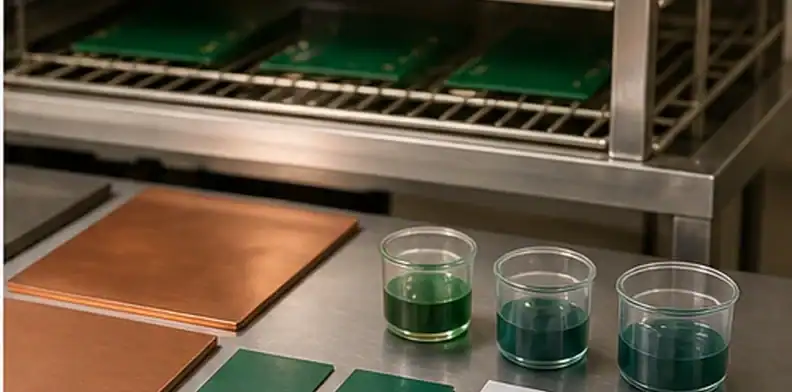
Adhesion starts before the mask is applied. Copper surface condition, mechanical or chemical preparation, cleanliness, coating thickness, tack dry, final cure, and bake history can all affect the result. A supplier does not need to publish its recipe, but it should confirm that the chosen mask system fits the laminate, copper finish, and assembly profile.
Use PCB cleanliness evidence when residue or process contamination is part of the concern. Cleanliness and adhesion are not the same test, yet contamination can make adhesion results hard to interpret. A lot with ionic residue near masked areas deserves more than a cosmetic discussion.
| Process assumption | Possible risk | Buyer question |
|---|---|---|
| Copper preparation | Weak bond at copper or laminate edge | Is surface prep standard for this finish? |
| Final cure | Soft mask or lifting after heat | Is the cure route fixed for this material? |
| Mask thickness | Poor edge coverage or cracking | Are thick copper areas reviewed? |
| Cleaning chemistry | Residue under or on mask | Is cleanliness evidence needed? |
Process call: A good adhesion reply ties mask cure and surface preparation to the actual board finish and assembly route.
Color should not be treated as a pure appearance choice when adhesion is controlled. Different colors or mask systems can have different process windows, so a color substitution on a qualified product deserves at least a supplier confirmation.
A small process table in the RFQ can help the supplier answer quickly: mask type, color, finish, assembly heat exposure, cleaning chemistry, and any coating step. Those fields turn an adhesion concern into a quoteable engineering review.
Decide which test evidence is needed
Not every order needs special adhesion testing. Many routine boards rely on the supplier’s qualified process and final inspection. Special evidence becomes useful when the product has prior mask lifting, thick copper, harsh cleaning, repeated thermal exposure, under-coating processes, or customer qualification requirements.
Common evidence may include supplier inspection, tape-test or cross-hatch style checks when specified, thermal stress review, first-lot photos, or an internal nonconformance record when a defect is found. The exact acceptance method should come from the customer drawing, purchase specification, or mutually agreed quality plan.
Do not write a test into the RFQ without naming what happens if the result is marginal. The response should state whether the lot is accepted, sorted, reworked, re-fabricated, or held for engineering disposition. That prevents a test result from becoming a debate after boards are already needed on the line.
Proof rule: Request adhesion evidence when it changes a release decision, not as a decorative certificate.
For first builds, decide whether the evidence is required before shipment or only if inspection finds trouble. That timing matters because a test added after the PO can move the delivery date or create a dispute over who pays for the extra work.
The evidence request should include the timing of the check. A test before shipment, after a solderability bake, after a reflow simulation, or after cleaning may all answer different questions. The drawing or PO should not leave the supplier guessing which exposure matters to the product.
Review high-risk areas before assembly
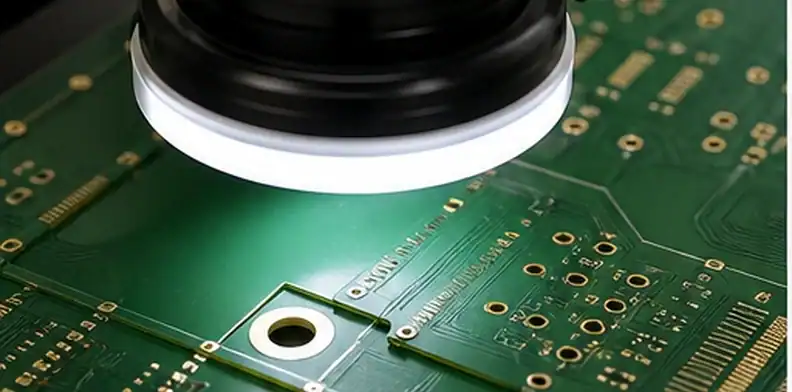
Adhesion risk is not evenly distributed across the board. Look near fine-pitch pads, via tents, routed edges, heavy copper steps, large exposed copper areas, score lines, labels, and zones that see rework heat. These features put stress on the mask or make contamination more likely.
The PCB incoming inspection page can help receiving decide how to screen suspect boards. For mask adhesion, receiving should photograph the area, record lot and panel position when possible, and separate isolated handling scuffs from true lifting, peeling, flaking, or mask transfer.
A useful first-lot review marks the location and likely cause category. For example, mask lifting from a routed edge suggests edge preparation or mechanical handling; lifting around a reworked pad may be an assembly heat issue; random flakes across the panel may point to process contamination or cure.
Inspection signal: Location matters because the same visible mask lift can come from fabrication, handling, rework, or storage.
High-risk areas deserve a simple photo map. Mark pad rows, routed edges, via fields, and rework zones so quality can sample locations that matter instead of inspecting only the easiest green areas.
Classify cosmetic marks versus release defects
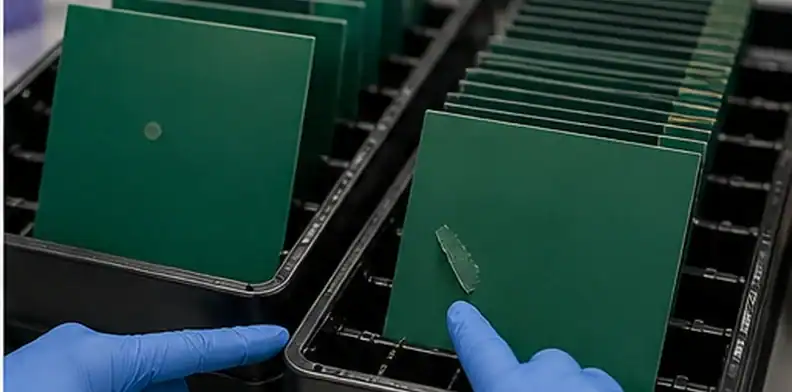
Cosmetic mask marks should not automatically stop a lot. Slight color variation, nonfunctional scuffs, or local gloss differences may be acceptable when copper is protected and the assembly process is not affected. Adhesion defects are different because loose mask can expose copper, interfere with soldering, or break free during cleaning.
Create a receiving classification before the dispute starts. The buyer can use categories such as accept, accept with note, supplier review, engineering hold, or reject. Each category should describe what evidence is needed and who can approve release.
| Observed condition | Likely disposition | Evidence to collect |
|---|---|---|
| Color or gloss variation only | Often accept with note | Photos and lot record |
| Mask lift at pad edge | Engineering hold | Close photos and assembly impact |
| Flaking under tape or handling | Supplier review | Sample, tape result, location map |
| Exposed copper in functional area | Reject or deviation review | Defect photos and drawing impact |
Release rule: Cosmetic mask variation can be a note; loose or peeling mask needs a disposition owner.
Receiving can make disposition faster by using plain categories. A cosmetic note can travel with accepted stock, while a functional adhesion issue should have an owner, sample quantity, and supplier response date.
For visible products, cosmetic and functional categories can overlap. A glossy patch may be harmless electrically but unacceptable to a customer-facing assembly. Mark that expectation as cosmetic release control rather than forcing the supplier to treat it as an adhesion failure.
Control supplier changes to mask process
A supplier may change mask brand, color, cure schedule, or preparation process because of availability or line preference. Some changes are harmless for ordinary boards, while others can affect adhesion, color, soldering, marking, conformal coating, or customer approval. The RFQ should state which changes require written notice.
Use processed Gerber approval for artwork and CAM edits, but keep mask-process substitutions in the quality or purchasing record. A mask color change is not only cosmetic when the customer has inspection, branding, optical, or coating requirements.
Good change control does not force the supplier to reveal proprietary chemistry. It asks the supplier to state whether a mask material or cure route has changed from the approved baseline and whether the same acceptance evidence still applies.
Change boundary: Mask substitutions belong in the release record when adhesion, assembly exposure, or customer approval is affected.
Mask-process changes should be tied to customer obligations. A consumer cosmetic board, a coated industrial controller, and a hidden prototype coupon may all tolerate different levels of change without requalification.
Build a receiving response for suspect lots
When a suspect lot arrives, avoid turning the first email into a blame argument. Collect photos, lot numbers, panel position, affected quantity, storage condition, assembly exposure, and any cleaning or rework history. Then ask the supplier whether the defect matches fabrication, handling, or post-delivery damage.
Holding every board may be too disruptive, but releasing every board without review can create assembly scrap. A staged response works better: isolate affected cartons, sample boards from different panels, inspect high-risk features, and agree on use-as-is, sort, replacement, or engineering deviation.
Purchasing should also check whether the PO or drawing actually required adhesion evidence. If it did not, the current lot may still need a disposition, but the repeat order should receive a clearer mask note and evidence rule.
Claim boundary: A mask adhesion claim is strongest when photos, lot traceability, and assembly history point to a specific failure mode.
Containment should match the production need. If only one carton shows loose mask, isolate that carton first; if the defect appears across panel positions, pause the lot and ask for a broader supplier investigation.
When the lot is urgent, receiving can release unaffected quantities while holding the suspect subset, but only after engineering agrees that the defect is isolated. That keeps production moving without hiding a real quality issue across the whole shipment.
Send QueenEMS the mask-risk evidence
Send the solder mask color and type requirement, Gerber or ODB++ files, surface finish, copper weight, assembly thermal profile, cleaning process, conformal coating notes, prior defect photos if any, and the acceptance rule you want applied. QueenEMS can review whether the package needs routine mask processing, first-lot adhesion evidence, or a clearer receiving disposition.
A useful RFQ note is: “PCB solder mask adhesion is controlled for this release. Supplier to confirm permanent mask system, cure route suitability, and any first-lot adhesion evidence included. Report mask material, color, or cure-route change before production.” Keep the wording practical and tied to the product.
Share the files through the QueenEMS contact page when a mask-risk review should happen before the order is placed.
Handoff rule: The final request should tell QueenEMS which mask condition would stop assembly, not only which color to print.
When sending the file package, include assembly exposure in ordinary language. Multiple lead-free reflow cycles, hand solder touch-up, solvent cleaning, or conformal coating tell the reviewer more than a generic high reliability label.
For repeat orders, keep the accepted mask evidence and any supplier response with the fabrication package. That record helps the next buyer avoid changing mask color, cure assumption, or cleaning exposure without realizing the previous lot was approved under a controlled condition.
FAQ
Is solder mask adhesion the same as solder mask opening control?
No. Opening control defines where copper is exposed; adhesion defines whether the permanent mask remains bonded during handling, heat, cleaning, and assembly.
Should I require a tape test on every PCB order?
No. Use a tape or adhesion check when the drawing, customer specification, product risk, or previous lot history makes the result useful for release.
Can a color change affect adhesion?
Yes, it can in some cases because mask systems, pigment loading, cure, and inspection behavior can differ. Ask the supplier to report material or cure-route changes when adhesion is controlled.
What should receiving do if mask peels near pads?
Hold the affected boards, photograph the location, record lot and panel details, and ask engineering whether exposed copper or loose mask can affect assembly.
Sources
Written by the QueenEMS Engineering Team
Upload your files today · Free DFM check before production · Ship worldwide
Get your PCB prototypes in as fast as 24 hours. We handle FR4, Rogers, and hybrid boards up to 40 layers in volume production, with advanced builds subject to engineering review — free prototypes for 2–4 layer FR-4 boards, no minimum order.
Just upload your Gerber + BOM — we source every part, assemble, and inspect (AOI + X‑Ray) so you don't have to chase suppliers. Boards ship in as fast as 24 hours.