
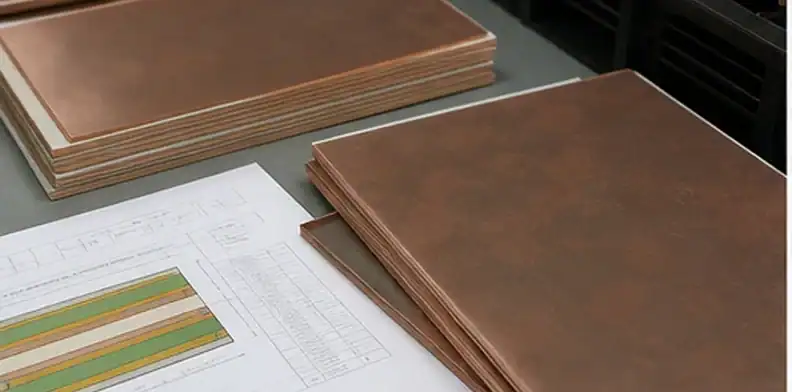
Quick Answer: PCB innerlayer oxide is a controlled treatment of patterned inner copper before multilayer lamination. It prepares the copper surface so prepreg resin can bond during pressing. Depending on the laminate and fabricator, the qualified route may be traditional oxide or an oxide-alternative adhesion promoter. The useful check is the approved treatment, handling, and bond evidence—not copper color alone.
Key takeaways
- The oxide note should identify whether the supplier uses traditional oxide, oxide alternative, or another approved bond preparation.
- Innerlayer handling time, cleanliness, and press readiness matter because treated copper can lose bond margin before lamination.
- Microsection, thermal stress, and lot traveler evidence make the process review stronger than a generic compliance statement.
- Any material, copper, or press-cycle change should be approved as a lamination change, not hidden inside DFM wording.
PCB innerlayer oxide checks become urgent when a multilayer board has thin dielectric, heavy copper, tight registration, or a reliability requirement that makes delamination hard to accept. The process sits between innerlayer imaging and lamination, so it is easy for buyers to miss until a supplier asks for a stackup change or quality later reports a bond issue.
This article is separate from general supplier stackup signoff and hybrid-material lamination discussions. The focus here is the treatment of innerlayer copper surfaces before pressing: what the RFQ should ask, what the supplier may choose, and what evidence should travel with the first lot.
Table of Contents
- What does innerlayer oxide do?
- Name the bond treatment before quote release
- Connect the oxide route to the stackup
- Check handling time before lamination
- Decide what evidence proves the bond
- Separate DFM suggestions from process changes
- Review microsection and stress-test needs
- Compare supplier replies on real controls
- Send QueenEMS a lamination-ready package
What does innerlayer oxide do?
After the innerlayer circuit is imaged, etched, and inspected, the exposed copper is cleaned and given a controlled bond-preparation treatment before prepreg layup. The purpose is to help the resin adhere to the copper through the lamination cycle. An untreated or contaminated surface can weaken that interface even when the finished board passes an electrical test.
Traditional black or brown oxide treatments change the copper surface; oxide alternatives use other adhesion-promoting chemistries. These are process families, not interchangeable color labels. A fabricator should qualify the route against the chosen laminate, copper pattern, press cycle, and reliability requirement. Do not specify a universal oxide thickness or bond-strength number without the relevant material and test method.
- Before treatment: confirm the innerlayer artwork and inspection are complete, and remove residues that could interfere with bonding.
- At treatment: use the approved oxide or oxide-alternative route for the released material system.
- Before pressing: protect the treated surface from handling contamination and keep within the fabricator’s qualified hold conditions.
- After lamination: use the specified inspection or qualification evidence to assess bond risk; an electrical pass alone does not establish adhesion.
This process explanation is the starting point. The sections below turn it into RFQ, stack-up, handling, and first-lot checks for a real build.
Name the bond treatment before quote release
The RFQ should name the expected bond-preparation route before pricing is treated as final. Some suppliers may use conventional oxide, some may use an oxide alternative, and some may propose a route tied to their line chemistry and laminate family. The buyer does not need the proprietary bath recipe, but the quote should say which route is assumed.
A drawing note that only says “multilayer PCB” gives purchasing no way to know whether two quotes use comparable bond treatment. Ask for the method family, the layer group it applies to, and the condition that would trigger engineering review. That is especially useful when an old board is moved to a second source or when a prototype supplier is replaced for production.
| RFQ field | Why it matters | Buyer action |
|---|---|---|
| Treatment route | Oxide and oxide alternatives do not carry the same process assumptions | Record the supplier assumption |
| Layer group | Not every copper surface has the same bonding risk | Tie the note to the stackup |
| Change trigger | A quiet process switch can change qualification logic | Require written approval |
| Lot evidence | Release needs more than a sales claim | Ask for traveler or inspection record |
RFQ signal: A usable PCB innerlayer oxide note tells the supplier what bond-preparation assumption is controlled and who approves a different route.
For repeat production, the useful record is the baseline. Save the approved treatment family, stackup revision, and supplier response beside the PO so a later cost-down or second-source move can be checked against a real condition instead of memory.
A useful supplier reply also identifies what the buyer does not control. For example, bath parameters, conveyor speed, or proprietary conditioner names can remain internal, while the release record still states the treatment family and approval trigger. That balance keeps the article practical for sourcing instead of turning the RFQ into a chemistry audit.
Connect the oxide route to the stackup
The oxide decision belongs with the released stackup because bond treatment interacts with copper weight, dielectric thickness, resin flow, and press cycle. A stackup that works for 0.5 oz copper may need different review when innerlayers carry heavier copper areas or large copper-density differences. Keep the oxide assumption next to the same revision that controls laminate, prepreg, copper, and finished thickness.
Use the stackup approval workflow as the control point. If the supplier revises prepreg count, copper weight, or layer pairing, the buyer should ask whether the bond-preparation route remains valid. Treat that answer as a production release item, not as a casual email.
A practical quote file can include one line such as: “Innerlayer bond treatment is controlled for L2/L3 and L4/L5 copper surfaces; supplier to state oxide or oxide-alternative route and request approval before route change.” That wording gives CAM and purchasing a clean approval boundary without demanding chemical details.
Stackup call: The bond treatment is credible only when it points to the same stackup revision that the factory will press.
A second source may use a different chemistry and still be acceptable. The buyer’s control point is not to force one supplier’s bath onto another line; it is to make the alternate route visible enough for engineering to decide whether the new build needs a pilot lot or extra sectioning.
Check handling time before lamination
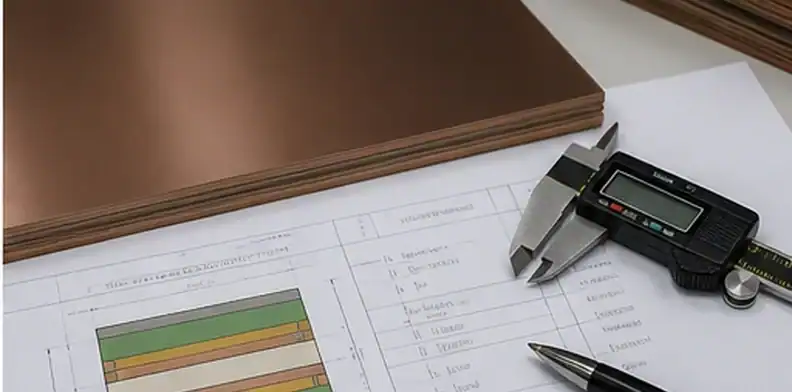
Treated innerlayers should not sit in an uncontrolled queue before lamination. The useful question is whether the supplier controls hold time, storage condition, fingerprints, airborne contamination, and rework after the bond surface has been prepared. Those points matter because the treated copper surface is part of the adhesion system.
Purchasing can ask for the supplier’s standard hold-time control without asking for confidential process limits. The reply should state whether treated panels go directly to layup, whether a maximum hold time exists, and what happens when a panel waits too long. A vague “standard process” answer may be acceptable for low-risk work, but it is weak for high-layer-count, heavy-copper, or temperature-cycled products.
Receiving does not normally inspect oxide directly because it is buried after lamination. That makes pre-press process control more useful than late cosmetic review. The buyer should decide whether the first production lot needs a traveler note, an internal quality checkpoint, or a sample build record.
Handling rule: Once innerlayer copper is treated for bonding, time and cleanliness become release variables rather than housekeeping details.
Hold-time questions are especially useful on expedited orders. Rush scheduling can move panels between queues quickly, but it can also compress normal checks or leave treated panels waiting for press capacity. Ask how the supplier protects treated cores when the schedule changes.
Decide what evidence proves the bond
Evidence should fit the risk of the board. A simple commercial multilayer may need only a confirmed route and final electrical test, while a high-reliability or thick multilayer build may need microsection evidence, thermal stress confirmation, or a quality document package. The RFQ should ask for the evidence level before the supplier locks the quote.
The PCB quality documents before shipment page is useful for organizing the final file set. For this topic, the key evidence is not a generic certificate. It is the connection between the released stackup, treated innerlayer route, press record, inspection, and any lot-specific exceptions.
| Risk condition | Useful evidence | Release question |
|---|---|---|
| Thick multilayer | Press traveler and microsection | Did the bond line survive the planned route? |
| Heavy inner copper | Cross-section plus press-cycle note | Was resin flow reviewed around copper steps? |
| Second-source transfer | Process-route comparison | Is the new route equivalent enough for approval? |
| Field-reliability product | Thermal stress or qualification record | What test supports repeat production? |
Proof rule: Ask for evidence that links the hidden bond surface to the lot, not a stand-alone statement that the supplier uses an approved process.
Evidence level can be staged. A prototype may only need a process statement, a pilot may need a first-lot traveler and microsection, and a qualified production run may only need a change-control promise unless the construction changes.
For high-mix purchasing, record whether the evidence is required for every build or only for a named project. Without that scope, a buyer may accidentally add first-article documentation to routine replenishment orders or, worse, omit it from the one controlled product that needs it.
Separate DFM suggestions from process changes
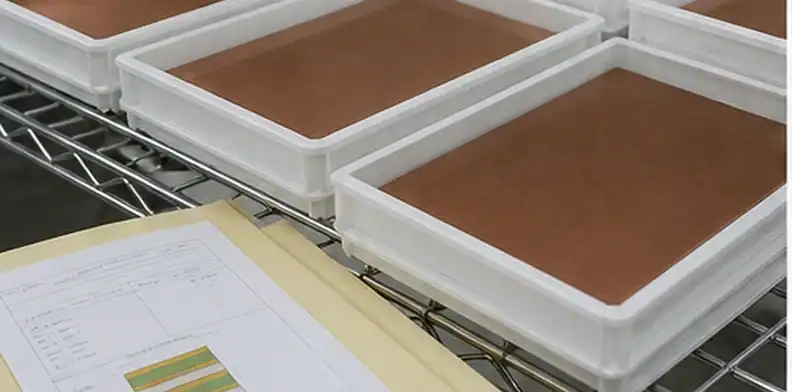
Suppliers may suggest a different bond route during DFM when their standard process differs from the buyer’s expectation. That can be a sound manufacturing suggestion, but it should be approved as a named process assumption. Do not let the change disappear under broad wording such as “factory standard optimization.”
The processed Gerber approval record helps separate artwork edits from manufacturing assumptions. A change in copper thieving, large plane splits, or material selection can influence lamination behavior, so DFM comments should identify whether the oxide route still supports the build.
Engineering should own the technical decision, purchasing should keep the quote assumption, and quality should know what record to check at shipment. That role split prevents a common dispute: the finished boards may pass electrical test, but nobody can prove whether the released process matches the approved one.
Approval boundary: A supplier can propose a bond-preparation route, but engineering should approve a route change before production release.
DFM wording should use verbs that create responsibility: state, confirm, request approval, report, or include. Phrases such as factory standard or best effort are weaker because they do not tell purchasing what will happen when a process assumption changes.
Review microsection and stress-test needs
Microsection evidence cannot show every square inch of a buried interface, yet it can reveal resin flow, voids, copper geometry, and plated-hole quality that point to lamination health. Pair the microsection request with the exact reason for concern instead of asking for reports out of habit. That keeps the inspection useful and avoids paying for evidence that nobody reviews.
For many multilayer jobs, the PCB microsection report already covers hole wall and laminate observations. Add innerlayer bond questions when the board has a thick stack, heavy copper transitions, known delamination sensitivity, or a customer qualification requirement. Thermal stress requirements should be named by the drawing or purchase spec, not guessed by the supplier.
A first article can carry more evidence than a repeat lot. After the process is stable, the buyer may reduce routine documentation while keeping the route and change-control rule fixed. That is usually better than demanding the same report forever without reviewing it.
Test rule: Use microsection or stress evidence when it answers a specific bond-risk question, then keep the approved condition stable for repeat orders.
A cross-section request should also identify the area of interest. Sectioning a routine area far from heavy copper or thin dielectric may satisfy a paperwork request while missing the part of the stack that motivated the review.
When the board includes buried features, filled vias, or dense plane layers, the section location should be selected with engineering input. A section through an easy region may show clean construction while the controlled area still carries resin starvation, void, or bond-line concern.

Compare supplier replies on real controls
Supplier comparison should look at control clarity rather than the lowest line item. One quote may include a clear treatment route, hold-time control, and first-lot evidence. Another may be cheaper because it assumes factory standard bonding without stating what will be done. Those are not equivalent offers.
Ask each supplier to answer the same five questions: which bond-preparation family is assumed, which layers it covers, what stackup revision it supports, what evidence is included, and which process changes require approval. The best reply is usually short, specific, and easy for engineering to sign.
| Supplier reply | Risk reading | Next action |
|---|---|---|
| Names route and evidence | Low ambiguity | Proceed to engineering signoff |
| Says factory standard only | Assumption hidden | Ask for treatment family and control point |
| Changes prepreg without bond comment | Stackup and process may diverge | Request revised release note |
| Offers no lot record | Receiving has weak proof | Decide whether first-lot evidence is needed |
Buyer call: Compare oxide-control answers before comparing price, because the cheaper quote may simply omit the controlled assumption.
The comparison is easier if purchasing sends the same short question set to every factory. Uneven questions produce uneven quotes, and later the cheapest supplier may only be cheapest because the evidence was never included.
Send QueenEMS a lamination-ready package
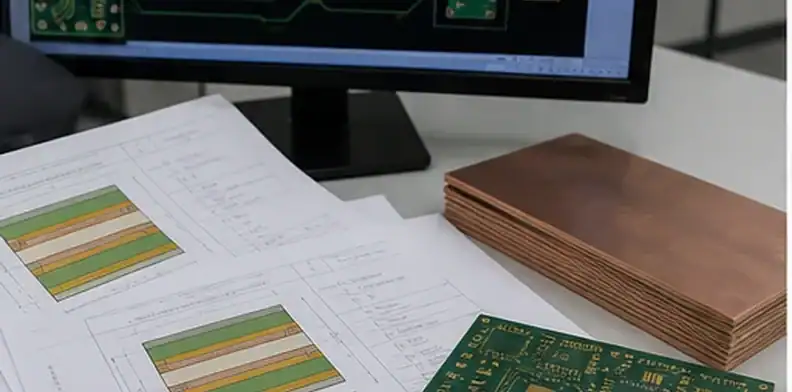
Send the released stackup, Gerber or ODB++ data, copper weights, layer count, material callouts, press-thickness target, reliability notes, and any customer test requirement. Mark whether innerlayer bond treatment is controlled, preferred, or left to the fabricator’s qualified route. QueenEMS can then review the package for quote readiness, flag missing lamination evidence, and return the questions that should be closed before purchase release.
For controlled builds, include a short RFQ note: “State the PCB innerlayer oxide or oxide-alternative route assumed for this stackup, the layers covered, first-lot evidence included, and approval rule for route or press-cycle change.” Keep that sentence with the PO file and the receiving record.
Upload the stackup and production files through the QueenEMS contact page when the build needs a controlled lamination review before quotation.
Release rule: The final package should let engineering approve the hidden bond process before the lot reaches lamination.
For the final handoff, include the old approved lot record if the design has built before. A prior record helps QueenEMS distinguish a stable repeat from a new lamination qualification problem.
The review package should also state the expected order stage. Prototype lots may be used to close feasibility questions, while production lots need a stable baseline that a second buyer, engineer, or supplier quality contact can read months later.
FAQ
Is PCB innerlayer oxide still used on modern multilayer boards?
Yes, oxide and oxide-alternative bond treatments are both used depending on the supplier process and board type. The buyer’s task is to know which route is assumed and whether a change needs approval.
Can receiving inspection see an oxide problem?
Usually no. The treated copper interface is buried after lamination, so receiving depends on process records, microsection evidence, and any required stress test rather than direct visual inspection.
Should every multilayer RFQ demand microsection evidence?
No. Use microsection evidence when thickness, copper weight, reliability class, second-source transfer, or a customer requirement makes hidden bond quality a release risk.
What note should I put on the drawing?
State that innerlayer bond treatment is controlled for the released stackup and that the supplier must report any route, material, copper, or press-cycle change before production.
Sources
- IPC-TM-650 Test Methods Manual
- IPC technical paper on oxide alternatives and innerlayer adhesion promoters
Written by the QueenEMS Engineering Team
Upload your files today · Free DFM check before production · Ship worldwide
Get your PCB prototypes in as fast as 24 hours. We handle FR4, Rogers, and hybrid boards up to 40 layers in volume production, with advanced builds subject to engineering review — free prototypes for 2–4 layer FR-4 boards, no minimum order.
Just upload your Gerber + BOM — we source every part, assemble, and inspect (AOI + X‑Ray) so you don't have to chase suppliers. Boards ship in as fast as 24 hours.