

Quick Answer: To verify PCB supplier UL claims, ask for the UL file number, company name, product category, recognized material or board scope, and any allowed mark-use boundary. Then check the information against UL Product iQ or the supplier’s official recognition record before PO release. A real UL number is useful only when it matches the supplier, product scope, and board construction you are buying.
Key takeaways
- Do not treat a UL logo on a quote as proof of the specific board you are ordering.
- Check the file number, recognized company, category, and construction scope.
- UL 94 flame rating and supplier UL recognition are related but not the same buyer check.
- Keep UL evidence with the qualification record and the released quote package.
Supplier qualification often gets rushed after price and lead time look good. UL evidence is one of the easiest claims to misunderstand because buyers may see a file number, logo, or flame rating and assume it covers the whole factory and every board construction. This article is written for purchasing, engineering, quality, and founders who need to check a PCB supplier’s UL claim before approval. It explains what to ask for, what to verify, and when a claim should pause the order.
Table of Contents
- Ask what the UL claim is actually saying
- Check file number, company name, and category together
- Do not confuse UL 94V-0 with supplier recognition
- Use QueenEMS E518360 as a verification example
- Know when UL evidence must pause the order
- Add UL proof to the supplier qualification record
- Write the RFQ question so the supplier cannot dodge it
- Keep the final decision tied to product risk
Ask what the UL claim is actually saying
The first buyer task is to separate the claim types. A supplier may be talking about a UL file number, a recognized printed wiring board category, a laminate flame rating, an insulation system, a marking permission, or a customer product certificate. These are not the same thing.
Claim boundary: Verify the exact UL claim before treating it as supplier approval evidence.
For a PCB order, the useful question is: What file number and recognized scope apply to this supplier and this board construction? That question is stronger than asking whether the factory has UL, because it forces the supplier to identify the evidence.
If the supplier cannot state the file number, company name, and covered construction, the claim is not ready for purchasing approval. The buyer can still continue price discussion, but the qualification gate should remain open.
The buyer should also note who made the claim. A sales email, quotation footer, factory certificate, and searchable UL record do not carry the same proof value. Keep the strongest evidence in the supplier file.
Check file number, company name, and category together
A UL file number alone is not enough. It should be checked beside the recognized company name, product category, and scope. A supplier could show a file linked to a related company, a material supplier, a different product category, or a construction that does not match the order.
UL Product iQ is the normal public lookup path for many UL certifications and recognitions. Access may require account use, but the buyer’s checklist remains the same: file number, company name, category, and scope must align.
| Verification field | Buyer question | Risk if missing |
|---|---|---|
| File number | What UL record should I search? | Unverifiable claim |
| Company name | Does it match the quoted supplier? | Wrong entity |
| Category | Is it relevant to printed boards? | Wrong certificate type |
| Scope | Does it fit the board construction? | Overclaimed approval |
This record belongs inside a broader PCB manufacturer capability check because UL recognition does not replace process capability, yield control, communication, or shipment evidence.
A mismatch does not always mean the supplier is dishonest. It may mean the supplier uses a group company, changed legal name, or quoted a product outside the recognized scope. The buyer still needs clarification before approval.
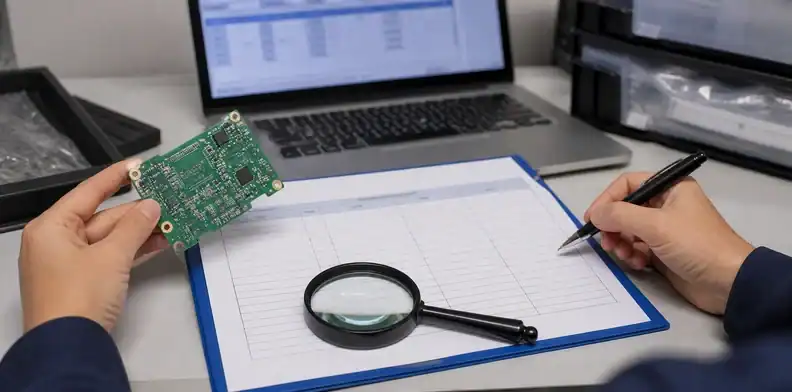
Do not confuse UL 94V-0 with supplier recognition
UL 94V-0 is a flame rating often associated with laminate or material behavior. A PCB supplier UL file is a supplier or product-category recognition record. A board can use a material with a flame rating while the supplier’s own UL recognition question remains separate.
This distinction matters in customer files. If the customer asks whether the PCB material is UL 94V-0, the material evidence may be enough. If the customer asks whether the PCB supplier has a recognized UL file for printed wiring boards, a different evidence path is needed.
Rating rule: Treat material flame rating and supplier UL recognition as separate lines in the approval checklist.
Use UL 94V-0 circuit board guidance to keep the material rating question separate from supplier file verification.
Customer engineers often ask for UL 94V-0 because it is familiar. Supplier recognition may be a separate purchasing requirement. Putting both questions in one checklist prevents the team from answering one and assuming the other is solved.
Use QueenEMS E518360 as a verification example
A practical example helps: QueenEMS can provide UL E518360 as a file reference when a buyer asks for supplier evidence. The buyer should still verify what that file covers and whether it applies to the ordered construction, not treat the number as a blanket approval for every possible PCB.
This is a healthy way to use certification evidence. The supplier gives a file number and scope; the buyer checks it against the order; engineering confirms whether the construction, material, and customer requirement fit.
| Example check | What to confirm | Owner |
|---|---|---|
| E-number | File exists and belongs to supplier | Purchasing or quality |
| Scope | Relevant product category and construction | Engineering |
| Material | Laminate and finish do not break assumptions | Supplier and engineering |
| Customer need | File evidence matches requested proof | Quality/customer owner |
QueenEMS’ own file reference is useful because it gives the buyer a concrete verification path. The correct habit is to verify the file and scope, not to accept any supplier’s number as a decorative credential.
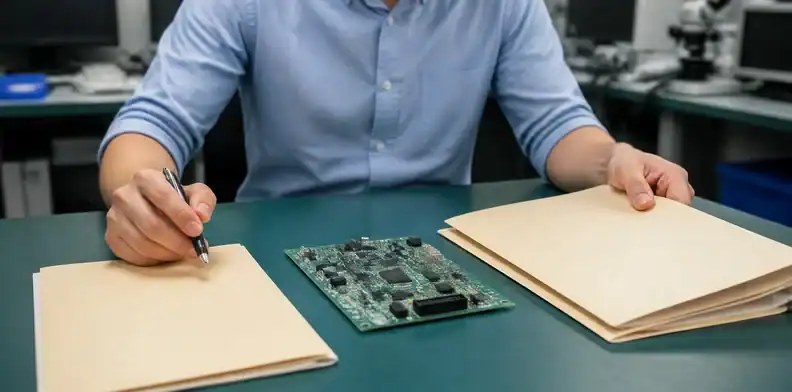
Know when UL evidence must pause the order
UL evidence should pause the order when the customer contract requires it, when the product certification owner needs it, when the supplier’s file cannot be verified, or when the quoted construction falls outside the apparent scope. It should not be treated as a paperwork detail after shipment.
The pause does not have to be dramatic. It can be a simple CAM or purchasing hold: confirm file, scope, material, and mark-use boundary before production release. That protects both the buyer and supplier from a late customer rejection.
Release rule: If UL evidence is a customer requirement, do not release production until file and scope are checked.
If the customer does not require UL evidence for this PCB, keep the file as a supplier qualification point rather than a shipment blocker. That distinction prevents unnecessary delay.
A production hold should be narrow and written. Hold only the UL evidence decision, not every unrelated engineering task, so the supplier knows what must be returned before release.
Add UL proof to the supplier qualification record
Supplier qualification should keep the UL file evidence with capability, quality, lead time, communication, and shipment proof. A screenshot alone is not ideal as the only record; keep the supplier’s written statement, file number, scope summary, and the date of buyer review.
The buyer can connect this to PCB supplier qualification order so the first production run is not approved only by price. UL evidence is one field in the supplier decision, not the whole decision.
The qualification file should keep four record groups together: the UL file number and scope, the fabrication capability notes, the quality evidence, and the commercial quote terms. Keeping them in one supplier record prevents a familiar problem: purchasing approves the price, engineering remembers a verbal capability, and quality later discovers that the UL evidence was never tied to the actual board construction.
Qualification signal: UL evidence is strongest when it sits beside a complete supplier approval record.
Qualification records should include the date of review. A file checked two years ago may still be valid, but the buyer should know when it was last reviewed and whether the product requirement has changed.
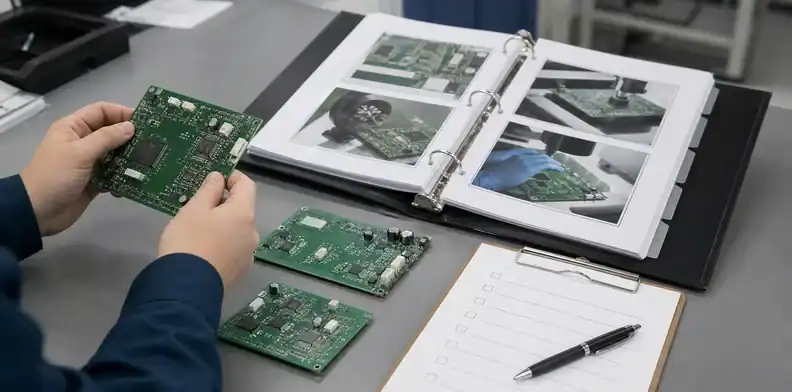
Write the RFQ question so the supplier cannot dodge it
The RFQ can ask: Please provide the UL file number, recognized company name, product category, covered PCB construction or material scope, and any mark-use limitation that applies to this quoted board. Also confirm whether the claim applies to bare PCB only or assembled product.
That wording avoids a vague yes. It also makes it easier for purchasing to compare suppliers because every supplier must return the same evidence fields.
RFQ signal: A supplier ready for approval can answer file number, entity, category, and scope without turning the question into sales language.
If the supplier says the information is proprietary, ask what customer-verifiable evidence can be provided instead. Some details may be limited, but the buyer still needs enough proof for its own customer or certification owner.
The RFQ question should be sent before the supplier prepares a final quote when possible. If the supplier cannot support the requested file or construction, discovering that early protects the schedule.
Keep the final decision tied to product risk
Not every PCB order needs the same UL review depth. A prototype for internal bench testing may need only material and supplier awareness. A product shipped into a certified appliance, power device, medical accessory, or customer-controlled program may need documented file evidence before release.
The decision should be written in the PO or supplier approval note. Either UL evidence is required before production, required before shipment, required for customer file only, or not required for this order. Ambiguity creates delay.
Approval point: Match the UL evidence depth to product risk and customer requirement before the PO is released.
Product risk sets the evidence depth. A simple prototype, customer demo, certified product, and safety-critical assembly should not all use the same UL approval rule.
For a purchasing manager, the review can be handled as a qualification gate: no approved file evidence, no preferred supplier status for orders that need UL. That is easier to enforce than trying to repair the record after the first customer asks for a certificate.
For an engineer, the key is construction fit. A UL file that appears valid for one material family or board type may not cover a different laminate, thickness range, copper weight, or special build. Ask the supplier to state the construction boundary in plain order language.
For a founder, this check is a credibility issue with customers. If a buyer claims a supplier is UL recognized and later cannot show file and scope, the customer may question the rest of the qualification file as well. A short verification step before PO release avoids that trust damage.
The final supplier approval note should say what was checked, when it was checked, and what product risk it controls. That note does not need legal language. It only needs enough evidence for the next buyer, quality engineer, or customer reviewer to understand the decision.
For repeat orders, keep the verification record with the approved supplier file instead of treating it as a one-time email. A supplier’s file may remain valid, but the board construction, laminate family, finish, customer requirement, or legal entity can change. The buyer should know whether the old record still supports the new order.
When a quote changes material or board type, reopen the UL question briefly. This is not a full supplier audit every time; it is a controlled check that the accepted scope still matches what will be built. That habit keeps the evidence useful without turning certification review into a bottleneck.
Save the final checked date in the RFQ folder.
FAQ
How do I verify a PCB supplier UL file?
Ask for the file number, company name, product category, and scope, then check those fields against UL Product iQ or the supplier’s verifiable UL record.
Is a UL logo on a quote enough proof?
No. A logo is not enough proof for a specific PCB order. The buyer needs file, entity, category, and construction scope.
Does UL 94V-0 mean the PCB supplier has UL recognition?
No. UL 94V-0 is a flame rating question, while supplier UL recognition is a separate file and scope question.
Can QueenEMS provide UL evidence?
Yes, QueenEMS can provide UL E518360 as supplier evidence when the buyer needs to verify the relevant file and scope for a PCB order.
Should UL evidence block shipment?
Block shipment only when the customer or product approval requires it before release. Otherwise keep it as part of supplier qualification and customer documentation.
Related QueenEMS articles
- UL 94V-0 circuit board guidance
- PCB fabrication certifications overview
- PCB manufacturer capability check
- PCB supplier qualification order
Send QueenEMS the UL verification package
If your PCB or PCBA project needs supplier UL evidence, contact QueenEMS with the customer requirement, board construction, laminate or material preference, quote, requested file evidence, and release timing. We can help review whether the UL claim is clear enough for supplier approval or customer documentation.
If you already received a UL file number from another supplier, include that wording too. Comparing the exact evidence fields helps reveal whether the claim is scoped or only promotional.
Sources
Written by the QueenEMS Engineering Team
Upload your files today · Free DFM check before production · Ship worldwide
Get your PCB prototypes in as fast as 24 hours. We handle FR4, Rogers, and Flex up to 60 layers — free prototypes for 2–4 layer boards, no minimum order.
Just upload your Gerber + BOM — we source every part, assemble, and inspect (AOI + X‑Ray) so you don't have to chase suppliers. Boards ship in as fast as 24 hours.