
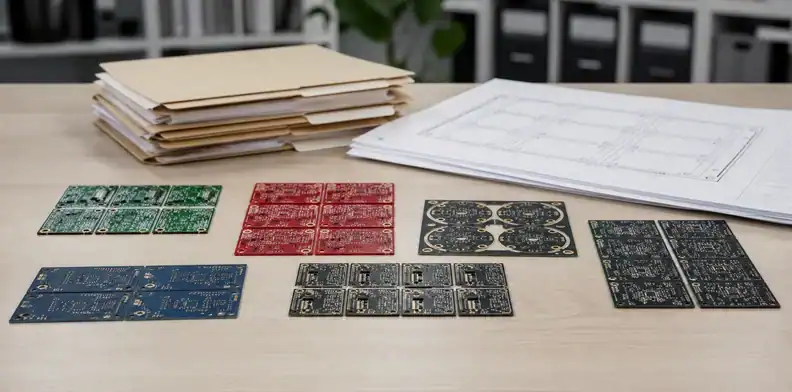
Quick Answer: Low volume pcb fabrication for many designs is cheapest only when the designs can share manufacturing rules without hiding risk. Combine designs when thickness, copper, surface finish, stackup, tolerance class, and delivery timing match; split them when one design forces a special rule that raises cost or review time for the whole set.
Key takeaways
- Treat a multi-design order as a controlled panel strategy, not as a discount trick.
- Shared setup cost helps only when the boards can share the same build rules.
- The RFQ should list which designs may share a panel and which designs must stay separate.
- Receiving and repeat orders need design-level labels, not one mixed-board memory note.
Low volume pcb fabrication often starts with a simple purchasing question: can several small designs be combined so the buyer avoids paying setup cost eight times? The useful answer is yes only when the engineering package keeps each design traceable and does not force incompatible requirements into one build. A cheap mixed panel can become expensive when one board needs a different thickness, finish, solder mask, copper weight, impedance rule, V-score rule, or date. The buyer then pays for extra CAM review, extra traveler notes, scrap separation, or a remake caused by an assumption nobody approved. This article gives purchasing and engineering a way to decide whether a low-volume multi-design PCB package should be combined, split, or quoted in controlled groups before the RFQ goes out.
Table of Contents
- Start with the shared-build question
- Identify which rules must match
- Separate setup savings from engineering risk
- Control design identity through CAM and receiving
- Use groups instead of one large mixed request
- Write the RFQ so suppliers can answer cleanly
- Decide when the cheapest option is not the best option
Start with the shared-build question
The first decision is whether the designs can truly share one manufacturing build. A shared panel is realistic when the designs use the same material family, finished thickness, copper weight, solder mask color, surface finish, and delivery expectation.
Do not start with the number of boards. Start with the build rules. Twenty-five pieces of eight designs may look like one neat order, but it becomes several technical orders when stackup, finish, or tolerance rules split.
Panel call: Combine designs only after the shared build rules are visible, not because the purchase quantity is small.
A practical RFQ line can say: quote designs A through H together only where common panelization does not change material, thickness, finish, tolerance, or inspection requirements.
Identify which rules must match
The common rules are the real cost boundary. Setup and tooling can be shared more safely when the boards share the same panel traveler, laminate, copper, drill class, solder mask, legend, finish, and packaging method.
| Rule | Combine when | Split when |
|---|---|---|
| Thickness | All designs use one finished value | One design needs a different fit or connector limit |
| Finish | All boards accept the same finish | One design needs ENIG, hard gold, or OSP only |
| Copper | Current and spacing rules are similar | One design needs heavier copper or special etch control |
| Delivery | All designs can ship together | One design blocks the release date |
| Inspection | Same acceptance basis works | One board needs special testing or documentation |
For a single-design panel cost discussion, connect this decision to PCB panel cost reduction. The multi-design case adds a second layer: every saving must be checked against design separation and traceability.
Build rule: The cheapest shared panel is the one that does not require hidden exceptions.
Separate setup savings from engineering risk
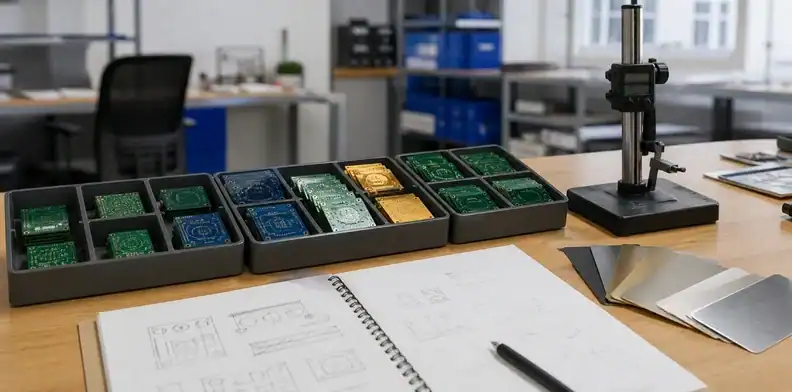
NRE and setup savings matter in low volume pcb fabrication, but they are not the only cost. A multi-design order can reduce repeated setup charges while increasing CAM questions, drawing clarifications, packing effort, and receiving mistakes.
Use NRE and tooling cost control as the commercial baseline, then add an engineering review column for each design. That prevents a low setup number from hiding a high clarification load.
The buyer should ask for the quote to show the shared assumptions. A supplier answer that says only ‘combined panel’ is too thin for release; it should name the construction, finish, and any designs that cannot share the panel.
Cost signal: A lower setup line is not a saving if it creates unpriced CAM work or unclear design separation.
Control design identity through CAM and receiving
Each design in the set needs its own file name, revision, quantity, and label rule. Without that, the supplier may fabricate the boards correctly while the buyer receives a mixed package that is hard to sort, inspect, or reorder.
The CAM package should keep one folder per design and one summary sheet for the combined quote. Receiving should be able to match each bag, label, or traveler line back to the design name without opening the CAD files.
For early prototypes, PCB prototype quote review helps keep the file package clean before the quote becomes a combined production order.
Traceability rule: Shared fabrication does not mean shared identity; every design still needs its own revision and receiving record.

Use groups instead of one large mixed request
The safest quote may be neither one combined panel nor eight separate orders. Many low-volume sets work best as two or three groups: same thickness group, same finish group, or same delivery group.
Grouping gives purchasing a cost benefit while preserving engineering control. It also lets the supplier reject one group without blocking every design in the batch.
| Group type | Good use | Buyer action |
|---|---|---|
| Same construction | Shared material and thickness | Ask for one panel option |
| Same finish | Same solderability/storage need | Quote together if delivery matches |
| Same delivery | Urgent prototypes only | Do not delay all boards for one design |
| Special-risk group | Impedance, heavy copper, controlled depth | Quote separately with DFM review |
Grouping call: Use two or three quote groups when one design would distort the whole order.
Write the RFQ so suppliers can answer cleanly
The RFQ should say which designs may be combined, which may not, and which assumptions must not change without approval. This lets suppliers propose a saving without silently changing a board’s construction.
Useful wording: Please quote these designs as a low-volume combined fabrication package where common material, finished thickness, copper, solder mask, surface finish, tolerance, inspection, and delivery rules are valid. Identify any design that should be split and state the reason.
Ask for the supplier to return both the combined price and any split recommendation. A good answer helps the buyer see whether the saving is real or only a quote formatting choice.
RFQ signal: A clean supplier reply lists the shared assumptions and the exceptions, not just one blended price.
Decide when the cheapest option is not the best option
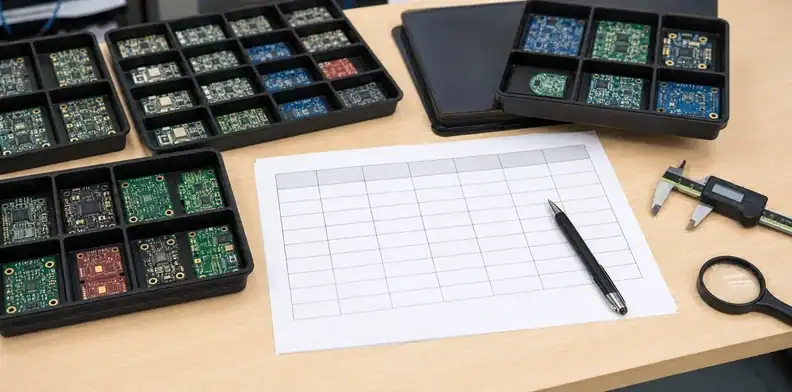
The cheapest quote should be rejected when it hides build differences, pushes design sorting onto receiving, or blocks a fast design behind a slow one. Low volume does not remove the need for release control.
Purchasing can still use the low quote as a negotiation point. Ask the supplier which assumption created the saving. If the answer is shared finish, shared thickness, or shared CAM setup, the saving may be usable. If the answer is vague, the risk is still open.
A founder or product owner should also consider learning speed. It can be better to pay for a separate urgent prototype when that design drives the product decision, while slower support boards wait for a shared panel.
Decision point: Choose the lowest quote only when it preserves design identity, technical rules, and schedule priority.
For an engineer, the best review is a short matrix that shows each design against construction, finish, thickness, copper, delivery, and inspection. That matrix turns a vague multi-design request into a quote-ready package.
For purchasing, the useful comparison is not only total price. Compare the combined quote, split quote, exception notes, expected CAM questions, label plan, and shipment plan. A supplier that explains why one design should be separated may be protecting the buyer, not upselling.
For a startup, the right answer may change by build stage. During first learning, speed and clear feedback can beat panel savings. During repeat low-volume orders, grouping becomes more attractive because the design set and receiving process are stable.
The final release record should keep the approved grouping decision with the quote. A later reorder should not depend on someone remembering why designs A through D were combined but design E was split.
For engineering, the most useful extra field is the reason each design belongs in a group. Write same thickness, same finish, same delivery, or split for special review beside the design name. This turns the decision from a memory shortcut into a repeatable manufacturing instruction.
For purchasing, ask the supplier to show the price difference between one combined package and the recommended split. The buyer does not need a complex cost model; it only needs enough visibility to see whether the saving is setup, freight, CAM time, or a packaging simplification.
For quality, mixed-design lots should have a receiving plan before shipment. The plan can be simple: one bag or compartment per design, one label per revision, and one packing list that shows each design quantity separately.
A combined low-volume order should also define overage and shortage handling by design. A supplier may hit the total board count while one design is short. The PO should state whether the acceptance rule applies to each design or to the combined quantity.
When one design is electrically risky, such as impedance control or high current, keep it out of a purely cost-driven mixed group. It may still share purchasing timing, but it should have its own engineering approval path.
When one design is mechanically risky, such as a connector-edge board or a tight enclosure shape, do not let panel utilization decide the routing method alone. Mechanical fit can be worth more than a small setup saving.
The quote should also state whether panel tooling is reusable. If the first mixed set is a one-time prototype package, reuse may not matter. If the same eight designs repeat every month, the tooling and label plan become part of the supply process.
Before release, check whether each design needs the same certificate, same inspection report, and same packaging evidence. A single shared certificate can be acceptable for common construction, but the buyer still needs design-level traceability for receiving and future reorders.
A useful buyer review also checks whether the supplier will fabricate all designs in one production traveler or separate travelers. One traveler can simplify setup, but separate travelers can make traceability easier when designs have different owners or release dates. When the designs come from different engineers, assign one person to own the combined package. Without one owner, the supplier may receive conflicting answers about finish, stackup, panel breakoff, or acceptable overage. The quote should state whether electrical test applies to every design. Skipping test on low-volume boards can save money, but the buyer should make that decision knowingly instead of discovering the assumption after shipment. For repeat orders, keep a small drawing or spreadsheet that shows the accepted grouping. If the supplier proposes a different panel in the next order, the buyer can compare the change instead of starting the whole decision again. The final approval should also name the board that controls the panel. Sometimes one large board, odd outline, or high-risk routing feature drives the panel plan for every other design. That board should be visible in the quote discussion.
Before approving the package, ask the supplier whether any design will be rotated, mirrored, or nested in a way that affects assembly or inspection. These are ordinary panelization choices, but they should not surprise the buyer after the boards arrive. When the designs include both bare-board-only and later-PCBA boards, mark the PCBA-sensitive designs in the quote matrix. Those boards may need stronger control over fiducials, rails, finish, and packaging because the next process depends on them.
FAQ
Can multiple PCB designs share one low-volume panel?
Yes, when they share construction, finish, thickness, copper, inspection, and delivery rules. Split any design that needs a special rule or different release timing.
Does combining designs always reduce PCB cost?
No. It can reduce setup cost, but it may add CAM review, sorting, packaging, or remake risk if the designs are not compatible.
What should I send for a multi-design PCB quote?
Send one folder per design, a summary matrix, quantities, revisions, allowed grouping rules, and any design that must ship separately.
Should I combine urgent and non-urgent PCB designs?
Usually no. Urgent designs should not be delayed by support boards unless the schedule and risk are clearly acceptable.
Can QueenEMS quote mixed low-volume PCB designs?
Yes, QueenEMS can review whether the designs should be combined, split, or grouped before the RFQ is finalized.
Related QueenEMS articles
- PCB panel cost reduction
- NRE and tooling cost control
- PCB prototype quote review
Send QueenEMS the multi-design quote matrix
If your low volume pcb fabrication request includes several designs, contact QueenEMS with the Gerber or ODB++ folders, revision list, quantities, preferred finish, thickness limits, delivery priority, and any board that cannot be mixed. We can help return a quote-ready grouping decision before the supplier locks the panel plan.
Include the supplier’s first grouping proposal if you already have one. The fastest review compares the proposed saving against the exact build rules that must stay unchanged.
Sources
Written by the QueenEMS Engineering Team
Upload your files today · Free DFM check before production · Ship worldwide
Get your PCB prototypes in as fast as 24 hours. We handle FR4, Rogers, and Flex up to 60 layers — free prototypes for 2–4 layer boards, no minimum order.
Just upload your Gerber + BOM — we source every part, assemble, and inspect (AOI + X‑Ray) so you don't have to chase suppliers. Boards ship in as fast as 24 hours.