
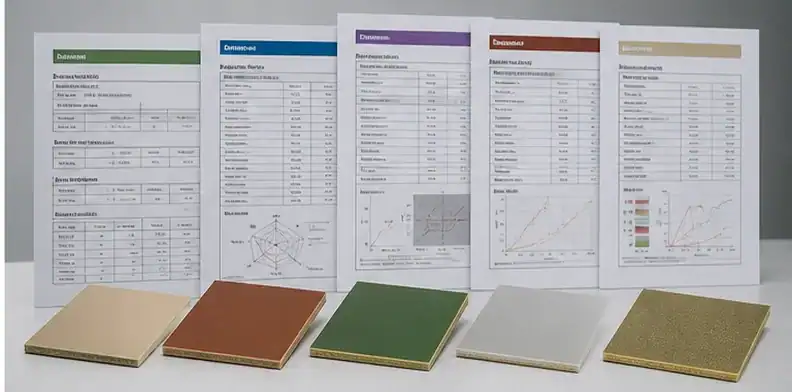
Quick Answer: A BT substrate grade comparison should separate material families, application fit, and qualification risk. MGC remains the most visible public BT reference, while Resonac, Nan Ya, Panasonic, Sumitomo Bakelite, Shengyi, and other suppliers may appear in alternate discussions; switching a qualified production package still requires engineering and customer approval.
Key takeaways
- Do not treat BT grades as interchangeable because the application, CTE, Dk, Df, and process route may differ.
- MGC HL832NX and GHPL-830NX are common public references for non-halogenated package-grade BT.
- Nan Ya and other suppliers may be reviewed for specific low-CTE, high-modulus, or cost and regional supply needs.
- An alternate material is a qualification decision, not only a purchasing negotiation.
Supplier names matter in BT because the grade carries process history, customer qualification, and material behavior. A new design can review alternates early. A qualified production package may be locked to a material family by customer approval, reliability data, or end-product documentation. For base parameter reading, use BT datasheet parameters. For China sourcing strategy, see sourcing BT from China. For the surrounding decisions across material data, package needs, process limits, and purchasing evidence, use the full BT PCB reference.
Table of Contents
- Who actually makes BT substrate materials?
- Why MGC became the common public reference
- What other suppliers may offer
- Where Chinese material options fit
- Why switching BT suppliers is difficult
- Which grade fits which application?
- How to qualify a BT alternate safely
Who actually makes BT substrate materials?
Several material companies can appear in BT substrate sourcing, but the supplier list alone does not decide grade fit.
MGC is the most visible public BT laminate reference. Other names in market discussions include Resonac or Hitachi Chemical heritage, Nan Ya, Panasonic, Sumitomo Bakelite, Isola, Shengyi, and regional material channels.
| Supplier or group | Typical buyer question | Review focus |
|---|---|---|
| MGC | Is the default BT family acceptable? | Known BT laminate families, halogen-free options, grade-specific data |
| Resonac / Hitachi Chemical heritage | Can legacy qualified material be supported? | Customer approval history and package fit |
| Nan Ya | Is a low-CTE or regional alternate possible? | Public grade data, qualification path, substrate maker support |
| Shengyi and China-side options | Can domestic sourcing support cost or lead time? | Datasheet match, availability, reliability evidence |
The useful comparison asks which grade supports the package need, which supplier can process it, and which customer approvals already exist. A cheaper alternate is not automatically usable in a released package.
This article compares grade and sourcing logic. It does not create a ranked vendor list or claim private market-share numbers.
Buyer call: Compare BT suppliers through grade, application, and qualification status rather than brand name alone.
Why MGC became the common public reference
MGC became the common reference because BT resin laminate technology is closely associated with MGC’s long public history in semiconductor packages.
MGC’s public pages describe BT laminate technology and multiple laminate families for semiconductor package applications. HL832NX and GHPL-830NX are widely cited non-halogenated examples for IC plastic packages.
Using MGC as a baseline helps engineering define what values must be matched: Tg, Dk, Df, CTE, moisture absorption, shrinkage, and flame classification. The baseline does not mean every project must use the same family.
Avoid vague statements such as MGC equivalent without deciding which properties must be equivalent.
Evidence rule: Use MGC as a reference point, then document the exact grade property set that alternatives must satisfy.
What other suppliers may offer
Other suppliers may offer BT or BT-like package materials for cost, regional supply, low-CTE, or application-specific needs.
Nan Ya, Resonac, Panasonic, Sumitomo Bakelite, Isola, and other material groups may appear in substrate conversations. Public and supplier-provided datasheets should be compared at the property and application level, not by category label.
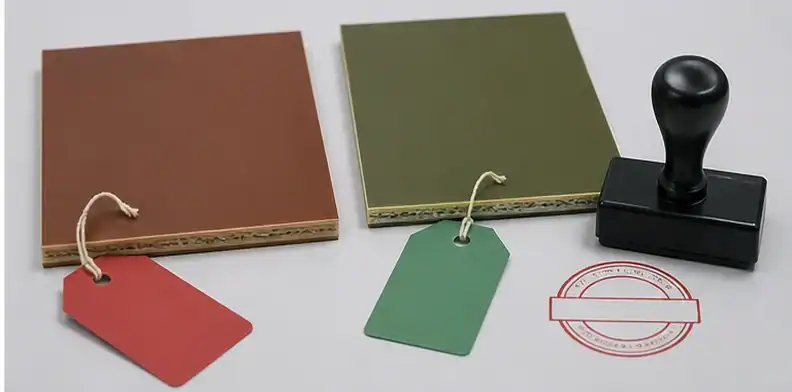
A new design can keep alternates open by specifying required properties rather than one unchangeable brand. A production design should not broaden the AVL without reliability evidence and customer approval.
Do not assume a supplier can process every alternate. Fabricator experience with the material is part of the grade comparison.
Engineering gate: Evaluate alternate BT grades with both material data and the fabricator’s process history.
Where Chinese material options fit
Chinese options can help sourcing flexibility, but they must be reviewed against the same package-substrate evidence as imported grades.
China-side materials and substrate supply are often discussed for lead-time control, cost pressure, and domestic supply-chain resilience. Shengyi and other domestic material paths may be relevant for some projects when the grade data and processing route fit.
For overseas buyers, the key is not whether the material is Chinese or Japanese. The key is whether the supplier can provide datasheet values, lot traceability, process history, and material-change control in English-friendly RFQ communication.
For a wider sourcing map, use QueenEMS’ China BT sourcing article.
Quote signal: Treat China-side BT options as candidates that still need grade, process, and reliability evidence.
Why switching BT suppliers is difficult
Switching BT suppliers is difficult because package qualification can lock material, process, and customer approval together.
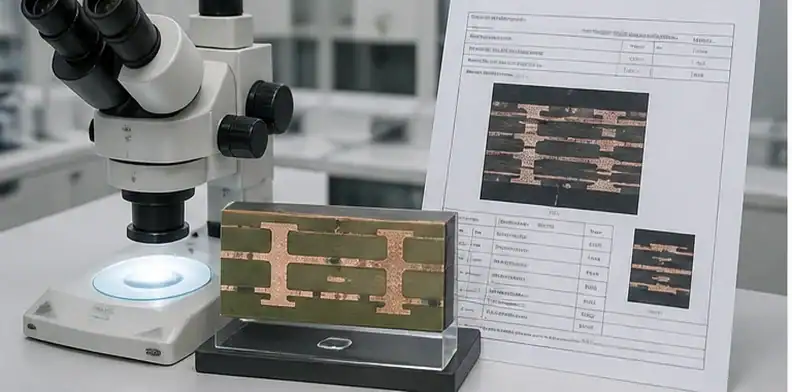
A qualified package may have passed reliability testing with one material family, one substrate maker, and one process flow. Changing only the laminate name can alter CTE, shrinkage, surface behavior, or warpage.
Before approving a switch, ask whether the end customer must re-approve the AVL, whether JEDEC or customer reliability tests must be repeated, and whether the production drawing allows equivalents.
A low price is not a substitute for requalification. For change-control workflow, use qualifying an alternate material.
Release check: A qualified production BT grade should change only through an approved material-substitution route.
Which grade fits which application?
Grade fit depends on application: memory, RF, SiP, thin packages, or cost-sensitive carriers each push different properties.
Memory may prioritize warpage, finish, and CTE. RF modules may care more about Dk and Df. Thin packages may need coreless support and low shrinkage. Cost-sensitive carriers may accept a broader material window.
Create an application row before comparing suppliers. The row should name the limiting risk, such as dielectric loss, low-CTE requirement, thin-core availability, bondable finish, or customer-approved source.
This application mapping keeps the supplier comparison from becoming a generic brand catalog.
Document rule: Select the BT grade that controls the project’s dominant failure mode.
How to qualify a BT alternate safely
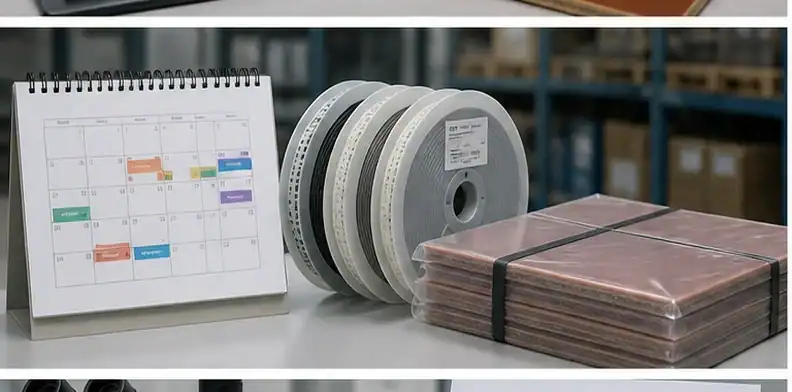
A safe BT alternate qualification starts with a property map, then moves into samples, reliability evidence, and customer approval.
The property map should compare Tg method, Dk and Df frequency, CTE, moisture, thickness availability, finish compatibility, and processing notes. The sample phase then verifies build quality, assembly behavior, and any customer tests.
QueenEMS can review whether the alternate is being offered as a direct equivalent, a cost alternate, or a new-design option. Those three cases need different approval depth.
Do not bury alternate approval in a purchase note. It belongs in engineering release records and customer communication when the product is qualified.
Design call: Approve BT alternates only after the replacement path is visible in data, samples, and customer rules.
Grade comparison field note: a BT supplier comparison should begin with the released grade and the risk being controlled. MGC may be the familiar public reference, but a useful alternate review asks which property must match. For memory, the match may be CTE, warpage, and finish compatibility. For RF, it may be Dk, Df, and frequency condition. For thin packages, it may be core availability, shrinkage, and stiffness. Without that property map, supplier comparison becomes a brand list rather than an engineering decision.
New designs have more room to evaluate Nan Ya, Resonac heritage materials, Shengyi, Panasonic, Sumitomo Bakelite, Isola, or other candidates. Qualified production designs have less freedom. Once a customer qualification, package reliability record, or drawing AVL points to one family, changing material can mean requalification. Purchasing should not use a cost quote from a new material to pressure a production supplier unless engineering has already mapped the approval route.
For China sourcing, the practical question is not whether a domestic option exists. It is whether the fabricator can process the grade, provide English datasheet support, quote current material availability, and explain what customer approval is needed. A domestic alternate can help cost or lead time for the right project, but it should still travel with datasheet comparison, sample plan, and deviation notice. QueenEMS can keep those threads separate so the buyer sees cost benefit, technical fit, and requalification burden independently.
Project-specific checks
| Buyer check | grade comparison log evidence | Use before quote release |
|---|---|---|
| MGC baseline | Nan Ya option | Confirms the grade comparison log basis before supplier comparison |
| Resonac history | Shengyi candidate | Shows which grade comparison log assumption needs engineering sign-off |
| Panasonic family | Sumitomo path | Prevents a quiet grade comparison log substitution during pilot planning |
- Verify the MGC baseline against the Shengyi candidate; that MGC baseline pairing protects the grade comparison log quote accuracy. If Isola review shifts, supplier wording changes; preserve qualified package in the grade comparison log so the MGC baseline reviewer sees why Shengyi candidate stayed controlled.
- Map the Nan Ya option against the Panasonic family; that Nan Ya option pairing protects the grade comparison log assembly release. If low-CTE need shifts, supplier wording changes; preserve alternate datasheet in the grade comparison log so the Nan Ya option reviewer sees why Panasonic family stayed controlled.
- Record the Resonac history against the Sumitomo path; that Resonac history pairing protects the grade comparison log customer approval. If customer AVL shifts, supplier wording changes; preserve sample coupon in the grade comparison log so the Resonac history reviewer sees why Sumitomo path stayed controlled.
- Compare the Shengyi candidate against the Isola review; that Shengyi candidate pairing protects the grade comparison log supplier comparison. If qualified package shifts, supplier wording changes; preserve reliability plan in the grade comparison log so the Shengyi candidate reviewer sees why Isola review stayed controlled.
- Separate the Panasonic family against the low-CTE need; that Panasonic family pairing protects the grade comparison log pilot planning. If alternate datasheet shifts, supplier wording changes; preserve regional sourcing in the grade comparison log so the Panasonic family reviewer sees why low-CTE need stayed controlled.
- Confirm the Sumitomo path against the customer AVL; that Sumitomo path pairing protects the grade comparison log shipment acceptance. If sample coupon shifts, supplier wording changes; preserve grade suffix in the grade comparison log so the Sumitomo path reviewer sees why customer AVL stayed controlled.
- Flag the Isola review against the qualified package; that Isola review pairing protects the grade comparison log repeat-order control. If reliability plan shifts, supplier wording changes; preserve supplier stock in the grade comparison log so the Isola review reviewer sees why qualified package stayed controlled.
- Freeze the low-CTE need against the alternate datasheet; that low-CTE need pairing protects the grade comparison log material continuity. If regional sourcing shifts, supplier wording changes; preserve MGC baseline in the grade comparison log so the low-CTE need reviewer sees why alternate datasheet stayed controlled.
- Trace the customer AVL against the sample coupon; that customer AVL pairing protects the grade comparison log quote accuracy. If grade suffix shifts, supplier wording changes; preserve Nan Ya option in the grade comparison log so the customer AVL reviewer sees why sample coupon stayed controlled.
- Review the qualified package against the reliability plan; that qualified package pairing protects the grade comparison log assembly release. If supplier stock shifts, supplier wording changes; preserve Resonac history in the grade comparison log so the qualified package reviewer sees why reliability plan stayed controlled.
- Name the alternate datasheet against the regional sourcing; that alternate datasheet pairing protects the grade comparison log customer approval. If MGC baseline shifts, supplier wording changes; preserve Shengyi candidate in the grade comparison log so the alternate datasheet reviewer sees why regional sourcing stayed controlled.
- Align the sample coupon against the grade suffix; that sample coupon pairing protects the grade comparison log supplier comparison. If Nan Ya option shifts, supplier wording changes; preserve Panasonic family in the grade comparison log so the sample coupon reviewer sees why grade suffix stayed controlled.
- Screen the reliability plan against the supplier stock; that reliability plan pairing protects the grade comparison log pilot planning. If Resonac history shifts, supplier wording changes; preserve Sumitomo path in the grade comparison log so the reliability plan reviewer sees why supplier stock stayed controlled.
- Tie the regional sourcing against the MGC baseline; that regional sourcing pairing protects the grade comparison log shipment acceptance. If Shengyi candidate shifts, supplier wording changes; preserve Isola review in the grade comparison log so the regional sourcing reviewer sees why MGC baseline stayed controlled.
- Verify the grade suffix against the Nan Ya option; that grade suffix pairing protects the grade comparison log repeat-order control. If Panasonic family shifts, supplier wording changes; preserve low-CTE need in the grade comparison log so the grade suffix reviewer sees why Nan Ya option stayed controlled.
- Map the supplier stock against the Resonac history; that supplier stock pairing protects the grade comparison log material continuity. If Sumitomo path shifts, supplier wording changes; preserve customer AVL in the grade comparison log so the supplier stock reviewer sees why Resonac history stayed controlled.
- Record the MGC baseline against the Shengyi candidate; that MGC baseline pairing protects the grade comparison log quote accuracy. If Isola review shifts, supplier wording changes; preserve qualified package in the grade comparison log so the MGC baseline reviewer sees why Shengyi candidate stayed controlled.
Sources
FAQ
Who makes BT substrate materials?
MGC is the most visible public reference, while Resonac, Nan Ya, Panasonic, Sumitomo Bakelite, Isola, Shengyi, and others can appear in alternate discussions.
Can I switch from MGC to another BT supplier?
Only after engineering and customer approval when the product is already qualified. New designs can evaluate alternates earlier.
Is Shengyi BT suitable?
It may be suitable for some designs if the exact grade, datasheet, fabricator experience, and reliability evidence match the application.
Are BT grades interchangeable?
No. Grade differences in CTE, Dk, Df, moisture, thickness, and processing can change package behavior.
Send QueenEMS your BT substrate grade comparison package
For a grade-comparison review, share the current approved material, target alternate, package notes, reliability class, customer AVL rules, and build quantity through QueenEMS alternate-material support. A BT material-build route response can keep baseline grade, allowed equivalent, and requalification risk separate.
Written by the QueenEMS Engineering Team
Upload your files today · Free DFM check before production · Ship worldwide
Get your PCB prototypes in as fast as 24 hours. We handle FR4, Rogers, and Flex up to 60 layers — free prototypes for 2–4 layer boards, no minimum order.
Just upload your Gerber + BOM — we source every part, assemble, and inspect (AOI + X‑Ray) so you don't have to chase suppliers. Boards ship in as fast as 24 hours.