

Quick Answer: You can source BT PCB and BT substrate work from China when the supplier can document the material route, line rules, surface finish, testing, traceability, and English RFQ support. The risk is not China by itself; the risk is accepting a vague BT label without material source, construction, and qualification evidence.
Key takeaways
- Overseas buyers should evaluate Chinese BT supply by evidence, not by website wording.
- BT raw material and specialty glass-cloth supply can still depend on Japanese and regional upstream sources.
- Ask for material traceability, line/space capability, finish options, reliability testing, and change-control rules.
- A quote-ready package should include Gerbers, stackup, material preference, finish, quantity, and reliability needs.
Table of Contents
- Can you reliably source BT PCB from China?
- What does China’s BT supply chain look like now?
- How dependent is BT on Japanese raw material?
- How do you evaluate a BT PCB supplier?
- What files and specs do you need to quote?
- Is Chinese BT cheaper, and is the trade-off worth it?
- What lead times should you expect?
- Bottom line: sourcing BT from China with confidence
Can you reliably source BT PCB from China?
Yes, but reliability depends on the supplier’s material control and process evidence. A Chinese supplier may be a board fabricator, substrate producer, trading office, or assembly partner, and those roles do not carry the same responsibility.
For overseas teams, the useful question is: can this partner turn the design package into a controlled BT quote with clear assumptions, alternates, documents, and communication timing?
For China sourcing, the first check is whether evidence can travel clearly across language, time-zone, and document boundaries. The supplier response should connect the BT claim to a material route, line rules, surface finish, inspection evidence, and export paperwork. A fast English quote is helpful, but it is only useful when the assumptions are visible before the PO.
A safe sourcing process puts technical assumptions in writing before commercial negotiation. That lets the China-side partner quote what can be built and lets the overseas buyer judge price against the same evidence.
Sourcing call: Keep evaluating a China quote until the material route, DFM notes, and document trail are visible. For the surrounding decisions across material data, package needs, process limits, and purchasing evidence, use the full BT PCB reference.
What does China’s BT supply chain look like now?
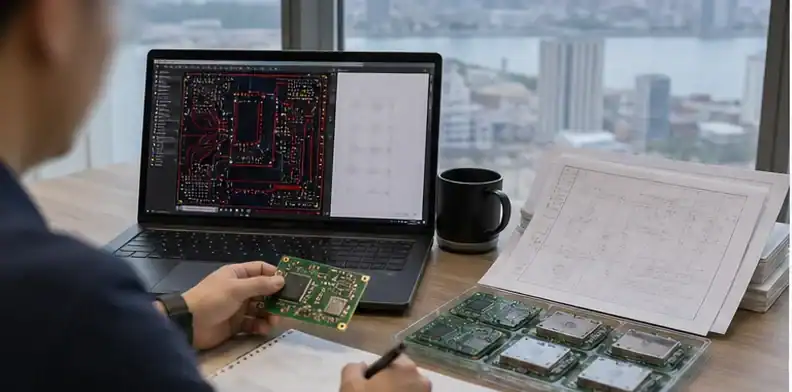
China has meaningful PCB, HDI, packaging, glass cloth, and electronics material capacity, and public reports continue to describe expansion around advanced package and low-CTE material demand. However, exact capacity numbers and qualification status should not be treated as universal availability for a buyer’s order.
Ask the supplier which parts are in-house, which are sourced, and which are qualified for your customer. A material source that exists in the market is not automatically approved for your project.
As of 2026, China-side BT and upstream expansion should be treated as real but uneven. Honghe’s Huangshi project and TaiBo’s added glass-cloth capacity are reported to support more low-CTE availability, and the regional share of low-expansion supply is expected to rise. That does not remove upstream dependency: BT raw materials still rely heavily on Japan’s MGC ecosystem, and cutting-edge glass cloth remains Japan-led. Overseas buyers should view this as a sourcing improvement that still requires supplier confirmation, not as a guarantee that every BT construction is immediately available.
For a small or mid-volume overseas project, this means the right partner is not only the company with the biggest upstream story. The buyer needs someone who can translate the supply-chain situation into a quote decision: what material is available now, which alternate is approved, what lead time is firm, and what document will prove the shipped lot matches the agreed route.
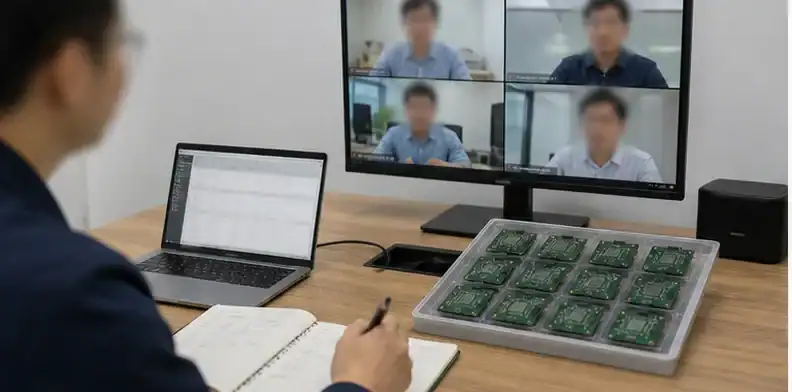
Communication cadence matters as much as factory identity. For US, Canadian, European, or Israeli buyers, a practical China partner should answer DFM questions in English, record exceptions before PO release, and state when a material answer must be reconfirmed because of allocation. That habit is often what separates a manageable overseas order from a surprise at receiving inspection.
For overseas sourcing, evidence must also survive handoff. Ask for English DFM notes, material route, stackup assumptions, inspection records, export document expectations, and the person who will confirm exceptions.
For China sourcing, evidence should prove both capability and role. Ask whether the partner is fabricating the board, sourcing a substrate, coordinating assembly, or acting as an export-facing project manager. Then connect that role to material route, line rules, surface finish, inspection records, and English DFM response.
A fast China quote can be useful, but it should be treated as conditional until the material route, documents, and communication path are confirmed.
Sourcing proof: A China-side BT quote is usable when material, process, documents, and exceptions are visible in English.
How dependent is BT on Japanese raw material?
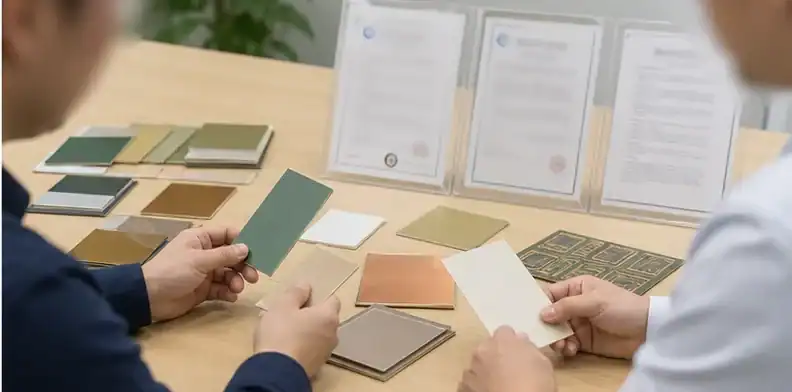
BT sourcing can still depend on upstream materials associated with Japanese suppliers, including MGC BT resin technology and specialty glass cloth used in advanced substrates. Nittobo describes T-glass as important for high-density package substrates, including AI semiconductors and high-performance CPUs.
This dependence does not block China sourcing, but it changes the risk record. The quote should name material source, approved alternates, and what happens if the preferred material is allocated.
The safest RFQ language is neutral and evidence-based. Ask whether the quoted route uses an imported BT material, a regional equivalent, or a locally available construction, then ask what customer approval is needed for each option. The answer should not be a national-origin claim; it should be a material-control record that engineering and receiving can check.
For China sourcing, datasheet values must be traceable to the quoted material route. Ask the supplier to identify the grade or approved equivalent and to state whether the values come from current supplier data or a general BT reference.
For China sourcing, datasheet values are only useful when they trace back to the quoted material route. The buyer should ask whether the value comes from the named grade, an approved equivalent, or a general BT reference, then decide if the answer is strong enough for overseas approval.
Parameter questions should be tied to supplier availability. A China-side quote should say which BT route is actually available for the requested schedule, which upstream material is imported or local, and whether the low-CTE glass-cloth requirement affects allocation. Values copied from a datasheet are not enough for sourcing risk.
Release rule: Overseas sourcing should reference supplier-controlled data and a written exception path.
How do you evaluate a BT PCB supplier?
| Check | Strong supplier answer | Weak supplier answer |
|---|---|---|
| Material identity | Exact grade, source, and alternate | ‘BT material’ only |
| Capability | Layer, line/space, via, finish limits | Generic HDI language |
| Reliability | Test records and acceptance method | No evidence until after order |
| Traceability | Lot and change-control rules | No material record |
| Communication | DFM questions in writing | Price-only response |
Proof rule: A supplier is credible when the quote makes assumptions visible before PO release.
In cross-border sourcing, the risky moment is often the handoff from quotation to PO. If the English quote, CAM notes, and purchase order do not carry the same material assumption, the receiving team may discover the gap too late.
The sourcing note should be readable by CAM, sales, purchasing, and receiving: material route, allowed alternates, documents required, and who approves exceptions. This reduces translation loss during the order.
Decision signal: A good China sourcing reply exposes exceptions in writing before the overseas buyer issues the PO.
What files and specs do you need to quote?
Send Gerber or ODB++ data, fabrication drawing, stackup, material preference, board outline, layer count, copper, line/space target, surface finish, impedance if needed, BGA/package notes, quantity, delivery country, and reliability requirements.
For file discipline, the QueenEMS article on quote files you actually need is a useful checklist. For customs planning, see HS codes for PCB import/export.
A low China quote is useful only when the buyer can see what is included. Material route, document package, inspection scope, and communication support often decide whether the landed cost is really lower.
For overseas sourcing, landed cost includes the evidence path. A low unit price can be real, but freight timing, export documents, English DFM review, material proof, inspection records, and payment terms decide whether the order is still economical when it reaches receiving.
Price rule: Use landed cost only after documents, inspection, freight, and material evidence are included.
Is Chinese BT cheaper, and is the trade-off worth it?
Chinese sourcing can be cost-effective, especially when the supplier has the right material path and communication model. It is not automatically cheaper after yield, qualification, document review, freight, and schedule risk are included.
The trade-off is worth it when the supplier’s evidence matches the design and the buyer can approve any alternate material in writing. It is not worth it when a low quote hides material substitution or undefined line limits.
The approval boundary should survive cross-border handoff. Engineering approves material or construction changes, purchasing manages quote and logistics, quality checks records, and the supplier documents exceptions in English.
The risk in overseas sourcing is that a low quote can move through time-zone handoffs faster than the DFM evidence. Keep the approval record tied to material proof, English exceptions, export documents, and receiving checks before payment or release.
Engineering should review the material and process limits, purchasing should check export terms and lead-time assumptions, quality should request readable inspection evidence, and the supplier should state who confirms exceptions across language and time-zone handoffs.
Approval rule: Cross-border BT orders need written approval for material, finish, construction, or document changes before production.
What lead times should you expect?
Lead time depends on material availability, layer count, line rules, surface finish, testing, and whether the job is prototype or production. As of 2026, buyers should expect BT-related lead times to be more sensitive to upstream allocation than ordinary FR-4 jobs.
Use the companion page on the 2026 BT supply chain outlook and confirm current lead time at quote and PO release.
The overseas sourcing risk appears when price and lead time arrive before DFM notes, material source, document scope, and exception ownership. Slow the order down long enough to capture those fields in English, because receiving teams cannot inspect a promise that was never written.
Before issuing the PO, align the English RFQ, drawing note, proforma invoice, inspection evidence, and shipment document expectations. Ask the supplier to confirm exceptions in one written reply.
Risk check: Pause the overseas order when documents, material evidence, or DFM exceptions are missing before payment.
Bottom line: sourcing BT from China with confidence
Source from China when the supplier can prove the material, process, evidence, and communication path. Do not source only from a keyword match.
Buyer call: The best sourcing path is the one that returns a controlled RFQ response, not only the lowest unit price.
A China sourcing file package should also include the buyer?s decision deadline. Suppliers can often answer faster when they know whether the request is for feasibility, prototype release, pilot build, or production sourcing. State the time zone for meetings, preferred response format, and who approves material exceptions. This avoids long email threads where sales, engineering, and purchasing each answer a different question. For BT work, a clear decision owner is often as useful as the lowest unit price.
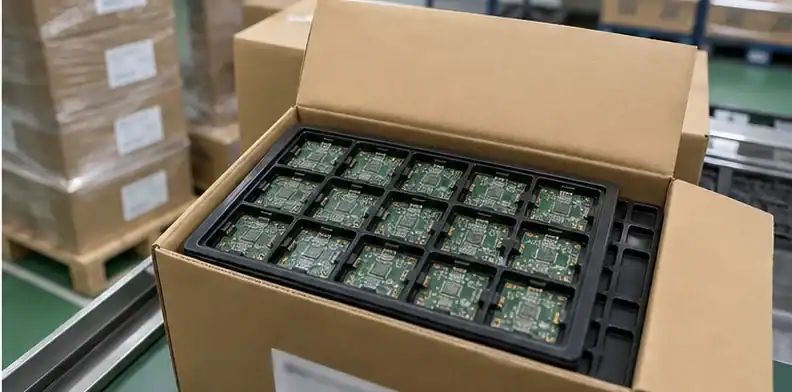
China sourcing should be read as a layered supply chain rather than a single factory label. A buyer may deal with a PCB fabricator, while the critical dependency sits one step upstream in BT laminate, low-CTE glass cloth, copper foil, or prepreg availability. That is why supplier qualification should ask what material family is actually available for the requested stackup and whether the quoted option is standard, allocated, or specially procured.
As of 2026, reported China-side expansion has become more relevant for overseas buyers. Honghe’s Huangshi base and TaiBo capacity additions are often discussed in relation to advanced electronic glass cloth and low-CTE supply, which can support substrate and high-density laminate demand. The useful question is not whether China is “self-sufficient” in a broad sense; it is whether the exact glass style and CCL route required by the project are locally available, partly localized, or still dependent on Japanese upstream supply.
That dependency should be stated neutrally in sourcing notes. Japanese raw material and specialty glass-cloth capability remains important in the BT ecosystem, especially for very low-CTE or advanced grades. A Chinese supplier may still be the right production partner, but the RFQ should identify whether material lead time is domestic, imported, or mixed.
Overseas buyers also need to distinguish communication ability from manufacturing ability. English DFM feedback, time-zone overlap, export paperwork, and clear material substitution boundaries are operational filters. They do not replace technical qualification, but they determine whether a small batch can move from quote to release without days of avoidable clarification.
The supplier conversation should also reveal escalation speed. A capable China partner should be able to say who answers material questions, who reviews CAM exceptions, who confirms export documents, and who contacts the buyer when an upstream laminate route changes. That operating clarity matters most on small overseas orders, where one missed clarification can consume the schedule advantage.
FAQ
Is Chinese BT reliable?
It can be, when the supplier documents material source, construction, process limits, and reliability evidence.
Who makes BT in China?
Different companies may supply materials, substrates, boards, or assembly support. Verify the role before treating a name as a complete solution.
What files do I need to quote?
Gerbers or ODB++, stackup, drawing, material preference, finish, quantity, package notes, and reliability requirements.
Is Chinese BT cheaper than Japanese supply?
Sometimes, but compare total cost including qualification, yield, lead time, and material approval.
Send QueenEMS a China BT sourcing package
To prepare a China sourcing quote, send Gerbers, stackup, material preference, line/space, finish, quantities, destination country, schedule, required documents, and approval boundaries through QueenEMS contact. QueenEMS can turn that package into an English-ready China BT substrate sourcing request with visible DFM and material assumptions.
Sources
Written by the QueenEMS Engineering Team
Upload your files today · Free DFM check before production · Ship worldwide
Get your PCB prototypes in as fast as 24 hours. We handle FR4, Rogers, and Flex up to 60 layers — free prototypes for 2–4 layer boards, no minimum order.
Just upload your Gerber + BOM — we source every part, assemble, and inspect (AOI + X‑Ray) so you don't have to chase suppliers. Boards ship in as fast as 24 hours.