
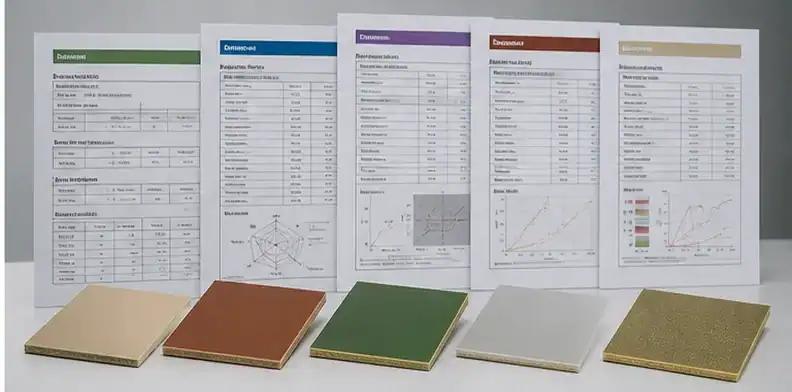
Quick Answer: Choose BT over FR-4 when the board is really a package substrate, when operating or assembly temperature pushes too close to FR-4 margin, when fine-pitch BGA or CSP warpage becomes a yield risk, or when CTE match to silicon matters more than laminate cost. Stay with FR-4 or high-Tg FR-4 when the product is a normal board-level assembly with enough heat, pitch, and reliability margin.
Key takeaways
- The switch trigger is not better material in the abstract; it is package stress, heat margin, warpage, or silicon CTE fit.
- High-Tg FR-4 can solve some board-level temperature problems without jumping to BT.
- BT is usually justified for BGA, CSP, memory, RF IC, SiP, and substrate-like builds.
- Cost review belongs after the failure mode is known, not before the material decision.
The common debate is not BT versus FR-4 as a property table. The useful question is when a design stops behaving like a normal PCB and starts behaving like a package substrate. QueenEMS already covers how BT and FR-4 differ. This page turns that difference into a release decision for engineers and buyers who must decide whether the extra cost and sourcing effort are justified. The related BT substrate guide ties this detail back to BT material behavior, package substrate choices, and buying checks.
Table of Contents
- When should you choose BT over FR-4?
- Is operating temperature the real trigger?
- Are you building a package substrate?
- Does fine-pitch BGA push the design to BT?
- When is high-Tg FR-4 enough instead?
- When is BT overkill for a board-level product?
- The decision in three engineering questions
When should you choose BT over FR-4?
Choose BT when package reliability becomes the dominant design problem rather than ordinary PCB laminate selection.
The fast screen is simple: is the design supporting a die, a compact package, a fine-pitch array, or a high-temperature assembly profile that FR-4 cannot margin safely? Any yes answer deserves a BT review.
| Trigger | Stay with FR-4 or high-Tg FR-4 | Move toward BT |
|---|---|---|
| Temperature | Assembly and service conditions leave comfortable Tg margin | Lead-free reflow, storage, or service temperature reduces resin margin |
| Interconnect | Standard SMT, ordinary BGA pitch, board-level routing | CSP, memory package, RF IC substrate, fine-pitch BGA carrier |
| Mechanical stress | Warpage and CTE mismatch are not the yield limiter | Silicon match, thin substrate, or coplanarity controls acceptance |
| Commercial pressure | Cost sensitivity dominates and risk is low | Package yield or reliability loss costs more than the material upgrade |
Purchasing should not ask suppliers to quote BT only because it sounds premium. Engineering should first identify the failure mode: heat margin, warpage, CTE stress, or substrate-level routing.
This page does not repeat the full FR-4 comparison table. It uses the already-known differences to decide when the design crosses the threshold.
Buyer call: Move to BT only when a named risk is stronger than the added material cost and sourcing effort.
Is operating temperature the real trigger?
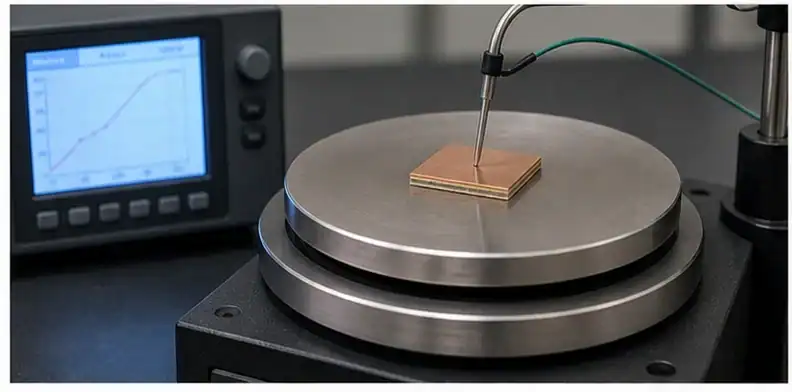
Temperature is a trigger when FR-4 Tg margin is too narrow for assembly, operation, storage, or repeat reflow.
Standard FR-4 Tg can be around 130-140 deg C, while high-Tg FR-4 may sit around 170-180 deg C. BT grades used for package substrates can offer higher thermal resistance, but the correct comparison must include the actual grade and test method.
A product that only sees moderate service temperature may not need BT. A package carrier that faces multiple lead-free reflows, molding heat, or tight dimensional stability after reflow can justify a BT review earlier.
Temperature alone is not enough. A large thermal margin with no fine-pitch, no die stress, and no thin substrate may still point to high-Tg FR-4.
Evidence rule: Use BT for temperature only when the real process profile is too close to the released FR-4 margin.
Are you building a package substrate?
Package substrates are the strongest natural home for BT.
BGA, CSP, memory packages, RF IC substrates, and SiP carriers need tighter control than many board-level assemblies. The material must support thin construction, lower expansion, dimensional stability, and high-density routing near a semiconductor device.
A buyer sourcing a package-like board should send package outline, ball map, die or component notes, thickness target, and surface finish requirements. Those files tell the supplier whether the RFQ is still PCB-level or substrate-level.
For memory-specific selection, use QueenEMS’ selecting BT for memory page rather than overloading this switch article.
Engineering gate: Once the build is package-like, treat BT as a candidate material before trimming cost.
Does fine-pitch BGA push the design to BT?
Fine-pitch BGA can push a design toward BT when warpage, registration, and solder-joint stress become yield limiters.
A board can pass ordinary electrical checks and still fail assembly because the package substrate or carrier moves too much. Thin BT constructions and lower-CTE grades are often reviewed when ball pitch, coplanarity, and substrate stiffness matter.
The RFQ should include ball pitch, finished thickness, warpage or coplanarity target, copper balance, and assembly profile. Without those details, the supplier can only guess whether high-Tg FR-4, BT, or another route is appropriate.
Fine-pitch alone is not a magic threshold. The decision changes when pitch combines with thin substrate, large component area, or strict coplanarity.
Quote signal: Use BT for fine-pitch work when assembly yield depends on substrate stability rather than only routing density.
When is high-Tg FR-4 enough instead?
High-Tg FR-4 is enough when the job remains board-level and the main issue is moderate heat margin.
Many industrial, consumer, and control boards do not need BT. High-Tg FR-4 can cover elevated reflow and service needs while keeping material availability, panel size, cost, and supplier options simpler.
Before approving BT, ask whether high-Tg FR-4 with a controlled stack-up and verified assembly profile solves the problem. That question can save cost when the board has no package-substrate behavior.
The middle option should not be used to hide a package risk. If the design needs low warpage around a die or fine-pitch package carrier, high-Tg FR-4 may only postpone the failure.
Release check: Keep high-Tg FR-4 in play for board-level heat margin; stop using it as a substitute for package-substrate control.
When is BT overkill for a board-level product?
BT is overkill when the application has ordinary SMT density, enough thermal headroom, and no substrate-level reliability requirement.
General control boards, low-cost modules, prototypes for fit checks, and non-package assemblies often gain little from BT. In those cases, the added material cost, sourcing time, and supplier qualification can reduce project speed without improving field reliability.
This is where the project should link to QueenEMS’ what BT costs article. Cost is not the opening argument, but it matters once engineering confirms that FR-4 risk is low.
Avoid the opposite mistake as well. A low-volume order can still need BT if the design contains a real package or CTE problem.
Document rule: Do not buy BT for prestige; buy it when FR-4 creates a measurable engineering risk.
The decision in three engineering questions
The final decision can be made with three questions: package behavior, heat margin, and CTE or warpage sensitivity.
Ask whether the design supports a semiconductor package function, whether the thermal profile erodes FR-4 margin, and whether low expansion or coplanarity controls yield. The more yes answers appear, the stronger the BT case becomes.
A release note can be short: BT selected because the design uses a thin fine-pitch package carrier with low-warpage requirement and multiple lead-free reflows. That sentence gives purchasing, quality, and supplier teams a real boundary.
For stack-up details after the material choice, move next to QueenEMS’ choosing BT thickness and layers page.
Design call: Approve BT when at least one clear substrate-level trigger is documented and the selected grade matches that trigger.
Switch field note for FR-4 versus BT: the buyer should write the trigger in engineering language. A weak note says use BT for better reliability. A usable note says the package uses a thin fine-pitch carrier, the assembly profile includes multiple lead-free reflows, and the released design requires lower warpage than the current FR-4 option can defend. That trigger lets purchasing understand why a cheaper FR-4 quote is not comparable. It also lets a supplier propose high-Tg FR-4 only when the real failure mode is temperature margin rather than package stress.
The middle path deserves attention. High-Tg FR-4 can be a sound choice for board-level products that run warmer than ordinary consumer boards but still do not behave like semiconductor package substrates. It keeps a wider supplier base and simpler sourcing. BT becomes stronger when the design is closer to BGA carrier, CSP, memory, RF IC substrate, or SiP territory. In those cases, silicon expansion, die area, ball pitch, substrate thickness, and coplanarity can dominate. A material decision that ignores those package details will look logical in a spreadsheet and still fail during assembly.
For overseas low-volume projects, ask suppliers to quote the decision boundary rather than only the material. One option can be high-Tg FR-4 with defined temperature margin, and another can be BT with the package-risk reason stated. QueenEMS can review both if the files include service temperature, reflow count, pitch, finished thickness, and target reliability. The result is not simply which material is stronger; it is which material solves the real problem without overbuilding the rest of the board.
What to send in the RFQ
Ask both material options against the same package and assembly requirements. A useful RFQ states the package function, ball pitch, finished thickness, stack-up, assembly reflow profile, service environment, and the required warpage or coplanarity limit. Name the current FR-4 grade and the specific failure mode that prompted a BT review; do not ask for a material substitution without that context.
| Decision evidence | Question for the supplier |
|---|---|
| Package and pitch | Is this a board-level assembly or a package carrier, and which routing or registration constraint drives the material choice? |
| Thermal profile | How does the proposed laminate grade perform against the actual assembly and service conditions? |
| Warpage and reliability | What acceptance limit applies, and how will the selected stack-up be checked at the relevant temperature? |
| Commercial boundary | What changes in lead time, qualification, tooling, and cost if BT replaces the FR-4 baseline? |
Request a proposed laminate grade and its datasheet for each option. Compare the values using the same test method and temperature range; a generic “BT” versus “FR-4” label is not a specification. Release the option that meets the documented package or board-level requirement, and retain the supplier’s rationale with the approved stack-up.
Sources
FAQ
When should I switch from FR-4 to BT?
Switch when package behavior, high heat margin, fine-pitch warpage, or silicon CTE matching becomes the limiting risk.
Is high-Tg FR-4 enough?
Often yes for board-level assemblies with moderate temperature stress and no package-substrate function.
Is BT overkill for a normal PCB?
Yes in many ordinary SMT products. BT adds value mainly when FR-4 creates package or reliability risk.
Do I need BT for every BGA?
No. Review BT when the BGA is fine-pitch, thin, package-like, high reliability, or warpage-sensitive.
Send QueenEMS your when to choose BT substrate over FR-4 package
For a material switch review, share the current FR-4 stack-up, target package, ball pitch, service temperature, reflow count, finished thickness, and cost boundary through QueenEMS material review. The answer can be a practical BT material manufacturing route path or a decision to keep high-Tg FR-4.
Written by the QueenEMS Engineering Team
Upload your files today · Free DFM check before production · Ship worldwide
Get your PCB prototypes in as fast as 24 hours. We handle FR4, Rogers, and hybrid boards up to 40 layers in volume production, with advanced builds subject to engineering review — free prototypes for 2–4 layer FR-4 boards, no minimum order.
Just upload your Gerber + BOM — we source every part, assemble, and inspect (AOI + X‑Ray) so you don't have to chase suppliers. Boards ship in as fast as 24 hours.