
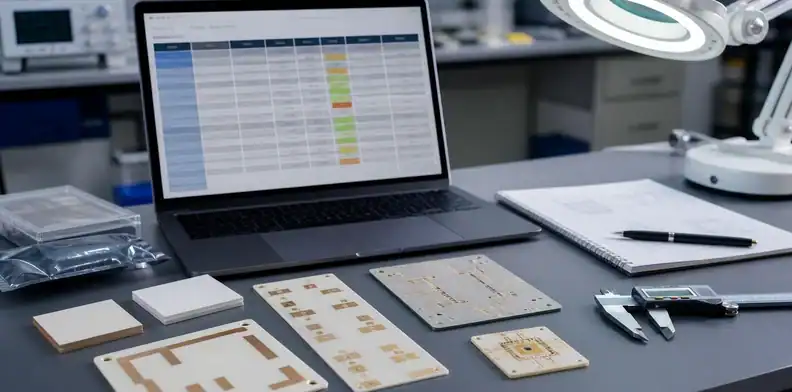
Quick Answer: A China ceramic PCB supplier shortlist should separate ceramic materials, metallized substrates, electronic packages and fabrication or assembly services. Sanhuan / CCTC, Sinopack, Bomin Electronics, Ferrotec’s China power-substrate operations and Huaqing appear in different parts of that supply chain. Fenghua provides broader electronic-material context. The comparison below identifies publicly documented offerings and the questions needed to determine order fit; it is not a ranking of quality, capacity or prototype service.
Key takeaways – Do not treat every Chinese ceramic company as a PCB contract manufacturer. – Separate ceramic material makers, metallized substrate makers, electronic ceramic package makers, and PCB/PCBA partners. – Ask for process evidence: AlN or alumina base material, DPC, DBC, AMB, HTCC, metallization, surface finish, inspection, and accepted file inputs. – Large Chinese leaders may be suitable for strategic supply, but not every prototype, low-volume, or mixed PCB plus PCBA order fits their commercial model.
Chinese ceramic PCB sourcing looks simple until the buyer starts comparing names. One company may make alumina or aluminum nitride ceramic sheets, another may make DBC or AMB substrates for power modules, and a third may be a listed electronic components group with ceramic powders and ceramic parts.
That distinction matters for buyers in the United States, Canada, Europe, and Israel. A power electronics team may need AlN or Si3N4 AMB for a high-current module. A hardware startup may only need a small ceramic PCB prototype, readable DFM notes, and a quote that includes fabrication, assembly, and export documents.
This guide does not rank companies by claimed capacity, private customer names, or unverifiable market-share figures. It uses public, checkable positioning and then explains how to choose the right partner type.
Table of Contents
- How this China ceramic PCB manufacturer list was selected
- Chinese ceramic PCB and substrate companies compared
- Which of these fit AlN vs Alumina vs DBC/AMB projects?
- Can large listed suppliers handle prototype and low-volume orders?
- How to verify a Chinese ceramic PCB supplier before you commit
- How to tell a ceramic PCB maker from a material or package supplier
- How to choose the right partner for your project type
- FAQ
How this China ceramic PCB manufacturer list was selected
This list was selected for overseas buyers who need a credible map of China’s ceramic PCB and ceramic substrate supply base. The selection standard is public verifiability: listed-company status where applicable, established group backing, official product pages, public investor disclosures, and a clear connection to ceramic substrates, AlN, alumina, DBC, AMB, DPC, HTCC, or electronic ceramics.
The list is intentionally narrow. Many websites claim to be ceramic PCB factories, but a copied product page is not qualification evidence. A useful China ceramic PCB manufacturer list should tell the buyer what each company appears to be, what process family it is associated with, and where it may not fit a small export order.
This article avoids unverified monthly capacity, private customer names, yield figures, and “number one” claims unless a reliable public source can support them.
The company descriptions below were checked against corporate product information and issuer disclosures in September 2026. This is a document review, not a factory audit or a test of their substrates. A listed-company identity helps establish who an organization is; it does not prove that a particular site can build your drawing.
Chinese ceramic PCB and substrate companies compared
The strongest Chinese names in ceramic PCB sourcing are not all the same type of supplier. Some are ceramic material leaders. Some are electronic ceramic package specialists. Some focus on metallized substrates for power modules. This table gives the sourcing map before the project-specific decision.
| Company | Public positioning | Ceramic-related capability to verify | Listed / group status | Best-fit sourcing use |
|---|---|---|---|---|
| Sanhuan / CCTC | Chinese electronic components and advanced materials group | Electronic ceramics and advanced-materials portfolio; verify the current substrate grade | Shenzhen-listed, stock code 300408 | Electronic-ceramic material and packaging research |
| Sinopack | Electronic ceramic packaging and ceramic material specialist | Alumina and aluminum nitride ceramics, ceramic packages, AlN substrates | Shenzhen-listed, stock code 003031 | AlN ceramic substrate and electronic ceramic packaging reference |
| Bomin Electronics | PCB company with ceramic substrate expansion | AMB and DPC ceramic substrates; verify the specific ceramic and construction | Listed company, stock code 603936 | Buyers studying PCB-linked ceramic substrate capability |
| Ferrotec China power-substrate operations | Power electronic substrate supplier within Ferrotec group | DCB, AMB, DPC, DAB substrates using ceramics such as alumina, AlN, and Si3N4 | Ferrotec group-backed China operations | Power module, EV, industrial, rail, and high-power substrate projects |
| Huaqing Electronic | Ceramic substrate and metallized ceramic supplier | AlN and alumina substrates, DBC and AMB products; other routes require current confirmation | Established specialist supplier | Custom ceramic substrate and metallized ceramic review |
| Fenghua Advanced Technology | Electronic components and electronic materials group | Ceramic powders, electronic pastes, ceramic-related electronic materials | Listed company, stock code 000636 | Broad electronic ceramics reference, not a ceramic PCB-first shortlist name |
Sanhuan / CCTC.
Sanhuan / CCTC is Chaozhou Three-Circle (Group) Co., Ltd. Its corporate website identifies an electronic-components and advanced-materials business founded in 1970 and listed in Shenzhen in 2014 under code 300408. Use it as a starting point for ceramic-material and packaging research, then obtain the current product grade and supply entity relevant to your order.
Do not automatically treat Sanhuan as the right path for every overseas prototype or low-volume RFQ. Before sending a small project, ask whether the company or its channel will support custom metallization, panelization, DFM review, export documentation, and assembly scope.
Sinopack.
Sinopack is Hebei Sinopack Electronic Technology Co., Ltd. Its product catalog includes AlN ceramic substrates and electronic ceramic packages. The company profile supplied to the 2026 CIOE exhibitor directory identifies stock code 003031. A package offering should not be interpreted as an interchangeable bare-board fabrication service.
Sinopack is especially relevant when the project involves AlN ceramic substrates or electronic ceramic packaging rather than a conventional PCB purchasing path. Ask whether the quoted item is a bare ceramic substrate, a metallized substrate, a package, or a fabricated PCB-like part.
Bomin Electronics.
Bomin Electronics is a PCB company with a ceramic-substrate business. In its March 18, 2026 issuer announcement, Bomin identifies AMB and DPC ceramic-substrate operations in Shenzhen. This supports including those process families in a sourcing inquiry; it does not establish every ceramic/process combination or a minimum order for your project.
For Bomin, ask which legal entity and production site would supply the quoted part, and request the current construction-specific data. Do not infer DBC availability or a complete AlN/alumina/Si₃N₄ process matrix from a general ceramic-substrate announcement.
Ferrotec China power-substrate operations.
The Ferrotec power-electronic-substrate page describes DCB, AMB, DAB and DPC product families and identifies operations in Dongtai, Shanghai and Sichuan. DAB uses aluminum metallization; it is not another name for a copper process. The ceramic depends on the particular construction, so confirm the selected product and manufacturing site rather than applying the group-wide portfolio to every location.
Ferrotec is most relevant to power electronics rather than general ceramic PCB shopping. It is a reference point for EV, rail, industrial equipment, renewable energy, and high-power semiconductor packaging supply chains.
Huaqing Electronic.
Huaqing is Fujian Huaqing Electronic Material Technology Co., Ltd. Its current product catalog includes AlN and alumina ceramic substrates, DBC and AMB products. An older project announcement mentioning HTCC is insufficient to establish the present production status or order fit of that route; request current product documentation where it is needed.
For buyer screening, Huaqing belongs in the specialist supplier category. Confirm whether the supplier is quoting ceramic sheets, metallized ceramic substrates, or PCB-like patterned ceramic parts, and ask which inspection and documentation are included.
Fenghua Advanced Technology.
Fenghua is Guangdong Fenghua Advanced Technology Holding Co., Ltd., identified as Shenzhen-listed code 000636 in its company profile. Its product categories include ceramic powders, precious-metal powders and electronic pastes. These establish an upstream materials role, not evidence that it accepts custom patterned ceramic PCB orders.
Use Fenghua as a reference for the wider Chinese electronic ceramics landscape. For an RFQ, ask whether the supplier manufactures the actual ceramic PCB or substrate you need, or only supplies upstream material, components, or related ceramic products.
These names represent different supply-chain roles. Start with the deliverable you need, then establish which entity offers it. Company size alone cannot answer whether a supplier can meet a particular drawing, quantity or inspection plan.
Which of these fit AlN vs Alumina vs DBC/AMB projects?
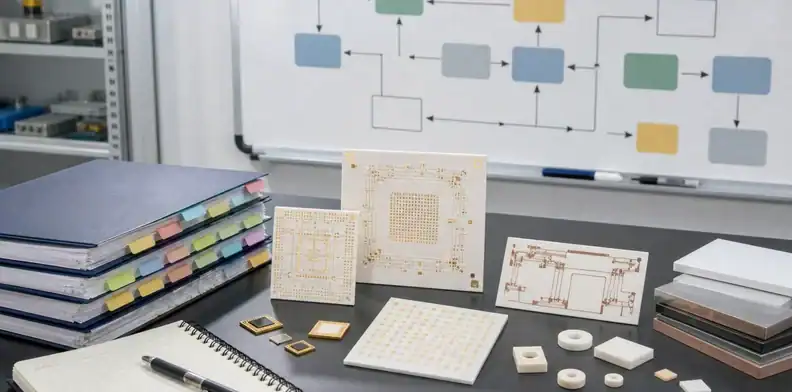
The right Chinese ceramic PCB supplier depends less on the brand list and more on the substrate structure. AlN, alumina, DPC, DBC, AMB, HTCC, and ceramic packages solve different manufacturing problems.
| Project requirement | Better supplier type to approach first | Names from this map that may be relevant | What to verify |
|---|---|---|---|
| Bare alumina ceramic substrate | Ceramic material or substrate maker | Huaqing; confirm other sources against a current grade sheet | Grade, thickness, tolerance, surface quality, laser cutting, lot records |
| Bare AlN substrate | AlN ceramic material or substrate specialist | Sinopack, Huaqing | Thermal conductivity class, thickness, flatness, surface finish, machining limits |
| DPC ceramic circuit | Metallized ceramic substrate supplier | Bomin, Ferrotec | Copper pattern limits, plating, surface finish, minimum feature, inspection data |
| DBC power substrate | Power ceramic substrate supplier | Ferrotec, Huaqing | Ceramic type, copper thickness, peel strength evidence, void/defect inspection |
| AMB substrate | Power module substrate specialist | Bomin, Ferrotec, Huaqing | AlN or Si3N4 base, brazing system, thermal cycling evidence, copper and finish |
| Electronic ceramic package | Ceramic package specialist | Sinopack | Package drawing, metallization, sealing, plating, test and documentation scope |
| Prototype ceramic PCB with assembly | Export-facing PCB/PCBA partner with ceramic sourcing control | QueenEMS project route | DFM feedback, file control, supplier selection, assembly, documents, communication |
Alumina is mature and cost-effective for many LED, insulation, and heat-spreading applications. AlN is considered when thermal conductivity is more demanding. DBC and AMB move the project into power substrate territory, where copper bonding, thermal cycling, ceramic fracture risk, and interface reliability become central.
For a deeper process decision, use the construction comparison in AMB ceramic PCB vs DBC. For broader manufacturing capability context, the ceramic PCB manufacturer page gives a practical buyer-facing overview.
Choose the supplier category after naming the ceramic and metallization. A source for an AlN sheet may not offer the patterned AMB substrate or assembled prototype that your next build requires.
Can large listed suppliers handle prototype and low-volume orders?
Large listed suppliers may handle prototypes, but they are not always the fastest path for overseas low-volume orders. The answer depends on commercial fit, engineering support model, minimum order expectations, communication process, and whether the buyer needs only a substrate or a complete PCB plus assembly flow.
Many overseas buyers ask the same question after finding impressive Chinese listed companies: “Can they build my small batch?” Sometimes yes, through a sales channel, distributor, sample program, or specific business unit. Sometimes the supplier is optimized for large account programs and does not want a low-volume engineering RFQ with incomplete files.
The risk is not only price. A small buyer may lose schedule while waiting for the wrong department, a minimum order answer, or a quotation that excludes assembly, test, packaging, or export paperwork. A missing copper thickness, finish, flatness tolerance, or thermal-cycle requirement can also change the quote.
A material producer can be appropriate for developing a substrate specification, while a fabrication or assembly partner may be needed for a working prototype. Confirm order size, engineering communication and delivery format directly; neither a listing nor a company category establishes those services.
How to verify a Chinese ceramic PCB supplier before you commit
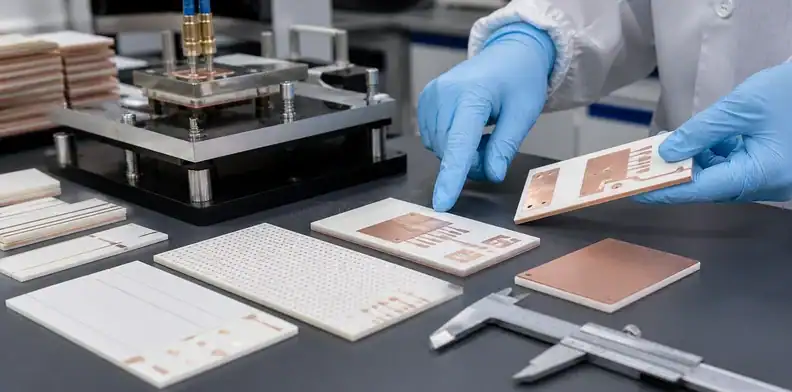
A Chinese ceramic PCB supplier should be verified by process evidence, not by keyword claims. Ask whether the company manufactures the ceramic base, metallizes the substrate, patterns copper, assembles components, or coordinates part of the chain through qualified partners.
Start with four questions:
- Which ceramic materials can you quote for this drawing: alumina, AlN, Si3N4, ZTA, or another material?
- Which process route applies: thick film, thin film, DPC, DBC, AMB, HTCC, LTCC, or a machined ceramic part?
- What files and drawings control the quote: Gerber, ODB++, DXF, fabrication drawing, stackup table, ceramic substrate drawing, plating specification, or assembly drawing?
- What evidence will be returned: DFM notes, material datasheet, dimensional report, visual criteria, surface finish confirmation, electrical test, thermal or reliability records, certificate of conformity, packing photos, or export documents?
Then test the answer. A real ceramic PCB or substrate supplier should ask about copper thickness, finished thickness, metallization, surface finish, outline method, hole quality, flatness, thermal path, operating temperature, insulation requirements, and whether assembly heat will stress the ceramic.
Language and time-zone handling are part of verification. Request a written DFM response in English, a named technical contact, a quote revision number, and a clear list of assumptions. Certification documents should be current, readable, and tied to the quoting entity. For broader screening, review the practical supplier checks in how to evaluate a ceramic PCB manufacturer.
Before approval, make the quotation identify the material grade, metallization, controlled revision, acceptance plan and unresolved exceptions. These details connect a public capability claim to the part being purchased.
How to tell a ceramic PCB maker from a material or package supplier
The fastest way to separate a ceramic PCB maker from a ceramic material or package supplier is to ask what output the quotation controls. A material supplier may quote AlN or alumina sheets. A package supplier may quote ceramic housings or metallized packages. A ceramic PCB partner should be able to quote the board or substrate as a controlled circuit item, with copper pattern, finish, drawing notes, inspection, and assembly limits addressed in writing.
Use the RFQ response as the test. A real ceramic PCB response should mention Gerber or ODB++ review, ceramic material, metallization or copper-bonding process, copper thickness, surface finish, outline tolerance, hole or slot rules, and thermal or assembly concerns. A material-only response usually stops at sheet size, grade, thickness, and machining. A package-only response usually centers on housing, seal, plating, and package drawing.
An illustrative sourcing problem is two offers for the same AlN outline: one covers a ceramic blank, while the other includes the copper pattern and finish. Their dimensions agree, so a spreadsheet may make the first offer look cheaper. Before asking either supplier to match price, place the quoted drawing beside the circuit drawing. Mark every operation needed to turn the offered item into the part your assembly team will receive.
Send the missing operations back as specific questions: who patterns the copper, applies the required finish and checks the completed circuit? If a separate processor is involved, ask which drawing and material identification travel with the work. A material supplier need not perform those operations itself, but the remaining work must have an owner and a quotation before the two purchasing routes can be compared.
Check the revised offer against the marked drawing, then confirm that a proposed sample and inspection report represent that finished deliverable. A photograph of a blank closes none of the circuit questions. The useful result is a complete supply route with visible exclusions; it is not proof of production capability, and an incomplete first reply alone is not evidence that the company is unreliable.
How to choose the right partner for your project type
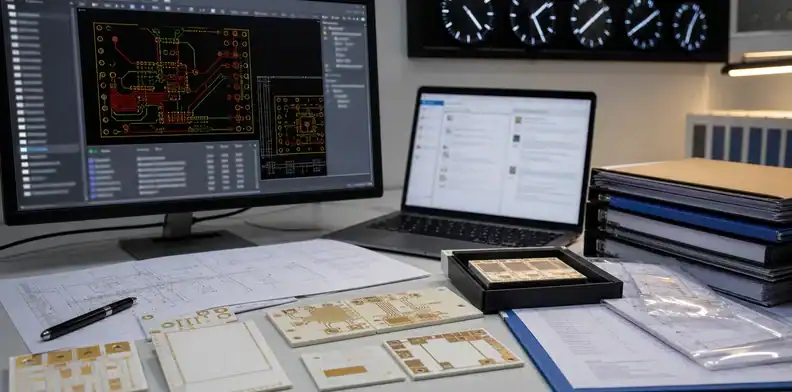
Choose the partner by project stage. A material investigation, a power module substrate program, and an overseas low-volume prototype need different supplier behavior.
| Project type | Supplier model that usually fits | Buyer action |
|---|---|---|
| Material benchmarking | Listed ceramic material or substrate leader | Ask for datasheets, available grades, sample policy, and lot documentation |
| Power module substrate | AMB/DBC/DCB specialist | Freeze ceramic type, copper thickness, finish, reliability target, and inspection plan |
| Optical, laser, or RF ceramic circuit | DPC or thin-film/thick-film specialist | Confirm line/space, plating, surface finish, flatness, and packaging requirements |
| Startup prototype | Export-facing ceramic PCB partner | Send Gerber/ODB++, drawing, stackup, material target, quantity, assembly scope, and schedule |
| Low-volume overseas production | PCB plus PCBA coordination partner | Require DFM notes, quote assumptions, incoming material control, assembly review, and shipment documents |
QueenEMS fits the last two categories best. The role is not to replace China’s large ceramic material leaders. It is to help overseas buyers turn a small or medium ceramic PCB requirement into a controlled manufacturing conversation: file review, material and process selection, DFM feedback, PCB fabrication, PCBA coordination when needed, English communication, and documentation.
That is useful when the buyer does not yet know whether the design needs alumina, AlN, DPC, DBC, or AMB. The first useful response is a clear engineering reply: which option is manufacturable, which drawing note is missing, what engineering must approve, and what will change price or lead time.
For a project-stage view, use the companion article on how to choose ceramic PCB manufacturer by project type.
For an overseas prototype, evaluate the actual RFQ response: were exceptions identified, were questions resolved, and did the quotation describe the accepted deliverable? This provides more useful project evidence than a general claim of international experience.
FAQ
Who are the top ceramic PCB manufacturers in China?
Start with Sanhuan / CCTC, Sinopack, Bomin Electronics, Ferrotec’s China power-substrate operations, Huaqing Electronic, and Fenghua Advanced Technology for broader electronic ceramics context. They are not interchangeable; some are material or substrate leaders, while others are electronic ceramics or power-substrate specialists.
What is the difference between a ceramic substrate manufacturer and a ceramic PCB manufacturer?
A ceramic substrate manufacturer may supply alumina, AlN, Si3N4, DBC, AMB, or metallized ceramic substrates. A ceramic PCB manufacturer or project partner should also understand PCB data, copper pattern requirements, surface finish, DFM review, assembly constraints, and buyer documentation.
Are Chinese AlN ceramic PCB manufacturers suitable for overseas prototypes?
Some are, but many AlN leaders are optimized for material or substrate supply rather than small overseas prototype handling. Verify minimum quantity, drawing review speed, English DFM support, quotation assumptions, accepted file formats, and whether assembly is included.
Should I choose DBC or AMB for a power electronics project?
DBC is often used for insulated heat dissipation substrates in power devices, while AMB is commonly considered when higher bonding reliability and demanding thermal cycling are central. The decision depends on ceramic material, power density, thermal cycling, copper thickness, module structure, and qualification target.
How do I know if a Chinese supplier really makes ceramic PCBs?
Ask for process-specific answers. A real supplier should identify the ceramic material, metallization process, copper thickness capability, finish options, inspection method, drawing requirements, and assembly limitations. A vague answer that only repeats “ceramic PCB” without process detail is not enough for supplier approval.
What should I send for a ceramic PCB quotation?
Send Gerber or ODB++ data, fabrication drawing, stackup or substrate drawing, ceramic material preference, copper thickness, surface finish, dimensions and tolerances, operating temperature notes, quantity, delivery target, and assembly files if PCBA is required.
Conclusion
The best China ceramic PCB manufacturer is not always the largest ceramic company. For material benchmarking or strategic substrate supply, listed leaders and established substrate specialists are the right place to study. For overseas prototypes, low-volume builds, and projects that need PCB fabrication plus PCBA coordination, the better partner is often the one that can return clear DFM questions, quote assumptions, material choices, and buyer-ready documentation.
Send QueenEMS your ceramic PCB data package if the next step is a practical build review rather than a supplier-name spreadsheet. Include the Gerber or ODB++ files, fabrication drawing, target ceramic material, copper thickness, finish, quantity, thermal or reliability notes, assembly files if needed, and your delivery country. The engineering team can help review whether alumina, AlN, DPC, DBC, or AMB is the right quoting path and help you contact us with a controlled RFQ package.
Sources
- The linked corporate catalogs and issuer announcement support the company descriptions above. Product listings are supplier statements, not independent validation of yield, reliability, capacity or suitability for a particular order.
- Retain a dated copy of the document used for supplier approval. Before a repeat order, check whether the legal entity, production site, material grade or process route has changed and whether reapproval is required.
Written by the QueenEMS Engineering Team
Upload your files today · Free DFM check before production · Ship worldwide
Get your PCB prototypes in as fast as 24 hours. We handle FR4, Rogers, and Flex up to 60 layers — free prototypes for 2–4 layer boards, no minimum order.
Just upload your Gerber + BOM — we source every part, assemble, and inspect (AOI + X‑Ray) so you don't have to chase suppliers. Boards ship in as fast as 24 hours.