
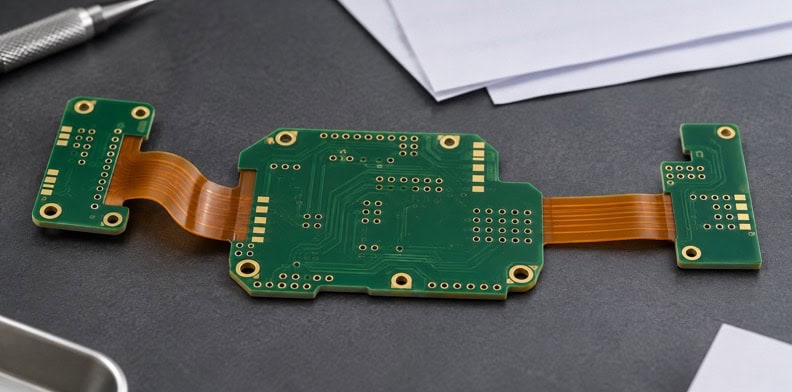
Quick Answer: Compare rigid flex PCB cost only after the quotations describe the same quantity, file revision and finished construction. Ask suppliers to identify material and process assumptions, included tests, one-time charges and delivery terms. Resolve exceptions with the design owner so a lower unit price is not mistaken for a lower price for the same board.
You have already chosen rigid-flex. The purchasing question is now which supplier’s quotation meets the requirement, and what each price actually includes. This guide compares offers for one design; it does not compare rigid-flex with separate boards and cables or calculate a universal board price.
Why do rigid-flex quotes for the same design differ?
The same files can leave different construction or commercial assumptions open, so suppliers may price different scopes. Material selection, regional construction, finished requirements and included evidence all need clarification. A quotation based on an alternate is not directly comparable with one based on the requested construction until the difference is resolved.
Start with the requirement rather than a list of reasons one manufacturer might be cheaper. Ask each supplier to name the documents it reviewed and the construction it assumes. An omitted question is not confirmation that the supplier interpreted the design exactly as you intended.
Construction labels need particular care. If an offer calls the board “bookbinder,” confirm the actual separated leaves and length arrangement. The bookbinder rigid-flex definition guide explains that physical distinction; a label alone does not establish an equivalent build or manufacturing route.
Minco’s rigid-flex cost whitepaper discusses construction complexity, dimensional requirements, panel use and early manufacturing input. Check how each supplier interprets those requirements for your board. The paper’s historical price comparison does not establish a current market rate or a QueenEMS quotation.
These drivers affect different parts of the offer. A more demanding regional construction can change the proposed manufacturing work. Tight dimensional requirements can affect how a finished feature is produced and verified. The board outline and delivery panel influence how the supplier proposes to arrange the work. Ask which assumptions materially affect the quotation instead of requesting a speculative breakdown of every internal production cost.
A supplier may also price an unresolved item conservatively, while another may leave it excluded. For example, an unspecified local support might be included under an assumption in one offer and marked “to be confirmed” in another. The price difference then includes an information difference. Resolve the support requirement and obtain comparable responses before treating the initial spread as a measure of manufacturing efficiency.
Which scope items must match when you compare prices?
Match the quantity tier, fabrication revision, regional construction, controlled materials, finish and required delivery format. Record what remains open to a supplier proposal and which exceptions change the offer. Compare prices against that common requirement, rather than assuming matching board names or matching Gerber attachments mean matching finished products.
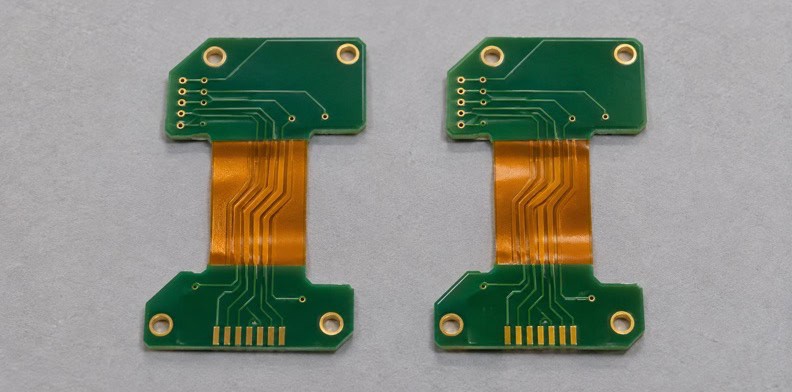
Also name the board performance standard and class required by the order, where applicable, and ask whether each supplier quoted to that requirement. Different acceptance requirements can change the product being offered even when the fabrication files match.
Use one comparison sheet per design revision. Keep each supplier’s wording beside the buyer’s requirement so purchasing can identify a missing answer without rewriting it as an assumed match. A blank should remain an open question, not become a pass.
| Comparison item | Common requirement | Record from each supplier | Question to close |
|---|---|---|---|
| Quantity and revision | Named order tier and complete file set | Quantity and files used for the offer | Are the quotations based on the same design? |
| Construction and materials | Regional stackup and controlled identities | Assumptions, alternates and open items | Does any proposal change the board? |
| Acceptance requirement | Board performance standard and class named in the order | Confirmation of the quoted requirement or exception | Are both offers priced to the same acceptance basis? |
| Finished delivery | Finish, outline and panel or individual format | Included deliverable and exceptions | Would receiving get the same usable item? |
| Charges | First-order and repeat-order comparison | Unit price and separately stated charges | Which charges recur or depend on changes? |
| Evidence | Agreed tests, coupons and records | Included scope and exclusions | Does the price include the required evidence? |
| Schedule and delivery | Required date and delivery basis | Schedule conditions, validity and inclusions | Which conditions could change the offer? |
This blank worksheet is an editorial comparison aid; QueenEMS does not present it as its internal purchasing procedure. Add separate columns for each supplier’s actual response. Obtain clarification where an offer does not state enough information to complete the comparison.
For an illustrative comparison, Supplier A quotes the requested material and includes the named inspection report. Supplier B offers a lower unit price, assumes an alternate material and excludes that report. The first comparison result is “scope unresolved,” not “B saves money.” Ask B to price the original requirement, or obtain engineering approval for the alternate and price its agreed evidence. Only then compare the total offers on the same quantity and delivery basis.
Check the unit behind the unit price. An individual finished circuit and a delivery panel containing several circuits are different purchasing units. Confirm the number of usable circuits represented by each priced item and whether the delivered panel arrangement meets the next operation’s needs. Keep prototype and production quantities in separate rows; an offer at another tier is an option to evaluate, not a matching response.
Controlled materials need equally explicit treatment. Where the order requires a named construction, record the supplier’s confirmation or proposed alternate. Where a material remains open, state the function it must satisfy and compare the proposals as proposals. Do not change the buyer’s requirement in the comparison sheet merely to make all quotations appear compliant.
How do you separate one-time charges from repeat prices?
Ask suppliers to identify tooling, engineering or other separately charged items alongside the unit price and quantity. Clarify what can be reused on a repeat order and what would trigger another charge. Compare the first order and a defined repeat order separately to make their different charge conditions visible.
“Tooling included” and a separately listed tooling charge can produce different-looking quotations. Neither wording tells you the repeat-order arrangement unless the supplier explains it. Record whether a revision, changed delivery panel or altered construction requires a new review or charge.
For each quantity tier, use the quoted unit price multiplied by the quantity, then add the separately quoted charges needed for that order. Build the repeat-order comparison again using the supplier’s stated reuse conditions. A lower unit price can be offset by a different first-order charge; the actual quoted amounts determine the result.
Ask for enough detail to understand the purchased scope; a supplier may not disclose its internal cost model. You do not need to invent a yield assumption, labor rate or lamination count to compare the offered deliverables. Ask the supplier to state a technical route where it affects the approved construction; do not infer the route from the price.
Separate recurring charges from charges triggered by a change. A report requested with every shipment belongs in the repeat-order scope even if it appears outside the unit-price line. A new engineering charge may instead depend on a revised construction or artwork. Ask the supplier to state those conditions. Calling all separately listed charges “one-time” can understate the comparison for future orders.
Also clarify the commercial terms for reuse, such as whether a repeat price depends on the same revision, quantity tier or ordering period. These are questions for the actual quotation, not universal supplier policies. If the reuse terms are missing, mark the repeat-order amount as incomplete rather than assuming that every charge from the first order disappears.
What testing and inspection should each quote state?
Each offer should identify electrical checks, construction evidence, test coupons and reports included for the proposed order. Test coupons are sample structures built on the production panel for evaluation. Specify which requirements the records address and what is excluded; “fully tested” alone does not define a comparable verification scope.
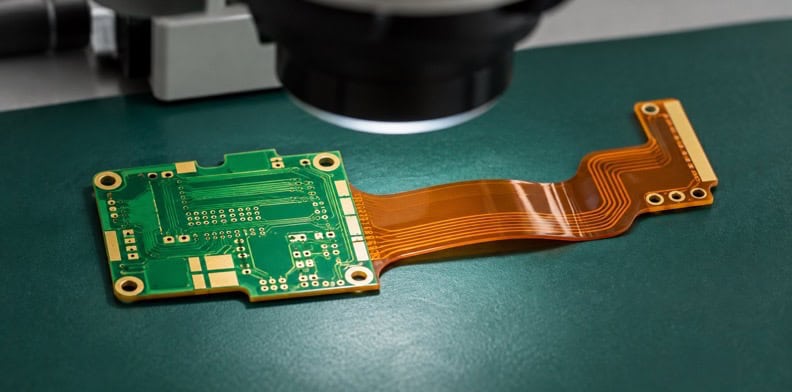
Separate a required result from the method proposed to obtain it. If the order needs evidence for a named region, transition or controlled electrical feature, identify that feature in the inquiry. Ask the supplier to explain how its quoted inspection or test relates to the requirement.
Do not assume that every available method applies to every bare-board construction. QueenEMS offers flying-probe testing; whether it is appropriate and included for a particular order should be confirmed during quotation. The availability of a test does not establish dynamic bend endurance or every other product requirement.
Keep any qualification request distinct from routine lot evidence. A supplier may price them separately or need more information before accepting the request. The comparison sheet should show that uncertainty, including who will agree the method, specimen and acceptance requirements.
For a hypothetical requirement to document a named construction feature, ask what specimen the supplier proposes to examine and which record will identify the result. Evidence from a test structure must be related to the feature the order actually requires. A list of available equipment does not answer that question. Likewise, an electrical check of connections should not be assumed to demonstrate a mechanical bending requirement.
Record when the evidence is supplied and whether review is required before shipment. An included report that arrives after a buyer’s release decision may not meet the intended purchasing task. Both suppliers should understand the same timing and deliverable, even if they propose different inspection methods for engineering to assess.
How do exceptions and alternates change the comparison?
A stated exception is part of the offer and needs a disposition from the responsible buyer or design authority. Compare the requested and proposed conditions, identify the affected region or document, and record the decision. Do not treat a lower price based on an unapproved alternate as an equivalent manufacturing quotation.
An alternative material may affect more than the material line. Ask which drawing, finished requirement or evidence plan would change and whether the quoted schedule depends on accepting it. Purchasing can coordinate the response, but engineering should decide changes to technical requirements.
Keep a short exception record for each supplier: the original requirement, proposed departure, affected file or region, commercial effect stated by the supplier, decision owner and approved revision. This record is an editorial suggestion. It supplies no automatic acceptance rule and does not replace the agreed order documents.
Distinguish an alternate quotation from the compliant base offer. If a supplier proposes a construction change to reduce cost, keep that option in its own comparison column until engineering approves it. Request the original requirement as a base price where the supplier can provide it. That makes the commercial benefit of the proposed change visible without quietly changing what the other suppliers were asked to manufacture.
After selecting the proposal, use the rigid-flex production release checklist for the subsequent verification stage. Quote comparison decides whether the offers are equivalent enough to choose between; release review checks the construction and evidence agreed for manufacture.
How do lead time and delivery terms affect the decision?
Confirm the schedule, its starting conditions, quotation validity and what delivery includes. PCB lead time depends on materials and project requirements, so compare the actual proposed schedules rather than a generic turnaround claim. Clarify freight, packing and other inclusions where they affect the amount or usable delivery being compared.
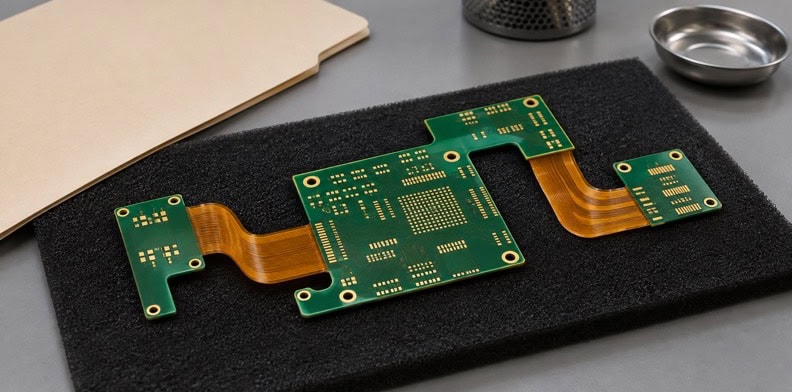
A schedule based on approved fabrication data is different from one stated while material or construction choices remain open. Ask what must be settled before the quoted period begins. Keep the required delivery date visible so a commercially attractive offer is not accepted on an incompatible schedule.
Likewise, confirm the currency and quantity basis and whether the price includes the stated delivery format. Use the supplier’s explicit conditions when building the purchasing comparison. Do not manufacture a landed-cost figure from missing freight or tax information.
Keep the quotation and its clarifications together so the purchase order refers to one agreed version.
Frequently Asked Questions
Is the lowest rigid-flex quote the cheapest option?
Only compare the total offered amounts after the quantity, construction, required evidence and delivery basis match. A lower unit price for a different scope does not establish a saving on the requested board.
Should I ask suppliers to itemize their quotes?
Ask them to distinguish unit pricing, separate charges, inclusions and exclusions sufficiently to compare the offers. A supplier may not disclose its internal costs, so focus on the scope you will receive.
Can I request quotes before the construction is final?
Yes. Identify preliminary requirements and decisions left open to proposals. Expect assumptions to differ, then obtain an updated offer when the design owner approves the construction.
Does a prototype price predict the production price?
Request the intended quantity tiers separately and clarify the assumptions for repeat orders. A prototype offer alone does not define production pricing or availability.
Send your released files for a quote and free DFM review.
Send the released regional stackup and drawings for a comparable quote. List materials, quantities, inspection scope and any proposed deviations.
If assembly is included in the comparison, use the same BOM revision, sourcing basis and inspection scope. Ask each quote to identify exclusions.