
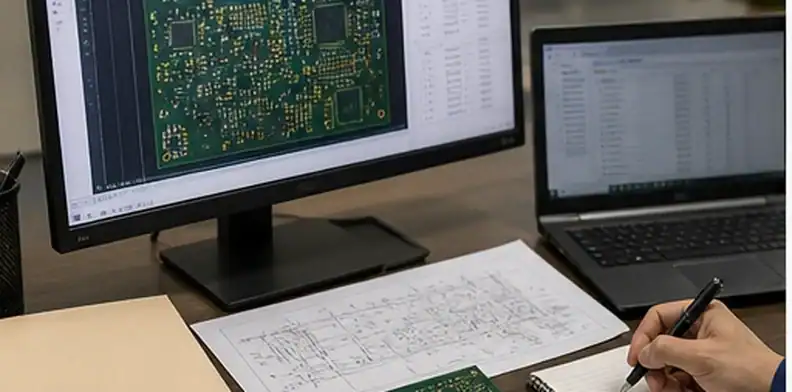
Quick Answer: PCB electrical test requirements should define the netlist basis, test method, coverage, report evidence, exceptions, and shipment hold rule before release. The purchasing record should make clear whether the supplier will use fixture test, flying probe, or another approved method, and what proof must ship with the lot.
Key takeaways
- Define whether the order needs fixture test, flying probe, 100 percent test, or a waiver.
- Tie the test program to the released netlist and revision.
- Ask for lot-level proof before shipment, not only a capability statement.
- Keep electrical test separate from impedance, solderability, and dimensional evidence.
The practical question is whether electrical test is included, what it proves, and what record ships with the lot. A buyer should settle that before fabrication release, because testing the wrong revision or waiving evidence can become expensive after components are placed.
Table of Contents
- Define what electrical test is expected to prove
- Choose flying probe, fixture, or sample evidence by risk
- What does 100 percent test really mean?
- Tie the test to the released netlist and revision
- Ask for useful records before shipment
- Know what electrical test does not cover
- Write the hold rule into the PO
- Send QueenEMS the electrical-test package
Define what electrical test is expected to prove
PCB electrical test should prove that the fabricated board matches the intended connectivity of the released data. The buyer should define whether the supplier tests every board, a sample, or only special lots.
This requirement should be visible in the quote because test method can affect cost and lead time. A buyer who assumes testing is included may discover too late that the supplier quoted a lower-control option.
The buyer should decide whether electrical test is a quote inclusion, a shipment requirement, or a risk-based add-on. Leaving that unclear creates disputes when a bare board fails after components have already been placed.
For purchasing, the first check is whether the quote explicitly includes electrical test. Many buyers assume it is standard, but a low-cost quote may have excluded a report, fixture, or full-lot coverage.
The quote should say whether electrical test is included, whether a report is included, and whether any fixture or special netlist cost is separate. That small line prevents a low price from hiding a missing control.
For assemblies with expensive parts, electrical-test evidence is not just a PCB quality document. It is a release control that helps prevent open or shorted bare boards from consuming components, labor, and customer schedule before the defect is discovered.
| Test method | Best fit | Buyer caution |
|---|---|---|
| Flying probe | Prototype or changing design | Flexible but slower |
| Fixture | Stable volume order | Fast but tooling needed |
| 100 percent test | High assembly or field risk | Every shipped board should pass |
| Sample test | Low-risk qualified source | Document waiver |
Choose flying probe, fixture, or sample evidence by risk
Flying probe, fixture test, or sample evidence should be chosen by revision stability, board density, order volume, and assembly value. Prototype and changing designs often fit flying probe; stable repeat orders may justify fixture test; very low-risk work may use a narrower evidence rule if the buyer approves it.
For engineering, the key question is which data created the test. A CAD netlist, Gerber-derived netlist, ODB++ package, and CAM-modified production file should not be treated as interchangeable without review.
A practical RFQ sentence is: “Quote 100 percent bare-board electrical test against released netlist and provide lot-level pass record before shipment; identify any exclusions before PO.”
Flying probe is helpful when the design is still changing because it avoids fixture commitment. Fixture test can make sense when the design is stable and the quantity supports tooling cost.
Flying probe and fixture test both have a place. The buyer should ask which method is quoted, whether tooling is needed, and whether test time affects lead time before choosing only by price.
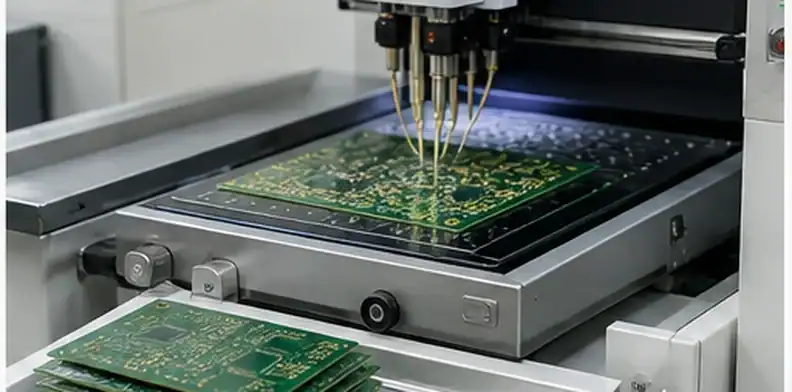
Flying probe is flexible and useful for prototypes, engineering changes, and lower quantities. Fixture testing can be faster for volume but may require tooling cost and lead time.
The supplier answer should name the method and the evidence. “Flying probe, 100 percent shipped boards, pass statement by lot” is much more useful than “ET included.”
For boards with expensive parts, the test decision should be made before assembly planning, not after a shipment arrives. A low-value prototype may tolerate a lighter record, but a production lot going directly to SMT needs stronger confidence that obvious opens and shorts were screened before components are consumed.
If the supplier proposes sample testing, the buyer should ask why sample evidence is acceptable for this order. A simple qualified reorder may tolerate a lighter record, while a new revision or high-value assembly usually needs a stronger full-lot requirement.
| Test record | What it should show | Why it matters |
|---|---|---|
| Netlist basis | Which released data controls test | Prevents wrong-revision pass |
| Tested quantity | How many boards passed | Controls shipment |
| Fail/retest count | Whether defects occurred | Shows process risk |
| Lot ID | Which shipment record applies | Supports traceability |
Buyer call: A test method is only useful when the buyer also knows the netlist basis, tested quantity, and shipment evidence.
What does 100 percent test really mean?
One hundred percent test means each shipped board should pass the defined electrical test, but the buyer still needs to know the coverage, method, and exception rule.
A buyer should ask whether “100 percent” refers to all produced boards, all shipped boards, or all boards after failed units were removed and replaced. Those distinctions matter when the delivered quantity is tight or when the assembler expects every board in the carton to be immediately usable.
For quality, the evidence should connect to the shipment. A generic statement that the factory can perform test is weaker than a lot-level record naming the quantity and pass status.
A 100 percent statement should also explain what happens to failed boards. The buyer should know whether failed boards are scrapped, repaired, retested, replaced, or shipped as excluded samples.
The phrase 100 percent test should be tied to shipped boards, not only produced panels. If failed boards are scrapped, repaired, or replaced, the buyer needs to know how the final accepted quantity was created.
If the supplier says electrical test is not needed, ask why. The answer may be acceptable for very simple boards, but it should be recorded as a buyer-approved waiver rather than an assumption.
| Evidence type | What it proves | What it does not prove |
|---|---|---|
| Electrical test | Opens and shorts | Connectivity evidence |
| Impedance report | Controlled impedance | Separate coupon/test |
| Solderability test | Pad wetting risk | Separate surface-finish evidence |
| Dimensional report | Fit and outline | Separate inspection |
Decision rule: Treat “100 percent test” as a shipped-board acceptance rule, not as a vague factory capability claim.
Tie the test to the released netlist and revision
Electrical-test evidence is useful only when it is tied to the released netlist and board revision. A pass report for an old file set, an unreleased CAM interpretation, or an unnamed revision cannot reliably protect assembly.
For assembly, the test reduces the chance of loading components onto boards with opens or shorts. That is why higher-value assemblies should not rely only on a supplier’s verbal assurance.
Netlist control should include the final CAM output when the supplier edits manufacturability details. The buyer does not need every CAM detail, but it should know whether any electrical interpretation changed.
Revision control is often the hidden risk. If CAM corrected a net, merged data, or changed test access, the supplier should confirm which file generated the final test program.
The test must connect to the correct revision. A supplier can test perfectly against the wrong netlist and still ship unusable boards.
The netlist basis should be visible before testing starts. If CAM has corrected or interpreted data, the buyer should know which released file and revision generated the final test program.
Proof rule: A pass report protects assembly only when it names the same revision and netlist basis that the buyer released.
Ask for useful records before shipment
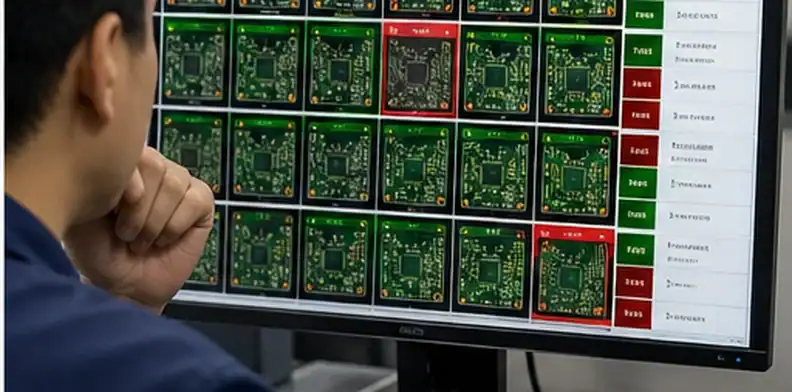
Useful shipment records should say what was tested, how many boards passed, which lot or panel set was covered, which revision or netlist was used, and how failures were removed or retested. A generic “E-test OK” statement is weaker than a lot-level record tied to the shipment.
For controlled impedance boards, electrical continuity test and impedance verification are different. The buyer should request impedance coupon data separately when signal integrity is part of the release condition.
A report does not need to be long. A one-page lot record with the right fields is often more useful than a generic certificate with no quantity or revision.
A useful test record is short but lot-specific. It should not be a generic certificate reused for every order. Quantity, lot ID, method, pass status, and exception handling are the minimum practical fields.
Useful records can include pass statement, lot number, test method, tested quantity, fail quantity, retest status, and whether any boards were scrapped or repaired.
A useful shipment record names the tested quantity, lot, revision, and pass status. A factory capability statement is not enough when the buyer needs to release boards into assembly.
The report should be short enough for purchasing to use but specific enough for engineering to trust. It does not need confidential fixture details, but it should let the buyer match the evidence to the correct shipment, revision, and acceptance decision.
Connect this to PCB quality documents before shipment.
Shipment rule: The record should be specific enough to release the lot, not merely prove that the supplier owns test equipment.
Know what electrical test does not cover
Electrical test does not prove every board feature. It mainly checks connectivity against the chosen test basis, so solderability, cleanliness, impedance, dimensions, material identity, finish condition, and assembly fit still need separate controls when they matter.
For reorders, the buyer should confirm whether the same test program is reused and whether any revision change reopened the test basis. A small layout change can make old test evidence irrelevant.
The boundary matters when a failure appears after assembly. A board that passed connectivity can still have solderability, contamination, or dimensional problems, so the claim path depends on the actual symptom.
Electrical test boundaries should be explained to non-engineering buyers. A finance or purchasing team may think test pass means the board is fully qualified, when it only proves the defined connectivity checks.
Electrical test does not prove solderability, dimensions, laminate identity, or cosmetic acceptance. It catches connectivity defects; other risks need other evidence.
For a simple prototype, the buyer may approve a lighter test record if the assembly risk is low. For boards that will receive expensive components or ship to a customer build, the test record should be lot-specific and kept with the release package.
If the concern is pad wetting or finish age, use PCB solderability test for bare boards. For mechanical risk, review PCB fabrication tolerances.
Acceptance rule: A connectivity pass does not replace solderability, impedance, dimensional, or material evidence when those risks matter to the product.
Write the hold rule into the PO
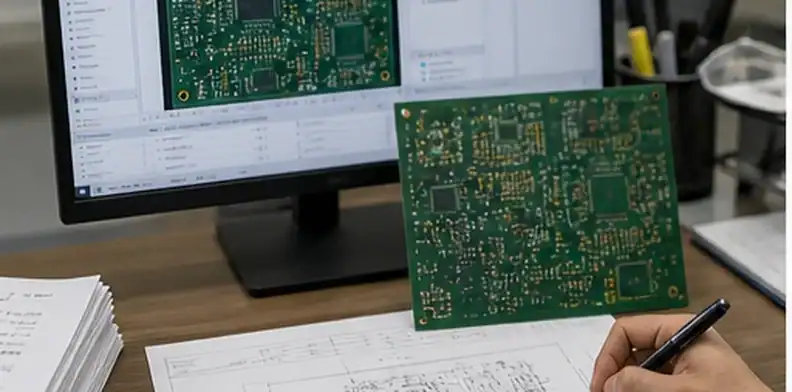
The PO should say what missing test evidence will do: hold shipment, hold final payment, pause assembly release, or require buyer approval. That prevents the supplier from treating the report as optional paperwork after the boards are already moving.
For repaired boards, the PO should say whether repair is allowed. Some buyers accept repaired bare boards for prototypes; others reject repair for production or reliability-sensitive products.
A shipment hold rule should be practical. If the buyer needs the record before release, state it in the PO and give the supplier a clear email address or portal location for the document.
The hold rule prevents shipment from outrunning evidence. If the report is required before release, state that the supplier must send it before carrier pickup or balance payment.
The same hold rule should cover missing or confusing reports. A document that names the wrong revision, tested quantity, or lot should trigger clarification before shipment, because the risk is not only whether test was performed; it is whether the evidence belongs to the boards being released.
The PO should say whether shipment is allowed without electrical-test confirmation. For higher-risk boards, the supplier should not ship until the buyer receives the required record.
The PO hold rule should name who can waive missing test evidence. Without an approval owner, shipping may proceed because the lot is packed even though the required record is still missing.
A useful hold rule does not need to be legalistic. It can say that shipment waits for lot-level electrical-test confirmation unless engineering approves a written waiver. That gives logistics a clear shipping rule and gives engineering control over the technical risk.
Payment and shipment can use different gates. Some buyers need the test record before balance payment; others need it before assembly release. Write the intended gate clearly so finance, logistics, and engineering do not apply three different rules to the same lot.
Release rule: Missing or mismatched test evidence should trigger buyer review before shipment, payment, or assembly release moves forward.
Send QueenEMS the electrical-test package
QueenEMS can compare the test request with board density, assembly value, netlist source, and supplier report sample. That helps decide whether standard electrical test is enough or whether the RFQ needs a stronger shipment hold rule.
For shipment release, avoid vague requests like ?send QC documents.? Name the electrical-test evidence specifically so the supplier knows what document blocks carrier pickup, balance payment, or assembly release.
If your PCB or PCBA project needs test evidence before shipment, contact QueenEMS with the Gerber or ODB++ data, netlist source, revision, quantity, assembly risk, and supplier report sample.
FAQ
Is PCB electrical test always included in a quote?
Not always. Many PCB suppliers include electrical test for standard production, but the quote may exclude a report, fixture cost, full-lot coverage, or special netlist requirement. The buyer should ask what is included before approving the PO.
Does 100 percent electrical test prove the PCB is good for assembly?
No. It helps prove opens and shorts against the tested netlist, but it does not prove solderability, impedance, dimensional fit, cleanliness, or assembly process compatibility.
Should prototypes use flying probe test?
Often yes, because flying probe avoids dedicated fixture cost and fits changing prototype revisions. For stable volume builds, a fixture may be faster and more economical if the design will repeat.
What report should I ask for before shipment?
Ask for the tested quantity, pass/fail result, lot ID, revision or netlist basis, test method, exception handling, and shipment quantity. For high-risk builds, also ask how failed boards were removed, repaired, or retested.
Can QueenEMS review PCB electrical test evidence?
QueenEMS can review the quote, Gerber or ODB++ release, IPC-D-356 or netlist basis if provided, supplier test statement, report evidence, and shipment hold rule before boards move into assembly.
Sources
Upload your files today · Free DFM check before production · Ship worldwide
Get your PCB prototypes in as fast as 24 hours. We handle FR4, Rogers, and Flex up to 60 layers — free prototypes for 2–4 layer boards, no minimum order.
Just upload your Gerber + BOM — we source every part, assemble, and inspect (AOI + X‑Ray) so you don't have to chase suppliers. Boards ship in as fast as 24 hours.