

Quick Answer: PCB price increase surcharge requests should name the trigger, copper or laminate driver, quote window, approval owner, and PO change rule. A buyer should approve the adder only when the supplier shows what changed from the accepted quote and whether the change affects the whole order, only future lots, or only an expedited release.
Key takeaways
To compare laminate families, electrical behavior, fabrication limits, and sourcing trade-offs in one place, use the complete PCB materials guide.
- Check whether the accepted quote, PO, or market clause allows a surcharge.
- Separate copper, laminate, finish, freight, FX, and urgency into different drivers.
- Ask for order-specific proof before approving any adder.
- Record whether the surcharge is one-time, future-only, or a revised baseline.
A surcharge request is not automatically wrong, but it should not be accepted as a vague “market changed” message either. The buyer needs to know what changed, when it changed, whether the PO was already accepted, and who approves the commercial revision.
Table of Contents
- Start with the quote validity window
- Identify the real surcharge driver
- Separate copper, laminate, finish, freight, and FX changes
- When is a surcharge request reasonable?
- What proof should the supplier provide?
- Use copper weight and board design to judge exposure
- Write approval triggers before release
- Protect repeat orders from silent repricing
- Decide whether to accept, requote, or pause
- Send QueenEMS the surcharge review package
Start with the quote validity window
The quote validity window decides whether the surcharge is a valid commercial change or a late surprise. A buyer should compare the quote date, expiry date, PO release date, supplier acknowledgement, and any written market-adjustment clause before discussing the amount.
A buyer can also ask whether the supplier bought material before or after the surcharge trigger. If material was already purchased under the original quote, the surcharge may need a different explanation.
Buyers should keep the quote email and PO acknowledgement together. The date sequence often decides whether the discussion is a valid requote, a negotiated change, or an unsupported surcharge.
Quote validity should be both a calendar rule and a change rule. A price may be held until a date, but the same quote may also reopen if the buyer changes copper weight, layer count, material family, finish, or quantity.
Before approving the adder, purchasing should compare three dates: quote issue, PO acceptance, and supplier surcharge notice. That date sequence often decides whether the discussion is a normal requote or a late commercial change.
For repeat buyers, the same logic belongs in the account record. If a price is valid only while material is available, the RFQ should say so before the buyer treats the number as a fixed production baseline.
Use your PCB quote validity rule as the baseline.
| Quote condition | What to check | Commercial signal |
|---|---|---|
| Quote expiry | Old price window closed | Requote may be fair |
| Buyer design change | Copper/material changed | Update price basis |
| Supplier accepted PO | Fixed order already released | Surcharge needs stronger reason |
| Market clause | PO allowed adjustment | Check trigger wording |
Price rule: Start with the accepted quote window; a surcharge after PO release needs stronger proof than a normal requote before release.
Identify the real surcharge driver
A surcharge request should name one real driver, not hide several changes inside a single adder. Copper, laminate, surface finish, freight, foreign exchange, expedited procurement, and supplier capacity pressure each need a different buyer response.
If the supplier proposes a permanent surcharge, separate it from the current PO. Approving one urgent order should not automatically rewrite the pricing basis for all future orders.
A supplier that names the driver early is easier to work with. A supplier that waits until the order is urgent may still have a real cost issue, but the buyer should require better documentation.
The surcharge driver should be named in the supplier’s own words. A copper market move, CCL vendor notice, freight lane change, or currency movement each points to a different verification path and a different buyer approval owner.
A surcharge request should name the driver. Copper, laminate, gold, energy, freight, exchange rate, and urgent procurement are different causes.
The supplier answer should name the driver in a way that points to evidence. “Copper foil increase on 2 oz outer layers” is reviewable; “market cost went up” is too broad to approve cleanly.
| Surcharge driver | Evidence to request | Buyer response |
|---|---|---|
| Copper | Foil, plating, heavy copper | Compare with copper weight |
| Laminate | CCL family or shortage | Ask for material driver |
| Finish | ENIG or special finish | Separate from copper |
| Freight | Shipping mode or route | Do not call it material |
Proof rule: A reviewable surcharge names the cost driver precisely enough for purchasing and engineering to test it against the actual board.
Separate copper, laminate, finish, freight, and FX changes
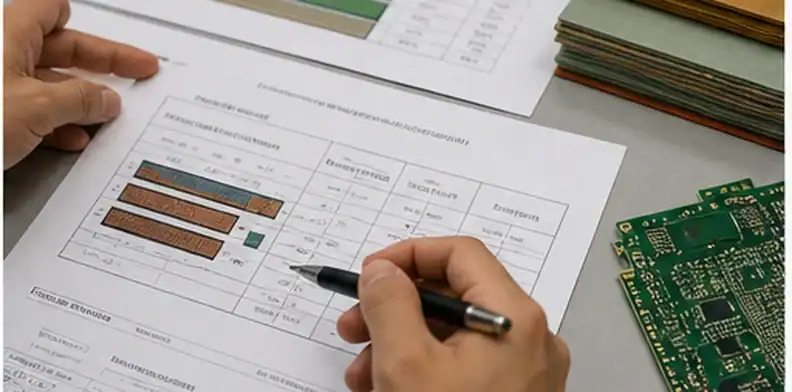
Separate each driver because the evidence and approval path are different. Copper exposure may tie to copper weight and plating area, laminate exposure may tie to availability, freight may tie to carrier choice, and FX may tie to payment currency or quote date.
The buyer should also decide whether a technical alternative is acceptable. Lower copper weight, different laminate availability, changed panel utilization, or longer lead time may reduce cost, but each needs engineering review.
If the surcharge includes freight, the buyer should decide whether the shipment method changed because of supplier delay, buyer urgency, or market capacity. Those are different cost owners.
A mixed surcharge is the hardest to approve. If the supplier combines copper, laminate, freight, and urgency into one number, ask for a simple split so purchasing can decide what is real and what belongs in a new quote.
Separate cost drivers before deciding. Copper surcharge may relate to base copper foil or plated copper. Laminate surcharge may relate to a specific CCL family. Freight surcharge may relate to shipping mode, not fabrication.
Do not approve a blended adder until the supplier separates technical cost from logistics cost. A laminate shortage may justify a material discussion, while an air-freight premium belongs in a shipping or schedule decision.
| Proof type | What it supports | Limitation |
|---|---|---|
| Index reference | Market direction | Not exact PCB cost |
| Material quote | Supplier cost input | Better order-specific proof |
| Design data | Copper exposure | Checks proportionality |
| PO wording | Approval owner | Controls invoice |
When is a surcharge request reasonable?
A surcharge is reasonable only when the supplier shows a changed condition that affects this order and the accepted quote allows review. A general market headline is not enough by itself; the request should connect the driver to the board stackup, quantity, timing, or approved change.
When a surcharge is rejected, the buyer should still give the supplier a next action. The next action may be keep original PO, issue formal requote, propose alternate material, or cancel before WIP begins.
For urgent projects, the buyer can approve the charge for the current PO while refusing to make it a standing term. That keeps the build moving and protects the next order from automatic uplift.
Reasonableness also depends on timing. A request before PO release is a quote discussion; a request after accepted PO but before material purchase is a change discussion; a request after shipment is an invoice dispute unless the PO allowed it.
A surcharge can be reasonable when the quote expired, the buyer changed the design, special material was not locked, the order quantity changed, or the PO terms allowed market adjustment.
When the request arrives after the accepted PO, ask whether any money has already been spent against the original quote. If the supplier has not bought material yet, the buyer may still have room to pause, requote, or change the build plan.
| Buyer action | When it fits | Record to keep |
|---|---|---|
| Accept | Proof and urgency are strong | Record as one-time or ongoing |
| Requote | Design or quantity changed | Reset baseline |
| Reject | No trigger or evidence | Keep original PO |
| Pause | Risk unclear | Hold release |
Buyer call: Accept the adder only when the trigger, timing, proof, and approval owner all match the released order.

What proof should the supplier provide?
The best proof is usually simple and order-specific: quote validity date, revised material quote, stackup change, copper weight, or supplier notification from the material channel.
Market references should be used as direction, not as a finished PCB formula. Public copper prices do not include the supplier’s foil grade, panel utilization, plating loss, CCL conversion, or negotiated purchasing window.
Proof can include quote date, PO date, material purchase date, copper or laminate index reference, supplier notice from the CCL vendor, revised material quote, or design change record.
The strongest proof connects to this board, not only to a public index. Useful evidence can include stackup, copper weight, material callout, vendor notice, and the supplier’s material purchase timing.
Ask the supplier to identify whether the surcharge changes the finished board price or only one input assumption. A copper market note may support a discussion, but the buyer still needs to see how the board’s copper weight, panel size, and plating requirement connect to the requested adder.
| Approval owner | What they approve | Why it matters |
|---|---|---|
| Engineering | Material or copper change | Approves technical effect |
| Purchasing | Price and PO change | Approves commercial effect |
| Quality | Substitution risk | Approves evidence |
| Planner | Schedule impact | Confirms urgency |
Use copper weight and board design to judge exposure
Heavy copper exposure should be visible in the drawing and stackup. If the board uses standard copper and small area, a broad copper surcharge deserves closer review.
The design data matters because copper exposure varies widely. Heavy copper, thick plating, large panels, and poor utilization can make a surcharge more plausible than on a small light-copper control board.
Heavy copper boards, thick plating, and low-yield panels are more exposed to copper movement than simple light-copper prototypes.
For a light-copper prototype, a broad copper surcharge deserves closer review because the actual exposure may be small. For heavy copper, thick plating, or large panels, the request may be more plausible but still needs proportional evidence.
Compare the request with PCB copper weight 1oz 2oz 3oz and broader PCB fabrication cost.
Decision rule: Copper movement matters most when the board design actually carries copper exposure; do not approve a broad adder without checking the stackup.

Write approval triggers before release
Approval triggers should be written before fabrication release so the supplier knows what requires buyer approval. Useful triggers include expired quote validity, laminate substitution, copper weight change, expedited material buy, revised ship method, or a price adder above a stated amount.
A surcharge clause should also say whether a price decrease can be passed back when the driver moves the other direction. One-way formulas can become a trust problem.
Approval triggers should include a notice deadline. A supplier that knows about a surcharge before production should not wait until packing or invoicing to ask for approval.
Approval triggers should be written before release. Common triggers include quote expiry, buyer revision change, quantity change, material substitution, CCL vendor surcharge, copper movement beyond an agreed threshold, or freight mode change.
The approval sentence should also say what happens if the driver disappears before the next order. Otherwise a one-time cost event can silently become a permanent unit-price increase.
Release rule: A surcharge should not change fabrication release until the buyer has accepted the trigger, proof, amount, and future-price effect.
Protect repeat orders from silent repricing
Repeat orders need a baseline record: accepted price, revision, stackup, material, copper weight, quantity band, validity date, and any surcharge that was approved as one-time. Without that record, a temporary emergency adder can accidentally become the new normal.
For repeat orders, a buyer can request a price-review calendar. That is cleaner than surprise renegotiation whenever the supplier feels margin pressure.
Repeat orders should not inherit old assumptions forever. If the buyer needs stable pricing, create a validity window, forecast quantity, and material-lock rule instead of relying on memory from the last PO.
Repeat orders need a cleaner rule because old prices often remain in ERP after market conditions change. The buyer should know whether the previous price is locked, revalidated, or subject to requote at each release.
For repeat orders, the supplier response should state whether the old price is locked, revalidated, or replaced by a new quote. That prevents ERP memory from approving a price that no longer matches the supplier’s accepted terms.
Decide whether to accept, requote, or pause
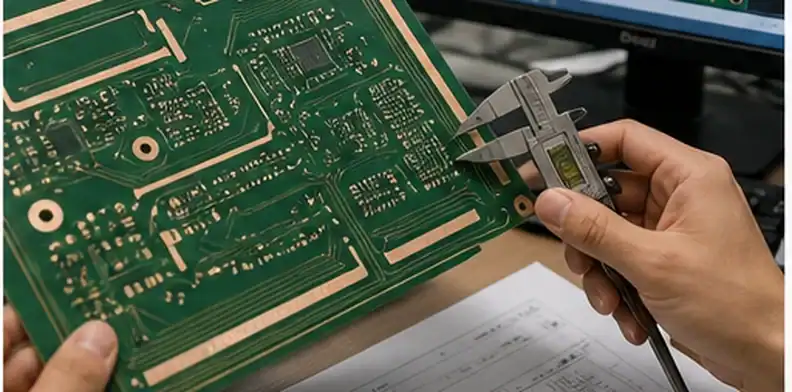
The buyer has three practical choices: accept the adder with limits, request a formal requote, or pause release until the technical and commercial facts are clear. The right choice depends on shipment urgency, approved quote status, supplier proof, and whether engineering has another material or schedule option.
Pausing is especially useful when engineering may approve an alternate material or copper option that avoids the surcharge without changing product risk.
A pause is not a rejection. It can be the right move when the buyer needs engineering to approve a material change or finance to compare the surcharge with a second quote.
Accept the surcharge when the trigger is real, the proof is reasonable, the amount is proportional, and the project schedule matters. Request a requote when the design or quantity changed.
For urgent prototypes, the buyer may accept a one-time surcharge to keep the schedule alive. For production lots, the safer choice is to document the driver, approval owner, and whether the adder changes future releases.
Decision rule: When the facts are incomplete, pausing release is often cleaner than approving a price change that the next reorder cannot explain.
Send QueenEMS the surcharge review package
QueenEMS can turn the surcharge note into a decision table so purchasing knows whether to approve, requote, challenge, or hold release.
The review should compare quote validity, PO timing, stackup, copper weight, material callout, supplier notice, and required ship date. That keeps the discussion tied to this order instead of a vague market argument.
If your PCB or PCBA project receives a surcharge request, contact QueenEMS with the original quote, PO date, validity term, board stackup, copper weight, material callout, quantity, supplier surcharge note, and required ship date.

FAQ
Can a PCB supplier add a surcharge after quoting?
Only when the quote, PO, timing, or agreed change rule supports it. If the PO was already accepted inside the validity window, the supplier should show a specific trigger rather than simply saying the market changed.
Is copper price enough proof for a PCB surcharge?
Not by itself. Public copper movement is a useful signal, but it does not prove the cost impact on one PCB order. The buyer should also review copper weight, plating exposure, material purchase date, and whether the supplier’s cost change applies to this lot.
Should I accept a surcharge to protect delivery?
Sometimes, especially when an urgent build would cost more to delay than to approve. The acceptance should still say whether the adder is one-time, future-only, or a new pricing baseline.
How do I write a surcharge clause in a PCB PO?
Name the allowed trigger, notice deadline, proof required, approval owner, and whether the rule can move price down as well as up. A short clause is stronger than a broad “market adjustment” phrase that nobody can apply consistently.
Can QueenEMS review a PCB surcharge request?
QueenEMS can review the accepted quote, PO date, supplier notice, copper or laminate driver, stackup, copper weight, and delivery pressure. The goal is to decide whether the adder is fair, needs a requote, or should be rejected before release.
Sources
Upload your files today · Free DFM check before production · Ship worldwide
Get your PCB prototypes in as fast as 24 hours. We handle FR4, Rogers, and Flex up to 60 layers — free prototypes for 2–4 layer boards, no minimum order.
Just upload your Gerber + BOM — we source every part, assemble, and inspect (AOI + X‑Ray) so you don't have to chase suppliers. Boards ship in as fast as 24 hours.