
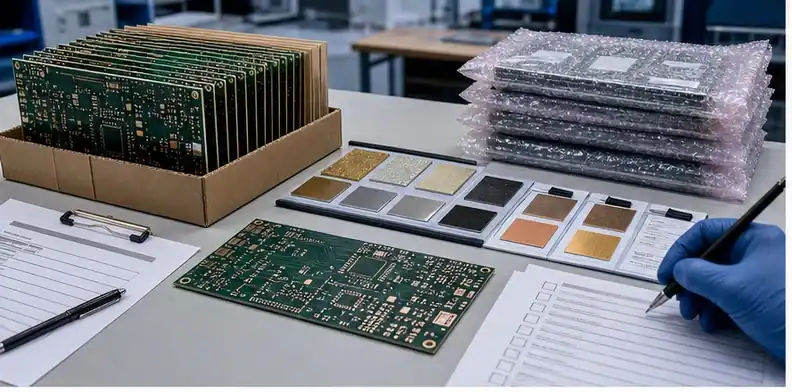
Quick Answer: A PCB solderability test is useful when bare boards have storage risk, surface-finish sensitivity, customer audit requirements, long logistics, or assembly consequences that make solder wetting evidence important before shipment.
Key takeaways – Do not request solderability testing as a vague quality slogan; connect it to finish, storage, and assembly risk. – Decide whether evidence is needed before shipment, at receiving, or during assembly qualification. – Ask for lot traceability and photos or records only when they change the buying decision. – Use the test request alongside normal finish, packaging, and incoming inspection controls.
Buyers often ask whether bare boards should be solderability tested before shipment. The answer depends on surface finish, storage time, handling, customer requirements, and assembly risk. A fresh prototype going straight into local hand assembly may not need the same evidence as production boards that will cross borders, sit in inventory, and later enter automated assembly.
This article helps purchasing and engineering decide when the test belongs in the RFQ, what evidence to ask for, and how to avoid confusing a useful solderability check with a broad guarantee. For related receiving checks, see PCB incoming inspection.
Decision map
- Decide when solderability evidence matters
- Connect the test to finish and storage
- Separate shipment evidence from receiving checks
- Watch common finish-related failure signals
- Keep the evidence proportional
- Add the request to the RFQ
- Solderability evidence as a buying decision
When does solderability evidence matter?
Solderability evidence matters when the buyer cannot accept uncertainty about wetting after shipment or storage. Examples include production builds with expensive components, boards going to a contract assembler, long transit or inventory time, customer audits, finish-change concerns, or previous wetting complaints.
For low-risk prototypes, the fastest path may be correct finish selection, clean packaging, and quick assembly. For higher-risk lots, a solderability test or sample record can be a reasonable insurance step. The decision should be tied to consequences, not habit.
The buyer should also decide where the evidence is most useful. Testing before shipment helps catch supplier-side finish or handling problems. Incoming checks help catch storage, transit, or receiving issues. Assembly trials prove process compatibility but may be too late for a bare-board dispute.
How do finish, packaging, and storage affect the decision?
Surface finish has a direct effect on solderability expectation. ENIG, HASL, immersion silver, immersion tin, OSP, hard gold, and other finishes have different storage and handling concerns. The RFQ should state the required finish and any shelf-life or packaging expectations.
Choose the sample condition before choosing the test
If ENIG reliability is a concern, the support article on ENIG black pad risk can help frame what solderability evidence can and cannot prove. Wetting evidence is useful, but it does not replace correct process control for finish chemistry and nickel surface condition.
Packaging should protect the finish from humidity, contamination, and handling. If boards will be stored, state storage expectations and ask whether vacuum packing, desiccant, humidity indicators, or date-code traceability should be included.
| Situation | Solderability evidence value | Related control |
|---|---|---|
| Long ocean or air shipment | Medium to high | Packaging and date code |
| Delayed assembly | High | Storage condition record |
| Finish change | Medium | First-article assembly review |
| Customer audit | High | Lot traceability and report |

Before shipment or during incoming inspection?
Before-shipment evidence is useful when the buyer wants the supplier to verify the bare board lot before release. It is most helpful when the assembly site is far away, the schedule is tight, or the buyer needs records before approving payment or shipment.
Assign the hold decision to the stage that owns the risk
Incoming inspection is still important because conditions can change after shipment. The PCB incoming inspection process should confirm packaging condition, finish appearance, date code, quantity, and obvious handling damage before assembly.
The safest approach for critical orders is not to choose one blindly. Use supplier evidence before shipment to reduce upstream risk, then perform targeted receiving checks before assembly. Keep both records tied to the same lot and revision.
What failure signals should buyers watch?
Poor wetting, dewetting, oxidation, contamination, discoloration, and unusual finish appearance can all trigger concern. Some symptoms are obvious visually; others appear only during soldering. A useful test request should name the concern and the acceptance record rather than asking the supplier to “guarantee solderability” without a method.
If wetting issues appear after arrival, compare supplier records with receiving evidence and assembly conditions. PCB quality documents before shipment can help organize the outgoing record so the discussion stays factual.
Do not overinterpret one photo. Lighting, angle, and residue can mislead. If the issue is serious, use sample testing, controlled reflow or solder dip evidence, and lot traceability to separate board finish risk from assembly-process risk.
| Signal | Possible source | Useful next check |
|---|---|---|
| Poor wetting | Finish, storage, or assembly process | Sample solderability review |
| Discoloration | Handling or finish aging | Packaging and date-code check |
| Localized defects | Contamination or process variation | Lot and panel traceability |
| Assembly opens | Board or process interaction | Compare board evidence with reflow data |
How much evidence is enough?
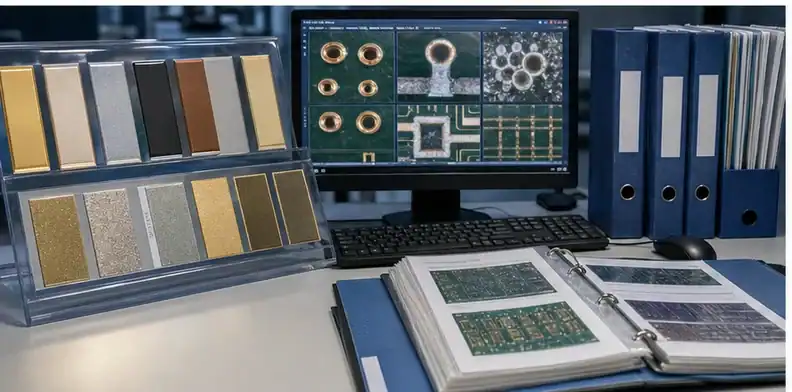
Evidence should be proportional. A short-run prototype may need no formal test beyond normal outgoing inspection. A production lot for an overseas buyer may justify sample photos, a record tied to date code, or a customer-specific test report. The buyer pays for evidence through cost, lead time, or supplier effort, so it should answer a real decision.
Avoid asking for every possible report on every order. That creates noise and may not improve quality. Instead, define the risk: finish sensitivity, storage time, assembly cost, audit need, or previous failure. Then choose the smallest evidence package that controls that risk.
For supplier qualification, combine solderability evidence with broader process review using PCB supplier qualification order. A single test result is useful, but repeatable control is better.
How should the RFQ request be written?
The RFQ should state surface finish, quantity, assembly timing, storage or shipment expectations, whether solderability evidence is required before shipment, and what form of evidence is acceptable. If the customer has a standard or acceptance method, include it rather than paraphrasing from memory.
If the buyer only needs risk review, ask the supplier to recommend whether testing is useful for the finish and delivery plan. If the buyer needs mandatory evidence, state that before quotation so cost and lead time are visible.
Request the QueenEMS review with the board finish, lot and date-code context, storage and transit plan, assembly timing, customer method, and desired shipment-hold rule. Ask whether a bare-board wettability record would change the release decision for this order.
| RFQ item | Why it matters |
|---|---|
| Surface finish | Drives solderability risk |
| Assembly timing | Determines storage exposure |
| Packaging request | Protects finish during logistics |
| Evidence format | Avoids unclear quality promises |
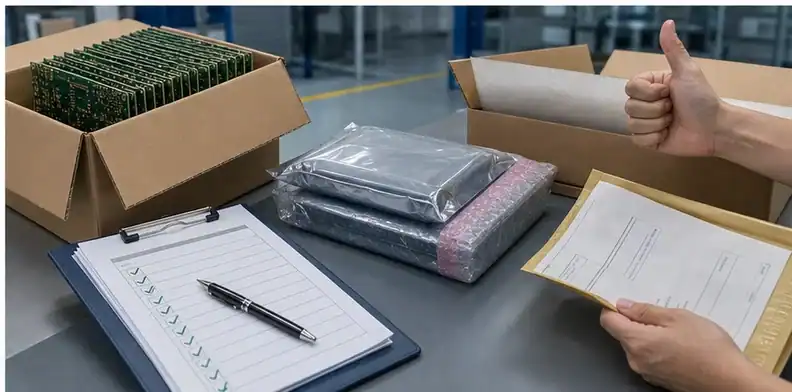
Solderability evidence as a buying decision
Connect the test to assembly consequences
A solderability test is most valuable when poor wetting would create a serious assembly problem. If the boards are simple prototypes assembled immediately, the risk may be low. If the boards carry expensive components, will be assembled by another factory, or have a long storage path, the evidence becomes more useful. The buyer should decide based on consequence, not anxiety.
This is especially true for overseas sourcing. A bare board may leave the PCB factory in good condition, spend time in transit, wait in a warehouse, and only later reach the assembly line. If the buyer has no evidence before shipment and no incoming check after arrival, a wetting problem becomes hard to assign. A small evidence plan can protect both sides by recording board condition at defined points.
Do not confuse solderability with every finish defect
Solderability evidence shows whether a surface wets under a defined method or condition. It does not automatically prove every possible surface-finish issue, storage issue, contamination source, or assembly-process problem. If the buyer is worried about ENIG black pad, oxidation, handling contamination, or long-term shelf life, the RFQ should name that concern separately.
For example, a board may pass a basic wetting check and still require finish chemistry control, packaging control, or customer-specific audit evidence. Conversely, a poor assembly result may come from stencil design, paste storage, reflow profile, or component finish rather than bare board solderability. A good record keeps the discussion factual by tying the test, lot, finish, storage condition, and assembly timing together.
Make the report useful, not decorative
Some reports look official but do not help the buyer make a decision. A useful solderability record should identify the lot or sample, the finish, the date, the method or acceptance basis when available, and the result. Photos can help when they show the tested area clearly, but photos alone are not always enough.
The buyer should also state whether a failed or questionable result should hold shipment. If the supplier discovers a wetting concern before shipment, the team needs an action rule: retest, hold, replace, rework if technically acceptable, or ask the buyer for disposition. That rule is better decided before the order is urgent and cartons are ready to leave.
Questions that make solderability requests clear
Ask whether the test is required before shipment, after incoming inspection, or during assembly qualification. Ask which surface finish and date code the evidence must cover. Ask whether photos, a report, or a simple lot record are enough. Also ask what action should happen if the evidence is questionable. These questions make the request operational rather than decorative.
If a customer standard requires a specific method, attach it. If the buyer is simply concerned because boards will travel and sit in storage, say that. The supplier can then recommend a practical evidence level. A clear reason usually produces a better answer than a vague demand for “full solderability guarantee.”
How to compare evidence between suppliers
Supplier A may include a sample record and careful packaging; Supplier B may include only standard outgoing inspection. Supplier C may offer a formal test but add lead time. The buyer should compare what decision the evidence supports. If the evidence will be used for a customer audit, the formal record may be worth the extra time. If the boards are urgent prototypes, simple packaging and quick assembly may be smarter.
The buyer should also watch whether the evidence is tied to the correct lot. A beautiful generic report does not help if it cannot be matched to the shipped boards. Lot traceability, date code, packaging condition, and receiving photos often matter as much as the test label.
What QueenEMS should return before shipment approval
A useful review should identify whether solderability evidence is necessary, what packaging is recommended, what outgoing record can be supplied, and what the buyer should check on arrival. If a test is requested, the response should clarify method, sample basis, timing, and whether the result can hold shipment. This keeps the final decision factual and prevents quality discussions from becoming emotional after assembly issues appear.
How to keep the test from becoming false confidence
The buyer should remember that solderability evidence is one checkpoint in a larger chain. If boards pass before shipment but are stored poorly after arrival, the assembly result can still suffer. If incoming inspection is clean but the reflow profile is wrong, the problem may appear as a solder defect even though the bare board was acceptable. The record should therefore connect supplier evidence, logistics, storage, receiving, and assembly timing.
For repeat orders, record whether solderability testing is mandatory, conditional, or not required. A conditional rule might say that testing is requested when storage exceeds a defined time, when finish changes, when the customer requests audit evidence, or when previous wetting complaints exist. This prevents every order from carrying unnecessary paperwork while keeping the option available when risk rises.
Approval record for reorders and supplier comparison
For repeat lots, preserve the finish, board date code, packaging method, specimen and conditioning basis, test method, result, and disposition rule. That history shows whether a later order has the same logistics and assembly exposure as the approved lot. A change in finish, storage duration, or assembly site may justify new evidence even if the fabrication data is unchanged.
Compare solderability evidence by test subject, method, sample condition, surface finish, lot identity and timing. A supplier photo of fresh production, a representative coupon tested after defined conditioning, and an incoming wetting check answer different questions. The IPC J-STD-003D scope covers printed-board conductors, lands and plated-through holes, so a component-lead result cannot substitute for the bare-board record.
Before shipment, identify the exact lot or representative specimen, finish, conditioning state, test method, acceptance rule and disposition for a questionable result. J-STD-003D also states that its methods assess finish wettability and are not intended to prove successful assembly processing. Keep stencil, paste, profile, component and storage controls in the assembly qualification rather than treating one bare-board pass as a universal guarantee.
Keep the chosen solderability rule with the lot history and state when it must be repeated. Purchasing then has an operational trigger instead of ordering the same report automatically or skipping it when logistics risk has changed.
FAQ
Is J-STD-003 the same as component solderability testing?
No. J-STD-003 addresses printed-board surfaces such as conductors, attachment lands and plated-through holes. Component leads and terminations use a different test scope, commonly associated with J-STD-002.
Does a passing bare-board test guarantee good assembly yield?
No. It shows acceptable wettability under the selected specimen and method. Paste, flux, thermal profile, stencil transfer, component finish, contamination and storage after testing can still change the assembly result.
When should the sample be tested?
Choose timing from the risk being controlled. Test before shipment when supplier-side finish release matters; test or inspect after receipt when transport and storage exposure matter; use both selectively when an expensive assembly cannot tolerate uncertainty.
For a solderability decision, send QueenEMS the board finish, lot and date context, storage and transit plan, assembly timing, customer test requirement, and desired hold rule. The response should state whether a J-STD-003-style bare-board check adds useful evidence for that order.
Written by the QueenEMS Engineering Team
Upload your files today · Free DFM check before production · Ship worldwide
Get your PCB prototypes in as fast as 24 hours. We handle FR4, Rogers, and Flex up to 60 layers — free prototypes for 2–4 layer boards, no minimum order.
Just upload your Gerber + BOM — we source every part, assemble, and inspect (AOI + X‑Ray) so you don't have to chase suppliers. Boards ship in as fast as 24 hours.