

Quick Answer: To reschedule PCB delivery after an order is confirmed, first ask whether the boards are still in WIP, finished but unpacked, packed for shipment, or already handed to the carrier. A safe push-out should define the new ship date, storage responsibility, surface-finish risk, packaging condition, payment timing, and who can release the hold. ENIG is usually more tolerant than OSP, but the buyer should still ask for finish date, storage conditions, and solderability evidence before delaying finished boards for months.
Key takeaways
- Do not treat a delivery push-out as a calendar change only; it changes inventory, finish age, payment, and liability.
- Ask the supplier to confirm whether the order is unbuilt, in process, finished, packed, or shipped.
- Separate storage fees from freight delay fees, and separate both from supplier-caused late delivery.
- For finished boards, ask for finish date, sealed packaging, humidity protection, and the next release date.
- Keep the push-out decision with the PO so receiving and finance know why the boards arrived later.
Projects slip. Firmware is not ready, the enclosure is late, a customer pilot moves to the next quarter, or the assembly line no longer has capacity in the planned week. The practical question is not only “Can I reschedule PCB delivery?” It is whether the supplier can hold the boards without creating storage, finish-age, payment, or release-control surprises.
The answer is yes in many cases, but it should not be handled with a vague “please hold until further notice.” A confirmed PCB order has already created factory capacity, material movement, finish aging, packaging work, and sometimes payment obligations. If the lot is finished, the supplier is no longer just changing a production plan; it is storing customer-specific inventory.
This article is about push-out after the order is already confirmed. It is different from reserving future capacity before release. If you are still planning a future call-off order, start with PCB capacity reservation or a PCB blanket purchase order. If your boards are already being built or are finished, use the decision process below.
Table of Contents
- Confirm whether boards are built, packed, or still WIP
- What date change should the supplier acknowledge?
- Decide whether to hold, split, or ship now
- How long can finished boards wait safely?
- Separate storage fees from freight delay fees
- Protect solderability and packaging evidence
- Keep ERP and blanket orders aligned
- What should the revised release note say?
- Send QueenEMS the push-out review package
Confirm whether boards are built, packed, or still WIP
The first question is simple: where is the order right now? A reschedule request before material issue is different from a request after ENIG, final inspection, vacuum packing, or carrier booking.
In practice: the supplier should answer with a production and shipment stage, not only “yes, we can delay.”
If the job is not yet released to production, the buyer may be able to push the delivery date with little cost. If panels are in process, the supplier may need to finish certain steps before a safe hold. If boards are complete, the discussion becomes storage and aging. If the shipment has been booked, freight change or warehouse fees may already exist.
The buyer should avoid writing “delay delivery two months” without asking whether the boards exist. That sentence can mean four different things to four departments: production holds the traveler, quality holds finished goods, logistics cancels a pickup, or accounting keeps an unpaid finished-goods balance open.
Ask a direct question: “Please confirm current order stage, finish date if completed, packing status, carrier booking status, and the latest safe date to ship without additional risk or fee.” This gives the supplier room to explain constraints without hiding behind a general answer.
| Current stage | Push-out meaning | Buyer check |
|---|---|---|
| Not released | Schedule change | Confirm quote validity and new release date |
| In fabrication | Safe hold point | Ask which process step can pause |
| Finished, not packed | Storage decision | Ask finish date and protection method |
| Packed, not shipped | Warehouse decision | Ask storage fee and package condition |
| Carrier booked | Freight change | Ask cancel/rebook fee and cutoff time |
What date change should the supplier acknowledge?
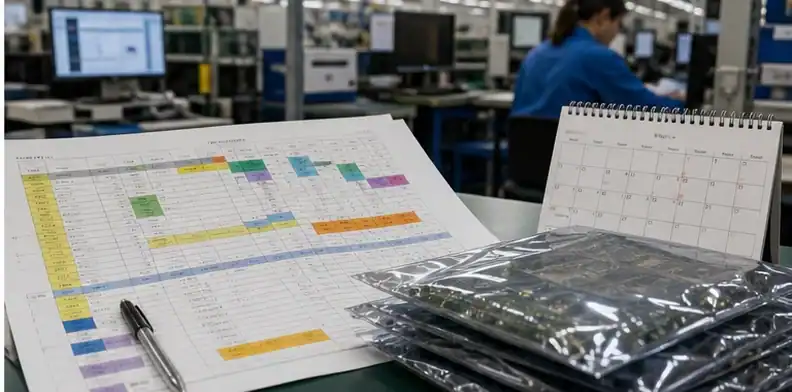
A push-out needs two dates: the old committed ship date and the new requested date. Without both, nobody can tell whether the supplier agreed to a new promise or merely received a loose request.
Decision point: a reschedule is not controlled until the supplier acknowledges the revised date, release owner, and cost impact.
The buyer should keep the old date visible because it explains why the order changed. If the original ship date was August 20 and the buyer now wants October 20, the record should show a 61-day hold. That matters for surface finish, packaging, storage space, invoice timing, and any customer promise.
The supplier should also say whether the new date is a ship date, delivery date, or release-from-hold date. These are not the same. A buyer in the United States, Canada, or Mexico may need boards delivered to a contract manufacturer by a specific week. A supplier in China may interpret the date as factory ship date. The difference can be a week or more depending on customs, freight mode, and local receiving. If the original acknowledgement is unclear, compare it with your PCB order confirmation before changing the schedule.
When the order feeds PCBA, the buyer should connect the push-out to the assembly schedule. Bare boards can be held, but components, stencils, SMT capacity, and test fixtures may have their own timing. A delivery delay that saves PCB storage may still create assembly cost if the downstream plan is not updated.
Clear wording can be short: “Please hold finished boards under sealed packaging and do not ship until buyer release. Target factory ship date is October 20. Notify buyer before any storage fee, finish-age risk, or package rework becomes necessary.” That is much safer than “ship later.”
Decide whether to hold, split, or ship now
There are usually three choices after a confirmed order slips: hold the full lot, split the lot, or ship everything and store it at the buyer or assembler. Each choice has a different risk profile.
Bottom line: the best answer depends on who can protect the boards better and who needs visibility for the next build.
Holding the full lot at the supplier can reduce freight movement and keep packaging under factory control. It can also create aging risk if the hold is long, unclear, or poorly tracked. Shipping everything immediately gives the buyer physical control, but it may create warehouse cost, import paperwork, and inventory that cannot be used yet.
Split shipment is often overlooked. If engineering needs ten boards for debug while the production build is delayed, shipping a small quantity and holding the balance may reduce risk. The buyer gets progress without paying to move inventory that will sit untouched.
The same logic applies to finished boards waiting for assembly. If the contract manufacturer has proper storage and incoming inspection capacity, shipping now may be sensible. If the assembler’s warehouse is crowded or uncontrolled, the supplier may be the safer short-term holder.
| Option | When it fits | Watch point |
|---|---|---|
| Hold all boards at supplier | Short delay, stable finish, good packaging | Define fee and release date |
| Split shipment | Engineering needs samples now | Track lot identity and remaining quantity |
| Ship all boards now | Buyer or CM has controlled storage | Confirm receiving inspection and shelf-life tracking |
| Cancel shipment booking | Carrier not yet picked up | Ask cutoff and rebooking fee |
| Rebuild later | Design may change | Check cancellation or WIP exposure first |
How long can finished boards wait safely?
Finished PCBs can wait, but the safe window depends on surface finish, storage conditions, packaging, handling, and the next soldering process. The buyer should not assume every finish ages the same way.
Key takeaway: ask for finish date and storage conditions before accepting a long push-out.
ENIG is generally more storage-tolerant than OSP because the nickel-gold finish resists oxidation better. OSP is more sensitive to humidity, handling, and repeated heat exposure. Published plating references often describe OSP as needing stricter storage discipline while ENIG can support longer shelf-life expectations when handled correctly. That does not mean ENIG can be ignored. It means the buyer should base the hold decision on finish type and evidence.
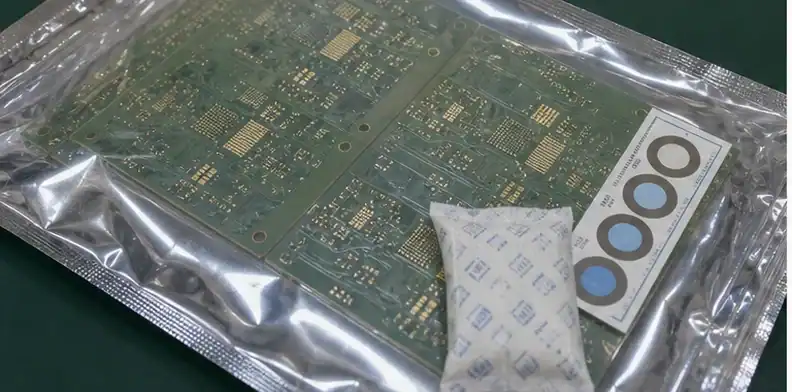
The supplier should confirm whether the boards are sealed, whether desiccant and humidity indicator cards are used, whether packages will remain unopened, and whether the boards were exposed during inspection or repacking. A two-month delay in sealed packaging is not the same as two months on an open shelf.
For boards that will go directly to SMT, solderability matters more than warehouse neatness. The assembler may ask for bake guidance, solderability test evidence, or a date-code note if the boards sit too long. These details should be handled before the delay, not discovered when the line is ready.
If the buyer does not know the surface finish risk, it should ask the supplier to rank the hold: safe with current packaging, safe only with repack, safe only for a shorter period, or not recommended. That gives purchasing a clear decision instead of a vague reassurance. If the delay may push the order outside the original commercial window, check whether the old PCB quote validity still applies to later releases or added storage work.
Separate storage fees from freight delay fees
Storage fees and freight delay fees are different. A supplier warehouse hold, third-party warehouse charge, carrier rebooking fee, demurrage, detention, and waiting-time fee should not be mixed into one unexplained amount.
Bottom line: each fee should have a cause, start date, approval trigger, and owner.
Storage fee usually relates to finished boards occupying controlled space beyond an agreed free period. Freight delay fee may appear when a pickup is booked and then canceled, when export documents are already prepared, or when a carrier shipment sits at a handoff point. The buyer should ask which fee is being proposed and when it begins.
For small PCB orders, a supplier may waive short storage. For production lots, heavy panels, special packaging, or long holds, a charge may be reasonable. The buyer’s job is not to reject every fee; it is to keep the fee proportional and approved before it grows.
A clean response looks like this: “Supplier can hold sealed finished goods free until September 15. After that, storage is X per week if buyer has not released shipment. Carrier rebooking fee applies only if pickup is booked and then canceled after cutoff.” That kind of wording turns a surprise invoice into a known decision.
If the delay was caused by the supplier missing the original date, do not accept storage language blindly. A buyer-side push-out and supplier-side late delivery are not the same event. The record should say who caused the schedule change.
Protect solderability and packaging evidence
The buyer should ask for a simple evidence package before allowing a long hold. The goal is to prove that the boards remained in a condition suitable for receiving and assembly.
Evidence check: delayed boards should arrive with enough evidence to explain finish age, packaging history, and any repack or bake decision.
Evidence does not need to be heavy. A final inspection date, finish date, package photo, label photo, humidity indicator photo, and statement that the package remained sealed can solve most ordinary questions. If the boards are high-value, fine-pitch, or reliability-sensitive, the buyer may ask for solderability confirmation or additional handling notes.
The buyer should decide what happens if the storage period extends again. Many problems come from repeated short delays. A two-week hold becomes a month, then a quarter. Each extension looks harmless alone, but the total aging time becomes material.
Set a review trigger. For example: “If shipment is not released by October 20, supplier will reconfirm packaging condition and finish-age risk before another hold.” That sentence gives the team a checkpoint without making the first request too complicated.
Keep ERP and blanket orders aligned
The purchasing system should match the new delivery plan. If ERP still expects goods this month while the supplier holds boards until next quarter, receiving, finance, and planning will read different realities.
Bottom line: update the PO line, internal schedule, and buyer release owner at the same time.
For blanket orders, the call-off schedule should change, not just the email thread. If only the supplier knows the new date, the buyer’s MRP may continue driving assembly or customer promises from the old date. If only the buyer changes ERP and the supplier misses the note, boards may ship too early.
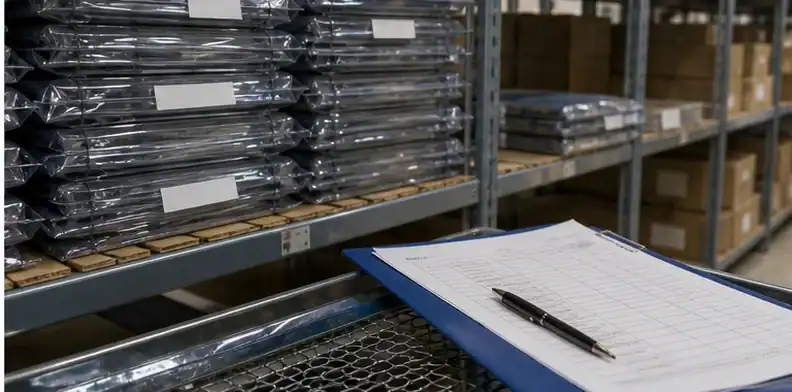
The internal record should name the old date, new date, quantity held, quantity shipped, storage arrangement, finish date, and next review date. It should also say who can release shipment. Without a named release owner, logistics may act on an old instruction or a casual message from someone outside purchasing.
If payment terms are tied to shipment, confirm whether the invoice waits until release or is issued when boards are completed and stored. Neither answer is universally right. The risk is assuming one answer while the supplier assumes another.
What should the revised release note say?
The revised release note should be practical enough for production, logistics, and accounting to use. It should not read like a long contract, but it should close the obvious gaps.
Key takeaway: the note should state date, quantity, storage, packaging, fee trigger, and release authority in one place.
A workable note might say: “PO 1234, revision B, 500 boards finished with ENIG on August 4. Buyer requests supplier hold sealed packages until October 20 factory ship date. No shipment before written release from purchasing. Supplier to notify buyer before package opening, repack, storage fee, or solderability concern. If release slips beyond October 20, both sides will review storage and finish-age risk again.”
That is enough for most teams. It gives the supplier permission to hold, but not permission to quietly add unknown charges or ship early. It gives the buyer a reminder that the hold is not infinite.
If the lot will be split, the note should identify quantities. “Ship 50 boards now for engineering build; hold 450 boards under same lot record.” If the boards go to an assembler, include the destination and receiving contact. If the buyer wants photos before shipment, ask before the release date, not after the carrier collects the goods.
Send QueenEMS the push-out review package
If your PCB or PCBA project has a delayed build, contact QueenEMS with the PO, current supplier status, surface finish, finish date if available, quantity, required new date, destination, and any storage or freight fee proposed. We can help review whether the push-out should be a hold, split shipment, immediate shipment, or revised release plan.
The most useful request includes the downstream reason: firmware delay, enclosure delay, customer schedule change, assembly capacity, or cash-flow timing. That context helps separate real technical risk from a simple logistics change.
FAQ
Can a supplier hold finished PCBs for two months?
Often yes, but the buyer should confirm surface finish, finish date, sealed packaging, humidity protection, storage fee, and release date. A two-month ENIG hold is different from a two-month OSP hold in uncontrolled handling conditions.
Is ENIG safe if I reschedule PCB delivery?
ENIG is generally more tolerant than OSP, but it is not magic. Ask for the finish date, storage condition, package status, and any supplier solderability recommendation before delaying finished boards.
Should I ship boards to my assembler instead of holding them at the fab?
Ship them if the assembler has controlled storage and needs the boards for incoming inspection or early setup. Hold them at the fab if the delay is short and the supplier can protect packaging better.
Who pays storage fees after a buyer-side push-out?
Usually the buyer may need to approve reasonable storage fees after an agreed free period, but the fee should be stated before it starts. If the delay is supplier-caused, the ownership of storage cost should be reviewed separately.
What should I do if the project slips again?
Do not rely on the first hold note forever. Reconfirm packaging, finish age, fee status, and the next ship date before extending the hold.
Sources
Upload your files today · Free DFM check before production · Ship worldwide
Get your PCB prototypes in as fast as 24 hours. We handle FR4, Rogers, and Flex up to 60 layers — free prototypes for 2–4 layer boards, no minimum order.
Just upload your Gerber + BOM — we source every part, assemble, and inspect (AOI + X‑Ray) so you don't have to chase suppliers. Boards ship in as fast as 24 hours.