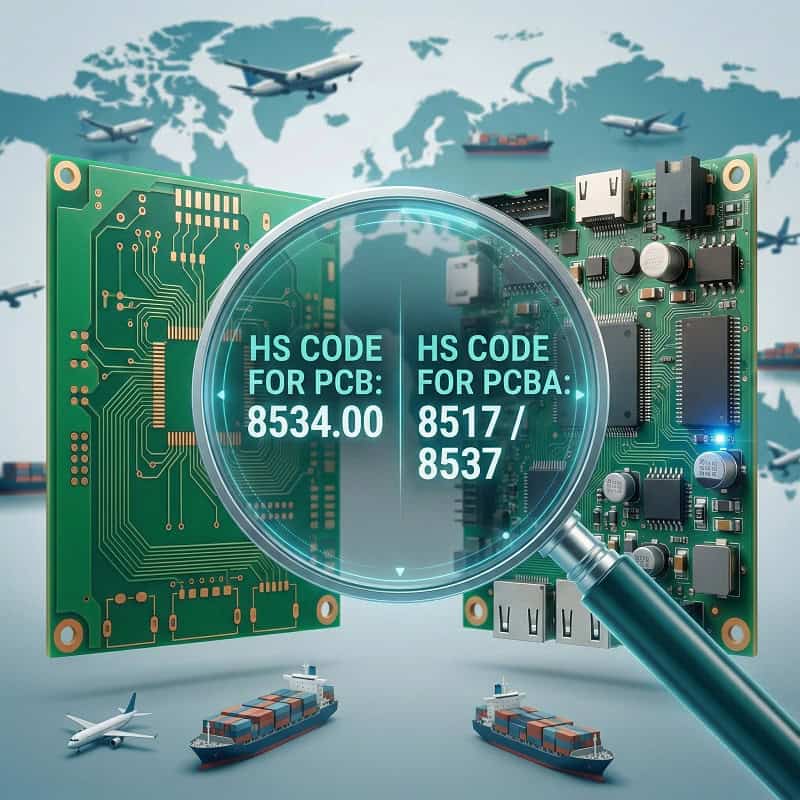
Quick Answer: The standard HS code for bare PCBs is universally 8534.00.00, carrying a 0% general duty rate in many regions. Conversely, assembled PCBA classification depends strictly on primary function, utilizing codes like 8537.10 or 8543.70 with tariffs reaching up to 25%. Filing a Post Entry Amendment within 30 days fixes misclassifications and prevents customs fines that scale up to 4× the duties owed. Key takeaways:
- Bare boards use 8534.00.00 globally.
- Functional PCBA uses 8517, 8537, 8542, or 8543.
- Split importing saves up to 60% on total duties.
- Advance rulings prevent costly 4-week customs holds.
Table of Contents
- What Is the HS Code for Bare PCBs?
- How Does the System Structure PCB Classifications?
- How Do You Classify Assembled PCBAs by Function?
- What HS Codes Apply to Flex and HDI PCB Types?
- What Are 2026 Tariffs on the HS Code for PCB and PCBA?
- How Do US, EU, and China Customs Codes Differ?
- What Happens If You Use the Wrong HS Code for PCB?
- How Can You Use Customs Strategy to Reduce Duties?
- What Documents Clear the HS Code for PCB and PCBA?
- How Do You Get an Advance Ruling for Imports?
You negotiate a competitive manufacturing rate, only to watch your profit margins vanish when customs holds your electronics shipment at the border. Incorrect documentation triggers immediate clearance delays, resulting in sudden storage fees and unexpected tariff hikes. By mastering the correct HS code for PCB and PCBA, you assign the exact legal classification required to clear customs smoothly and eliminate thousands of dollars in overpaid import duties.
What Is the HS Code for Bare PCBs?
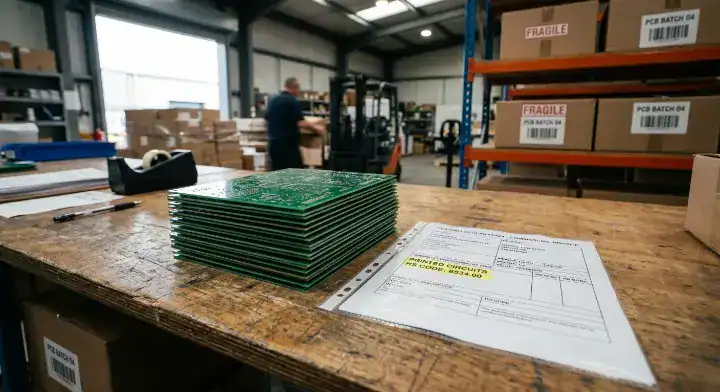
The universal HS code for bare printed circuit boards without mounted components is 8534.00.00. This 8-digit classification covers single-sided, double-sided, and multilayer boards globally, allowing you to import raw substrates smoothly.
Printed Circuits is a category covering passive connection boards without active elements. China uses specific subheadings like 85340010 exclusively for boards exceeding 6 layers. When ordering PCB fabrication services, assigning this specific code guarantees the lowest possible baseline tariff.
The 8534.00 Classification Rules
Here is the strict legal boundary:
- Must not contain any active or passive surface mount components.
- Includes rigid, flexible, and rigid-flex bare substrates.
- Covers boards with basic structural elements like plated through-holes.
Key Takeaway: Customs agents will immediately reject 8534.00 declarations if border X-ray scans detect any soldered microcontrollers or resistors.
Bottom line: Declare all unpopulated bare circuit boards strictly under the 8534.00 heading to secure the lowest possible import tax.
| Board Status | Correct HS Heading | Component Allowance |
|---|---|---|
| Bare PCB | 8534.00 | None |
| Partially Assembled | Functional Code (e.g., 8543) | Any SMT/THT part |
| Fully Assembled | Functional Code | Fully populated |
Maintaining zero components on the board is the only legal requirement to qualify for the 8534.00 bare board classification.
How Does the System Structure PCB Classifications?
The global trade system structures classifications using a 6-digit universal root code followed by country-specific extensions. For electronics, the first 4 digits identify the broad machine category, while digits 5 and 6 isolate the specific circuit type.
The Harmonized System is maintained by the WCO and covers over 5,000 commodity groups identified by six-digit codes. This framework updates every five years, which means your logistics team must verify shipping codes against the current HS 2022 edition to prevent paperwork rejections.
Root Codes vs Extended Digits
Consider the structural breakdown:
- First 2 digits (Chapter 85): Electrical machinery and equipment.
- Next 2 digits (Heading 8534): Printed circuits.
- Final 2-4 digits: Regional attributes like layer count or material composition.
Key Takeaway: Export documents often clear the origin border with a 6-digit code, but import filings require the full 8 or 10-digit extension to calculate exact destination duties.
Bottom line: Require your freight forwarder to use the complete 10-digit import classification specific to your destination country’s tax system.
| Code Length | Usage Stage | Specificity |
|---|---|---|
| 6 Digits | Global Baseline / Export | Broad category (Printed Circuits) |
| 8 Digits | Regional Import | Specific material / Layer count |
| 10 Digits | Statistical Tracking | Anti-dumping / Local tariffs |
Extending the root code correctly prevents automated software blocks when filing customs entry documents.
How Do You Classify Assembled PCBAs by Function?
You classify assembled PCBAs based on the primary function of the completed board, never by its individual components. A board controlling industrial motors uses 8537.10, while a wireless router module requires 8517.70.
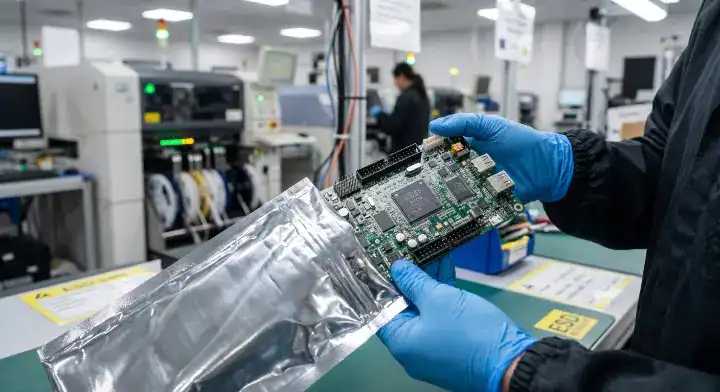
Buyers frequently ask if a board containing microcontrollers and power regulators falls under 8542.31 or 8543.70. The physical presence of an integrated circuit chip does not dictate the code; the final executed action of the hardware determines the exact legal category.
Functional Category Breakdowns
Follow this exact hierarchy:
- 8537.10: Applies to electrical control and power distribution boards like PLCs.
- 8517.70: Covers telecom equipment, modems, and network routing modules.
- 8542.31: Dedicated strictly to specific integrated circuit module assemblies.
- 8543.70: Catches miscellaneous electronic apparatus like general-purpose IoT sensors.
Key Takeaway: Slapping a generic “PCBA” label on your commercial invoice guarantees a customs inspection because border agents cannot determine the functional tariff rate.
Bottom line: Describe the board’s exact end-use application on your commercial invoice to legally justify your chosen functional classification code.
| End-Use Application | Recommended HS Heading | Duty Risk |
|---|---|---|
| Motor Controller | 8537.10 | Moderate |
| Network Router | 8517.70 | Low (IT Agreement) |
| Miscellaneous IoT | 8543.70 | High (General category) |
Functional matching completely eliminates the ambiguity that triggers physical cargo inspections.
What HS Codes Apply to Flex and HDI PCB Types?
Flexible and HDI PCBs fall under the standard 8534.00 root but often trigger specific 8-digit subheadings based on material composition. Complex flexible PCB manufacturing requires accurate material declarations to avoid misclassification penalties.
A rigid-flex board is a hybrid substrate combining flexible polyimide with rigid FR4 layers. These specific architectures still utilize 8534.00 globally as long as they remain completely unpopulated.
Advanced Substrate Declarations
Pay attention to these variations:
- Flex circuits might fall under plastics chapters if lacking conductive copper traces.
- Embedded component PCBs blur the line between bare and assembled boards.
- Advanced HDI PCB capabilities involving laser microvias do not alter the 8534 root category.
Key Takeaway: Customs officers frequently flag flex boards for physical inspection because they visually resemble finished membrane switches, which use a completely different 8536 heading.
Bottom line: Explicitly state “unpopulated flexible printed circuit” on your packing list to prevent agents from confusing it with a finished switch assembly.
| PCB Technology | Base HS Heading | Inspection Risk |
|---|---|---|
| Standard FR4 Rigid | 8534.00 | Low |
| Flexible Polyimide | 8534.00 | High (Mistaken for switches) |
| Embedded Component | Consult Customs | High (Contains hidden parts) |
Accurate material descriptions stop agents from reclassifying flexible substrates into higher-taxed plastic or switch categories.
What Are 2026 Tariffs on the HS Code for PCB and PCBA?
The 2026 tariff landscape imposes a massive 25% Section 301 duty on many assembled PCBAs imported from China, while bare PCBs often face lower baseline rates. Certain 8543 and 8537 HS code exemptions remain extended only until November 2026.
Many procurement teams wonder if it still makes financial sense to import assembled boards. Bare PCB rates often sit at 0% baseline plus regional duties, while functional PCBA rates add a 10-30% premium based on the end-use category.
The Financial Impact of Assembly Location
Here is the hard financial math:
- Importing bare boards and assembling domestically avoids the 25% completed goods tariff.
- Splitting the supply chain can reduce total import duties by 40-60%.
- Domestic assembly labor costs typically run 2-3× higher than overseas rates.
Key Takeaway: Because domestic labor runs significantly higher, split manufacturing rarely yields net savings for production volumes below 500 units. Executing smart PCB tariff reduction strategies requires strict volume modeling.
Bottom line: Calculate your total landed cost before splitting orders, because the domestic labor premium usually destroys the tariff savings on low-volume runs.
| Strategy | Import Duty Risk | Labor Cost | Best For |
|---|---|---|---|
| Full China Turnkey | High (Up to 25%+) | Low | Volumes < 500 units |
| Split (Import Bare) | Low (Often 0%) | High | Volumes > 2000 units |
High-volume production relies on duty separation to maximize profit margins against Section 301 tariffs.
How Do US, EU, and China Customs Codes Differ?
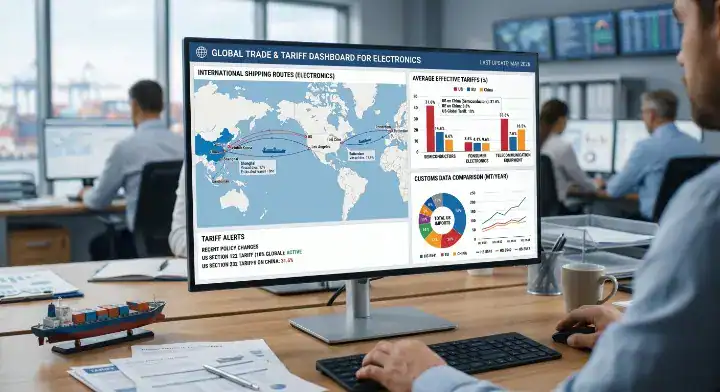
While all three regions share the identical 6-digit root for printed circuits, the US HTSUS, EU TARIC, and China Customs systems append different trailing digits. The US adds 4 digits for statistical tracking, whereas China adds digits to define layer counts.
The Harmonized Tariff Schedule of the United States (HTSUS) provides the applicable rates for all merchandise, maintaining 8534 as “Printed circuits” with a general duty rate of free for bare boards under normal trade relations.
Regional Suffix Discrepancies
The variations look like this:
- US HTSUS: Uses 10 digits to track material types like glass epoxy versus paper-based laminates.
- EU TARIC: Employs a 10-digit system focused heavily on enforcing anti-dumping measures.
- China HS: Specifically separates ≤4 layers (85340090) from >6 layers (85340010) for export tracking.
Key Takeaway: Using a Chinese export 10-digit code directly on your US import declaration guarantees an automated rejection from the customs software.
Bottom line: Always truncate your supplier’s export code to 6 digits and let your local broker assign the final 4 import digits based on regional laws.
| Region | Code System | Primary Trailing Digit Focus |
|---|---|---|
| USA | HTSUS | Base material composition |
| Europe | TARIC | Anti-dumping enforcement |
| China | China Customs | Board layer count |
Adapting the trailing digits to the destination country prevents immediate system rejections during electronic filing.
What Happens If You Use the Wrong HS Code for PCB?
Using the wrong HS code triggers automated customs holds averaging 2 to 4 weeks and incurs severe financial penalties. Negligence fines can scale up to 4 times the total duties owed, effectively wiping out your product margin.
Last quarter, a robotics startup contacted us because their shipment of 500 assembled boards sat at Los Angeles customs for 18 days. Their forwarder incorrectly declared fully populated BGA boards under the bare PCB code 8534.00.00. We helped them file a Post Entry Amendment for 8543.70.99, paid the $2,400 duty difference, and cleared the shipment within 72 hours.
Resolving Misclassification Holds
To fix an active hold:
- Immediately file a Post Entry Amendment (PEA) with the corrected 10-digit code.
- Pay the exact duty difference calculated by the new functional category.
- Provide a revised commercial invoice explicitly detailing the board’s function.
Key Takeaway: The most frequent and costly error in electronics shipping is blindly applying the 8534.00 bare board code to a fully assembled PCBA.
Bottom line: State the exact assembly status and functional purpose on every commercial invoice to prevent automated X-ray flags at the border.
| Violation Type | Customs Action | Financial Penalty |
|---|---|---|
| Minor Typo | Warning / PEA required | Duty difference |
| Negligence | Cargo Hold | Up to 4× duty owed |
| Intentional Fraud | Seizure | Full cargo value + legal action |
Rapid amendment filing stops warehouse storage fees from accumulating during a customs hold.
How Can You Use Customs Strategy to Reduce Duties?
You can legally reduce import duties by analyzing your PCBA’s end-use industry and reclassifying it from a general electronic apparatus to a specific, tariff-exempt category. This strategic shift often drops applicable duties from 25% down to 0%.
A European medical device company imported assembled patient monitoring boards, paying a 4.2% duty under the general 8543.70 heading. We advised reclassifying the boards under 9018.19 as electro-diagnostic apparatus parts. Following a formal customs ruling, their duty dropped to 0%, saving them €18,000 annually across 2,000 boards.
End-Use Exemption Strategies
Look for these legal exemptions:
- Medical device parts (Chapter 90) often qualify for WTO IT Agreement zero-tariffs.
- Aerospace and aviation components frequently hold special duty-free statuses.
- Renewable energy controllers might receive specific environmental tariff waivers.
Key Takeaway: Accepting a default “miscellaneous electronics” classification guarantees you will overpay on long-term production imports.
Bottom line: Audit your current HS codes annually to guarantee you use the most specific, duty-exempt category available for your industry.
| Industry | General Code Duty | Specific Exemption Code | Potential Savings |
|---|---|---|---|
| Medical | 8543 (High) | 9018 (Zero) | Massive |
| IT/Telecom | 8543 (High) | 8517 (Low/Zero) | High |
| Consumer IoT | 8543 (High) | Variable | Moderate |
Proving a specialized end-use application legally shields your imports from broad retaliatory tariffs.
What Documents Clear the HS Code for PCB and PCBA?
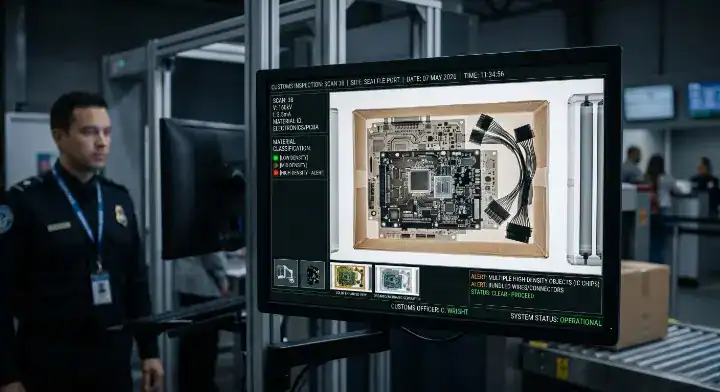
Clearing customs rapidly requires a commercial invoice, a detailed packing list, and a precise bill of materials that substantiate your chosen HS code. Incomplete paperwork forces customs officers to guess your product’s function, resulting in automatic cargo holds.
A commercial invoice is the primary legal document customs uses to assess duties and taxes. Over 60% of electronics shipping delays stem from vague invoice descriptions like “circuit board” lacking functional details.
The Perfect Invoice Framework
Your invoice must explicitly list:
- The exact layer count and base material (e.g., 6-layer FR4).
- The clear assembly status (Bare Board vs Assembled PCBA).
- The primary functional application of the completed circuit.
Key Takeaway: Providing a detailed functional description on the invoice acts as legal proof supporting your specific 8537 or 8543 PCBA classification.
Bottom line: Ban the use of generic terms like “PCB” or “electronics parts” on your shipping documents to secure frictionless border clearance.
| Document Type | Critical Information Required | Customs Purpose |
|---|---|---|
| Commercial Invoice | Value, Assembly Status, Function | Calculate exact duty rate |
| Packing List | Weight, Dimensions, HS Code | Physical cargo verification |
| Bill of Materials | Active ICs, Connectors | Confirm functional claim |
Perfect documentation removes the human guesswork that leads to subjective customs delays.
How Do You Get an Advance Ruling for Imports?
You secure an advance ruling by submitting a formal Binding Ruling request to your national customs authority before initiating your first shipment. This legal document permanently locks in your HS code and duty rate, shielding you from future classification disputes.
U.S. Customs and Border Protection (CBP) offers Binding Rulings that provide importers with a legally binding advance classification. Requesting this ruling prevents misclassification penalties and guarantees accurate tariff forecasting from the start.
The Ruling Application Process
Prepare the following evidence:
- High-resolution photos of the bare or assembled board.
- A complete Bill of Materials (BOM) identifying major active components.
- A technical datasheet explaining the primary function and end-use application.
Key Takeaway: Rulings typically require 30 to 90 days to process, which means you must initiate the request during your product’s final prototyping phase.
Bottom line: File a Binding Ruling request for every new PCBA design to guarantee stable, predictable import costs for the entire product lifecycle.
| Application Step | Required Material | Timeframe |
|---|---|---|
| Submission | BOM, Photos, Datasheet | Day 1 |
| Review Period | Customs Evaluation | 30-90 Days |
| Final Ruling | Legally Binding Document | Permanent |
An approved advance ruling serves as an absolute legal defense against any port agent attempting to reclassify your goods.
We eliminate the massive financial risks of border delays by manufacturing high-quality electronics paired with flawless export documentation. If you struggle with unpredictable import costs or delayed shipments, contact us for trade support today. Our engineering team provides full turnkey manufacturing backed by precision customs compliance, guaranteeing your boards clear the border instantly and arrive exactly when you need them.
FAQ
What is the HS code for a bare PCB? 8534.00.00. This code applies universally to all bare printed circuit boards — single-sided, double-sided, multilayer, rigid, and flexible — as long as no electronic components are mounted. Some countries add extra digits for layer count: China uses 85340010 for boards with more than 6 layers and 85340090 for boards with 4 layers or fewer.
What HS code should I use for assembled PCBA? It depends on the board’s primary function. Use 8537.10 for control and power distribution boards, 8517.70 for telecom equipment modules, 8542.31 for integrated circuit assemblies, and 8543.70 for general-purpose electronic apparatus that doesn’t fit other categories. Never use the bare PCB code 8534.00 for assembled boards.
Can I reduce import duties by shipping bare PCBs and components separately? Yes, this is a highly effective legal duty reduction strategy. Bare PCBs under 8534.00 often carry lower or zero duty rates, while assembled boards face higher tariffs. By importing bare boards and assembling domestically, you can reduce total duties by 40-60%. Calculate your local labor costs carefully, as domestic assembly can be 2-3 times higher than overseas rates.
What happens if my freight forwarder uses the wrong HS code? Wrong HS codes trigger automatic customs holds averaging 2-4 weeks, fines up to 4 times the duties owed for negligence, or seizure in severe cases. The most common error is classifying assembled PCBA under the bare board code 8534.00. To fix it rapidly, file a Post Entry Amendment with the correct HS code and pay any duty difference.
How do I get an advance HS code ruling for my PCB product? Submit a Binding Ruling request to your country’s customs authority — CBP in the US, or the Binding Tariff Information (BTI) system in the EU. Include product photos, functional descriptions, layer count, component list, and end-use application. Rulings take 30-90 days and provide total legal protection against surprise duty hikes at the border.
Upload your files today · Free DFM check before production · Ship worldwide
Get your PCB prototypes in as fast as 24 hours. We handle FR4, Rogers, and hybrid boards up to 40 layers in volume production, with advanced builds subject to engineering review — free prototypes for 2–4 layer FR-4 boards, no minimum order.
Just upload your Gerber + BOM — we source every part, assemble, and inspect (AOI + X‑Ray) so you don't have to chase suppliers. Boards ship in as fast as 24 hours.