
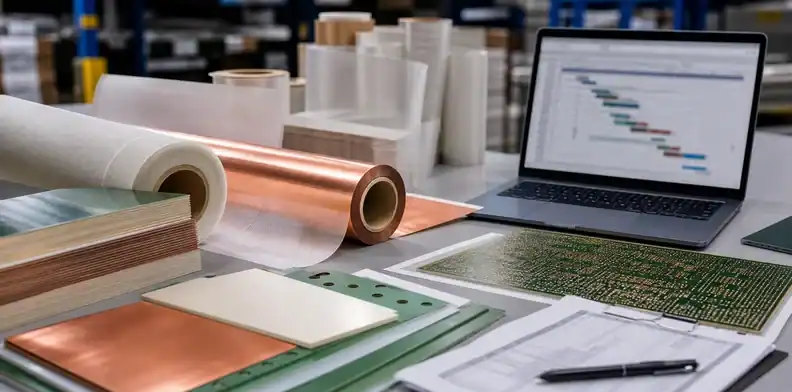
Quick Answer: As of 2026, BT substrate supply should be treated as sensitive rather than fully normalized. AI packaging demand, low-CTE glass cloth constraints, BT resin sourcing, and advanced substrate capacity can all affect lead time, price validity, and material substitution choices.
Key takeaways
- The strongest verified supply-chain signal is not a single BT shortage number; it is upstream pressure from AI package substrates and specialty glass cloth.
- MGC remains a key BT material reference, while Nittobo describes T-glass as a key material for high-density package substrates.
- Buyers should control lead time with material alternates, quote validity, approved substitutions, and earlier RFQ release.
- Do not turn market reports into guaranteed delivery dates; confirm with the actual supplier before PO release.
Table of Contents
- Is BT substrate still in shortage in 2026?
- What caused the BT supply pressure?
- How AI chip demand ripples into memory and BT
- What are current BT lead times and prices?
- When will the shortage actually ease?
- Is the raw material still Japan-dependent?
- How does the ABF crunch connect to BT?
- How can you secure BT supply for your project?
Is BT substrate still in shortage in 2026?
As of 2026, buyers should treat BT substrate supply as constrained in some advanced and package-related segments, even if not every BT job is short. The risk depends on material grade, glass cloth, line density, substrate producer, and customer qualification.
The safest public wording is ‘supply-sensitive’ rather than a universal shortage claim. A standard BT prototype may be quoteable while a specific low-CTE or package-grade construction faces a long lead time.
For 2026 supply planning, scheduling is the first decision. A buyer should identify which material inputs are allocation-sensitive, when the design freezes, and whether alternates can be approved before the order becomes urgent. The same BT wording can carry very different risk depending on glass cloth, resin route, customer qualification, and package demand at the time of quote.
The practical planning step is to turn supply news into dated quote assumptions. Material route, alternate status, quote validity, and allocation timing should be visible before the buyer relies on a delivery date.
Planning call: Treat each 2026 lead-time answer as dated until the supplier confirms allocation for the exact construction.
The schedule review should distinguish sample builds from repeat orders. A supplier may support prototypes from existing stock or a small reserved lot, while production quantities need a fresh allocation check. Ask whether the same grade, glass style, and laminate source are available for the next build, not only whether the first small order can ship. For the wider topic map, the BT PCB guide connects this point to specifications, applications, sourcing, and quote preparation.
What caused the BT supply pressure?
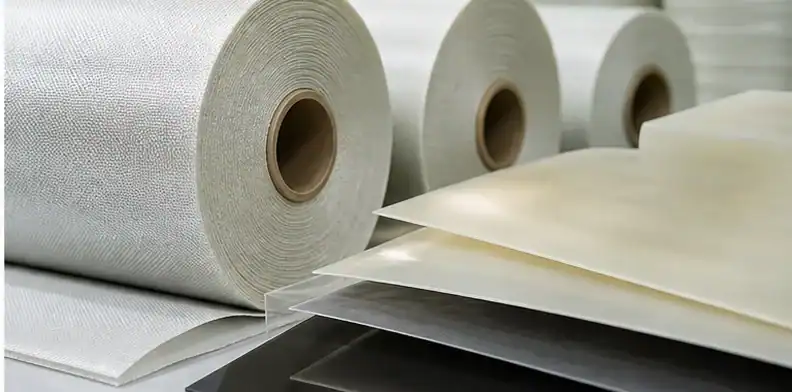
The pressure comes from upstream material demand and advanced packaging growth. AI accelerators, high-performance CPUs, GPUs, and switches increase demand for package substrates, low-CTE glass cloth, and build-up material ecosystems. Nittobo states that T-glass is used in semiconductor package substrates for communications ASICs and high-performance CPUs, including AI semiconductors and switches.
That upstream pressure can ripple into BT because packaging suppliers, glass cloth producers, and laminate producers compete for constrained specialty capacity.
As of 2026, the supply signal is more specific than a generic shortage label. Reported pressure is tied to AI packaging demand, including CoWoS-like advanced packaging, which competes for upstream BT resin, CCL films, and specialty low-CTE glass cloth. Buyer-side quote planning should assume that CCL, film, and advanced glass cloth can show about 4–5 months of lead time, and that CCL-type upstream material quotes may reflect roughly 30% increases; both figures should be verified with the supplier before PO release.
In a supply-chain review, evidence should be dated. The supplier should state material source, allocation status, approved alternates, lead-time assumption, and when the answer must be reconfirmed.
Supply-chain evidence should be dated. Ask suppliers which laminate family, CCL route, film, glass cloth, and allocation window are being quoted for the requested build month. A generic availability answer is weak when the market is moving; a dated supplier note is easier to compare with reported 2026 lead-time and price signals.
A short lead-time answer is only a snapshot. For 2026 planning, ask when the supplier will revalidate material allocation and price.
Allocation proof: A 2026 lead-time answer should include the exact material route and the date it was confirmed.
How AI chip demand ripples into memory and BT
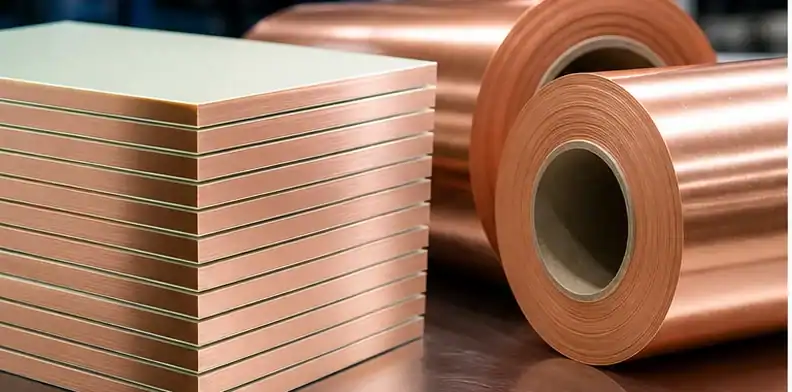
AI package demand can pull attention and material toward high-value substrates. Memory and storage products may then feel the effect through substrate queues, controller package supply, or specialty glass cloth availability.
For memory-specific boundaries, see BT in memory packaging. HBM should be treated separately because it uses TSV-stacked memory and advanced packaging concepts rather than a simple BT organic package.
This matters for buyers who are not building AI hardware directly. A storage module, controller board, or compact RF package can still feel upstream pressure when the same low-CTE glass cloth or substrate capacity is pulled into higher-value packaging programs. The RFQ should therefore ask for actual material allocation, not only whether the end application is unrelated to AI.
Supply-chain planning should not rely on a static property table. The critical question is whether the grade, glass style, and laminate route behind those values are available for the buyer’s date, quantity, and qualification requirement.
In a supply-chain article, property values matter because each value can imply a different upstream input. Low-CTE glass cloth, selected BT resin systems, and package-grade laminate routes may face different allocation pressure. The schedule decision should therefore follow the exact grade and glass style, not the broad BT label.
Parameter review should be tied to availability, not only performance. A grade with the right Tg, CTE, and dielectric values may still be risky if its CCL or low-CTE glass-cloth path is allocated. The quote should state whether the required material is stock, reserved, imported, or waiting on upstream confirmation.
Planning rule: Treat every 2026 material value as available only after the supplier confirms source and allocation date.
What are current BT lead times and prices?
Lead time and price vary too much by construction to publish one safe number. Market reports in 2025-2026 describe advanced material pressure and price increases in the broader substrate ecosystem, but a purchase decision must rely on current supplier quotes.
Use QueenEMS’ laminate price change tracker and the cluster page on what drives BT cost to control quote validity, surcharges, and alternate material language.
In a constrained supply year, the prototype order and production order may not face the same allocation window. A supplier can quote samples from available stock and still require a different plan for repeat quantities.
A supply-risk note should include quote date, material source, lead-time validity, approved alternates, and the reconfirmation trigger. That is more useful than a general market headline.
Decision signal: Trust the supplier that dates its allocation answer and explains what could change before production release.
When will the shortage actually ease?
Some capacity additions are planned across specialty glass and electronic materials, but buyer relief depends on qualification, yield, product mix, and whether demand grows faster than new supply. Public reports about capacity expansion should be read as directionally useful, not as a guarantee for a specific BT board.
For China sourcing, see sourcing BT from China. The RFQ should ask when material can be allocated for the exact construction, not only whether capacity is expanding somewhere in the chain.
As of 2026, reported relief is expected to arrive gradually rather than all at once. The shortage rate has been reported to narrow toward about 5–7% within 2026 as China capacity, including Honghe’s Huangshi base and TaiBo capacity release, ramps through the year; verify that figure with the supplier before treating it as a planning input. The structural bottleneck is not fully gone: <3 ppm advanced glass cloth remains highly dependent on Japanese supply, so the buyer still needs dated confirmation for the exact glass style and material route.
In 2026, price can move because the supplier is reserving scarce inputs, shortening lead time, or changing the material path. Ask which lever is active before treating the increase as margin alone.
In 2026, a higher quote may reflect reserved material, a short validity window, or a grade that competes with advanced package demand. Treat the price movement as a supply-chain signal first; margin negotiation comes after allocation and alternate status are clear.
Price rule: A 2026 BT quote should state validity date and allocation assumption.
Is the raw material still Japan-dependent?
Several upstream materials remain tied to Japanese suppliers and technologies. MGC describes BT laminate technology and BT materials for semiconductor packaging, while Nittobo describes special glass for high-density package substrates. Public supply-chain reporting also highlights low-CTE glass cloth as a bottleneck in AI packaging.
This does not mean a buyer cannot source from China or elsewhere. It means the supplier should disclose material source, approved alternates, and change-control rules.
The approval boundary should follow supply risk. Engineering approves alternates, purchasing manages allocation and validity windows, quality checks lot traceability, and the supplier dates each material commitment.
The risk in 2026 planning is that public capacity expansion can be mistaken for availability of a specific construction. The buyer should require dated confirmation for the exact material, grade, glass cloth, quantity, and substitute path.
Engineering should decide which material alternatives are technically acceptable, purchasing should check whether allocation supports the build schedule, quality should verify that incoming lots match the agreed route, and the supplier should update the buyer when upstream timing changes.
Approval rule: A supply-driven alternate is acceptable only after engineering approves the exact material and evidence route.
How does the ABF crunch connect to BT?
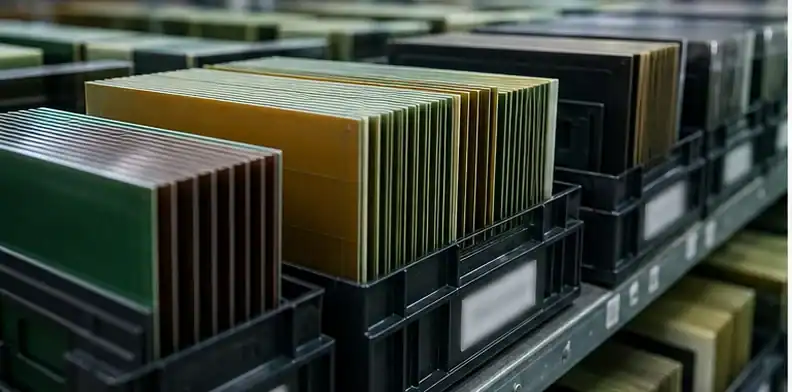
ABF and BT are different materials, but the supply-chain pressure can be connected through advanced packaging demand. Ajinomoto describes ABF as an insulating film used in high-performance semiconductor substrates. When high-end packages absorb substrate capacity and specialty upstream materials, related organic substrate markets can feel knock-on effects.
Do not claim ABF shortage equals BT shortage. Treat it as a shared ecosystem risk that requires material confirmation.
A weak supply answer turns market headlines into a delivery promise. Public capacity news may be directionally useful, but the order still needs grade-level allocation, glass-cloth status, price validity, and alternate approval for the exact construction.
Before relying on the schedule, ask the supplier to confirm allocation date, validity period, approved alternates, and any material that must be reserved. That converts market risk into an order plan.
Risk check: Pause release when allocation or price validity changes after the design has been frozen.
How can you secure BT supply for your project?
Secure BT supply by approving alternates early, asking for material source and lead-time assumptions, setting quote validity, reserving long-lead material only after design freeze, and documenting substitution approval. For production builds, keep a safety-stock or forecast discussion separate from the prototype quote.
Supply rule: A BT order is not controlled until the quote states material, alternate, lead time, expiration, and what evidence ships with the lot.
The 2026 planning question should also cover quote validity. A supplier may be able to quote today but need to recheck material allocation when the PO is delayed, the quantity changes, or the stackup revision moves. Ask for the validity window, allocation trigger, and alternate-material approval path in writing. This does not remove supply-chain risk, but it makes the risk visible before the buyer promises a date to its own customer.

The 2026 supply picture should be written with numbers and boundaries together. Reported upstream pressure has included CCL, film, and advanced glass cloth lead times around 4–5 months in some channels, while certain CCL-type quotes have reflected roughly 30% price increases. Those figures are not universal price promises; they are planning signals that should be checked against the supplier’s dated quotation, material maker, and glass-cloth route.
AI packaging is the demand engine behind much of the pressure. CoWoS-like capacity growth pulls on advanced substrates, interposers, low-CTE glass cloth, BT-related organic materials, and nearby supply-chain resources. The effect can reach memory and module buyers even when their own package is not an AI accelerator, because upstream producers allocate capacity across several high-growth packaging categories.
Reported relief is expected to be uneven. As of 2026, some market notes put the possible shortage-rate gap near 5–7% within 2026 as additional capacity comes online, including China-side expansion associated with Honghe’s Huangshi base and TaiBo; buyers should verify the current allocation status with the supplier. That easing does not remove every risk because advanced glass cloth below 3 ppm CTE remains heavily linked to Japanese supply, and qualification timing may lag physical capacity.
For buyers, the planning move is to separate availability confirmation from price negotiation. First confirm the material route, factory allocation, and shipment timing. Then decide whether to prebuy, approve a controlled material family, or redesign the stackup for a more available grade. A vague shortage label is less useful than a dated answer tied to one laminate family and one production window.
Inventory strategy should match project maturity. Early prototypes can sometimes accept a technically reviewed alternate, while a qualified package or module may need the same material family held for repeat lots. That distinction determines whether the buyer should reserve stock, widen the material window, or delay the build until the supplier can confirm the intended route.
FAQ
Is BT in shortage in 2026?
Some BT-related and package-substrate materials remain supply-sensitive in 2026. The answer depends on exact construction and supplier allocation.
When will it ease?
Relief depends on capacity, qualification, yield, and demand growth. Do not rely on public expansion headlines for a specific PO date.
Why is BT supply tight?
AI packaging and high-performance substrate demand can pressure upstream resin, glass cloth, and substrate capacity.
How do I secure BT supply?
Approve alternates, confirm material source, freeze the design earlier, and require quote-validity and change-control language.
Send QueenEMS a BT supply-risk RFQ
For a 2026 supply-risk check, provide target material, stackup, Gerbers, package notes, prototype timing, production forecast, allowed alternates, and delivery country on the QueenEMS contact page. QueenEMS can prepare a BT substrate quote package quote package that records lead-time, allocation, and material-substitution risk before the PO is placed.
Sources
Written by the QueenEMS Engineering Team
Upload your files today · Free DFM check before production · Ship worldwide
Get your PCB prototypes in as fast as 24 hours. We handle FR4, Rogers, and hybrid boards up to 40 layers in volume production, with advanced builds subject to engineering review — free prototypes for 2–4 layer FR-4 boards, no minimum order.
Just upload your Gerber + BOM — we source every part, assemble, and inspect (AOI + X‑Ray) so you don't have to chase suppliers. Boards ship in as fast as 24 hours.