
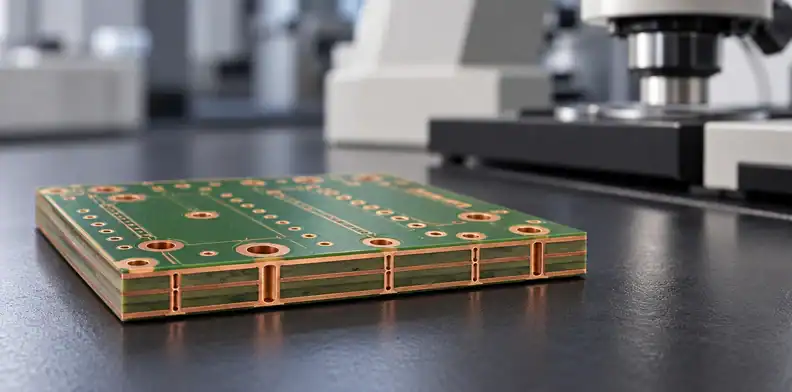
Quick Answer: Request PCB interconnect stress testing when you need evidence that a representative plated interconnect construction can withstand a defined thermal cycling exposure, beyond its initial electrical or visual acceptance. IST heats a designed coupon with DC current while monitoring electrical resistance. It is most useful when qualifying a construction or process change, comparing suppliers, or investigating interconnect failures.
The purchasing decision starts with the failure question. A clear microsection can show acceptable plating in the section examined. A continuity result can show a connection at the time of testing. If your concern is how that connection behaves through repeated heating and cooling, commission evidence that measures that behavior.
What does IST measure on a PCB test coupon?
IST measures changes in the resistance of coupon interconnects during controlled thermal cycling. DC current heats a specified circuit, and the system cools the coupon between heating periods. The resulting resistance history helps assess plated barrels and internal connections under the selected exposure, including weaknesses that become apparent during cycling.
IPC-TM-650 2.6.26, Revision A, May 2014 is titled DC Current Induced Thermal Cycling Test. Its Method A uses a coupon with independent power and sense nets and lists IST as the equipment type; Method B, listed as CITC, uses a single daisy-chain net with measured TCR. This article covers Method A. Name it and the agreed revision in the test brief.
IST is a bare-board interconnect assessment on an engineered coupon. Solder-joint vibration testing, assembled-product burn-in and functional testing answer different questions, so quote them separately.
How does IST differ from a microsection or electrical test?
IST records electrical behavior through a defined stress exposure, while a microsection reveals physical construction at a selected cut plane. A routine bare-board electrical test checks the ordered connectivity and isolation requirements under its stated conditions. These methods provide complementary evidence, so the test plan should assign each a specific acceptance question.
| Your acceptance question | Evidence to request | What still needs separate assessment |
|---|---|---|
| Are the required connections present and unwanted connections absent? | Bare-board electrical-test record tied to the lot | Interconnect endurance through a defined thermal exposure |
| Is the sampled plating and interface geometry acceptable? | Located microsection images, measurements and acceptance criteria | Electrical behavior while the structure is repeatedly heated |
| Does a representative construction remain electrically stable during the selected cycling? | Approved IST coupon, test conditions and resistance results | The location and physical mechanism of a detected failure |
This is an editorial evidence-selection worksheet, not an IPC acceptance standard. Only the IST description and the optional post-test failure location and microsection draw on IPC-TM-650 2.6.26A.
For dimensional and image requirements, use the separate PCB microsection report checklist. A supplier can provide both forms of evidence without treating a successful result from one as a substitute for the other.
When is the extra qualification work worth specifying?
Additional IST qualification is worth considering when a decision depends on interconnect endurance: approving a new construction, comparing a changed fabrication process, evaluating a second source, or investigating a heat-related failure. The responsible engineering team should choose the exposure and acceptance criteria according to the product requirement and the uncertainty being resolved.
Examples include a revised plated-hole structure, a material change that affects the interconnect construction, or a new supplier whose existing qualification data covers a different board. In each case, ask what decision the result will support. A repeat order using an accepted construction may need a different evidence plan from a first qualification build.
The equipment originator's introductory FAQ identifies supplier evaluation, process monitoring and troubleshooting among IST applications. That supports a targeted qualification decision; it does not make IST mandatory for every multilayer order.
Budget for coupon design, panel space, testing and analysis when requesting the quote. Obtain those costs from the proposed provider rather than applying a generic percentage to the PCB price.
Which coupon details must represent the production board?
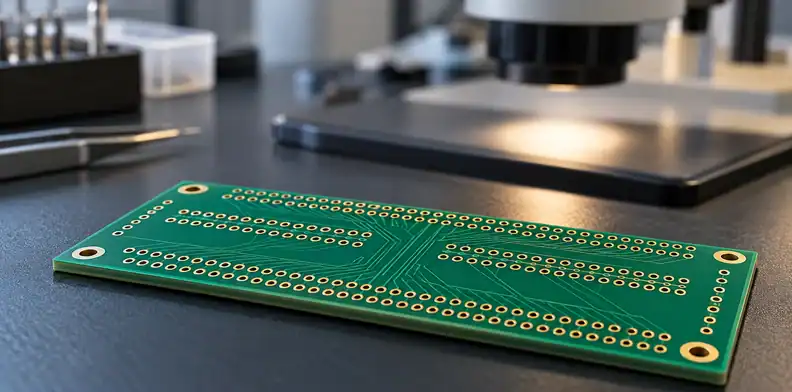
The coupon must represent the interconnect construction that you want to evaluate, and the report must identify that relationship. Review its materials, layer structure, plated-hole or via geometry, interconnect interfaces and manufacturing route with the fabricator and test provider. A generic coupon helps only if it captures those features; otherwise the purchasing question remains open.
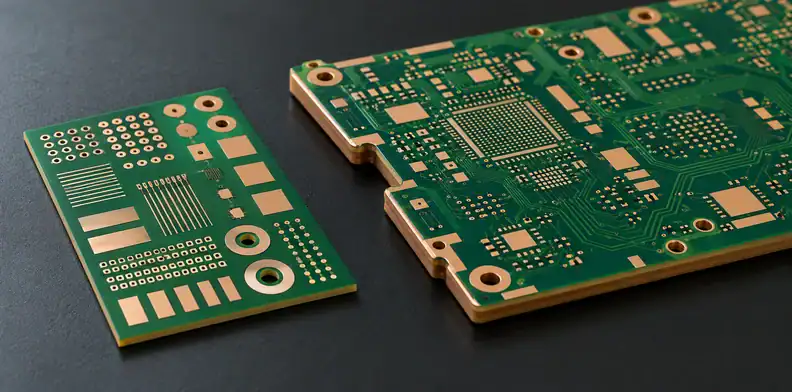
IPC-TM-650 2.6.26A describes panel-incorporated coupons and design rules intended to achieve thermal uniformity. Coordinate the test vehicle before panelization. Adding an improvised coupon after the panel is released can create another engineering round and still fail to capture the relevant structure.
Document exceptions explicitly. If the product includes several via constructions but the coupon represents only one, identify the covered population and the remaining qualification need. Preserve the approved coupon drawing with the board revision so a repeat report can be checked against the same requirement.
What should the test specification and report contain?
The test brief should define the method, representative construction, specimen identity, preconditioning, exposure, resistance reference, failure criteria and required records before work starts. The report should return results against those same fields. Agree the scope before comparing prices so that different laboratories are quoting evidence for the same engineering decision.
Use this worksheet to reconcile the request and response:
| Item | Put in the request | Verify in the returned report |
|---|---|---|
| Decision and scope | Qualification, comparison or failure investigation | The stated conclusion answers that decision |
| Method | Agreed test method, revision and any departures | Method used and departures disclosed |
| Construction | Board revision, stackup and interconnect features | Coupon drawing and represented construction identified |
| Traceability | Required panel, lot and sample identification | Results remain linked to each specimen |
| Conditioning and cycling | Agreed preparation and thermal exposure | Actual preparation, temperatures and cycle history |
| Resistance basis | Applicable reference, channels and failure criterion | Results assessed against the specified basis |
| Completion rule | Required endpoint and treatment of early stops | Cycles to failure or end of test, and percent change, for each power and sense net; interrupted specimens identified |
| Investigation and disposition | Records to retain and approval responsibility | Findings, unresolved exceptions and next action recorded |
This is an editorial procurement worksheet, informed by the method's procedures and reporting fields. It contains no universal temperature, cycle-count or acceptance threshold.
The publicly hosted method includes typical conditions, but those entries are tied to a method and construction category. Confirm the governing requirement before copying a number into your purchase order. Also agree whether you need resistance traces, numerical exports, a summary report, or a combination.
For a fabrication quotation and free DFM check, upload Gerber files and the BOM through the inquiry form, together with the proposed test brief. For a bare-board order, mark assembly as out of scope and identify who will approve and provide any specialist testing.
How should you respond to a failed coupon?
A failed coupon should trigger a documented investigation against the agreed test plan and represented production population. First confirm specimen identity, test conditions and measurement validity. Then preserve the resistance records and locate the affected interconnect before destructive examination. The authorized engineering and quality owners should decide the disposition of the associated boards.
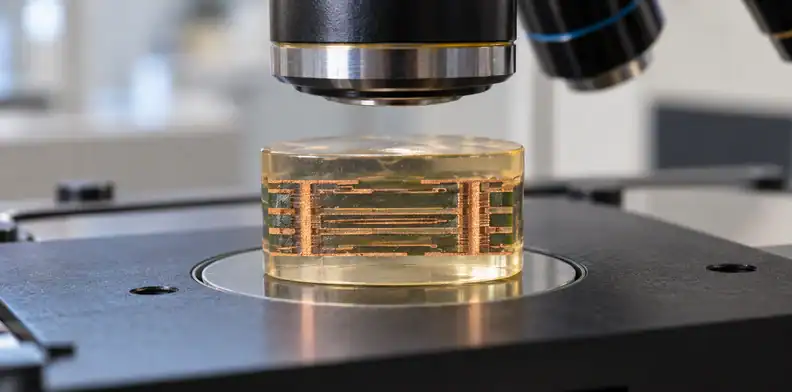
Section 6.2 of IPC-TM-650 2.6.26A describes optional failure location, by thermal camera, hot plate or resistance isolation, followed by microsection. Section 6.4 states that the method's optional tests were not validated under IPC-MDP-650, so specify any required analysis in the brief. A resistance change alone cannot identify every possible crack or interface mechanism.
Consider an illustrative report review: the requested qualification uses the released coupon revision, but the laboratory report identifies an older drawing. Resolve that mismatch before accepting a conclusion about the new build. If the specimen is correct and a failure is confirmed, record the affected construction and corrective action before choosing a retest plan.
Can an IST pass predict product life or replace reflow testing?
An IST pass supports a conclusion about the tested specimens under the documented exposure and acceptance criteria. Predicting product life requires an additional relationship between that exposure, the failure mechanism and the service environment. Assembly exposure needs its own defined requirement, whether it is simulated before IST or tested separately.
For Method A, the document labels assembly preconditioning optional but recommends it for lead-free exposure. It allows current-induced preconditioning or an alternate method, such as convection reflow simulation to IPC-TM-650 2.6.27, so name the one you require. A comparison between suppliers is useful only when the specimen construction, conditioning, method and result criteria are comparable. A larger cycle count from a different test setup is not automatically the better result.
Keep the conclusion proportionate: identify the construction tested, the conditions completed and the decision supported. Record any product qualification work that remains open.
What can QueenEMS review before you place the order?
QueenEMS can review your fabrication requirements for quotation and DFM, including the board construction and the documents needed to define the order. Bring the reliability objective and proposed evidence plan alongside the fabrication files. If IST is required, confirm the testing provider, scope and availability separately before accepting the production quotation.
We have more than 10 years of experience. Standard builds go up to 24 layers and advanced builds up to 100; extreme parameters may be feasible as prototypes but are not guaranteed for volume production. The PCB capabilities page provides context for that discussion.
What else should you confirm before ordering?
Confirm whether the result applies to the ordered construction, which test requirement governs, and who will resolve a failed or incomplete result. These questions also help separate ordinary production acceptance from additional qualification work. The answers should remain with the released specification so later orders retain the agreed evidence requirements.
Does a passing microsection remove the need for IST?
No. A passing section addresses the sampled physical features. Whether you also need IST depends on the interconnect endurance question and the governing qualification requirement.
Is IST the same as convection reflow simulation?
No. IST uses current-induced coupon heating and resistance monitoring. Convection reflow simulation to IPC-TM-650 2.6.27 is a separate assembly exposure, although Method A permits it as an alternate preconditioning step; specify which one you require.
Is one cycle count suitable for every PCB?
No. The method, construction, conditioning and procurement requirement determine the applicable endpoint. Compare results only after those conditions and the failure criteria have been aligned.
Does every production panel need an IST coupon?
The agreed sampling and qualification plan determines coupon coverage. Define whether the evidence qualifies a construction, monitors a process or accepts a production lot before deciding panel and sample selection.
Upload your Gerber files and BOM to request a quotation and free DFM check. Include the stackup, quantity and reliability requirement; identify a bare-board-only order where applicable.
Upload your files today · Free DFM check before production · Ship worldwide
Get your PCB prototypes in as fast as 24 hours. We handle FR4, Rogers, and hybrid boards, with standard builds up to 24 layers and higher layer counts subject to engineering review — free prototypes for 2–4 layer FR-4 boards, no minimum order.
Just upload your Gerber + BOM — we source every part, assemble, and inspect (AOI + X‑Ray) so you don't have to chase suppliers. PCB assembly typically takes 5–8 working days once all components are in stock. The confirmed delivery schedule is subject to your quotation.