
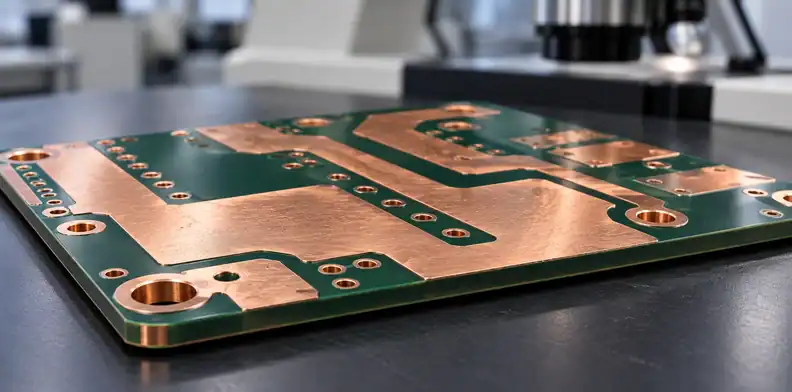
Quick Answer: A heavy copper PCB RFQ should define the copper basis for each layer, the critical electrical and thermal requirements, and the evidence needed to accept the first lot. Ask each supplier to return its proposed construction, any manufacturing changes and the inspection scope before comparing prices or authorizing fabrication.
A quotation can look complete while leaving different suppliers free to assume different copper constructions. The result may be two prices for boards that do not meet the same requirement. A short response matrix makes those assumptions visible before the purchase order is released.
What should a heavy copper RFQ resolve before quotation?
A useful heavy copper RFQ separates the buyer's electrical requirements from the supplier's proposed manufacturing route. It gives each bidder the same design revision and asks for a layer-by-layer return, a list of departures and a proposed inspection scope. The buyer can then compare quotations against the same order requirements.
Send the fabrication data and a controlled drawing or specification that identifies the board revision, quantity and delivery destination. Include the proposed stack-up, relevant net information and any fixed mechanical constraints. Tell the supplier which items are mandatory and which it may propose as alternatives.
The existing heavy copper PCB design guide covers conductor sizing and drawing fields. This guide concentrates on what comes back from the manufacturer and how the buyer closes open items.
Do not treat an estimate as construction approval. If one supplier excludes the first-article evidence or assumes a different foil basis, record that difference beside its price. Request a revised quote when the change prevents a like-for-like comparison.
How should the RFQ define copper on each layer?
State whether each copper figure describes starting foil, a nominal finished condition or a minimum finished requirement. Identify the layer, units, tolerance and measurement location where the design depends on a particular conductor. Define plated-hole copper separately; a surface-layer ounce designation does not establish a barrel measurement.
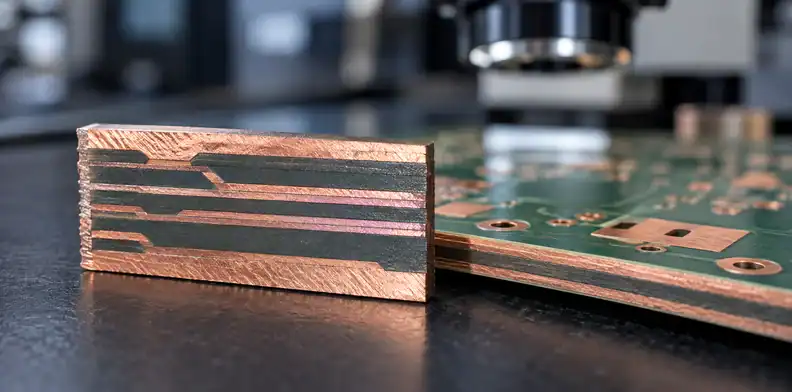
A drawing should distinguish starting foil, finished outer copper and plated-hole copper. They describe different conditions. Agree with the fabricator on the relevant basis and inspection method for each requirement.
For a critical power path, name the trace or feature and identify where the requested minimum is to be checked. A cross-section at one location cannot automatically prove every feature on a panel. Ask whether the proposed coupon or section represents the construction that matters to your drawing.
Record any plated-hole thickness requirement in the fabrication specification rather than inferring it from the surface foil; the copper plating thickness distribution guide covers barrel evidence. For surface copper, the supplier's response should identify the measurement location, the basis used and any limits in its method.
Which electrical and thermal conditions must the buyer state?
Give the fabricator the current duty, operating conditions and design limits that govern each critical net. Identify the conductor regions that cannot be narrowed or rerouted without approval. The supplier can assess whether its proposed construction is manufacturable, while the product team remains responsible for approving electrical and thermal performance.
A continuous load, a short pulse and a current path shared across layers can lead to different questions. State the operating environment and allowable temperature rise where the design team has defined them. Include voltage or clearance requirements where they affect the construction, together with the intended assembly conditions.
An IPC-hosted paper by Michael R. Jouppi on IPC-2152 explains that conductor temperature rise depends on the board construction, mounting, environment and conductor geometry. It is a reason to include those conditions in the engineering discussion, not a universal current rating for an ounce value.
If the manufacturer suggests narrowing a conductor to make the pattern more practical, request the proposed finished geometry and its location. Have the design authority check the entire path, including holes and connections, before accepting the change.
What should the supplier return with its quote?
Ask for a construction proposal and a list of assumptions that can be matched to your drawing. A meaningful return identifies copper by layer, dimensions that need review, the proposed evidence and any requested departure. Keep unresolved questions visible in the quotation record instead of treating a verbal reply as closure.
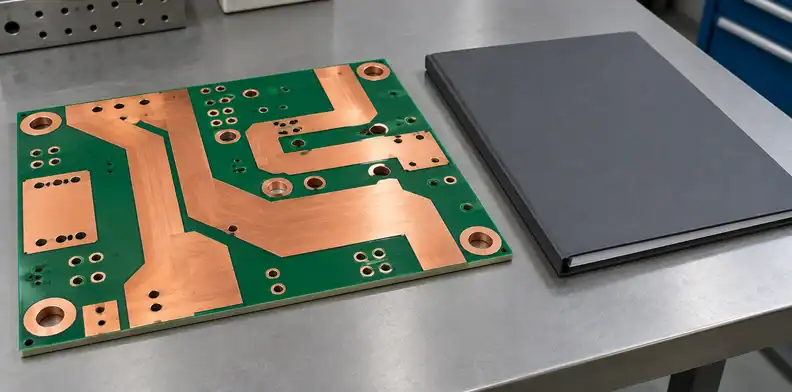
The table below is a buyer's comparison tool. It is not an IPC acceptance form. Request only the details relevant to the order, and agree who will review each response.
| Supplier return | Useful response | Red flag to resolve |
|---|---|---|
| Copper schedule | Layer names, starting or finished basis, and proposed checks | A single ounce value with no layer or basis |
| Construction | Proposed stack-up, finished thickness and materials | An alternate construction priced without identification |
| Critical geometry | Proposed minimum line and space for the stated copper on each layer, and a response against protected traces, pads and holes | A reduced feature with no marked drawing or approval request |
| Fill and balance | Approach for spaces between thick conductors and any copper-balance proposal | An added feature in a stated keep-out without review |
| Solder mask | Proposed coverage and areas requiring drawing clarification | An exception to the drawing hidden in general terms |
| Inspection scope | Test method, section locations and records included in the quote | A pass statement with no agreed scope |
| Deviations | A numbered list tied to the drawing revision | “Equivalent” used without identifying what changed |
The goal is comparable assumptions, not identical factory processes. A supplier can propose a different construction, but the buyer needs enough information to assess its effect on the product before accepting it.
Send your Gerber files, stack-up and fabrication drawing for a quote and free DFM check. Add a BOM if assembly is part of the request; a bare-board quote does not require an assembly BOM.
What evidence should release the first lot?
Define the first-lot evidence, the acceptance specification and class, and the acceptance criteria in the purchase order before fabrication. Depending on the construction, the package can include section locations, the agreed copper-thickness basis, dimensional checks, electrical-test results and the disposition of every deviation. A report supports release only for the features and locations it identifies.
A practical gate is to compare the returned records with the released drawing, not merely check that files have arrived. For example, if the drawing asks for a minimum at a power neck but the section is taken elsewhere, request clarification before treating the item as closed. If a section does not represent a feature, it cannot establish that feature's result.
Use this starting checklist and adapt it to the order:
- Copper basis: Does the report identify the same layer and finished or starting basis specified on the drawing?
- Sections: Are the locations, features and applicable acceptance criteria named?
- Geometry and mask: Are the protected features checked against their drawing requirements?
- Electrical test: Does the record identify the board revision and agreed test scope?
- Deviations: Is each departure traceable to a written disposition for this order?
Hold the lot if the copper basis in a report differs from the RFQ basis, a required section location is unidentified, a protected conductor was reduced without approval, or a departure has no written disposition.
QueenEMS offers flying-probe testing and can build to IPC Class 3 when specified; confirm at quotation whether that applies to your copper construction. The particular test, sampling and records for a board should be agreed in the order; availability does not mean every test is included automatically.
Which DFM changes need renewed approval?
Return changes to the design authority when they fall outside the approved drawing or the discretion granted in the order. Copper basis, protected conductor geometry, material substitutions and inspection scope can all affect the decision. Record the affected revision and the order or lot to which the approval applies.

A useful change record contains the original requirement, the proposed alternative, its affected layers or features, the reason for the request and the response from the authorized buyer. Attach the marked drawing or stack-up rather than relying on a short message such as “equivalent material accepted.”
For repeat orders, ask whether a prior concession applied only to the first lot. If it was temporary, the next quotation should return to the released design unless the design authority issues a revision. If the change becomes permanent, preserve the approved document as the new baseline.
What else do buyers ask about heavy copper RFQs?
Buyers often ask how to specify copper, when to request a section and who can approve changes. The answers depend on the drawing and purchase order. The following questions provide a starting point for comparing supplier responses and documenting decisions before the lot is released.
Should the RFQ specify starting or finished copper?
Specify the basis needed by the design, per layer. If performance depends on a finished minimum, state that requirement and agree the measurement location and method. Do not assume a nominal starting foil callout supplies the same acceptance condition.
Does every heavy copper order need a microsection?
Not automatically. Define whether a section is required, its location, sampling and acceptance criteria in the purchase order. A first lot or a changed construction may justify a specific evidence request, subject to the buyer's requirements.
Can the supplier change a protected conductor during DFM?
Only within the authority granted by the order. If the proposed width, route or copper condition falls outside it, the supplier should identify the change and the buyer's design authority should approve or reject it in writing.
Why can quotes for the same Gerbers differ?
Suppliers may assume different copper bases, materials, constructions, tests or documentation. Ask each to identify those assumptions before comparing the total. PCB lead time also varies with the material and project requirements.
Upload your Gerber files and fabrication requirements to QueenEMS for a quote and free DFM check. Include a BOM when you also need assembly.
Upload your files today · Free DFM check before production · Ship worldwide
Get your PCB prototypes in as fast as 24 hours. We handle FR4, Rogers, and hybrid boards, with standard builds up to 24 layers and higher layer counts subject to engineering review — free prototypes for 2–4 layer FR-4 boards, no minimum order.
Just upload your Gerber + BOM — we source every part, assemble, and inspect (AOI + X‑Ray) so you don't have to chase suppliers. PCB assembly typically takes 5–8 working days once all components are in stock. The confirmed delivery schedule is subject to your quotation.