
Quick Answer: A datasheet that lists burn-in boards as an application, or shows high Tg, Td and T288 values, does not rate a board for your chamber duty. Those are typical, method-bound laminate values. Define the board duty first, then record which evidence represents your ordered construction, which items stay open, and who decides whether a trial is needed.
Featured image: Generic AI-generated material illustration; not a QueenEMS material lot or test result.
A reusable semiconductor burn-in board carries devices through the customer’s test runs. Its purchasing decision needs an evidence trail from the approved board duty to the construction being ordered. A quotation saying “high-temperature polyimide” leaves that trail incomplete.
Does ‘burn-in board’ on a laminate datasheet approve your board?
No. Arlon 85N and Ventec VT-901 list burn-in boards as an application, but neither attaches a continuous temperature, dwell or cycle rating to that statement. The application list identifies a candidate use. It does not establish that your stack-up, copper construction and repeated chamber duty are covered.
The Arlon 85N datasheet separates high-temperature processing applications, including soldering and reflow, from applications involving prolonged heat exposure. That separation prevents a solder-processing claim from silently becoming a repeated-use approval.
VT-901 also separates its application list, material availability and storage conditions from its property table. Available core or prepreg forms tell purchasing what the material maker offers. The fabricator still needs to confirm the construction proposed for the order.
Ask which document and which part of it support the stated duty. If the answer stops at the application list, retain the material as a candidate and leave duty suitability unresolved.
What do Tg, Td, T288 and Z-expansion values tell a BIB buyer?
Tg, Td, T288 and Z expansion describe different material measurements under the methods and conditions printed beside them. Both sheets identify their data as typical. Use each entry within that scope; none provides a direct conversion to continuous board temperature, cumulative chamber hours or reusable-board cycle life.
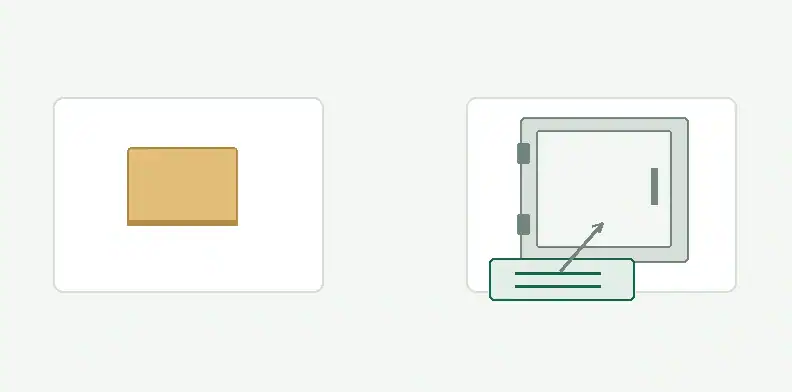
The following is a reading aid for the Arlon sheet and the Ventec VT-901 properties sheet. It does not rank the grades.
| Entry | Published typical data | Scope to retain |
|---|---|---|
| Tg by TMA | 85N: ≥250°C; VT-901: 250°C. Both cite IPC-TM-650 2.4.24. | A glass-transition measurement, not a continuous-use allowance. |
| Td | 85N: initial 387°C and 5% weight loss 407°C, citing IPC-TM-650 2.4.24.6. VT-901: 395°C, citing ASTM D3850. | Retain the endpoint and method; these differently labelled results do not establish a grade ranking. |
| T288 | Both sheets: >60 minutes, citing IPC-TM-650 2.4.24.1. | Method-bound T288 time entry at 288°C; the >60-minute value is not a chamber-run count. |
| Total Z expansion | 85N: 1.2%; VT-901: 1.4%, each over 50–260°C and citing IPC-TM-650 2.4.24. | Expansion over that interval, not a finished-board life result. |
These method identifiers are transcribed from the sheets; they do not prescribe the customer’s acceptance procedure. Arlon disclaims warranty for its typical properties. Ventec says its typical data are not specification values and asks users to verify suitability for their application.
What board duty must the buyer define before evidence can apply?
The buyer must supply an approved PCB temperature-versus-time duty reference, dwell per run, expected repeated-use cycles or cumulative hours, and any relevant bias or socket-loading scope. Without those inputs, a reviewer cannot decide which conditions the offered evidence covers or which parts of the intended use remain unsupported.
Use one field for the customer-approved PCB duty reference: object, location and record ID. How that temperature was measured is a separate measurement question. Here, the reference is an approved input to the material decision.
Keep dwell per run and the expected reuse history identifiable in the request. A document covering a single exposure does not, by itself, provide evidence for an unspecified sequence of later runs. Whether it can support that sequence is an engineering decision to record.
For bias and socket loading, state whether each is included in the suitability decision and identify the customer requirement. This record does not define the electrical stress, socket mechanics or qualification limits. Leave unknown inputs open for the responsible customer engineer.
Does the evidence represent the construction you are ordering?
Often only partly. Typical laminate data describe material test specimens, while the ordered PCB has a particular pressed construction and fabrication history. Arlon’s processing guide says lamination depends on equipment and construction factors and gives no single correct pressure. Evidence for the build therefore needs a stated relationship to that build.
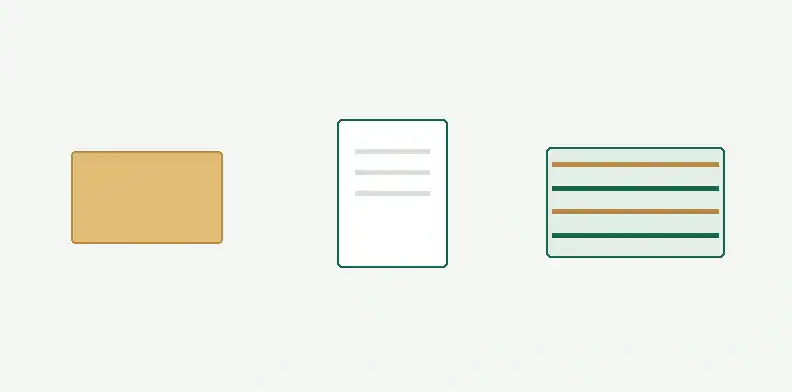
Separate grade-level typical data, lot or certificate records, and evidence from the ordered construction. A material certificate links a supply record to a grade or lot. An agreed coupon or build record must identify the construction and condition it represents before it can answer a duty question.
The existing 85N construction and processing guide covers the material-specific fabrication review. Keep that work separate from deciding whether its evidence applies to repeated BIB use.
Use this Board-Duty-to-Evidence Applicability Record as an editorial procurement suggestion. It is not a standard, test result or QueenEMS capability statement. Copy the record for each duty element so unsupported transfers stay visible.
| Field | Information to enter |
|---|---|
| Customer-defined duty element | Approved PCB duty reference; dwell; repeated-use cycles or cumulative hours; bias/socket-loading scope; or approved material and drawing revision. |
| Evidence offered | Document or result ID and revision. |
| Specimen or construction represented | Material specimen, identified lot, coupon or ordered build. |
| Condition represented | The exposure or condition actually covered. |
| Criterion and method owner | Named customer owner and agreed basis. |
| Gap or transfer assumption | What must be assumed to apply the evidence to this order. |
| Decision status | Accepted, held open, or awaiting a trial/lab decision. |
What should the fabricator return on construction, lots and substitutions?
Ask for the named grade and core/prepreg construction against the approved drawing revision, material lot linkage, proposed deviations or substitutes with their approval records, and the evidence agreed for this build. A response should identify both what is being supplied and what remains outside the evidence returned with it.
This Construction and Change-Evidence Return is a second editorial suggestion. The fields imply no required test values or automatic equivalence between materials.
| Return field | Requested response |
|---|---|
| Named grade, core and prepreg construction | Match the released layer schedule and drawing revision. |
| Material lot/record linkage | Identify the records associated with the build. |
| Proposed deviation or substitute | Name the change; record “none” if none is proposed. |
| Approval record and approver | Identify the customer’s disposition before release. |
| Evidence agreed for this build | Name the promised records and their scope. |
| Not covered by typical values | Return unresolved duty or construction questions explicitly. |
| Change/re-evaluation trigger | State which material or construction changes reopen review. |
QueenEMS’s ATE PCB manufacturing service starts from released customer design data. Confirm the requested material and construction during quotation; optional assembly is quoted separately. This scope does not include qualifying a laminate for the customer’s burn-in duty.
What stays open, and who decides whether a trial is needed?
Any required duty condition without applicable evidence stays open, including cumulative chamber exposure on the ordered construction. Name the customer owner who decides whether to accept the available basis, hold release, or request a trial or laboratory evaluation. Typical property values cannot fill an undocumented gap in that decision.
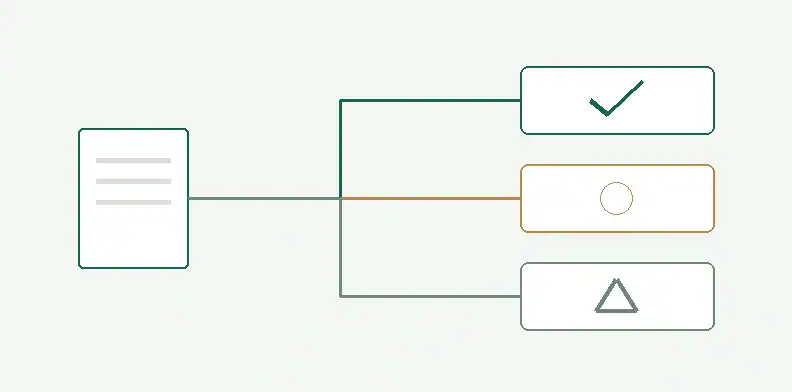
Use “accepted” only with the decision’s scope and approver recorded. Use “held open” where a requirement or supporting record is missing. “Trial/lab decision” means the responsible owner must define the question, representative construction, method and acceptance basis before commissioning the work. The form supplies no test interval or pass limit.
Reopen the affected entries when the grade, core/prepreg construction, material supplier or drawing revision changes. Carry forward a prior acceptance only when the approver records why its evidence still represents the changed order.
What else should buyers ask about BIB materials?
Before choosing a BIB laminate, ask how the offered material data relate to the approved board duty and ordered construction. Confirm how proposed substitutions are approved and who owns any suitability trial. Keep the fabrication quote separate from the customer’s duty and qualification decision.
Is a higher Tg enough to choose a burn-in board laminate?
No. Tg is one method-bound material entry. The buyer still needs an approved board duty, an identified construction and evidence applicable to that duty. A larger Tg number supplies neither cumulative chamber hours nor an approval for the completed reusable board.
Can a fabricator substitute an “equivalent” polyimide on a burn-in board?
Only with the customer’s approval. Treat the proposal as a change requiring disposition under the customer’s approval process. Return the named substitute, affected construction and approval record; a generic equivalence label does not close the duty-evidence review.
Do T260 or T288 times predict how many chamber runs a board survives?
No. The datasheet times belong to the stated material tests. A reusable-board life decision needs evidence applicable to the intended exposure sequence and construction; dividing a test time by a run duration does not provide that evidence.
Does QueenEMS qualify laminate for my burn-in duty?
No. QueenEMS can review released fabrication data for a quotation and manufacturability. The customer owns the duty and suitability decision, including any separately arranged trial or laboratory evaluation needed to close the evidence gaps.
Send your released files for a quote and free DFM review.
Send Gerber, drill files, stackup and drawings for a PCB quote. Include the approved laminate grade and flag open material-evidence questions.
For assembly, add the BOM and assembly drawing. Confirm the quoted scope; burn-in qualification stays with your designated test team.