
In manufacturing, EMS stands for Electronics Manufacturing Services. An EMS provider carries out agreed production work, which can include PCB assembly, component sourcing, testing and logistics. An original equipment manufacturer (OEM) owns the product and brand and can perform manufacturing itself or contract some of it to an EMS provider.
The practical distinction between EMS and OEM is responsibility: who releases the design, approves purchases and changes, performs the agreed work, and accepts the finished product. Define these responsibilities before comparing electronics manufacturing services.
1. Why Do EMS and OEM Responsibilities Matter?
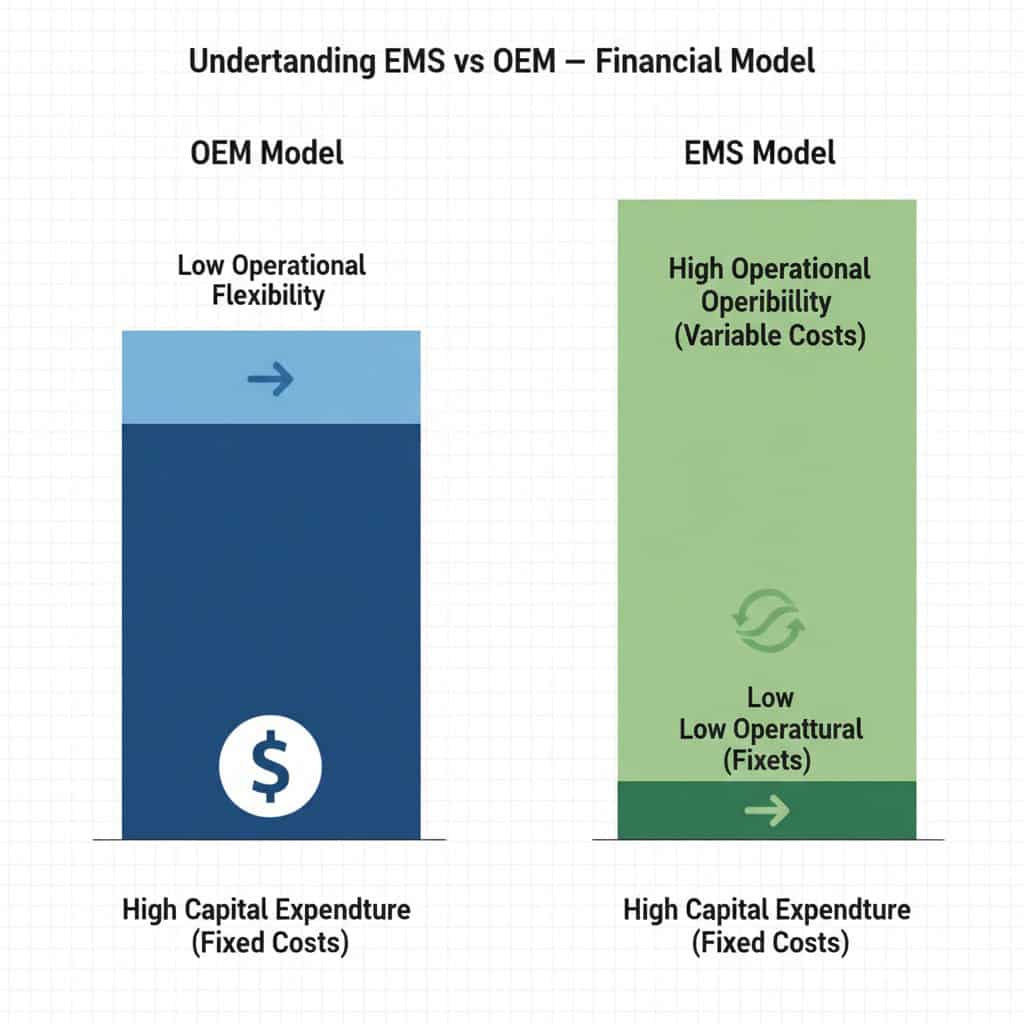
Outsourcing changes which production resources your team must manage. The decision depends on equipment needs, demand, engineering support and the scope a supplier has agreed to provide.
- Production resources: Compare the cost of internal equipment, staffing and maintenance with the supplier’s quoted setup, production and support charges.
- Engineering ownership: Name the people who approve drawings, component substitutions, test limits and release changes.
Record the responsibility split in the RFQ so two suppliers are pricing the same work.
2. What Does EMS Stand For in Manufacturing, and How Does It Differ from OEM?
Electronics Manufacturing Services describes contracted manufacturing support. OEM describes the product owner’s role. These roles can overlap: an OEM can retain a factory, and an EMS provider can offer design support if it is included in the contract.
- OEM responsibilities commonly include product requirements, design release, brand management and customer support.
- EMS responsibilities can include component sourcing, PCB assembly services and testing to the released specification.
| Entity | Primary role | Design/IP responsibility | Production responsibility |
|---|---|---|---|
| OEM | Product and brand owner | Defined by ownership and agreements | Can manufacture internally or contract work |
| EMS | Contracted manufacturing provider | Access and use governed by agreement | Performs the agreed assembly, sourcing and test scope |
Confirm ownership and permitted use of design files, firmware, tooling and test programs in the agreement.
3. How Do EMS Providers Enhance Your PCB Assembly Efficiency?

An EMS provider may use SMT assembly equipment, inspection programs and trained production staff to carry out the released build. Ask how the supplier will handle your package types, batch size and test requirements rather than comparing machine speed alone.
- Production fit: Ask about setup, changeover, process checks and capacity for the actual board.
- Engineering support: Agree how assembly questions will be recorded, returned and resolved before production.
4. Why Does Design for Manufacturing Matter Before Assembly?
Design for manufacturing and assembly reviews identify issues such as pad geometry, component clearance, solder access and incomplete production data. The review should result in a marked-up issue list and an approved decision for each change.
- Process review: Check the footprint, paste data and inspection access before releasing production tooling.
- Component sourcing: Require approval for substitutions and document any effect on fit, performance, firmware or testing.
| DFM factor | Question to resolve | Review output |
|---|---|---|
| Pad geometry | Does the land pattern suit the package and process? | Approved footprint or documented change |
| Part spacing | Can the assembly be placed, inspected and reworked? | Clearance issue list and disposition |
A DFM review identifies risks; it does not establish a guaranteed yield or authorize the factory to alter your design.
5. How Does Outsourcing Change Total Cost of Ownership?
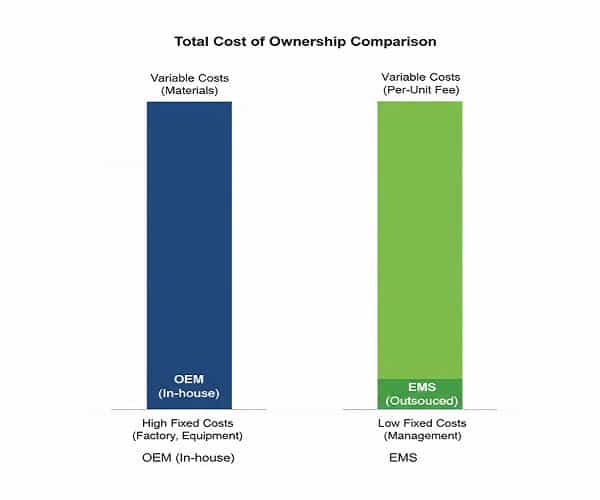
Compare the complete cost of each sourcing model. A per-unit assembly price may exclude setup, materials, fixtures, test development, storage, scrap or engineering changes.
- Capital expenditure: Identify which equipment and tooling you would need to buy, maintain or qualify internally.
- Demand changes: Ask how order changes affect minimum purchases, reserved capacity, inventory and cancellation charges.
6. Can System Integration Services Simplify Your Supply Chain Strategy?
System integration, often called box build, can include enclosure assembly, wiring, firmware loading, system testing and packaging. These activities must be quoted and confirmed separately from board assembly; the term EMS alone does not establish that a supplier provides them.
- Handoffs: Name who supplies and accepts the enclosure, cables, mechanical parts and assembled PCB.
- Test scope: Distinguish testing of the finished unit from checks performed during through-hole PCB assembly.
| Service level | OEM responsibility | Supplier responsibility |
|---|---|---|
| PCBA scope | Release data and acceptance requirements | Perform agreed board assembly and tests |
| Box-build scope | Release mechanical, wiring and system requirements | Perform only separately confirmed integration work |
Ask for an explicit list of included operations and the records returned at each handoff.
7. What Should a Continuing EMS Partnership Provide?
A continuing production relationship needs a repeatable release process. Drawings, BOM revisions, approved alternates, inspection instructions and open issues should remain traceable between orders.
- Prototype transition: Record the changes approved after the pilot build before placing a repeat order.
- Supply continuity: Agree how shortages, obsolete parts and long-lead components will be reported.
8. How Do You Check an EMS Supplier’s Fit?
Review the supplier’s proposed process against your actual product. Ask for the scope of engineering support, production controls, test coverage, reporting and the person responsible for unresolved questions.
- Communication: Agree who responds to production questions and how urgent issues are escalated.
- Technical fit: Confirm that the proposed process covers your board, packages and acceptance criteria.
9. What Do Certifications and Acceptance Standards Tell You?
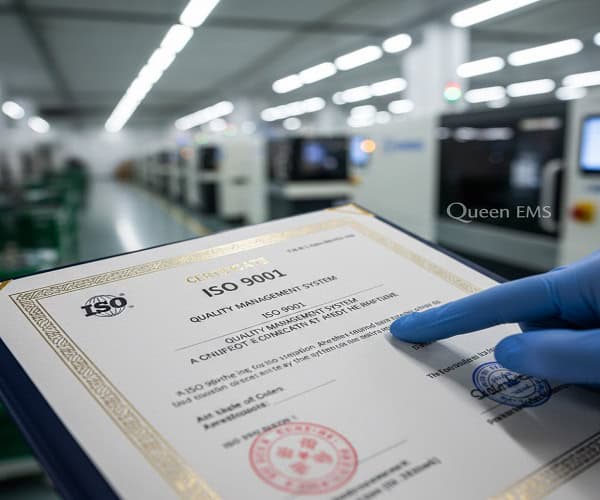
A quality-management certificate describes an audited system and scope. It does not establish that every unit meets a product safety requirement. Verify the certificate’s site, scope and validity, then specify the product acceptance criteria separately.
- Process records: Ask how inspection results, nonconformances and corrective actions are controlled.
- Traceability: State which material lots, serial numbers and test results must be linked to the delivered units.
| Certification / Standard | Purpose | Buyer check |
|---|---|---|
| ISO 9001 | Quality-management system | Verify site, scope and certificate validity |
| IPC-A-610 | Electronic assembly acceptance criteria | Specify applicable edition, class and order requirements |
Treat a supplier certificate and the acceptance criteria on your order as separate checks.
10. What Should You Send QueenEMS for a PCBA Quote?
Send the released BOM, fabrication and assembly data, target quantities, test requirements and delivery location. Ask QueenEMS to confirm the requested scope, open engineering questions, material readiness and schedule in the quotation.
- Build inputs: Identify the approved revision and any components or operations supplied by your team.
- Schedule: Distinguish quotation turnaround, production time, shipment date and delivery date.

To compare suppliers, keep the same file revision, quantity and test scope in each RFQ. List unresolved questions and the decisions required before release. You can contact us today with those inputs for a project-specific review.
FAQ
Can I switch from an OEM-only model to an EMS partnership for an existing product?
Yes. Plan the transfer of drawings, BOMs, tooling, approved sources and test records, and agree how the first transferred build will be accepted.
What’s the best way to protect my IP when working with an EMS?
Use an appropriate confidentiality and ownership agreement, control file access, and define permitted use of the design, firmware and tooling. Have the agreement reviewed for your project.
How do I know if an EMS provider is right for my small business?
Look for a supplier whose proposed batch sizes, change control, support and test scope fit the project. Confirm these in the quote rather than relying on a service label.
What is the typical lead time when working with an EMS partner?
Lead time depends on material readiness, build scope and testing. For QueenEMS PCBA work, the typical assembly window is 5–8 working days after components are in stock, subject to the quotation. Shipping and separately agreed operations can add time.
How do I get a fast and accurate quote for my PCB assembly?
Provide the released BOM, Gerber or ODB++ data, placement and assembly files, target quantity, test requirements and delivery location. Identify any supplied parts or unresolved alternates.
Upload your files today · Free DFM check before production · Ship worldwide
Get your PCB prototypes in as fast as 24 hours. We handle FR4, Rogers, and hybrid boards, with standard builds up to 24 layers and higher layer counts subject to engineering review — free prototypes for 2–4 layer FR-4 boards, no minimum order.
Just upload your Gerber + BOM — we source every part, assemble, and inspect (AOI + X‑Ray) so you don't have to chase suppliers. PCB assembly typically takes 5–8 working days once all components are in stock. The confirmed delivery schedule is subject to your quotation.