

Quick Answer: Large PCB manufacturing cost rises sharply at low volume because one board consumes a large share of a production panel while setup, tooling, CAM, test, special handling and protected packaging are spread across few units. The useful question is not price per square centimeter. Ask for panel utilization, boards per panel, process-route assumptions, expected yield and one-time versus recurring charges.
Large PCB manufacturing cost often surprises teams that are used to prototype-pool pricing. An oversized outline may eliminate shared panels, reduce boards per production panel to one, require nonstandard equipment and make each late defect consume far more material. Five smaller boards are not automatically cheaper, but a large board needs a different cost model.
This article shows buyers how to read the quote, distinguish real cost drivers from vague “oversize” surcharges and identify design changes that reduce cost without weakening function.
Table of Contents
- Start with the production panel, not board area
- Separate one-time and recurring cost
- Understand why low volume loses pooling benefits
- Model yield exposure on a large outline
- Price the construction and process route
- Include test, handling and packaging
- Compare one large board with a partitioned design
- Request a transparent cost disposition
Start with the production panel, not board area
Bottom line: Material cost follows the production panel and usable yield, not the exact area of the finished outline.
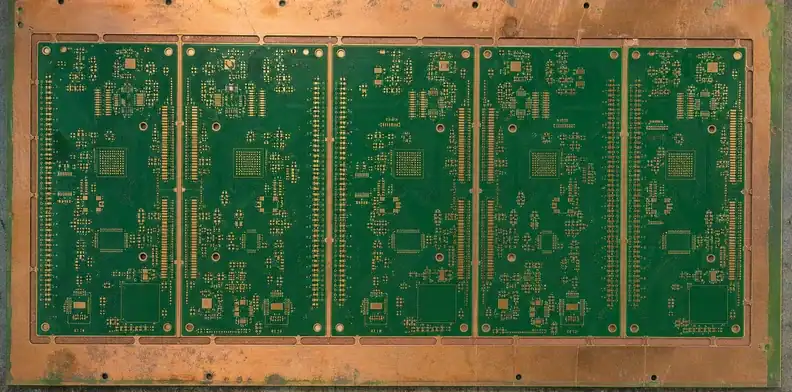
The supplier buys and processes laminate in sheet and panel formats. Tooling borders, plating contact, coupons, registration targets and process margins consume space that is not shipped. A small change in finished length can cross a nesting threshold and reduce the number of boards per panel. Unit price can jump even though finished area changes only slightly.
Altera’s panelization example shows why nominal sheet dimensions cannot be used as the available nesting field: fabrication borders and separation spaces reduce it. Use the returned panel drawing to establish boards per panel before applying a cost model.
Ask for the proposed production panel dimensions, board orientation, boards per panel and estimated utilization. Distinguish customer array dimensions from the fabricator’s working panel. The Large Format PCB manufacturer page explains why usable size is layer- and process-dependent.
| Cost input | What to request | Why it matters |
|---|---|---|
| Production panel | Size, orientation and margins | Defines material and equipment route |
| Boards per panel | Good-board target and x-out policy | Converts panel cost to unit cost |
| Utilization | Finished area versus processed area | Reveals threshold effects |
| Quantity | Panels and release schedule | Spreads setup and qualification work |
Separate one-time and recurring cost
Decision point: A useful quote separates NRE and tooling from recurring panel, process, test and packaging charges.
CAM engineering, impedance modeling, drill/rout programs, test preparation and special fixtures may be largely independent of order quantity. At low volume, those charges are divided among few boards. Combining them into one unit price hides what will happen at repeat order.
Request at least three columns: one-time, recurring per production panel and recurring per shipped board. Identify which tooling can be reused and what revision changes make it obsolete. A new outline, netlist or stack-up may trigger different reset rules.
Use an explicit model to test the quotation assumptions: estimated cost per accepted board = NRE/Q + panel processing cost/(boards per panel × assumed good-board yield). Here Q is the accepted-board quantity and NRE is the one-time engineering and setup cost. With illustrative inputs of $600 NRE, $120 per panel, two boards per panel and 90% yield, the estimate is $96.67 at Q = 20 and $72.67 at Q = 100, excluding freight, tax and separately priced work. This is an expectation model, not a panel-start schedule. Actual production uses whole panels, and the supplier must quote the required accepted quantity and replacement terms.
The PCB NRE article explains common setup charges. For a large board, add carriers, large test fixtures, custom packaging and special dimensional inspection to the review.
Never compare suppliers until the same one-time and recurring scope is visible.
Understand why low volume loses pooling benefits
In practice: Oversized prototypes often cannot share the same standardized panel and production flow used by small pool orders.
Prototype pooling works when many designs fit common material, thickness, copper, finish and rule sets. A large outline can occupy most of a panel, require a nonstandard sheet or prevent the supplier from filling leftover space. It may also require dedicated scheduling on equipment with a larger field.
This is why ordering one oversized prototype can cost more than five small boards. The comparison is not one unit versus five units; it is one dedicated panel and route versus a shared, standardized service. Ask whether the quote assumes a dedicated panel and whether a slightly smaller outline would re-enter a routine format.
Do not optimize solely for the cheapest first lot. A pooled shortcut that cannot support repeat production creates redesign and requalification cost later. Compare prototype and production routes before releasing the design.
Ask for quantity breaks based on complete production panels rather than arbitrary unit counts. For an illustrative six-up layout before yield allowance, 11 and 12 boards require two panel starts; 13 require three. The supplier still needs to plan the required accepted quantity. A staged release can preserve cash flow but lose panel efficiency or require repeated setup. Let the supplier show the economic batch size, then decide whether inventory carrying cost justifies it.
Material minimums matter for unusual laminates and copper constructions. The supplier may need to purchase more sheet material than one lot consumes. Clarify whether residual material can be reserved for repeat orders, how long it remains controlled and whether storage or obsolescence risk is included.
Model yield exposure on a large outline
Evidence check: Quote risk depends on expected good boards per panel and where defects can occur, not only a generic factory yield percentage.
When one panel yields one large board, any nonrepairable defect can consume the entire panel value. More layers, fine features, heavy copper, special vias and tight registration add defect opportunities. Long-distance dimensional error can reject a board even when local conductor quality is good.
Ask whether the quote includes a normal yield allowance, guaranteed shipped quantity or overbuild. Clarify x-out policy for customer panels. For repeat production, track actual good boards per panel and the dominant loss category rather than negotiating an abstract yield number.
| Yield question | Weak answer | Decision-ready answer |
|---|---|---|
| How many boards per panel? | “Depends” | Proposed nesting with process margins |
| What quantity is guaranteed? | “Best effort” | Shipped quantity and overbuild rule |
| What happens after an x-out? | “Rebuild if needed” | Panel acceptance and replacement policy |
| How is repeat cost updated? | “Same price” | Review tied to actual route and yield data |
The PCB x-out panel policy helps align acceptance when multiple boards or modules share a delivered panel.
Price and delivery should be based on good-board output, not optimistic raw-panel starts.
When a quote contains only an “oversize” line item, send the outline, construction and quantity breaks for a panel-cost disposition. Ask for the nesting threshold and scope difference rather than a generic discount.
Scrap timing changes the cost impact. An inner-layer AOI reject occurs before later plating, mask, finish, test and routing costs are added; a final electrical reject consumes nearly the full route. Ask which late-stage risks dominate and whether design or evidence changes can move detection earlier. Earlier detection can reduce cost even when the raw defect rate is unchanged.
Do not assume a supplier’s higher unit price means lower yield. It may include guaranteed quantity, conservative overbuild or more complete inspection. Normalize the delivered scope and acceptance risk before drawing conclusions.
Price the construction and process route
Key takeaway: The same outline can have very different cost when layer count, material, thickness, copper, vias, feature rules or finish change.
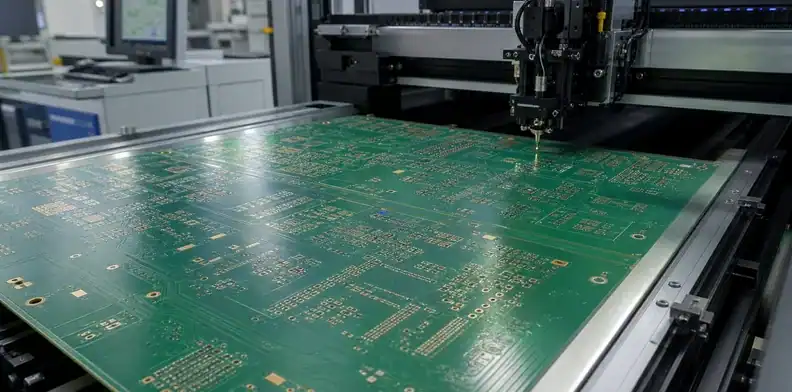
Multilayer construction adds material, lay-up, lamination and registration work. Low-loss or named laminates may have larger minimum purchases or limited sheet formats. Heavy copper affects etching, plating and resin fill. Sequential lamination, blind vias, tight impedance and unusual finishes add dedicated operations and inspection.
Ask the supplier to mark which specifications force the special route. Then separate functional requirements from inherited defaults. A tolerance or material name copied from an older design can block a lower-cost, qualified alternative.
Use the PCB fabrication cost article for general drivers and the supplier stack-up signoff to freeze the approved construction.
Review tolerances by function. Tight outline, thickness, impedance or positional limits can reduce the usable process window and increase inspection or sorting. Relaxing a nonfunctional tolerance may help, but vague “commercial tolerance” language can create a fit problem. Link every relaxation to a system budget and record it on the released drawing.
Surface finish also affects material flow and lead time. An ordinary finish processed routinely on the large route may cost less than a specialized finish that requires outsourcing or unusual tank capacity. Ask for alternatives only after checking solderability, contact, shelf-life and regulatory needs.
Include test, handling and packaging
What this means: Large-board cost continues after fabrication; inspection fields, test time, support fixtures and shipping protection can be material line items.
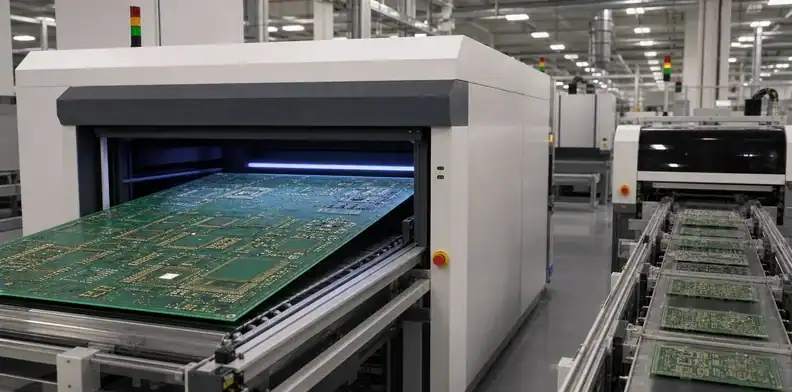
Flying-probe travel increases with net count and physical span. Dedicated fixtures may be economical at volume but expensive for prototypes. Dimensional reports can require large-field equipment or multiple setups. Thin, long boards need controlled support during processing and inspection.
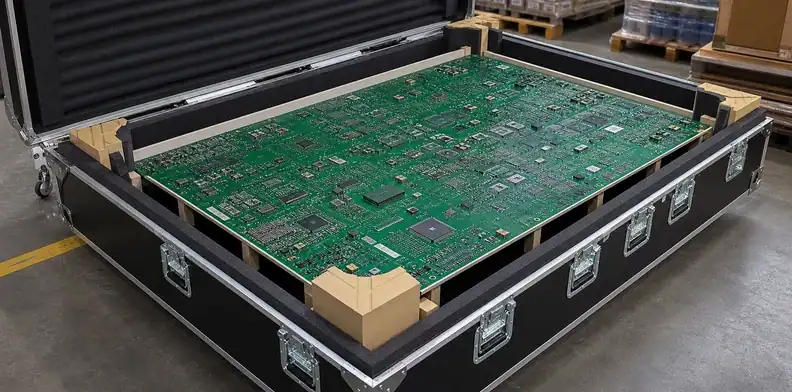
Packaging should prevent moisture, electrostatic exposure, corner impact and bending. A rigid support board or custom crate adds cost but can be cheaper than replacing a warped international shipment. Ask whether freight is quoted by dimensional weight and which Incoterm is used.
The PCB packaging and labeling requirements provide a general checklist; oversized products need added full-span support and receiving inspection.
A low fabrication price is not comparable if test evidence, support tooling or protected packaging is excluded.
Freight can be nonlinear. Oversized cartons may be billed by dimensional weight, need a pallet or incur manual-handling surcharges. Compare ex-works fabrication price with the landed, protected product. A supplier located farther away may still be competitive, but the quote should make logistics assumptions visible.
Compare one large board with a partitioned design
Decision point: Partition only when total system cost and risk improve after connectors, cables, assembly, test, enclosure and field service are included.
Smaller boards can improve panel utilization and access standard equipment. They may also isolate high-risk functions, simplify replacement and reduce scrap exposure. But every partition adds interconnects, mating tolerances, purchasing items and potential failure points.
Build a system comparison with PCB fabrication, connectors, cable assemblies, assembly labor, fixtures, test, enclosure changes and service. Include signal integrity and power-drop effects for long interconnects. The PCB minimum-order and cost article helps frame quantity economics; this article focuses on the quote mechanics behind the large-board option.
Avoid redesigning solely to gain one extra board per panel. A small material saving can disappear if the new connector needs manual assembly or creates a new compliance test.
Request a transparent cost disposition
The final quote should expose assumptions, thresholds and exclusions so the team knows which design changes alter price.
Send one controlled RFQ package and request production panel, nesting, construction, test method, inspection scope, packaging, lead time and quantity assumptions. Ask the supplier to identify the nearest cost threshold: smaller outline, different panel orientation, relaxed nonfunctional tolerance, alternate material or consolidated order quantity.
Do not demand confidential process economics. You need enough structure to make a decision, not the factory’s entire cost model. A useful disposition might say that a 15 mm length reduction restores two-up nesting, while a vague “oversize surcharge” gives no engineering path.
Request two controlled scenarios rather than many speculative quotes. Scenario A should preserve the released design. Scenario B should change one clearly nonfunctional driver and show the cost, lead-time and qualification effect. Multiple simultaneous changes make it impossible to understand which lever mattered and increase the risk of approving the wrong revision.
Use the PCB quote-exclusions checklist before purchase order.
Approve price only when boards per panel, route, evidence, packaging and revision are explicit.
Track the estimate against actual repeat-order data. Record panels started, good boards shipped, test hours, special-handling events, packaging configuration and freight class. The purpose is not to audit the supplier’s margin; it is to learn whether the design and contract assumptions remain valid. If actual output improves, ask whether the next price break reflects the stabilized route.
Protect comparability when a quote is revised. Keep a change log that names the altered quantity, material, outline, tolerance, test scope or delivery assumption. A lower number after scope was removed is not a cost reduction. It is a different product or risk allocation.
Lead time is part of cost. A special material purchase, large-field equipment queue or custom fixture can extend the route. Expediting may add dedicated setups and freight without removing technical hold points. Ask for the critical-path operation and the latest date for data, material and drawing approval.
Compare payment timing as well as price. Material prebuy, noncancelable tooling and freight deposits change cash exposure at prototype volume. Put those commercial assumptions beside the technical scope so a lower unit figure does not hide a larger upfront commitment.
Finally, separate target price from feasibility. Pushing a supplier to match a routine small-board benchmark can encourage hidden exclusions or an unqualified workaround. First agree on the buildable route and acceptance scope; then negotiate volume, scheduling and repeat-order efficiency against that stable baseline.
Frequently Asked Questions
Why does PCB area increase cost so quickly?
Because finished area can cross a production-panel threshold, reducing boards per panel while setup and process margins remain. The increase is often stepwise rather than linear.
Why do large PCBs lose prototype discounts?
They may not fit shared panels or standardized routes, so the order uses dedicated material, scheduling and engineering.
Does one oversized prototype cost more than five small boards?
It can. Compare processed panels and setup scope, not finished unit count. Five small designs may share a routine panel while one large board consumes a dedicated panel.
How can I reduce large PCB manufacturing cost?
Ask which outline threshold, construction rule, tolerance or evidence requirement drives the special route. Change only nonfunctional requirements and compare total system cost.
Should I request a cost per square inch?
Use it only as a rough normalization. It can hide panel waste, layer count, process complexity, tooling, test and packaging.
Written by the QueenEMS Engineering Team.
Send the outline, construction and quantities to identify the cost threshold before changing the design.
Review My Large PCB Cost Drivers
Upload your files today · Free DFM check before production · Ship worldwide
Get your PCB prototypes in as fast as 24 hours. We handle FR4, Rogers, and hybrid boards up to 40 layers in volume production, with advanced builds subject to engineering review — free prototypes for 2–4 layer FR-4 boards, no minimum order.
Just upload your Gerber + BOM — we source every part, assemble, and inspect (AOI + X‑Ray) so you don't have to chase suppliers. Boards ship in as fast as 24 hours.