
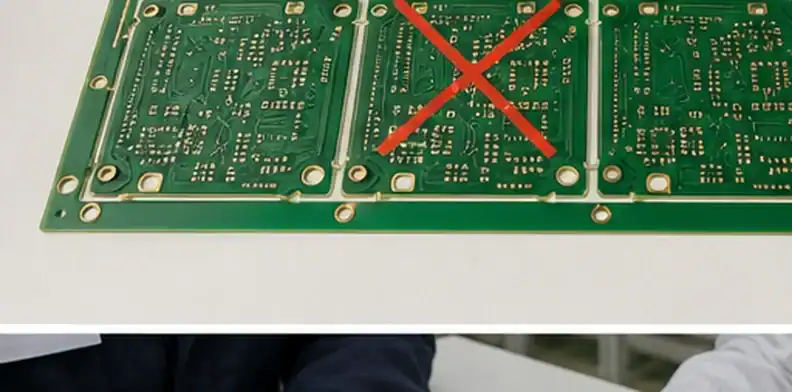
Quick Answer: PCB x-out boards should be accepted only when the panel policy, SMT loading method, usable-board count, traceability, and price adjustment are clear before assembly. The safe decision is made before the assembler programs the line, because a rejected panel can change placement time, yield accounting, and receiving acceptance.
Key takeaways
- Decide whether X-outs are allowed before the panel is fabricated.
- Count accepted good circuits, not only shipped panels.
- Confirm whether SMT can safely skip marked positions.
- Put price, replacement, traceability, and notice rules in the RFQ.
The buyer’s practical question is whether marked bad positions are acceptable for this build and whether the invoice should change. The answer depends on assembly method, traceability, usable-board count, and whether the supplier disclosed the X-out policy before shipment.
Table of Contents
- Define X-out acceptance before the panel is built
- Why X-out boards affect SMT cost, not only PCB yield
- When no-X-out policy is worth paying for
- How receiving should count good and bad boards
- Set price, replacement, and evidence rules
- Write the panel policy into the RFQ
- Send QueenEMS the panel-acceptance package
Define X-out acceptance before the panel is built
PCB x-out boards should be allowed, limited, priced, or rejected before the panel is fabricated. A buyer should define whether panels must contain only good boards, whether a small X-out rate is acceptable, and how shipped quantity is counted.
The buyer should also decide whether X-out marks are allowed on rails, in the circuit image, or on labels. The mark needs to be visible to the assembly team without contaminating good boards or confusing automated inspection.
The key buyer choice is whether the assembler can reliably process a panel that contains bad positions. A panel can be acceptable to the board fabricator and still be inefficient or risky for SMT.
Connect the decision to PCB panelization for assembly. Panel policy is not only a fabrication issue; it affects SMT loading, paste printing, placement, AOI, and depaneling.
The approval should happen before fabrication because X-out policy can influence panel yield strategy. If the supplier assumes X-outs are allowed and the buyer later rejects them, the discussion becomes a remake or credit argument instead of a normal quoting choice.
| X-out policy | When it fits | Buyer decision |
|---|---|---|
| No X-out | High-value SMT or strict traceability | Higher PCB price may be fair |
| Limited X-out | Prototype or low-risk assembly | Define max bad positions |
| Accept by good circuit | Quantity matters more than panel count | Invoice by usable boards |
| Reject after arrival | No prior agreement | Expect dispute |
If the supplier offers extra panels to cover X-outs, verify the extra panels use the same revision, finish, date code, and test status. Extra boards that are not traceable can create a second problem.
Acceptance rule: Approve X-outs only when usable quantity, traceability, assembly handling, and invoice basis are already defined.
Why X-out boards affect SMT cost, not only PCB yield
X-out boards affect SMT cost because the assembler must still handle, align, skip, inspect, and depanel the full array. Even when the bare-board price looks acceptable, the marked bad positions can slow programming, increase operator checks, and complicate yield reporting.
For purchasing, the first number to record is not the number of panels. It is the number of accepted good circuits. A PO for 500 boards should not silently close with fewer usable circuits because several bad positions were hidden inside panels.
If the assembler uses a board loader, stencil printer, placement program, and AOI tied to panel positions, even one X-out can require setup attention. That extra attention may be reasonable for prototypes and unacceptable for steady production.
For volume assembly, the cost of an X-out is not limited to the missing circuit. Operators may need to adjust loading, vision programs may need skip data, and traceability may no longer match the buyer’s planned good-board count.
X-out positions affect assembly because machines and operators must know which circuit positions are usable. If the panel file, mark, and work instruction are unclear, a bad position can receive components or a good position can be skipped.
| Assembly control | What to verify | Why it matters |
|---|---|---|
| Panel photo | Shows marked positions | Record before assembly |
| Good circuit count | Controls invoice | Avoid panel-count confusion |
| Assembler instruction | Prevents loading bad positions | Protects SMT |
| Replacement rule | Handles shortage | Keeps schedule visible |
If the order is already late, accepting X-outs may look attractive. The buyer should still ask whether line slowdowns or special handling will erase the schedule gain.
Assembly teams also need to know whether the bad position affects support pins, vacuum pickup, fiducials, or stencil contact. A marked bad circuit away from rails may be manageable; a bad position that changes panel handling can create more labor than the missing circuit itself.
Buyer call: Count the assembly handling cost before accepting a cheaper bare-board delivery with marked positions.
When no-X-out policy is worth paying for
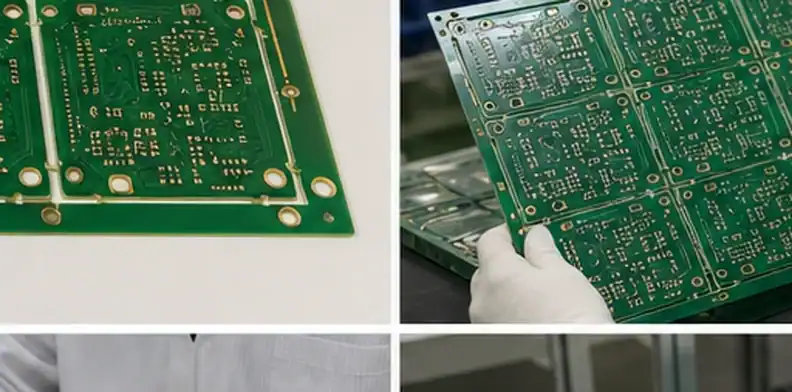
No-X-out policy is worth paying for when the value of predictable assembly is higher than the bare-board yield saving. High component value, audit traceability, strict delivered quantity, automated placement, and customer-controlled lots all make partial panels harder to justify.
For engineering, the question is whether the X-out position affects panel stiffness, fiducials, rails, tooling holes, or support. If the bad location changes how the panel behaves in stencil printing or depaneling, the assembler should review it before acceptance.
For expensive components, a no-X-out rule may be cheaper than one misplaced assembly run. The buyer should compare the cost of stricter bare-board yield with the cost of loading parts on a bad circuit.
No-X-out language should be reserved for builds where it matters. When every panel must run automatically, or when one missed position can consume expensive components, the higher bare-board cost may be easier to justify.
No-X-out policy is worth paying for when assembly automation, traceability, customer audit, or component cost makes partial panels risky. It may also be needed when panel balance affects stencil printing or fixture alignment.
The final decision should be visible to the whole build team: accept as-is, request replacement, accept with credit, or hold before assembly. That decision should not live only in a buyer-supplier chat.
No-X-out policy is especially useful when the board has expensive BGAs, programmed modules, customer serial-number tracking, or fixture-dependent assembly. In those cases, the cost of a cleaner bare-board panel may be lower than the cost of explaining why one circuit position was skipped or loaded incorrectly.
Decision rule: Pay for no-X-out panels when the cost of assembly confusion is higher than the cost of stricter bare-board yield.
How receiving should count good and bad boards
Receiving should count good circuits, bad marked positions, and full panels separately. That gives purchasing a usable quantity, gives quality a traceability record, and gives assembly a clear release or hold decision before solder paste or loading starts.
For the assembler, the risk is accidental loading. A marked circuit should be skipped consistently during paste, placement, inspection, and depaneling. If the assembly program cannot handle skip data reliably, no-X-out may be the safer rule.
Receiving should not remove panels from their original packaging before photos and count are complete. If the panel is repacked or mixed with other lots, the supplier may not accept the quantity evidence.
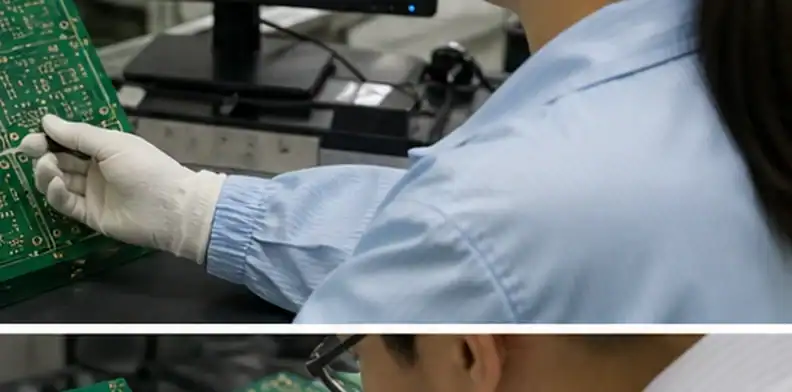
Receiving should photograph the panel before depaneling because the mark may disappear from the later production record. The photo should show panel ID, position, and the total number of good circuits counted.
Receiving should count good circuits, bad marked circuits, complete panels, and accepted usable quantity. Do not approve an invoice by panel count only when X-outs are present.
Use PCB incoming inspection and the PCB overage underage policy to keep count and payment aligned.
The receiving record should also say whether the X-out was known before shipment or discovered only at arrival. Advance notice gives purchasing room to approve a price basis and gives assembly time to prepare skip instructions. A surprise X-out is a different problem because the buyer may already have scheduled SMT capacity, kitted components, and customer delivery around full-good panels.
If the supplier ships extra panels to cover bad positions, receiving should not simply count the cartons and close the PO. The extra good circuits need the same revision, surface finish, lot identification, and electrical-test status as the main shipment. Otherwise the buyer may solve the quantity shortage while creating a traceability mismatch.
Receiving should keep the photo before depaneling. Once the panel is separated, the visible relationship between panel ID, X-out mark, and good circuit count may disappear, which weakens both supplier discussion and internal invoice approval.
Proof rule: Receiving evidence should preserve the panel ID, marked position, and accepted good-circuit count before the panel is separated.
Set price, replacement, and evidence rules
The price rule should say whether the buyer pays per good circuit, receives replacement panels, accepts a credit, or rejects the shipment. Without that rule, the same delivery can look acceptable to the fabricator and short to the buyer.
For quality, the mark should be traceable. The buyer should know whether the mark was made by fabrication inspection, electrical test, final QA, or receiving. Different origins imply different confidence levels in the rest of the panel.
If the buyer accepts limited X-outs, it should define whether the supplier must add extra good boards to meet the ordered quantity. Otherwise, the shipment can look complete while the usable board count is short.
Price adjustment should follow usable quantity. If the supplier ships ten panels but two positions are X-out, the buyer should know whether the invoice is based on panels, good circuits, or the original ordered board quantity.
The commercial rule should say whether X-out circuits count toward delivery quantity. Most buyers should count only accepted good circuits as usable quantity.
The useful supplier answer is specific: maximum X-out positions per panel, marking method, replacement rule, invoice basis, and whether notice is required before shipment.
For invoice approval, the buyer should keep one simple number visible: accepted usable circuits. Panel count, carton count, and produced circuit count can all be true while the usable shipment quantity is still short. That is the number purchasing should compare with the PO and assembly plan.
The replacement rule should say whether the supplier sends replacement good circuits, credits the missing usable circuits, or remakes the panel. Each option has a different schedule effect, so the RFQ should not leave replacement to a last-minute negotiation.
Price rule: Pay and close the PO by accepted usable circuits, not by carton count or full panel count when X-outs are present.
Write the panel policy into the RFQ
The RFQ should state the X-out policy in plain production language: allowed or not allowed, maximum rate, marking method, notice requirement, usable-board count, and replacement or credit rule. That wording gives the supplier a quoting boundary before panelization, stencil planning, and SMT instructions are locked.
For finance, price adjustment should be simple. The buyer pays for the good circuits that were accepted under the agreed rule, not for a confusing mix of full panels and unusable positions.
The RFQ should use plain language because X-out expectations are often handled differently by fabrication and assembly teams. State the maximum allowed bad circuits per panel, marking method, and invoice basis.
The RFQ should also define who approves an exception after production starts. A buyer may accept one marked position to save delivery, but that approval should come from the person who understands assembly risk and customer quantity, not from a shipping clerk trying to close the carton.
The RFQ should also tell the assembler what to expect. A buyer who allows X-outs in fabrication but sends an assembly package that assumes every position is good creates avoidable line confusion.
RFQ wording can be short: “Quote with no X-out panels unless approved in writing. If X-outs are proposed, state maximum X-out positions per panel, marking method, good circuit count, price impact, and replacement rule.”
A prototype may accept a lighter X-out allowance when the assembly is manual and component value is low. A production build with automated placement, customer traceability, or expensive components should use a stricter written rule.
The RFQ should also state whether a changed panel layout is allowed. A supplier may try to avoid X-outs by changing the array, rails, or panel utilization, but that can affect stencil design, fiducial location, depaneling stress, carton count, and SMT support. A layout change after quote should be treated as an engineering review item, not a silent manufacturing convenience.
For PCBA orders, send the same X-out rule to the assembly side. The bare-board supplier may think in terms of yield, while the assembler thinks in terms of program skip data, paste print reliability, component waste, and final accepted quantity.
Send QueenEMS the panel-acceptance package
QueenEMS can review the array drawing and assembly method together. That is the fastest way to decide whether the X-out policy is a cost choice, a traceability issue, or a production stop condition.
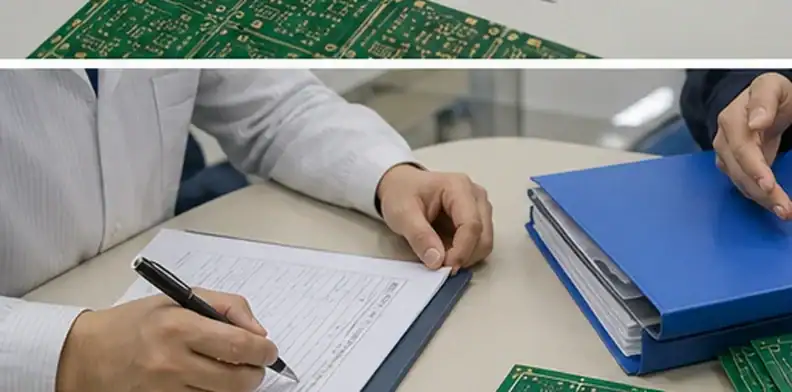
A useful receiving note can be short: panel lot, panels received, X-out positions, accepted good circuits, supplier notice status, and whether SMT is released or held.
If your PCB or PCBA project involves panelized boards, contact QueenEMS with the array drawing, panel quantity, good-circuit requirement, X-out photos if available, assembly method, component value, and delivery quantity rule.
FAQ
Are PCB x-out boards normal in panelized orders?
They can be normal for some panelized fabrication orders, but only if the buyer approved the policy before shipment. Normal does not mean free of consequence; the buyer still needs a usable-board count, marking method, and assembly instruction.
Should I pay full price for panels with X-outs?
Pay full price only if the quote allowed X-outs and the delivered good-circuit count matches the accepted quantity rule. If the PO required no X-outs or a fixed number of good boards, request replacement, credit, or a revised invoice basis.
Can SMT assembly handle X-out panels?
Sometimes. SMT can handle X-out panels when the bad positions are clearly marked, the program or work instruction can skip them, and traceability still works. For automated or high-value builds, no-X-out panels may be safer.
When should I require no X-out panels?
Require no-X-out panels when component value, automation, customer audit, strict traceability, or panel balance makes partial panels risky. The requirement should appear in the RFQ before panel tooling, stencil planning, or SMT programming starts.
What should QueenEMS review before accepting X-out panels?
QueenEMS should review the array drawing, good-circuit count, bad-position photos, marking method, assembly process, component value, and delivery quantity rule. The output should be accept, accept with credit, remake, or hold before SMT.
Sources
Upload your files today · Free DFM check before production · Ship worldwide
Get your PCB prototypes in as fast as 24 hours. We handle FR4, Rogers, and Flex up to 60 layers — free prototypes for 2–4 layer boards, no minimum order.
Just upload your Gerber + BOM — we source every part, assemble, and inspect (AOI + X‑Ray) so you don't have to chase suppliers. Boards ship in as fast as 24 hours.