

Quick Answer: Decision: solder-mask aperture review. Controlled object: pad-by-pad top and bottom mask data tied to component land patterns, via treatment, finish, and registration capability. Design-owned boundary: SMD or NSMD intent, component-specific openings, via-in-pad treatment, exposed test areas, and customer-approved mask rules. Supplier discretion: documented global compensation only where it preserves the selected land definition and all protected copper. Stop rule: mixed SMD and NSMD styles without approval, an opening smaller than the solderable land, or an aperture exposing another net.
Mask opening RFQ path
- When do mask openings need RFQ review?
- Which files show the solder mask opening?
- How should SMD and NSMD choices be handled?
- What DFM warnings should stop release?
- How should quotes with different mask rules compare?
- What should a mask opening RFQ include?
When do mask openings need RFQ review?
PCB solder mask opening requirements need RFQ review when pad exposure, mask expansion, SMD or NSMD pad style, fine pitch, BGA/QFN reliability, or solder bridging risk can change the assembled result. The buyer should not leave these assumptions hidden inside the CAD tool.
- Fine-pitch components make mask registration and opening rules more sensitive.
- The supplier needs to know whether pad style is fixed or may be adjusted by CAM.
- Assembly risk is higher when mask changes alter solder wetting or paste behavior.
| Situation | RFQ decision |
|---|---|
| BGA or QFN pads | Confirm SMD/NSMD intent and mask expansion |
| Dense connector | Review opening and mask web together |
| Low-risk prototype | Accept supplier standard only when assembly risk is known |
Bottom line: Mask opening control belongs in the quote when it can change solder joint behavior.
Which files show the solder mask opening?
The solder mask Gerber or ODB++ layer shows the actual opening, but the supplier also needs copper pads, paste data when PCBA is in scope, component package context, and any drawing note that fixes SMD or NSMD intent. One layer alone rarely tells the whole risk story.
- Send solder mask, copper, paste, and assembly drawing together when assembly matters.
- Flag components where opening changes require engineering approval.
- Keep the released file revision consistent across all layers.
| File | What it proves |
|---|---|
| Solder mask layer | Opening size and web geometry |
| Copper layer | Pad size and copper exposure relationship |
| Paste layer | Assembly process assumption |
Bottom line: Mask opening review is strongest when fabrication and assembly layers are checked together.
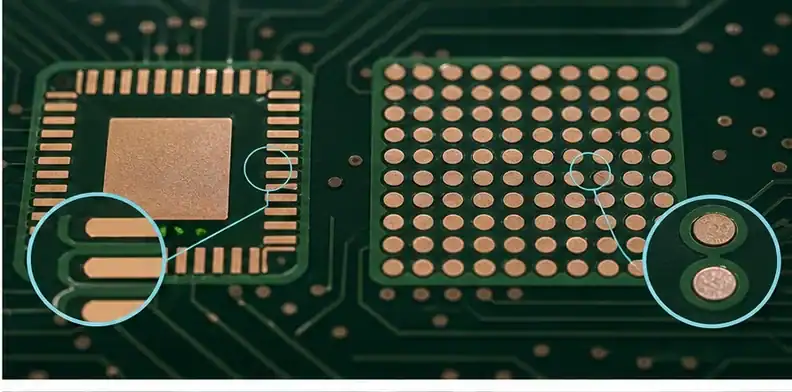
How should SMD and NSMD choices be handled?
SMD and NSMD choices should be treated as design-owner decisions for packages where reliability or solder volume is sensitive. NSMD exposes copper beyond the pad edge, while SMD uses mask overlap to define the solderable area. A supplier may flag manufacturability, but the buyer should approve functional changes.
- Do not let a global mask expansion rule override package-specific intent.
- Check BGA, QFN, and fine-pitch footprints before approving changes.
- Document whether supplier standard expansion is allowed for noncritical pads.
| Pad style | Buyer attention |
|---|---|
| NSMD | Copper pad controls solderable area |
| SMD | Mask edge helps define solderable area |
| Mixed footprint | Needs package-by-package review |
Bottom line: SMD versus NSMD is not just a drawing preference when assembly reliability is at stake.
What DFM warnings should stop release?
DFM warnings should stop release when the supplier cannot hold the requested opening, when mask encroaches onto pads, when a web may disappear, or when a suggested change modifies the intended pad definition. Cosmetic-only mask cleanup can move faster, but functional openings need approval.
- Ask whether the warning affects solderability, bridging, or only process yield.
- Request a marked view for critical footprint changes.
- Keep approved mask-opening assumptions with the quote record.
| Warning | Release action |
|---|---|
| Mask on pad | Review solderability risk |
| Opening too narrow | Confirm component and paste effect |
| Gang opening proposed | Approve only after checking bridge risk |
Bottom line: The hold point is any mask change that changes how the component solders.
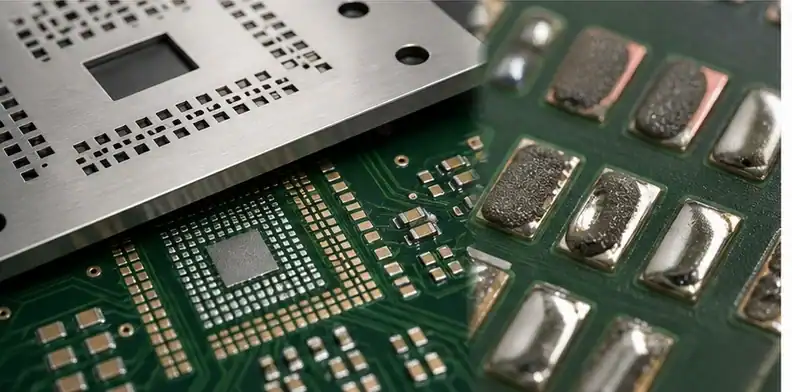
How should quotes with different mask rules compare?
Quotes should compare the accepted mask-opening rule, evidence level, assembly support, and DFM approval path. A cheaper bare-board quote may use a standard mask expansion that is fine for simple pads but risky for dense packages that need controlled pad definition.
- Ask each supplier to restate whether mask openings follow data or factory standard.
- Separate price differences from different inspection or assembly review scopes.
- Do not compare lead time until the approval path for critical footprints is known.
| Quote assumption | Interpretation |
|---|---|
| Factory standard expansion | Fast if no sensitive package is involved |
| Package-specific review | Safer for dense PCBA work |
| No DFM comments | Not proof that the opening is safe |
Bottom line: Compare the mask assumption before comparing the quoted price.
What should a mask opening RFQ include?
A mask opening RFQ should include the solder mask layer, copper layer, paste layer when relevant, package list, critical-footprint notes, SMD/NSMD assumptions, acceptable supplier cleanup, and evidence request. That gives QueenEMS the context to review the opening as a product decision.
- Mark critical footprints instead of demanding special review for every pad.
- State who may approve mask expansion or gang-opening changes.
- Ask for photos or first-article review only where acceptance depends on the opening.
| RFQ item | Purpose |
|---|---|
| Critical component list | Focuses review effort |
| SMD/NSMD note | Prevents hidden pad-definition changes |
| Assembly files | Connects mask opening to soldering risk |
Bottom line: The RFQ should say which openings are functional and who can approve a change.
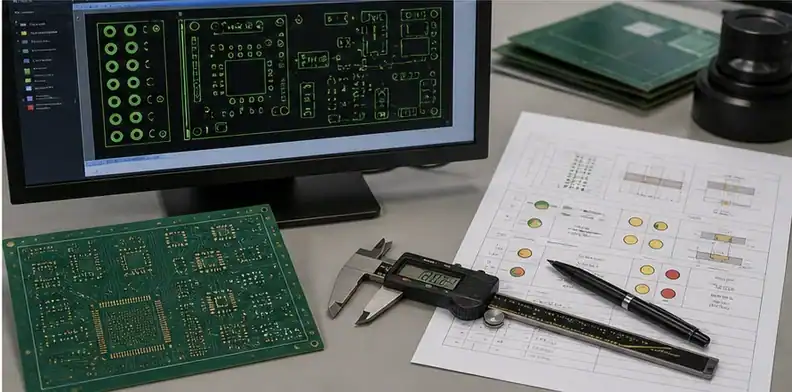
What should the buyer record before release?
Production record for the solder-mask aperture review
Controlled object
Controlled object: pad-by-pad top and bottom mask data tied to component land patterns, via treatment, finish, and registration capability.
Failure boundary
Failure boundary: partly covered lands, exposed adjacent copper, solder-joint geometry changes, or inconsistent BGA pad definition.
Design-owned conditions
Design-owned conditions: SMD or NSMD intent, component-specific openings, via-in-pad treatment, exposed test areas, and customer-approved mask rules.
Supplier discretion
Supplier discretion: documented global compensation only where it preserves the selected land definition and all protected copper.
Required proof
Required proof: a processed mask overlay highlighting fine-pitch apertures, mixed definitions, and any supplier-proposed expansion change.
Production stop
Production stop: mixed SMD and NSMD styles without approval, an opening smaller than the solderable land, or an aperture exposing another net.
Repeat-order baseline
Repeat-order baseline: the approved mask layers, component application note, expansion exceptions, registration assumption, and assembly result.
RFQ inputs
RFQ inputs: copper and mask Gerbers, controlled footprints, component application notes, via rules, finish, assembly process, quantity, and DFM authority.
FAQ
Can the supplier decide the solder-mask aperture review?
Discretion for solder-mask aperture review: documented global compensation only where it preserves the selected land definition and all protected copper. Engineering control for solder-mask aperture review: SMD or NSMD intent, component-specific openings, via-in-pad treatment, exposed test areas, and customer-approved mask rules.
What stops this solder-mask aperture review?
Stop rule for solder-mask aperture review: mixed SMD and NSMD styles without approval, an opening smaller than the solderable land, or an aperture exposing another net. Disposition owner for solder-mask aperture review: the named engineering approver.
Which proof closes the solder-mask aperture review?
Evidence for solder-mask aperture review: a processed mask overlay highlighting fine-pitch apertures, mixed definitions, and any supplier-proposed expansion change. Revision link for solder-mask aperture review: the quoted dataset.
What survives into the next order?
Reorder baseline for solder-mask aperture review: the approved mask layers, component application note, expansion exceptions, registration assumption, and assembly result.
For a focused solder-mask aperture review, send QueenEMS copper and mask Gerbers, controlled footprints, component application notes, via rules, finish, assembly process, quantity, and DFM authority. Redline request: solder-mask aperture review. Open assumptions: solder-mask aperture review. Approver: solder-mask aperture review owner.
Written by the QueenEMS Engineering Team
Sources
Upload your files today · Free DFM check before production · Ship worldwide
Get your PCB prototypes in as fast as 24 hours. We handle FR4, Rogers, and Flex up to 60 layers — free prototypes for 2–4 layer boards, no minimum order.
Just upload your Gerber + BOM — we source every part, assemble, and inspect (AOI + X‑Ray) so you don't have to chase suppliers. Boards ship in as fast as 24 hours.