
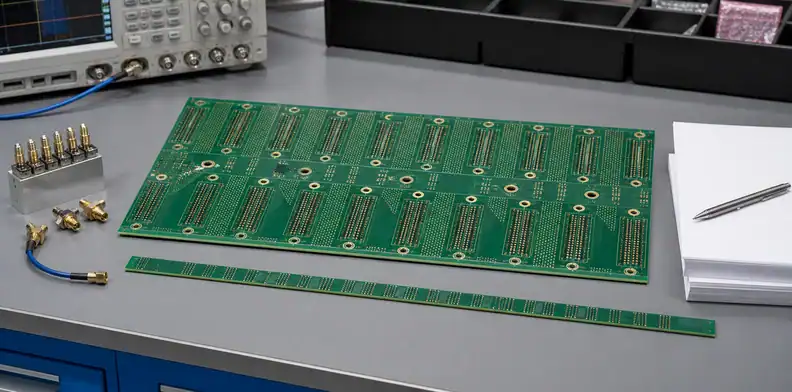
Quick Answer: High-Speed Backplane PCB RFQs should include channel stackup, impedance evidence, backdrill rules, connector-hole requirements, copper-roughness assumptions, and coupon expectations. The quote should protect the designed signal path rather than only pricing a large multilayer board.
High-Speed Backplane PCB quotation depends on whether the supplier understands the complete channel evidence package. Use this page when a backplane quote must protect the signal channel, connector interface, backdrill plan, and test evidence together. The goal is to keep pricing tied to the electrical path the hardware team actually released.
Table of Contents
- What makes a backplane RFQ different?
- Which stackup data should be frozen first?
- How should impedance and insertion-loss evidence be requested?
- Where do backdrill and via-stub rules belong?
- How do connector and press-fit details affect the quote?
- What should the supplier return before PO release?
- Which documents prevent first-lot surprises?
- What evidence package fits a backplane RFQ review?
What makes a backplane RFQ different?
A high-speed backplane PCB RFQ is different because the board is a channel system, not just a large multilayer panel. The supplier must understand route length, connector transitions, via stubs, reference planes, material loss, copper roughness, and test evidence before the quote is meaningful.
This article does not replace material-specific pages or the controlled impedance PCB design and manufacturing page. It ties those evidence items into one package for buyers quoting backplanes, line cards, switch fabrics, and connector-heavy high-speed boards.
RFQ signal: quote the channel assumptions, not only the layer count.
Backplane RFQs become slow when the design team sends only Gerbers and a layer count. The supplier can manufacture copper from those files, but cannot know which traces are long channels, which transitions are loss-sensitive, and which connector areas require special evidence. A useful RFQ identifies the channel-critical structures.
Backplane buyers should identify the channels that matter most rather than forcing the supplier to infer them from routing density. Long differential pairs, connector transitions, retimer lanes, and high-loss layer changes should be called out as controlled review items.
The RFQ can protect confidentiality while still being useful. Buyers may redact system details, but they should preserve layer assignments, controlled net classes, connector regions, and evidence expectations so the supplier can quote the manufacturing reality.
Which stackup data should be frozen first?
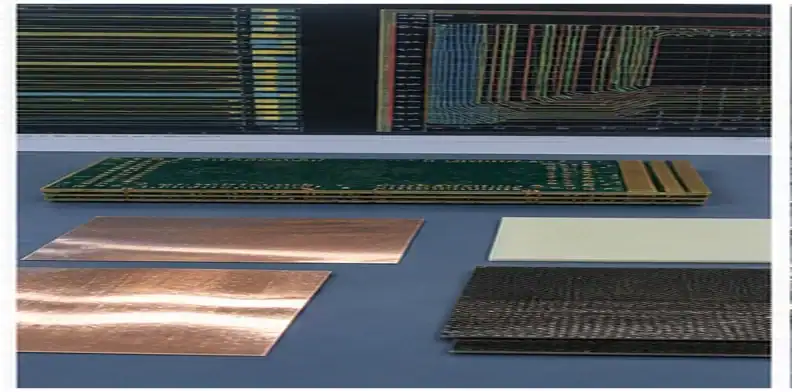
Freeze the signal-layer map, dielectric build, reference planes, copper type, roughness assumption, finished thickness, and controlled impedance targets before requesting production pricing. Backplane stackups often carry long routes, multiple connectors, and via transitions, so small construction changes can move channel margin.
If foil roughness matters, link the material discussion to HVLP copper foil decisions. The RFQ should say whether copper foil is controlled by performance need or left to supplier construction choice.
| Backplane RFQ field | Channel reason | Quote evidence |
|---|---|---|
| Route-layer map | Shows where long channels travel | Supplier stackup response by layer pair |
| Backdrill rule | Controls via-stub assumption | Depth, keepout, and inspection note |
| Connector hole data | Links SI design to mechanical fit | Finished hole and plating evidence |
Buyer call: do not accept a backplane quote that treats stackup as a post-award detail.
The stackup should be tied to the route map. If long channels use specific internal layers, those layers need controlled dielectric and reference-plane information. A quote that changes prepreg or copper foil around those layers can change the channel even when total board thickness remains acceptable.
A stackup proposal should be compared with the channel model assumptions if engineering has them. Even when the exact simulation is not shared, the buyer can state controlled dielectric layers, target impedance, copper foil expectation, and loss-sensitive routing regions.
Material availability should be checked before the quote is treated as stable. Low-loss laminate, copper foil type, and prepreg combination can all affect lead time, and a substitution can change the channel assumption.
How should impedance and insertion-loss evidence be requested?
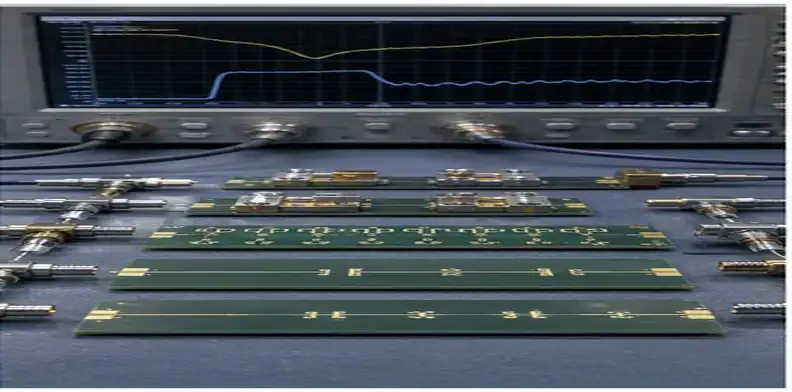
Request impedance and insertion-loss evidence according to the channel risk. A short control board may only need impedance coupons, while a long backplane may need test-coupon design, insertion-loss coupon expectations, and a clear link between coupon geometry and the routed channel.
The supplier needs trace geometry, tolerance, target impedance, coupon location, test method expectation, and reporting format. If the quote only says ‘controlled impedance included,’ the buyer still does not know what evidence will arrive with the lot.
Proof rule: define the coupon before fabrication, not after the first boards are finished.
Impedance coupons alone may not answer every backplane question. For some products the buyer also needs insertion-loss coupons, via transition evidence, or a report format that can be compared with simulation. Define the evidence before fabrication so coupon design is not improvised after routing.
When insertion-loss evidence is required, the coupon cannot be an afterthought. The coupon should represent the relevant layer pair, copper type, via transition, and length assumption closely enough to support the release decision.
For backdrill, ask whether the supplier will report depth by process setup, inspection coupon, or documented measurement. The answer decides how much evidence engineering receives with the first lot.
Where do backdrill and via-stub rules belong?
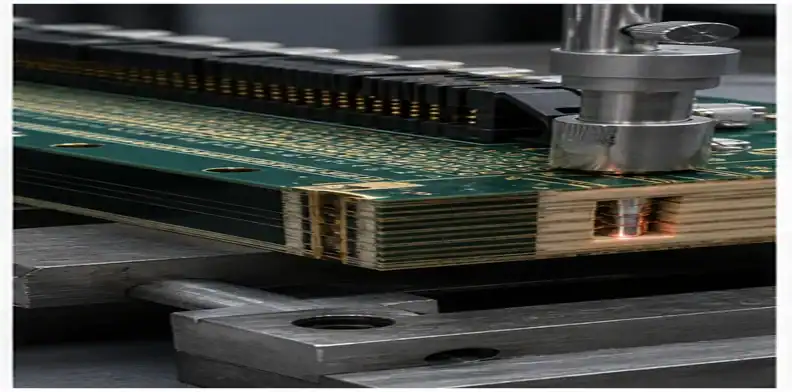
Backdrill and via-stub rules belong in the RFQ when the design depends on stub reduction for high-speed margin. The buyer should not let CAM infer backdrill depth, keepout, or acceptance from routing files alone.
Use PCB backdrill requirements for the detailed backdrill callout. In the backplane RFQ, connect that callout to the layer transition map, connector region, impedance target, inspection evidence, and any do-not-backdrill zones.
Release rule: a backdrill assumption is a channel assumption.
Backdrill rules should identify both targets and exclusions. Connector regions, long vias, power areas, and mechanical holes may not share the same backdrill need. A marked drawing helps the supplier avoid both under-drilling a critical stub and drilling a location that should be left untouched.
Backdrill review should include tolerance and inspection language. A target depth without an accepted remaining stub, keepout, or verification method can still leave the buyer unsure whether the built board matches the channel plan.
Connector fields deserve a combined mechanical and electrical review. Press-fit holes, connector escape routing, return-path continuity, and local plane clearances meet in a small region of the board.
How do connector and press-fit details affect the quote?
Connector and press-fit details affect the quote because backplanes often combine high-speed routing with thick boards, tight hole tolerances, and mechanical insertion requirements. The supplier needs connector drawings, finished hole requirements, plating thickness assumptions, and any press-fit acceptance data.
Connect this package to press-fit hole tolerance review when connector pins decide acceptance. Electrical and mechanical evidence should not be quoted by different assumptions.
| Supplier omission | Why it is risky | Buyer follow-up |
|---|---|---|
| No coupon plan | Test evidence may not represent the channel | Ask for coupon geometry and report format |
| Material named as equivalent | Loss and roughness may change | Request dielectric and copper comparison |
| Backdrill excluded | Stub resonance may remain unmanaged | Decide whether exclusion is acceptable |
Buyer call: quote the connector interface as part of the board, not as a later assembly issue.
Connector data belongs in the PCB RFQ because the board shop controls the plated holes and local structure. Press-fit fit, plating thickness, hole tolerance, and board thickness can decide whether the board is usable before any assembly process starts.
Connector-hole evidence should be matched to the connector supplier’s requirements and the board supplier’s process capability. Thick backplanes can make plating and finished-hole control more demanding than the same connector on a thinner board.
If the buyer has simulation assumptions, convert them into manufacturing fields rather than sending a vague request for high-speed capability. Layer pair, dielectric, copper, via, and connector assumptions are the fields a supplier can quote.
What should the supplier return before PO release?
The supplier should return a construction proposal, impedance/coupon plan, backdrill review, material availability note, connector-hole comment, and any CAM holds. That package lets engineering decide whether the quote preserves the released channel.
A useful response also names what is excluded: insertion-loss testing, special coupons, backdrill depth reporting, microsection evidence, connector-hole capability, or material substitution approval. Without those exclusions, purchasing may compare prices that cover different deliverables.
Quote evidence: ask for a written backplane RFQ response, not scattered email replies.
Supplier return packages should be easy to compare. Ask each supplier for the same evidence headings: stackup, material, impedance/coupon, backdrill, connector holes, exclusions, and open questions. That format exposes hidden differences between quotes.
Supplier responses should be organized by channel risk. A single long DFM email is harder to approve than a table separating material, impedance, backdrill, connector holes, coupons, and exclusions.
A useful supplier answer also states what is not included. Insertion-loss testing, special coupons, extra reports, and connector-hole capability evidence should not be discovered as exclusions after award.
Which documents prevent first-lot surprises?
First-lot surprises usually come from hidden assumptions: an alternate laminate, different copper foil, moved reference plane, backdrill depth interpretation, or coupon that does not represent the route. The RFQ should create a document trail before those choices become production facts.
Use hybrid PCB impedance coupon and TDR evidence when the lot requires representative coupon thinking. For backplanes, the coupon decision should be tied to layer pair, route geometry, via transition, and report format.
Acceptance rule: require the evidence that will decide whether the first lot can be released.
First-lot documents are not paperwork for paperwork’s sake. They are how engineering confirms that the built board still represents the simulated channel. If the coupon or material report does not map back to the route, the evidence cannot carry the release decision.
First-lot evidence should be chosen before production because coupon position, test structure, and report format affect the build. Waiting until shipment to ask for data can leave the supplier with no representative structure to measure.
For first builds, request a supplier callout of any CAM change near connector fields or long channels. Those are the regions where small edits can create disproportionate signal-integrity questions.
Backplane review should also keep mechanical and electrical evidence together. A connector-hole change may look like a fabrication detail, but it can affect press-fit acceptance, plating evidence, and the return path around dense connector fields. A quote package that separates those notes into unrelated files invites a supplier to price the board before the channel risk is visible.
The same applies to backdrill tolerance. If engineering cares about residual stub length, the RFQ should state how the supplier will report the drill target, allowed miss, and inspection method. Otherwise two suppliers can quote the same backdrill note while assuming different evidence burdens.
What evidence package fits a backplane RFQ review?
Use this review when purchasing needs a quote but engineering still has channel assumptions that cannot drift. The useful package is the stackup, impedance table, route-layer map, connector and press-fit notes, backdrill drawing, material preference, coupon requirement, and expected test reports.
Buyer call: protect channel evidence before the PO turns assumptions into cost.
Share the backplane evidence package through the QueenEMS contact page. QueenEMS can translate it into a controlled RFQ list: missing channel data, laminate or copper assumptions, connector-hole risks, coupon gaps, and backdrill questions that should be answered before supplier selection.
FAQ
Does every high-speed backplane need insertion-loss testing?
No. The need depends on data rate, route length, customer requirement, coupon design, and the margin proven by engineering.
Can the supplier choose the laminate?
Only when the RFQ allows substitution and engineering approves the loss, thickness, copper, and reliability impact.
Is press-fit evidence part of a PCB quote?
Yes, when connector fit and hole condition decide whether the board can be accepted.
For schedule-sensitive projects, the review should flag which assumptions can be closed after supplier selection and which must be settled before price comparison. Material availability, connector-hole capability, and backdrill interpretation usually belong before selection. Report format and first-lot evidence timing can sometimes be finalized during pre-production if the supplier already agrees to the required structures.
A backplane quote is easier to defend when every exclusion is visible. Ask the supplier to state whether insertion-loss testing, special coupons, depth evidence, connector-hole reporting, or material traceability is included. That single exclusions list often saves more time than another round of broad capability questions.
Backplane evidence should also match the buyer’s lab capability. If the buyer cannot independently measure insertion loss, the supplier report format and coupon traceability become more important. If the buyer has a channel lab, the RFQ should state which delivered structures need to correlate with internal test fixtures so first-lot review is not delayed by mismatched evidence.
The buyer should also decide how much supplier engineering response is required before PO. A low-risk backplane revision may need only stackup confirmation and coupon notes. A new connector field, data-rate increase, material change, or backdrill rule may justify a formal pre-production review. Stating that expectation keeps the supplier from quoting a routine fabrication package when the buyer needs engineering evidence.
For multi-supplier quoting, request the same response structure from every shop. Ask each supplier to answer material, stackup, impedance, backdrill, connector-hole, coupon, inspection, and exclusion questions in the same order. That makes the technical differences visible before purchasing compares unit price or lead time.
When engineering is still tuning the channel, label the order as an engineering validation build instead of a production baseline. That wording lets the supplier quote fabrication feasibility while keeping final acceptance evidence open until the channel assumptions are frozen.
Keep that validation label visible in the RFQ table and the purchase record.
Written by the QueenEMS Engineering Team
Upload your files today · Free DFM check before production · Ship worldwide
Get your PCB prototypes in as fast as 24 hours. We handle FR4, Rogers, and hybrid boards up to 40 layers in volume production, with advanced builds subject to engineering review — free prototypes for 2–4 layer FR-4 boards, no minimum order.
Just upload your Gerber + BOM — we source every part, assemble, and inspect (AOI + X‑Ray) so you don't have to chase suppliers. Boards ship in as fast as 24 hours.