
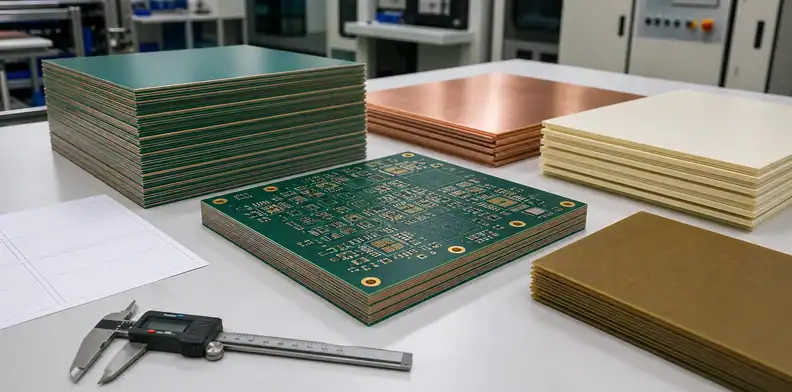
Quick Answer: High-Layer Count PCB RFQs should freeze the lamination construction before pricing is compared. The supplier needs stackup, material, registration, drilling, microsection, and substitution evidence before a quote can represent the intended board.
High-Layer Count PCB work should be reviewed as a lamination and evidence problem, not just as a layer-count label. Use this page when a high-layer board needs construction evidence before the buyer can trust price, lead time, or first-lot acceptance. The goal is to freeze lamination assumptions before they become hidden supplier choices.
Table of Contents
- What should be checked before quoting high layer count?
- Which stackup fields must be explicit?
- How does registration risk enter the review?
- Where do drilling and aspect ratio limits appear?
- How should material substitutions be controlled?
- What microsection evidence is useful?
- How should buyers compare supplier stackup proposals?
- How should buyers package a lamination review?
What should be checked before quoting high layer count?
A high-layer count PCB should be quoted only after stackup, lamination sequence, registration risk, drilling limits, material availability, and evidence requirements are visible. Layer count alone does not tell the supplier whether the construction is routine or high risk.
Use PCB stack-up design before fabrication for the general stackup conversation. This article focuses on the RFQ checkpoint: what must be frozen before a supplier’s price and lead time are credible.
RFQ signal: ask for a lamination-readiness response, not only a layer-count capability answer.
Layer count is only the visible count of copper layers. The risk sits in how those layers are built, pressed, drilled, plated, and verified. A high-layer RFQ should therefore describe construction and evidence rather than asking only whether a supplier can build a certain number of layers.
A high-layer RFQ should show whether the construction is one conventional lamination or requires sequential steps, buried structures, or special material handling. Those details change both process risk and the type of evidence that should be quoted.
A capability statement such as ‘we can build 24 layers’ is only the first screen. The RFQ still needs construction data because two 24-layer boards can have very different press cycles, materials, hole structures, and evidence needs.
Which stackup fields must be explicit?
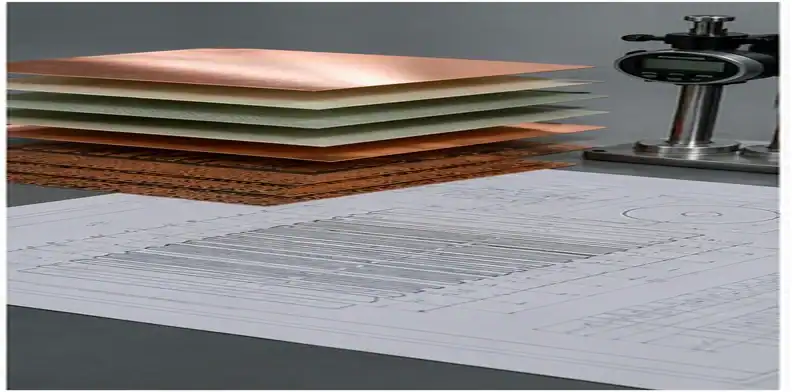
The RFQ should name core and prepreg materials, copper weights, dielectric targets, finished thickness, impedance layers, sequential lamination needs, and any symmetry constraints. Missing stackup detail becomes expensive when the supplier must rebuild the construction after quote.
For high-layer builds, material thickness and resin content can influence pressed thickness, drill quality, registration, and thermal behavior. A generic ‘FR-4 multilayer’ description is too weak for a production quote.
| Lamination field | Why it matters in high-layer builds | RFQ action |
|---|---|---|
| Core and prepreg list | Controls pressed thickness and resin behavior | Request supplier construction proposal |
| Sequential lamination | Adds registration and reliability risk | Name cycle count and evidence need |
| Smallest plated hole | Sets drill and plating difficulty | Quote with finished thickness and aspect ratio |
Buyer call: make the proposed construction visible before price comparison.
Stackup fields should be explicit enough for the supplier to propose a real construction. Core thickness, prepreg style, copper weight, target thickness, and impedance layers all affect the press result. Missing values force the supplier to quote from assumptions that may later change.
Supplier stackup proposals should include enough material detail to be reviewed by engineering. A layer-count price without core, prepreg, copper, and target thickness information is only a capability screen, not a production-ready quote.
The supplier’s stackup proposal should show where impedance layers, power planes, and critical via transitions sit. Without that context, engineering cannot tell whether a material or prepreg change is harmless.
How does registration risk enter the review?
Registration risk enters the review when many layers, tight annular rings, fine pitch, stacked structures, or sequential lamination steps reduce alignment margin. The supplier needs to know where registration is critical and what evidence the buyer expects.
The hybrid PCB layer registration page owns a related specialty case. For this article, the focus is broader: high layer count registration as part of RFQ evidence and first-lot release.
Proof rule: ask whether registration will be verified by coupon, microsection, AOI record, or supplier process evidence.
Registration risk should be connected to actual features. Dense BGAs, small annular rings, buried structures, fine pitch connectors, and tight via lands are stronger triggers than layer count by itself. The RFQ should tell the supplier where alignment matters most.
Registration-sensitive features should be named. Fine-pitch BGAs, small annular rings, dense via arrays, and controlled impedance layers do not all carry the same alignment risk, so the supplier needs to know where to focus process evidence.
Registration review should be tied to actual land and via geometry. A high layer count with generous annular rings can be easier than a lower layer count with aggressive fine-pitch breakout.
Where do drilling and aspect ratio limits appear?
Drilling and aspect ratio limits appear when finished thickness, hole size, copper plating, and reliability expectations meet. A high-layer count board may need larger minimum holes, different via structures, or evidence that plating can meet the acceptance requirement.
The RFQ should include finished thickness, smallest plated hole, via span, backdrill needs if any, copper thickness, and microsection expectation. Those fields make the supplier’s drill and plating assumptions explicit.
Release rule: do not quote high layer count only from layer count and board size.
Drilling limits are often discovered late when the board is already priced. High finished thickness and small holes can push aspect ratio, plating throw, and reliability evidence. Naming the smallest holes and via spans early lets the supplier quote the correct route.
Drill review should include plating and inspection, not just minimum hole size. A supplier may be able to drill a hole but still need evidence that plating thickness, annular ring, and reliability expectations can be maintained.
Drill evidence may include microsection, plating thickness report, or first article data. The buyer should choose evidence that answers the hidden reliability question instead of requesting every possible document.

How should material substitutions be controlled?
Material substitutions should be controlled before RFQ release because a high-layer count stackup may depend on prepreg flow, cured thickness, Tg, resin content, copper adhesion, and lamination behavior. A substitute can be manufacturable but still change the build.
Use PCB material substitution approval when a supplier proposes alternate laminate or prepreg. In this high-layer context, the buyer should ask how the substitute changes thickness, lamination sequence, impedance, drill reliability, and evidence.
| Supplier variance | Possible consequence | Approval owner |
|---|---|---|
| Alternate prepreg | Thickness, resin flow, or impedance shifts | Engineering and quality |
| Larger minimum hole | Routing or component breakout may change | Hardware engineering |
| Different press sequence | Registration and reliability evidence changes | Engineering release owner |
Buyer call: require written approval for material changes that alter the construction, not only the data sheet name.
Material substitution can be tempting when a preferred prepreg is constrained. In a high-layer build, however, a substitute may change resin flow, press thickness, glass style, drill behavior, or impedance. The RFQ should require a construction comparison before acceptance.
Material substitution should be reviewed against the whole construction. A substitute that meets a generic Tg or loss value can still change resin flow, pressed thickness, dielectric spacing, drilling behavior, or registration margin.
For material substitutions, ask whether the supplier is changing only a brand name or also changing glass style, resin content, cured thickness, or press behavior. Those details decide whether the substitute is truly equivalent.
What microsection evidence is useful?
Microsection evidence is useful when hidden layer structure, plating quality, dielectric condition, or registration decides acceptance. It is especially relevant for first production lots, small vias, thick boards, controlled impedance builds, and customer qualification.
Use PCB microsection report requirements to define report content. In the RFQ, say whether the report is required for quote release, first article, every lot, or only qualification builds.
Proof rule: evidence timing should be part of the quote, not an afterthought at shipment.
Microsection requirements should be tied to release stage. A prototype lot may need first-lot evidence, while a mature repeat build may rely on a known control plan. The buyer should state whether evidence is needed for quote approval, first article, or recurring production.
Microsection timing should be linked to the order stage. Engineering samples may need evidence to close feasibility; production lots may need evidence to satisfy customer release or supplier qualification. The RFQ should not leave that timing open.
Lamination readiness also affects schedule. A supplier that must redesign the stackup after PO release can lose more time than a supplier that asks hard construction questions before quoting.

How should buyers compare supplier stackup proposals?
Compare supplier stackup proposals by construction detail, not by layer count label. Two suppliers can both quote a 20-layer board while using different prepreg combinations, press cycles, copper distribution assumptions, drill constraints, and evidence packages.
The supplier stackup signoff page explains how to review proposed construction. For high-layer RFQs, the buyer should require a short variance note when the supplier’s stackup differs from the released drawing.
Buyer call: the winning quote should be the quote that preserves the controlled construction, not merely the lowest layer-count price.
Supplier stackup proposals should be reviewed side by side. Differences in prepreg count, copper distribution, press cycle, and drill assumptions can create different boards under the same layer-count title. Purchasing should not collapse those differences into one price line.
When proposals differ, ask suppliers to identify every variance from the released stackup. That turns comparison from a price-only exercise into a construction review, which is the only fair comparison for a high-layer build.
When multiple suppliers propose different constructions, keep the comparison in engineering language. Purchasing should see which proposal changes dielectric spacing, hole reliability, registration margin, or evidence cost.
If registration is the main worry, ask each supplier to mark which layers, drills, or via fields drive their concern. A generic “high layer count risk” comment is not enough for award comparison. The buyer needs to know whether the risk sits in lamination movement, laser or mechanical drilling, copper distribution, material availability, or inspection evidence.
This also helps quality decide what to inspect first on a pilot lot. Registration evidence, microsection results, and drill-position notes should point to the same risk area instead of arriving as separate reports with no release priority.
How should buyers package a lamination review?
Use this review when layer count, board thickness, material availability, via aspect ratio, or impedance spacing makes the press construction part of the buying decision. The package should include Gerber or ODB++, stackup drawing, material callouts, copper weights, smallest hole and via table, impedance requirements, registration-sensitive features, microsection expectations, and any proposed substitution.
Release rule: freeze the lamination assumptions before comparing production quotes.
Attach the package through the QueenEMS contact page for a high-layer count PCB lamination review. QueenEMS can return a quote-readiness list that separates stackup gaps, material substitutions, drill and plating concerns, registration evidence, and approval holds that must be closed before RFQ release.
FAQ
Is high-layer count PCB risk only about layer number?
No. The risk also depends on thickness, material set, via size, registration margin, copper distribution, and evidence requirements.
Should every high-layer board need a microsection report?
No. Use microsection evidence when hidden structure affects qualification, customer acceptance, first article release, or reliability risk.
Can a supplier change prepreg to hit thickness?
Only with approval when the change affects impedance, resin flow, lamination behavior, or reliability assumptions.
A lamination review should also distinguish prototype flexibility from production control. Engineering samples may allow a supplier to propose a construction that proves feasibility, but production lots need a stable baseline for material, press sequence, drill limits, and evidence. The RFQ should say which mode the buyer is requesting.
For customer-facing hardware, keep the supplier’s construction proposal with the release record. If the next quote changes material, prepreg count, minimum hole size, or evidence, the buyer can see whether the change is a harmless purchasing update or a new engineering approval item.
High-layer count PCB quotes should also state whether the supplier is pricing normal production yield or an engineering validation lot. A first build with new materials, aggressive holes, or tight registration may need extra review time, coupon evidence, or controlled scrap assumptions. Treating that lot as ordinary production can make the quote look clean while hiding the real learning curve.
Buyers should also ask what happens if the supplier’s proposed construction misses the target thickness or impedance during pre-production review. The answer may be a prepreg change, press-cycle adjustment, artwork compensation, or engineering hold. Each path affects schedule differently. A high-layer RFQ is stronger when those correction routes are understood before the build is already on the press schedule.
A final useful check is whether the supplier can hold the proposed construction for repeat production. A first quote that depends on temporary material availability, undocumented prepreg substitution, or a one-off press recipe may create repeat-order risk even if the first lot can be built.
When engineering is still deciding between constructions, ask for options rather than one blended quote. Separate pricing for original stackup, supplier-proposed stackup, and material-substitution path makes approval cleaner and prevents a temporary option from becoming the production baseline.
Option pricing should also name the evidence attached to each route, because a cheaper construction without microsection or registration proof may not support the buyer’s release decision.
Keep the chosen route tied to the exact board revision and supplier response.
Written by the QueenEMS Engineering Team
Upload your files today · Free DFM check before production · Ship worldwide
Get your PCB prototypes in as fast as 24 hours. We handle FR4, Rogers, and hybrid boards up to 40 layers in volume production, with advanced builds subject to engineering review — free prototypes for 2–4 layer FR-4 boards, no minimum order.
Just upload your Gerber + BOM — we source every part, assemble, and inspect (AOI + X‑Ray) so you don't have to chase suppliers. Boards ship in as fast as 24 hours.