
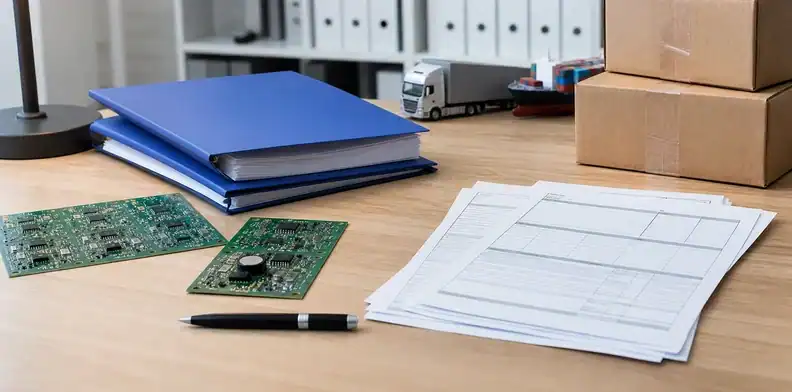
Quick Answer: A pcb supplier germany decision should be based on evidence the German buyer can file before PO release: RoHS/REACH scope, customs documents, shipment terms, supplier identity, and first article proof. The supplier does not need to solve every EU compliance topic alone, but the quote should clearly state what QueenEMS supplies, what the importer controls, and what evidence travels with the shipment.
Key takeaways
- Separate product compliance evidence from customs and Incoterms responsibility.
- Ask for RoHS/REACH documents by board or PCBA scope, not as a generic certificate.
- Keep EORI/DDP/DAP responsibility clear before shipment booking.
- German OEMs usually need a cleaner first-shipment evidence package than a simple low-price quote.
A German OEM choosing a pcb supplier germany option usually cares less about a supplier’s country label and more about whether the shipment can pass internal approval, import handling, and customer documentation without surprise. The risk appears when the quote says PCB price and lead time but does not define RoHS/REACH scope, customs document owner, Incoterm boundary, packaging labels, or first article evidence. That creates a problem after the boards are already built. This article frames the decision for buyers sourcing from China into Germany: what evidence should be requested before PO, what should be handled by the importer, and what QueenEMS can review before the first shipment.
Table of Contents
- Define the German buyer’s file requirement first
- Separate RoHS and REACH from customs handling
- Clarify EORI, DDP, and importer responsibility
- Ask for a first-shipment evidence pack
- Check when PCBA scope changes the answer
- Use a Germany-specific RFQ paragraph
- Review the quote as a repeat-supply decision
- Make the repeat shipment record reusable
Define the German buyer’s file requirement first
The first step is to ask what the German buyer must file internally. Some OEMs need only bare-board evidence. Others need PCBA evidence, supplier qualification files, incoming inspection data, or customer-specific compliance packages.
The RFQ should name the purchase scope: bare PCB, consigned assembly, turnkey PCBA, replacement order, or pilot production. Compliance, customs, and receiving records change with that scope.
File rule: Do not ask for a generic Germany certificate; ask for evidence tied to the quoted board, assembly scope, and shipment.
Separate RoHS and REACH from customs handling
RoHS and REACH answer product-compliance questions. Customs documents answer import-entry questions. A German buyer needs both categories organized, but they are not the same supplier response.
For product compliance, connect the file to RoHS REACH PCB documents so the supplier does not return a stale or scope-free declaration. For shipment handling, connect the decision to DDP vs DAP PCB shipping because duties, VAT handling, and importer-of-record responsibility belong in the shipping agreement.
| Question | Evidence type | Owner to confirm |
|---|---|---|
| Restricted substances | RoHS/REACH statement | Quality or compliance |
| Shipment value | Commercial invoice | Purchasing/logistics |
| Importer role | EORI and Incoterm record | Importer or broker |
| Receiving match | Packing label and PO | Warehouse/quality |
Boundary call: Product documents support customer compliance; customs documents support border and accounting handling.
Clarify EORI, DDP, and importer responsibility
For Germany and the EU, EORI identity and importer responsibility should be settled before the supplier books shipment. The supplier can help prepare export and commercial documents, but the importer side still needs a party that can lawfully receive and clear the goods.
A quote that says DDP should not be accepted as a complete answer unless it states who manages import entry, duties, VAT, broker communication, and delivery after clearance. A DAP quote should state what documents the buyer or broker receives before arrival.
Shipping signal: A usable quote names the Incoterm and the customs-document handoff, not only the freight price.
Ask for a first-shipment evidence pack
German OEMs often expect a neat first-shipment pack because the first order becomes the reference for repeat supply. The pack should include the quote, PO, drawing revision, stackup, inspection summary, compliance statements, packing list, invoice, and label photos when needed.
The receiving team should know which records to keep before the shipment arrives. PCB incoming inspection helps connect the paperwork to the delivered boards instead of leaving documents in separate email threads.
For buyers comparing North American and European sourcing expectations, PCB manufacturing for Canadian OEMs gives a useful contrast in buyer evidence habits.
Receiving rule: The first shipment should teach the repeat-order process, not create a one-time scramble.
Check when PCBA scope changes the answer
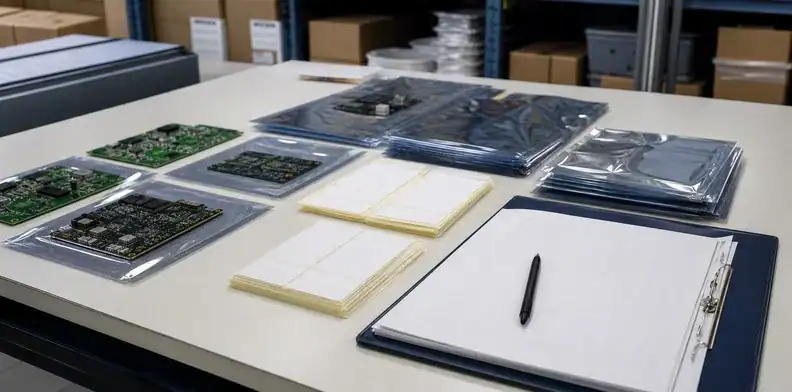
Bare PCBs and PCBAs create different evidence packages. Bare-board evidence may focus on board material, finish, RoHS/REACH declarations, lot labels, and inspection reports. PCBA adds BOM, component traceability, solder materials, programming, testing, and packaging rules.
Do not let the supplier answer a PCBA import question with bare-board-only evidence. The RFQ should state whether QueenEMS supplies assembly, component sourcing, consigned kit handling, or only fabricated boards.
Scope point: PCBA turns a board compliance file into a product and supply-chain evidence file.
Use a Germany-specific RFQ paragraph
A useful RFQ paragraph can say: Please quote the PCB or PCBA for shipment to Germany and include RoHS/REACH scope, commercial invoice and packing-list assumptions, Incoterm, importer/broker handoff, first-shipment inspection evidence, and any document that QueenEMS expects the buyer to provide.
This wording gives the supplier permission to state boundaries. It is better to know before PO that the buyer must supply an EORI, broker instruction, customer declaration format, or special receiving label.
RFQ signal: Ask for boundary wording before price approval so compliance and shipping gaps do not appear after fabrication.
Review the quote as a repeat-supply decision
A German OEM should review the first quote as the start of a repeat-supply record. The supplier response should make it easy to reorder the same board, repeat the same shipment path, and answer the same compliance request without rebuilding the file from memory.
The final decision is not whether the supplier can ship one order. It is whether engineering, purchasing, logistics, and receiving can repeat the order with controlled evidence.
Supplier decision: Choose the supplier that makes the evidence reusable, not only the supplier with the lowest first quote.
Make the repeat shipment record reusable
The first Germany-bound order should create a repeat shipment record. Save the accepted quote scope, RoHS/REACH evidence, invoice wording, packing-list format, Incoterm, importer or broker handoff, inspection record, and receiving notes in one folder.
This record protects the second order. If the supplier changes finish, material, destination, Incoterm, or document format, the buyer can compare the change against the accepted first-shipment file instead of relying on memory.
The record should also state which items belong to QueenEMS and which belong to the importer or broker. That boundary makes repeat orders faster because the buyer knows what to send before production starts and what to check before pickup.
Repeat rule: A Germany sourcing decision is strongest when the first shipment creates a reusable evidence package for the next order.
For engineering, the strongest contribution is revision discipline. A compliance file tied to the wrong drawing revision can pass a superficial check but fail when a customer asks why the shipped board differs from the declaration.
For purchasing, the quote comparison should include document completeness, Incoterm clarity, and first-shipment support. A slightly lower price can become expensive if the buyer must chase missing documents after the boards ship.
For logistics, the risk is handoff timing. Commercial invoice, packing list, HS code, importer identity, and broker contact should not be discovered after the shipment is already in transit.
For quality, the first shipment should connect inspection evidence to labels and packaging. A clean receiving record reduces disputes if the customer later asks for proof by lot or purchase order.
For engineering, the strongest evidence is a revision-controlled technical package. A Germany-bound shipment should not rely on a compliance statement that names only a product family while the actual drawing revision, finish, or laminate has changed. For purchasing, supplier comparison should include how fast the supplier can answer document questions. A buyer may accept a longer quoted lead time if the supplier returns compliance and customs evidence in a cleaner format. For quality, the first article or incoming inspection record should be tied to the same lot that the invoice and packing list describe. This prevents a clean technical report from becoming detached from the delivered shipment. For logistics, the quote should say whether the supplier prepares export paperwork only or also supports the importer with pre-alert documents. The earlier the buyer receives invoice and packing-list drafts, the easier it is to correct wording before pickup. For a German OEM with strict customer files, ask whether the supplier can keep the same document format on repeat orders. A one-time custom file is less useful than a repeatable package that purchasing and quality can request again. Do not ask the supplier to guess the buyer’s tax or broker setup. The supplier can provide shipment data, but the importer and broker should own local clearance instructions and accounting treatment. When the project is PCBA, add BOM revision and component-sourcing scope to the Germany file. A bare-board RoHS statement cannot cover components that were sourced and assembled later. The final PO should reference the accepted evidence package or document list. That small note keeps the supplier from treating the compliance request as an optional email attachment after the order is built.
A German buyer should also ask whether certificates or declarations are issued by the quoted supplier entity. A document from a related company can still be useful, but the buyer needs to know the legal and production relationship before filing it. For packaging, ask whether labels show PO, part number, revision, quantity, and lot or date code. German receiving teams often care about clean matching between supplier paperwork and warehouse records. If the project uses consigned parts or customer material, separate the bare PCB evidence from the consigned-material record. The PCB supplier should not be blamed for component documents it did not source. When the buyer uses a freight forwarder, send the forwarder document requirements before the supplier packs the order. Invoice wording, shipment value, and package count are easier to correct before the pickup request is placed. If a customer requires a specific declaration format, send that format during RFQ. A supplier’s standard declaration may be technically useful but still rejected by a customer portal that expects exact fields. The first order should also record language expectations. Many engineering files are English, but the German customer may need specific fields, declarations, or invoice descriptions to match internal purchasing systems. When the buyer requests DDP, compare the supplier’s DDP service with the buyer’s own broker process. DDP can reduce work for a small buyer, but it can also hide importer and VAT handling details that a mature OEM wants to control. A good supplier response will say what it can provide immediately, what it needs from the buyer, and what belongs to the broker or importer. That honest boundary is more valuable than a vague promise that everything is handled.
For engineering change control, the supplier should know whether a material substitution, finish substitution, or stackup change requires a new compliance statement. A small technical change can become a document change when the customer file is strict. For customer audits, keep supplier emails that explain document scope. A formal declaration is useful, but the clarification email may prove why a statement covers bare PCB only, PCBA, or a named material family. For repeated German shipments, record whether the customer accepts supplier-standard documents or requires customer-form declarations. That single decision changes how much preparation is needed before every shipment. When the buyer compares a domestic EU supplier with a China supplier, do not compare only board price. Compare evidence speed, import handling, customs document clarity, and the buyer’s internal labor to approve the first shipment. A good Germany-bound quote lets the buyer answer four questions quickly: what is being built, which evidence supports it, who imports it, and what receiving checks on arrival. If any answer is missing, the PO is not yet quote-ready.
| Review status | Meaning | Buyer action |
|---|---|---|
| Ready for PO | Supplier and importer evidence are clear | Release order |
| Buyer confirmation needed | Importer, broker, or customer format is open | Hold commercial approval |
| Supplier evidence missing | Scope, declaration, or inspection file is unclear | Ask supplier before PO |
If the German buyer has an internal supplier portal, ask which files must be uploaded before PO and which files can wait until shipment. This prevents the supplier from preparing a useful document that still arrives too late for internal approval. The buyer should also confirm whether prototype and production shipments use the same evidence requirement. Many OEMs accept lighter prototype paperwork but expect production shipments to include a repeatable compliance and receiving file. A practical first-order review can end with three labels: ready for PO, ready after buyer/importer confirmation, or not ready because supplier evidence is missing. That simple status is easier for purchasing and engineering to act on than a long email thread.
FAQ
What should a PCB supplier provide for Germany?
Ask for quote scope, RoHS/REACH documents, commercial invoice assumptions, packing list, Incoterm, inspection evidence, and shipment labels tied to the PO.
Does a Chinese PCB supplier need a German certificate?
No generic German certificate is enough by itself. The buyer needs product and shipment evidence tied to the actual board or PCBA scope.
Who handles EORI for PCB imports into Germany?
The importer or its broker normally controls EORI-related import handling. The supplier should state what documents it will provide and where buyer responsibility begins.
Should RoHS and REACH be requested before PO?
Yes, request scope and date before PO so the supplier does not build the order before a customer compliance gap is visible.
Can QueenEMS help prepare a Germany shipment file?
Yes, QueenEMS can help review the quote scope, compliance evidence, shipment documents, and first-shipment records before release.
Related QueenEMS articles
- RoHS REACH PCB documents
- DDP vs DAP PCB shipping
- PCB incoming inspection
Send QueenEMS the Germany sourcing file
If your German PCB or PCBA project needs a China supplier review, contact QueenEMS with the drawing revision, quote scope, destination city, Incoterm preference, RoHS/REACH requirement, invoice or packing-list format, and first-shipment evidence request. We can help identify which items QueenEMS can supply and which items the importer or broker must confirm.
Attach any customer compliance wording exactly as received. The wording often reveals whether the buyer needs bare-board evidence, assembled-product evidence, or a shipment-document handoff.
Sources
Written by the QueenEMS Engineering Team
Upload your files today · Free DFM check before production · Ship worldwide
Get your PCB prototypes in as fast as 24 hours. We handle FR4, Rogers, and Flex up to 60 layers — free prototypes for 2–4 layer boards, no minimum order.
Just upload your Gerber + BOM — we source every part, assemble, and inspect (AOI + X‑Ray) so you don't have to chase suppliers. Boards ship in as fast as 24 hours.