
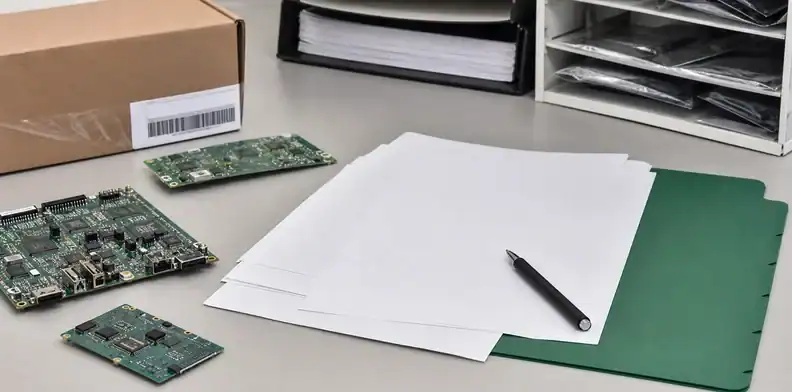
Quick Answer: RoHS REACH PCB documents should prove restricted-substance control and article-level chemical communication, not only state that the board is compliant. Before EU import or customer review, ask for a supplier declaration, RoHS scope statement, REACH SVHC statement, material or finish boundary, test report when required, lot traceability, and a responsible signature. Keep the documents tied to the exact board revision, finish, laminate, and production lot.
Key takeaways
- RoHS and REACH are related compliance checks, but they are not the same document.
- A generic certificate is weak if it does not name the supplier, product, date, scope, and responsible party.
- SVHC status can change, so old REACH statements need date control.
- Connect compliance papers with shipment and lot evidence before releasing the order.
A buyer asking for rohs reach pcb documents is usually close to shipment, import, customer audit, or production release. The risk is not only whether the board was built with common compliant materials. The risk is whether the paperwork can survive a customer question months later. This article separates the documents a buyer should request from the broad material chemistry behind them. It is written for purchasing, quality, founders, and hardware teams who need a quote-ready and shipment-ready evidence package.
Table of Contents
- Separate RoHS from REACH before asking for paperwork
- Build a document package, not a single certificate
- Check whether the statement matches the actual PCB
- Use REACH SVHC dates as a control point
- Decide when a test report is worth requesting
- Tie compliance papers to labels and traceability
- Write the RFQ request in buyer language
- Keep legal review separate from supplier evidence
- Review the compliance package before shipment
Separate RoHS from REACH before asking for paperwork
RoHS and REACH are often requested together, but they answer different questions. RoHS controls specific restricted substances in electrical and electronic equipment. REACH deals with chemical registration and communication duties, including substances of very high concern in articles above certain thresholds.
Compliance call: Ask for RoHS and REACH as two evidence lines, even when the supplier returns one combined letter.
For a PCB order, that means the buyer should ask what the declaration covers: bare board only, assembled PCBA, laminate, solder mask, surface finish, solder, components, packaging, or all supplied items. If the purchase includes PCBA, component declarations may become part of the package.
The document request should stay practical. A supplier is not rewriting EU law for the buyer; it is confirming the product scope, date, responsible company, and evidence basis for the order.
In a customer audit, the weakest answer is often a file named certificate.pdf with no product scope. Purchasing should rename and store the evidence by supplier, product, revision, date, and lot so the next review does not start from scratch.
Build a document package, not a single certificate
A single generic certificate can be enough for a low-risk inquiry, but it is weak for import files, customer audits, or regulated products. A stronger package includes the declaration, supporting material or test evidence where needed, supplier signature, date, product identifier, and lot link.
The buyer should also connect compliance documents to PCB quality documents before shipment so the paperwork is not separated from the boards that actually ship.
| Document | What it should say | Buyer check |
|---|---|---|
| RoHS declaration | Scope and restricted-substance claim | Board revision and supplier signature |
| REACH SVHC statement | Candidate List date and article scope | Date is current enough for customer use |
| Test report | Material or sample test basis when needed | Matches product or material family |
| Lot record | Which shipment the papers support | Traceability connects to labels |
Evidence rule: Treat the declaration as the summary and the lot record as the link to the shipped boards.
A combined statement is acceptable when it clearly separates RoHS and REACH claims inside the same document. The buyer should reject the format only when it hides scope, date, substance status, or the responsible supplier entity.
Check whether the statement matches the actual PCB
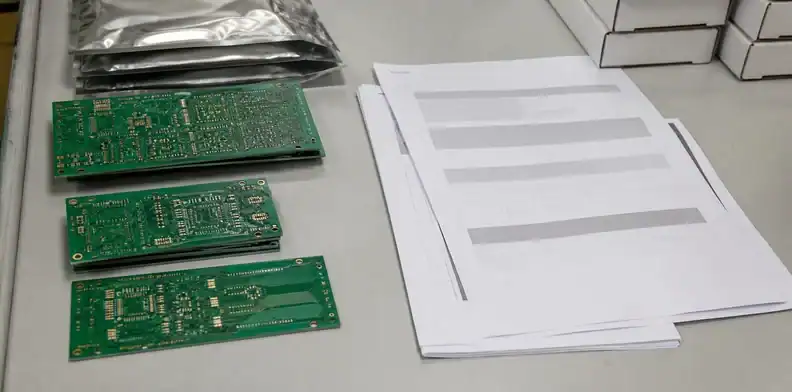
The declaration should match the actual PCB construction. A document for a generic FR4 board may not cover a special laminate, unusual solder mask, ENIG or hard-gold finish, embedded metal part, press-fit hardware, or assembled components. The buyer should compare the document scope with the BOM, drawing, and supplier quote.
For bare PCBs, pay attention to laminate family, solder mask, surface finish, marking ink, and any special process. For PCBA, add solder alloy, components, connectors, cables, adhesives, labels, and packaging where the customer asks for full supplied-product evidence.
Scope signal: If the document does not name whether it covers bare PCB or PCBA, ask for clarification before shipment release.
This boundary also helps avoid over-requesting. If the customer asks only for bare-board RoHS and REACH evidence, do not force the PCB supplier to certify components it did not source. If QueenEMS handles the assembled product, the evidence package should follow the supplied scope.
For assembled products, the BOM owner should be involved early. A bare-board declaration cannot answer for connectors, IC packages, solder paste, labels, wire harnesses, or customer-supplied parts unless those items are in the supplied scope.
Use REACH SVHC dates as a control point
REACH SVHC status changes when the Candidate List changes. A statement from several years ago may be too old for a customer audit even if the material recipe has not changed. The buyer should record the date of the statement and the Candidate List reference used by the supplier.
A practical request is simple: Please provide a REACH SVHC statement for this PCB or PCBA scope, naming the Candidate List date used, whether any SVHC above the communication threshold is present, and the responsible supplier entity.
| SVHC field | Why it matters | Action |
|---|---|---|
| Statement date | Shows when the review was made | Refresh if customer requires current status |
| Candidate List reference | Defines the chemical list used | Keep with compliance file |
| Article scope | Bare PCB or assembled product | Match purchase scope |
| Substance disclosure | Shows if communication duty exists | Escalate to customer if present |
The supplier does not need to write a legal memo. It needs to provide a clear statement that purchasing and quality can file with the shipment record.
Date rule: A REACH statement without a review date is not a stable customer-audit record.
SVHC review should not be pushed to the shipping clerk at the last minute. If the destination customer requires a current statement, put that requirement into the RFQ and PO so the supplier knows the evidence is a release item.
Decide when a test report is worth requesting
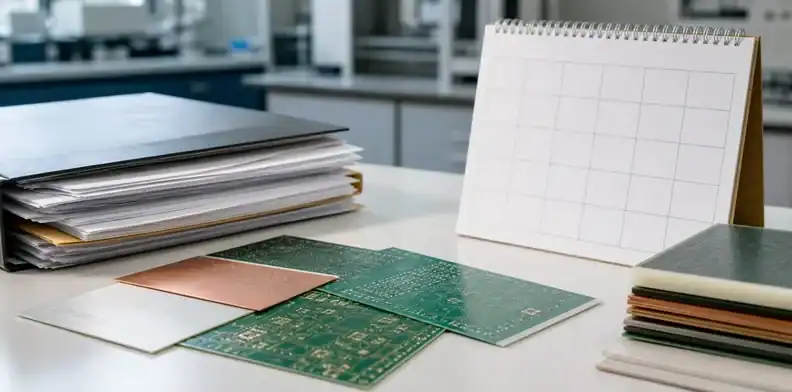
A test report is not always required for every PCB lot. For many repeat orders, a declaration plus controlled supplier process may be acceptable. A test report becomes more useful when the customer requires it, the material path is new, the finish or process is unusual, or the shipment is audit-sensitive.
The buyer should also check whether the test report is product-specific, material-family based, or a broad supplier capability report. Each can be useful, but they do not carry the same proof value.
Test call: Request test evidence when customer risk, new material, special finish, or audit exposure justifies the cost and time.
If the product requires halogen-free materials, keep that as a separate requirement and link it to how to specify a halogen-free PCB. Halogen-free and RoHS are not identical claims.
Testing should be targeted. Asking for every possible chemical test on every low-risk lot creates cost and delay, while asking for no evidence on a regulated customer shipment creates a filing risk. The customer requirement should set the depth.
Tie compliance papers to labels and traceability
Documents are useful only when they can be tied to the shipped boards. The buyer should keep lot number, packing label, PO number, board revision, finish, quantity, and shipment date with the declaration. Otherwise a future customer question may become a search through email instead of a controlled record.
This is where PCB lot traceability becomes part of the compliance process. A declaration dated today is more credible when it can be matched to the exact lot delivered next week.
| Record item | Where it appears | Why the buyer keeps it |
|---|---|---|
| PO and item number | Purchase order | Connects order to evidence |
| PCB revision | Drawing and Gerber release | Prevents wrong-version filing |
| Lot and label | Packaging record | Links paper to boards |
| Declaration date | Compliance file | Supports audit timing |
Traceability also protects the supplier. If a customer later asks about a specific shipment, the supplier can point to a dated declaration and lot record rather than issuing a broad new statement under pressure.
Write the RFQ request in buyer language
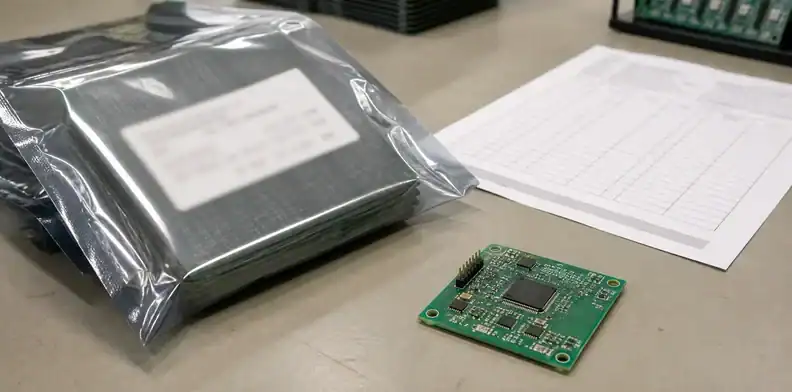
The RFQ request should be specific enough for the supplier to answer without guessing. It can say: Please provide RoHS declaration, REACH SVHC statement with review date, product scope, supplier signature, and shipment lot reference for the quoted PCB or PCBA. State whether the documents cover bare boards only or assembled product.
If the customer needs a specific format, include it. If the customer only asks for a declaration, do not invent extra paperwork that slows the order. The buyer’s job is to match the evidence to the customer’s requirement and product risk.
RFQ signal: Good compliance paperwork is scoped, dated, signed, and tied to the shipped lot.
A supplier reply that says only compliant without product scope, date, and responsible entity should be treated as incomplete for serious import or customer-audit use.
The RFQ wording should avoid legal conclusions. Ask for supplier declarations and supporting evidence; let the importer, brand owner, or customer compliance owner decide final market obligations.
Keep legal review separate from supplier evidence
This article is not legal advice. The supplier can provide product evidence and declarations; the importer or brand owner still needs to decide what the market, customer contract, and product category require. That separation protects both sides.
Purchasing can still make the order safer by asking the right evidence questions early. The best time to fix a missing declaration is before shipment, not after the customer asks for an audit pack.
Owner boundary: The supplier provides evidence; the importer or product owner decides compliance obligations and customer filing rules.
A missing signature or company name is a small issue before shipment and a large issue after the customer audit begins. Check those administrative details while the order can still be corrected calmly.

Review the compliance package before shipment
Before release, check that the declaration names the supplier, product scope, date, responsible person or department, and product identifier. Then check that the packing label and shipment evidence can be matched to the same PO and revision.
If the order is urgent, do not accept a vague promise that paperwork will follow. Ask which document is missing, who owns it, and whether shipment should wait or proceed with written customer approval.
A buyer who keeps this package clean can answer customer questions quickly without reopening the whole supply chain discussion.
For QueenEMS projects, tell us whether you need bare-board evidence, PCBA evidence, or both. That one distinction changes which suppliers and documents belong in the final compliance package.
For purchasing, the safest habit is to request compliance evidence at quotation instead of after the boards are boxed. The supplier then understands that the declaration is a release requirement, not an afterthought. It also gives the buyer time to correct scope language before the customer audit clock starts.
For quality teams, the review should be simple enough to repeat. Check date, supplier name, product scope, responsible signature, revision, lot link, and customer-required format. If any field is missing, return the document before shipment rather than accepting an email promise.
For founders and small hardware teams, the best protection is not a thicker compliance folder. It is a clean match between what the customer asked for and what the supplier can truthfully provide. That keeps the evidence useful without slowing every prototype shipment.
FAQ
Are RoHS and REACH the same for PCB orders?
No. RoHS focuses on restricted substances in electrical and electronic equipment, while REACH includes chemical communication duties such as SVHC information for articles.
Do I always need a lab test report for RoHS?
No. Many orders use supplier declarations, but a test report may be requested for new suppliers, special materials, regulated customers, or audit-sensitive shipments.
How current should a REACH SVHC statement be?
Use a statement with a clear review date and Candidate List reference. Refresh it when the customer requires current evidence or when the statement is too old for the audit file.
Should PCB compliance documents cover PCBA too?
Only when the purchase scope is PCBA or the customer asks for the assembled product. Bare PCB declarations do not automatically cover sourced components.
Can QueenEMS help prepare a RoHS and REACH package?
Yes, QueenEMS can help organize the supplier declaration, SVHC statement, lot link, shipment evidence, and customer-required document format for PCB or PCBA orders.
Related QueenEMS articles
- Halogen-free PCB specification rules
- PCB quality documents before shipment
- PCB fabrication certifications overview
- PCB lot traceability
Send QueenEMS the compliance evidence request
If your PCB or PCBA project needs RoHS, REACH, SVHC, or customer compliance paperwork, contact QueenEMS with the product scope, board revision, BOM if assembled, customer document request, destination market, quantity, and shipment timing. We can help review what evidence should be requested before quote or shipment release.
The most useful request includes the customer’s exact wording. That lets QueenEMS separate required documents from nice-to-have paperwork that may slow the order without reducing risk.
Sources
Written by the QueenEMS Engineering Team
Upload your files today · Free DFM check before production · Ship worldwide
Get your PCB prototypes in as fast as 24 hours. We handle FR4, Rogers, and Flex up to 60 layers — free prototypes for 2–4 layer boards, no minimum order.
Just upload your Gerber + BOM — we source every part, assemble, and inspect (AOI + X‑Ray) so you don't have to chase suppliers. Boards ship in as fast as 24 hours.