
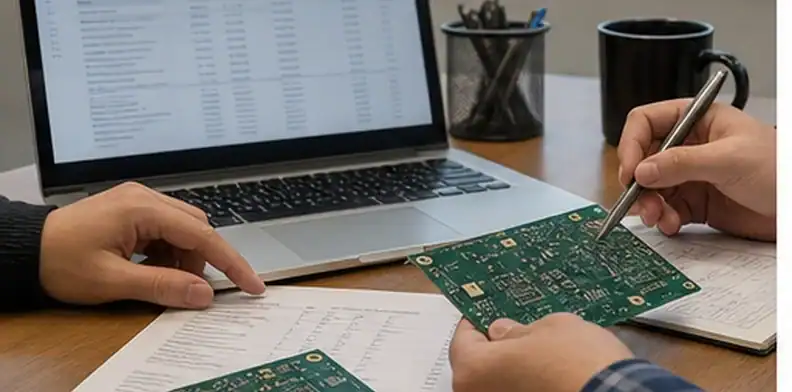
Quick Answer: Canadian OEM PCB manufacturing quotes should compare the build package, quality evidence, Incoterm, destination, import assumptions, and repeat-production controls. A low overseas PCB price can be misleading if freight, brokerage, taxes, documentation, or evidence are not separated. The best supplier response lets engineering approve the board and purchasing compare landed cost from the same scope.
Key takeaways – Quote the technical board and the Canada delivery boundary separately. – Ask whether reports, certificates, and packing evidence are included. – Use DDP/DAP assumptions carefully; do not compare them as equal prices. – Keep prototype and production release decisions separate.
PCB manufacturing for Canadian OEMs often involves a mix of engineering risk and import-cost uncertainty. A supplier may quote the board correctly but leave delivery, brokerage, or evidence assumptions vague. Another supplier may quote landed service but not prove the technical build fit. The buyer needs both views before approving the order.
This page is written for Canadian hardware teams sourcing custom bare PCBs from overseas suppliers. It focuses on the comparison fields that prevent a cheap quote from becoming a slow or disputed order.
Table of Contents
- What should Canadian OEMs define first?
- Which files make the quote firm?
- How should DDP and DAP be compared?
- What quality evidence should ship with the lot?
- How can remote supplier qualification work?
- When should prototype and production be separated?
- What risks matter for industrial OEM products?
- What should you send for a Canada PCB quote?
What should Canadian OEMs define first?
Canadian OEMs should first define whether they are buying an engineering prototype, pilot lot, service-spare batch, or production release. Each stage deserves a different quantity, evidence level, and approval path.
An engineering prototype may prioritize speed and design feedback. A pilot lot should confirm repeatability, packaging, inspection, and supplier communication. A production release should lock revision, stackup, material, finish, test evidence, and delivery terms.
The supplier should not have to infer that stage from quantity alone. Ten boards can be urgent engineering samples or a critical service lot. State the use case in the RFQ so the quote reflects the real risk.
Canadian OEMs should also name the receiving owner. A shipment going to an engineering lab in Ontario may need different labels, invoice references, and receiving evidence than a shipment going to a contract manufacturer in Quebec, Alberta, or British Columbia. The board may be identical, but the delivery and acceptance path can change.
Which files make the quote firm?
A firm Canadian OEM quote needs the released image data, drill package, fabrication notes, layer build, laminate expectation, target finished thickness, copper callout, solder mask and finish requirements, controlled-impedance notes, special tolerances, and quantity. If the board will later be assembled, add the assembly constraint that affects bare-board fabrication.
The fabrication drawing is where many quote changes begin. Missing finish, unclear thickness, vague material notes, or undefined impedance can make the first price a placeholder. A supplier can still quote, but the price may change after CAM review.
For file readiness, QueenEMS’ PCB fabrication quote files article is the deeper checklist.
A practical RFQ note should say whether alternates are allowed. For example, a drawing may name FR-4 broadly, while engineering actually expects a specific Tg, CTI, loss class, or UL-recognized laminate family. If Canadian purchasing accepts an alternate without engineering review, the incoming lot may satisfy price but fail the product record.
How should DDP and DAP be compared?
DDP and DAP should not be compared as if they are the same delivery promise. DDP usually means the seller takes more responsibility for delivery and import handling to the named place. DAP usually means the seller delivers to a destination while import clearance, duties, and taxes remain with the buyer.
For Canada-bound shipments, the buyer should ask the supplier to state the delivery city, transport mode, carton count, commercial invoice/packing-list approach, and which party handles import clearance. The quote should also make clear whether brokerage, duties, taxes, or special delivery charges are included or excluded.
This is a purchasing comparison, not only a logistics detail. A DAP quote may look lower because costs are waiting outside the supplier invoice. Use QueenEMS’ DDP vs DAP PCB shipping article to structure the landed-cost review.
The comparison should also separate urgent air freight from planned replenishment. Air shipping can make sense for prototypes or line-down service stock. For stable production, scheduled shipments may reduce cost and receiving stress. The quote should say which freight assumption was used so a fast prototype quote is not mistaken for a production landed-cost baseline.
What quality evidence should ship with the lot?
Quality evidence should match the OEM’s receiving and customer obligations. Common evidence includes a COC tied to the job, electrical-test status, outgoing inspection notes, impedance data where required, material statement, packing photos, and any customer-specific acceptance note.
Canadian OEMs that build industrial, medical-adjacent, energy, or telecom products may need more than a pass/fail shipment. The receiving team may need to verify revision, quantity, labeling, packaging condition, and certificates before boards enter production.
Do not ask for every report by default. Ask for the evidence that supports the board risk and the internal quality system. A simple FR-4 prototype may need less documentation than a controlled-impedance production lot.
Evidence should be tied to the lot, not only to the supplier’s general capability. A sample certificate from another order does not prove the current boards were tested. Ask the supplier to connect the record to job number, revision, quantity, and shipment date when the board is moving into production or customer-facing use.
How can remote supplier qualification work?
Remote supplier qualification works when the buyer tests the supplier’s file review, evidence response, and production discipline before volume release. The first pilot should prove more than board appearance. It should prove that questions are documented and repeatable.
Ask the supplier to return a build assumption sheet with material, stackup, finish, test, panel, report, and delivery terms. Then compare that sheet to the quote and drawing. Misalignment at this stage is cheaper to fix than a shipment dispute.
The buyer can also request sample documentation from a similar job format without demanding customer-confidential data. The goal is to see whether the supplier can provide organized records, not to audit another customer’s project.
One remote qualification habit works well: ask the supplier to mark each unusual feature as standard, review-required, or supplier-proposed. This gives engineering a fast view of risk without requiring a full audit. It also helps purchasing avoid treating every supplier response as equal.
When should prototype and production be separated?
Prototype and production should be separated when the design still has open engineering risk. A working prototype does not automatically qualify material, stackup, test evidence, packaging, or repeat-order control.
Before moving to production, confirm which prototype assumptions become permanent. Supplier-adjusted trace widths, alternate laminate, waived reports, nonstandard panelization, or urgent shipping shortcuts should not silently become the production baseline.
For a structured transition, connect this decision to QueenEMS’ PCB prototype to production switch signals.
What risks matter for industrial OEM products?
Industrial OEM products often care about long availability, revision control, harsh operating environments, and field-service continuity. The PCB quote should therefore show material availability, finish suitability, quality evidence, packaging, and reorder control.
If the board supports power conversion, motor drives, controls, outdoor equipment, or service parts, ask whether the supplier can repeat the approved build after months or years. A cheaper one-time prototype source may not be the right production partner.
The buyer should also decide what stops shipment: material substitution, missing report, unapproved stackup change, packaging damage, or discrepancy between drawing and final data.
Service parts deserve special attention. A Canadian OEM may reorder a small quantity years after the first release, and the original laminate, finish, or panel process may no longer be standard. Keep the approved build record and allowed alternates visible so the supplier can quote the repeat order without guessing.
What should you send for a Canada PCB quote?
Send QueenEMS the manufacturing files, drawing, stackup, quantity breaks, destination city or province, preferred Incoterm, quality evidence requirements, and the expected project stage. Include any customer requirement that affects material, finish, inspection, packaging, or labels.
The useful quote separates board price, one-time charges, evidence requirements, and delivery assumptions. That gives Canadian purchasing a cleaner landed-cost comparison and gives engineering a clearer approval record.
For review, send the RFQ package through the QueenEMS contact page. We can check whether the manufacturing scope and Canada delivery assumptions are clear enough for supplier comparison.
FAQ
Should Canadian OEMs request DDP pricing for PCBs?
DDP can be useful when the buyer wants a more complete landed-cost view, but it should be compared only against quotes with the same destination and scope.
Are Gerbers enough for a Canadian OEM quote?
Gerbers may be enough for a rough price, but a firm quote needs drawing notes, stackup, material, finish, tolerances, quantity, and evidence requirements.
What quality records should be requested?
Request records that match the product risk: certificate of conformance, electrical test, final inspection, impedance report, material statement, and packing evidence where needed.
Can QueenEMS support Canada-bound PCB orders?
Yes. QueenEMS can review the technical package and delivery assumptions so the quote compares manufacturing scope and landed-cost boundary separately.
Written by the QueenEMS Engineering Team
Upload your files today · Free DFM check before production · Ship worldwide
Get your PCB prototypes in as fast as 24 hours. We handle FR4, Rogers, and Flex up to 60 layers — free prototypes for 2–4 layer boards, no minimum order.
Just upload your Gerber + BOM — we source every part, assemble, and inspect (AOI + X‑Ray) so you don't have to chase suppliers. Boards ship in as fast as 24 hours.