
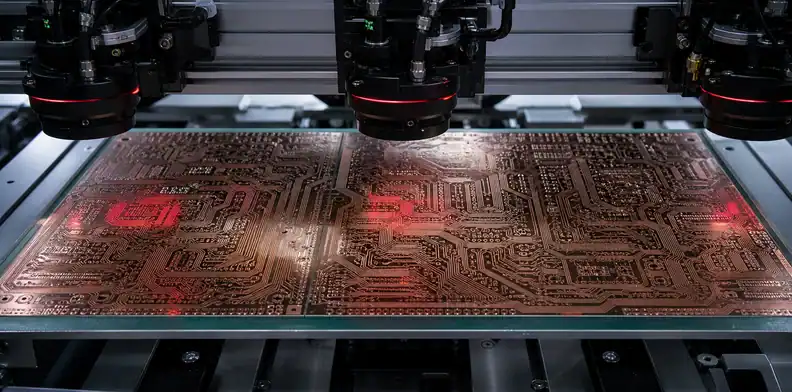
Quick Answer: PCB outer-layer AOI should compare the etched outer circuit with the approved reference data and classify deviations before solder mask hides the copper. The useful record identifies the side, artwork revision, panel position, defect type, review disposition, and any repair or CAM decision. AOI is a visible-pattern control; it does not replace electrical test, microsection, or final functional evaluation.
Outer-layer AOI takes place after the circuit has passed through imaging, plating or etching, stripping, and other steps that can change the delivered copper. Unlike an inner layer, the panel can still move through solder mask, surface finish, routing, and electrical test. That makes an early, traceable decision valuable: it can prevent a visible circuit defect from being covered by later process value.
Table of Contents
- Define the outer-layer AOI question
- Classify defects by their released consequence
- Keep the reference revision under control
- Separate AOI from other inspections
- Decide when an AOI call needs engineering
- Retain evidence that receiving can understand
- Use AOI data on repeat orders
- Send a fabrication evidence RFQ
- Choose retention by product risk
- Connect findings to corrective action
Define the outer-layer AOI question
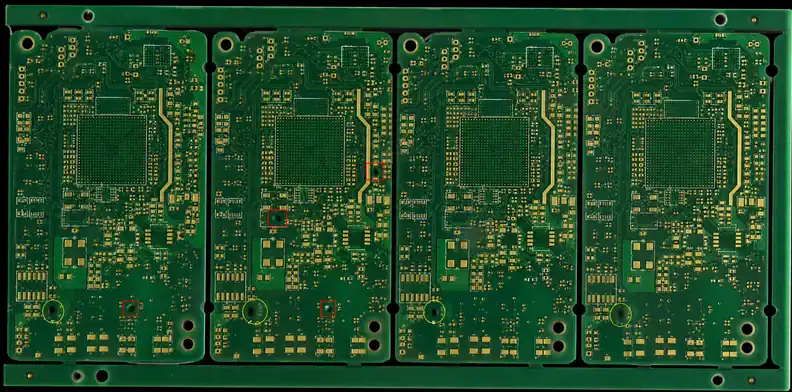
Outer-layer AOI asks whether visible copper features match an approved data set closely enough to move into the next operation. It is not a blanket claim that the bare board is fault-free. The program must be tied to the correct layer, side, panel format, and released artwork; otherwise an apparent pass may compare the board with a stale or incomplete reference.
Ask the supplier which outer layers are inspected, at what process point, and how a human reviewer disposes of a flagged condition. That information is more useful than a broad statement that AOI is available because it tells the buyer whether the controlled feature is seen before mask and finish change its appearance.
Inspection scope: outer-layer AOI owns visible circuit comparison before later operations make a copper finding harder to isolate.
The first-article inspection versus AOI comparison helps separate a controlled first-piece decision from automated pattern comparison. Use the AOI, X-ray, and ICT inspection overview when the acceptance question extends beyond visible outer-circuit geometry.
Classify defects by their released consequence
AOI can flag opens, shorts, extra copper, missing copper, narrowed conductors, protrusions, registration deviations, and other visible differences. The disposition should be based on what the feature controls. A harmless nonfunctional artifact is not the same as a reduced high-voltage clearance, a missing current path, or a shifted connector pad.
The record should not collapse every difference into pass or fail without context. Use an agreed acceptance standard, drawing note, or engineering disposition for conditions that require judgment. The key is to preserve the feature location and actual finding before a repair or CAM edit changes the visible state.
| AOI finding | Product consequence to check | Typical owner |
|---|---|---|
| Missing or necked conductor | Open circuit, current loss, impedance shift | Engineering and quality |
| Residual copper bridge | Short or clearance reduction | Quality, with engineering for controlled gaps |
| Pad or land shift | Hole capture, connector fit, assembly alignment | Engineering |
| Edge nick or extra copper | Depends on distance to functional feature | Quality under drawing criteria |
Disposition call: classify a finding against the released function of that location, not its visual appearance alone.
Keep the reference revision under control
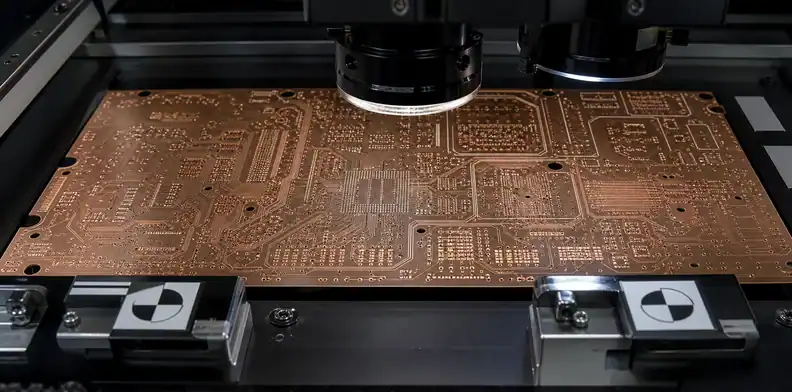
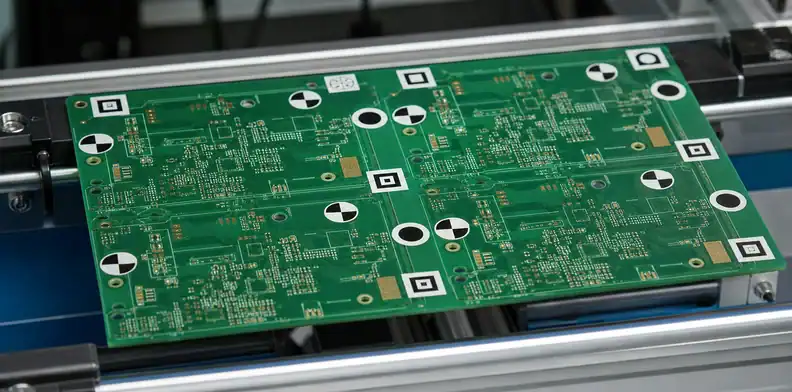
AOI is only as useful as the data it compares. A changed Gerber export, panelization update, revised copper pour, or approved CAM modification can alter the expected image. The supplier should identify the exact reference revision used for the inspection program and keep it linked to the production traveler or controlled job record.
This matters on rapid revisions. A board may retain the same product name and layer count while a small pad move, routing change, or connector revision changes the inspection intent. A correct AOI program for the earlier revision can create false calls or, worse, miss a difference that the new data should control.
The processed Gerber approval article is relevant when CAM output becomes the accepted production definition. Outer-layer AOI should reference that same controlled output rather than a separate, unverified copy of the design data.
Revision rule: an AOI pass has value only when the reference image can be traced to the released fabrication revision.
Separate AOI from other inspections
AOI does not prove barrel copper, resin fill, solderability, dielectric thickness, or final electrical continuity. Those questions need different methods. Electrical test can identify certain opens and shorts after fabrication, microsections show a cross-sectioned structure, and incoming inspection can verify agreed visual or dimensional conditions. Treating one result as proof of all other conditions creates a false sense of coverage.
The buyer can decide the inspection mix by asking what failure mode each method sees. A fine-line outer copper defect may be well suited to AOI. A hidden via-wall issue needs metallization evidence. A board can also pass AOI yet fail a net-specific electrical test if the visible pattern comparison does not capture the particular fault mode.
| Question | Method that can help | What it cannot replace |
|---|---|---|
| Visible copper compared with artwork | Outer-layer AOI | Electrical or hidden-structure evidence |
| Net continuity and isolation | Electrical test | Local visual defect classification |
| Via or plated-hole structure | Microsection | Whole-panel circuit comparison |
| Finished cosmetic condition | Incoming or final visual review | Revision-linked copper inspection |
Coverage check: request AOI for visible outer-circuit control and use another method for every hidden or electrical risk.
Decide when an AOI call needs engineering
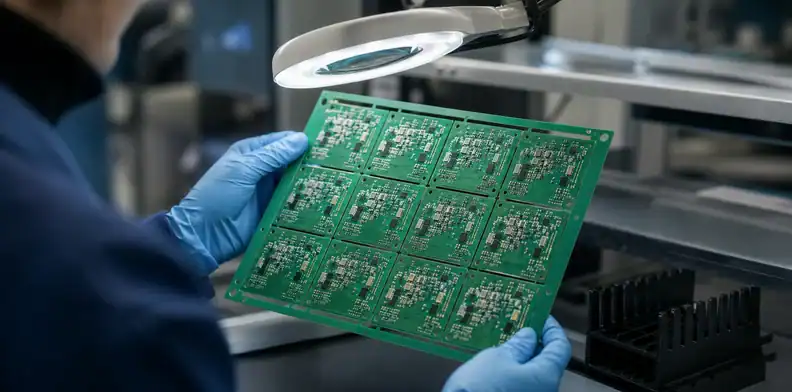
Most clear departures from a released conductor pattern should be contained by quality. An engineering decision is needed when the proposed disposition changes a controlled trace, pad, clearance, copper distribution, or repair rule. The manufacturer should not decide a functional deviation only because it looks small in an AOI image.
Build a short escalation path into the RFQ: define which layer features are electrically controlled, who approves CAM or repair changes, and whether evidence is needed before the panel moves to solder mask. A marked image and reference overlay normally provide a clearer decision basis than a sentence in an email.
For high-speed or high-voltage regions, include the reason the feature is sensitive. That stops a general visual reviewer from treating an impedance neck or clearance reduction as an ordinary cosmetic event.
Engineering boundary: a local AOI finding becomes a design decision when its disposition changes a specified electrical or interface feature.
Retain evidence that receiving can understand
Receiving teams rarely need every raw AOI image. They do need a concise record when the project calls for inspection evidence: product revision, panel or lot reference, inspected layers, relevant finding, disposition, and any approved exception. This lets later quality review distinguish a clean lot from a lot that moved forward under a conscious engineering decision.
Keep the record proportional to the risk. A simple commercial board may only need the supplier’s normal quality statement. A product with a controlled outer-layer feature can justify a first-article AOI summary or a retained disposition for the sensitive region. The record should help someone make a later acceptance decision, not create a large archive with no link to the drawing.
The PCB incoming inspection workflow can be used to decide how the supplier evidence and receiving check fit together. It should not be used to turn AOI images into an unrelated cosmetic requirement.
Record check: retain the revision, feature, finding, and disposition needed to explain why the lot was released.
Use AOI data on repeat orders
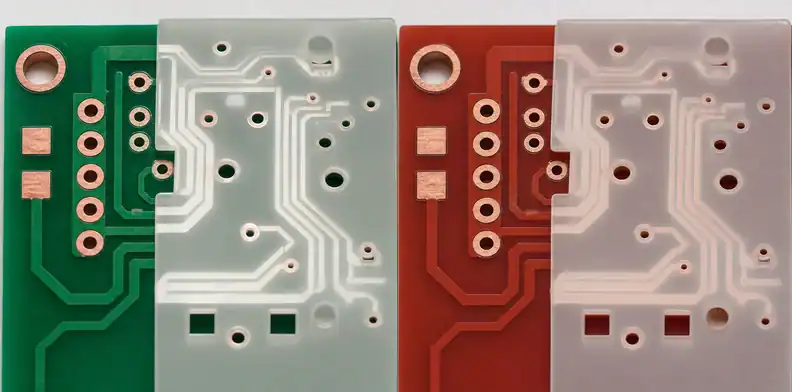
Repeat orders benefit when a previous AOI disposition is linked to the product revision. The same part number may return with a different stack-up, panel format, copper weight, or supplier route. A prior accepted image does not automatically approve the new build, but it can show which features were sensitive and which inspection record closed the first-lot question.
Before a reorder, compare the current controlled fabrication data with the AOI reference and any approved CAM revisions. Changes in copper artwork, panelization, or critical feature definitions should trigger an updated inspection program. This protects the buyer from assuming that a repeated product name guarantees identical manufacturing evidence.
Purchasing should also compare supplier quotations for their inspection assumptions. One supplier may include a normal AOI route; another may quote a special review or require a new program. The difference is useful only when it is tied to the same controlled feature and release record.
Repeat-order rule: reuse AOI learning only after confirming that the new production data still represents the same inspection question.
Send a fabrication evidence RFQ
QueenEMS can review outer-layer AOI evidence when the RFQ includes Gerber or ODB++ data, revision-controlled fabrication drawings, the layers and features that require visible circuit control, applicable acceptance criteria, any approved CAM data, and the desired first-lot or retention record. A generic request for “AOI report” leaves too much to interpretation.
Ask the supplier to state the inspection stage, reference data, escalation path for functional deviations, and what record can be returned for the named feature. That structure lets engineering compare coverage without forcing a manufacturer to expose proprietary inspection-program settings.
For an evidence-focused quotation review, send the controlled layers and release notes to QueenEMS via the production contact page. The response can separate an outer-circuit visibility question from an electrical-test, microsection, or engineering-disposition requirement before the first lot is released.
Choose retention by product risk
Not every order needs archived imagery for every panel. The right retention level depends on the consequence of an outer-layer defect, design stability, and whether the first lot is a qualification reference. A targeted record for a controlled region can help a later release decision far more than an unlinked image archive.
| Project condition | Useful AOI record | Reason |
|---|---|---|
| Stable repeat build | Normal disposition | The inspection question is established |
| New fine-line region | First-article summary | Confirms the named circuit area |
| Panel or supplier change | Updated reference confirmation | Prevents use of stale program data |
| High-value interface | Defined exception record | Supports later quality review |
Retention call: keep AOI evidence because it supports a defined future decision, not because the machine produces images.
The PCB quality documents before shipment article shows how an AOI exception record can be included in a defined handoff package instead of becoming an isolated factory file.
The retained item should remain readable outside the inspection department. A useful exception record has the board or panel identifier, layer and side, released artwork revision, location or coordinate convention, defect classification, reviewer disposition, and the link to any approved repair instruction. Machine screenshots without those fields are difficult for a receiving engineer or a later supplier to use. The record does not need to disclose program thresholds; it needs to make the accepted or rejected circuit condition traceable to the product that shipped.
For builds that use panel-level serialization, retain the serial range or panel position as well. That small connection lets a later receiving question be traced to the correct inspection decision without turning the AOI archive into a general production-history system.
For unpanelized boards, a clearly marked datum corner and board revision can serve the same traceability purpose.
Connect findings to corrective action
An outer-layer finding becomes useful process learning when the response identifies the stage that first created it. A recurring bridge can lead to resist or etch investigation; a registration shift can lead to a reference-target review. Preserve the observed condition before repair or CAM correction changes the visible evidence.
The corrective record should distinguish a true defect from a program or data-reference issue. An apparent extra copper feature can be a valid change missing from the AOI reference. A repeated nuisance call can show that the program threshold needs review, but it should not be used to normalize a real circuit deviation. The disposition must therefore name both the observed geometry and the reference revision used to judge it.
For a first lot, a short corrective-action summary can be attached to the production record when a controlled region produces an exception. It should state the containment, final disposition, and whether the same area needs attention on the next panel. That gives purchasing and quality a usable release history without claiming that AOI itself proves root cause.
One useful way to frame the record is to separate three clocks. The detection clock says when the image was compared. The containment clock says when affected panels were stopped or segregated. The corrective-action clock says when a process, program, or data issue was closed. Combining all three into one date makes it difficult to learn whether the factory reacted promptly or merely documented the conclusion after later work had begun.
That separation also helps when the board moves to a different supplier. The new manufacturer does not need historical machine settings, but it does need to know the controlled feature, past defect category, approved reference revision, and any inspection condition that was used to protect the first lot. This is a practical handoff record rather than a generic request for quality paperwork.
Corrective-action rule: record the circuit condition first, then connect the response to the stage that can prevent recurrence. Review our PCB quality control capabilities.
FAQ
Does an AOI pass prove electrical continuity?
No. AOI compares visible geometry. Electrical test is needed when the acceptance question is net continuity or isolation.
Can AOI inspect after solder mask is applied?
It can support some visual checks at other stages, but the outer-copper comparison discussed here is most useful before mask hides or changes the circuit surface.
Should every AOI call be sent to engineering?
No. Clear quality defects can follow the agreed disposition. Engineering is needed when a proposed repair, exception, or CAM change affects a controlled product feature.
What is the minimum useful AOI record?
The minimum is the inspected reference revision, layer or side, feature or finding, disposition, and the link to the released lot or panel.
Sources
- A Dataset for Deep Learning Based Detection of Printed Circuit Board Surface Defect
- IPC-6012, Qualification and Performance Specification for Rigid Printed Boards
Written by the QueenEMS Engineering Team
Upload your files today · Free DFM check before production · Ship worldwide
Get your PCB prototypes in as fast as 24 hours. We handle FR4, Rogers, and hybrid boards up to 40 layers in volume production, with advanced builds subject to engineering review — free prototypes for 2–4 layer FR-4 boards, no minimum order.
Just upload your Gerber + BOM — we source every part, assemble, and inspect (AOI + X‑Ray) so you don't have to chase suppliers. Boards ship in as fast as 24 hours.