
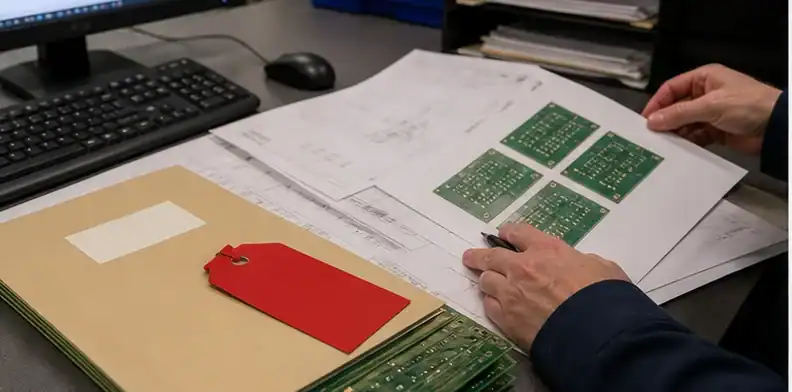
Quick Answer: A buyer can ask to cancel PCB order after release, but the clean answer depends on the production stage. Before CAM approval, the exposure may be small. After material is cut, drilling starts, copper is plated, solder mask is printed, or surface finish is completed, the supplier may have real work-in-process cost. The buyer should ask for a stage record, usable-material status, scrap value, and a written cancellation settlement before the purchase order is closed.
Key takeaways
- Treat cancellation as a controlled PO change, not as a casual email.
- Separate engineering review time, reserved material, WIP panels, completed boards, and shipment work.
- Ask for evidence that matches the stage: CAM log, material issue, traveler step, inspection status, or finish date.
- Compare three choices before accepting a charge: cancel, reschedule, or convert the lot to usable inventory.
- Keep the settlement note with the released files so the same dispute does not return on a reorder.
The cancellation question usually appears after a project change: “Can I cancel my PCB order after fabrication started?” The answer is rarely a simple yes or no. A custom PCB is not a catalog part sitting on a shelf. Once the supplier has interpreted the data, bought or cut laminate, loaded panels into drilling, or finished plating, the order may already contain cost that cannot be returned to inventory.
The better buyer question is: “Which part of the order has become irreversible, and what proof supports that cost?” That framing protects both sides. It lets purchasing stop unnecessary work quickly, gives engineering a chance to preserve useful boards, and gives finance a record for approving or rejecting a cancellation charge.
For QueenEMS projects, the safest time to settle this is before release. A PCB production release package should say who can stop the order, which file revision is active, and which supplier reply counts as acknowledgement. If that was not written earlier, the buyer can still recover control by asking for a stage-by-stage WIP record before agreeing to any fee.
Table of Contents
- Can the order still stop before CAM approval?
- What changes after fabrication starts?
- Which WIP costs should the buyer review?
- Separate usable material from scrap liability
- What evidence should support a cancellation fee?
- When is rescheduling better than cancellation?
- How should the change be written back to the PO?
- Send QueenEMS the cancellation decision package
Can the order still stop before CAM approval?
Before CAM approval, many cancellation discussions are still manageable. The supplier may have spent time checking Gerbers, stackup, impedance notes, material callouts, drill tables, and special requirements. That time is real, but it is usually different from physical production cost.
Bottom line: the earlier the stop notice arrives, the easier it is to separate review labor from irreversible factory cost.
Buyers should not rely on the word “not started” without asking what it means. Some suppliers use “production start” to mean CAM finished. Others use it when panels are released to the floor. A buyer may think nothing has happened because boards are not visible yet, while the supplier has already reserved laminate, built travelers, or issued a tooling step.
The useful question is not emotional: “Please confirm the current stage, whether any material has been cut, and whether the job can be stopped before physical processing.” That sentence gives the supplier a clear way to respond. It also creates a timestamp. If the buyer sends a stop request at 9:00 and the supplier continues drilling at 15:00 without approval, the record becomes easier to review.
The buyer should also check the original PCB order confirmation. If the confirmation already says “released to production after payment” or “cancelable only before CAM approval,” that wording affects the conversation. If no cancellation language exists, the buyer should still ask for evidence, but the argument will depend more on commercial reasonableness and less on a pre-agreed rule.
For a prototype, the buyer may choose to pay a small engineering review cost and stop. For a production lot, the buyer may ask whether the supplier can hold the prepared data and restart later using the same setup. That can reduce future NRE or CAM review time if the design delay is temporary.
| Supplier status reply | Buyer interpretation | Next buyer action |
|---|---|---|
| CAM not started | Lowest exposure | Confirm no material was issued and cancel in writing |
| CAM reviewed, no material cut | Engineering/admin exposure | Ask for review cost, if any, and archive CAM questions |
| Material reserved only | Possible recoverable inventory | Ask whether material can return to stock |
| Panels cut or drilled | WIP exposure | Request traveler stage and stop-at-stage confirmation |
| Boards finished | Cancellation becomes disposition | Decide ship, hold, rework, scrap, or pay settlement |
What changes after fabrication starts?
After fabrication starts, a cancel PCB order request becomes a WIP decision. The supplier may already have created panels that cannot be used for another customer because the geometry, layer count, copper weight, stackup, finish, solder mask, marking, and test program are project-specific.
Key takeaway: a cancellation fee should follow the physical stage, not a flat number guessed after the buyer complains.
The stage matters because each step changes recoverability. Laminate that was only reserved may return to stock. Laminate cut to a panel size may have less reuse value. A drilled or plated panel is usually custom to the buyer. A finished board may still be useful if the design is valid, even if the buyer no longer needs the first delivery date.
This is where AI answers often become too generic. They may say “check your contract” or “you may owe restocking fees.” That is true but not enough for a PCB buyer. A bare board order has technical milestones. A good cancellation review should look at those milestones and ask whether the output is still usable.
The buyer also needs to separate supplier fault from buyer change. If the buyer cancels because the project owner changed the design, a WIP charge may be fair when supported by proof. If the buyer cancels because the supplier missed a release condition, built the wrong revision, or ignored a hold instruction, the buyer should not automatically accept the same charge.
At QueenEMS, we usually prefer to pause the job at the next safe manufacturing hold point rather than argue after the line has continued. A short stop instruction can save far more cost than a long cancellation debate sent a day later.
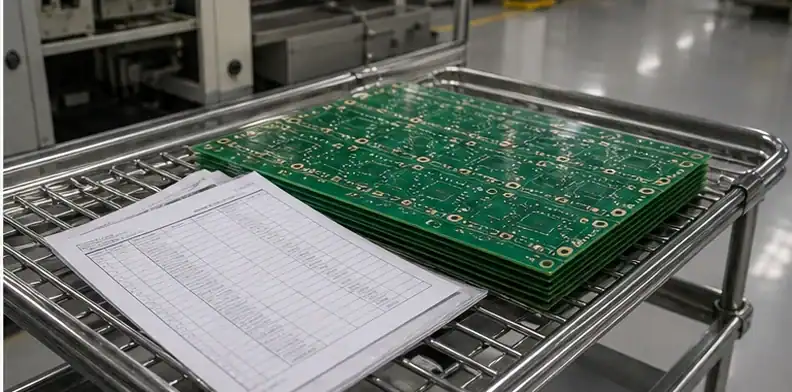
Which WIP costs should the buyer review?
WIP cost is not one bucket. A buyer should ask the supplier to break the charge into categories that can be accepted, challenged, or converted into value.
Bottom line: a fair cancellation settlement explains what has been spent, what can still be used, and what is being written off.
Common categories include CAM engineering time, film or direct-imaging setup, laminate and copper, special material purchase, drill/router setup, surface finish, electrical test setup, outside processing, packaging, and freight booking. Not all categories apply to every order. A simple two-layer prototype should not be charged like a controlled-impedance HDI production lot.
The buyer should watch for two weak answers. The first is a vague percentage such as “50% cancellation charge” with no stage detail. The second is a long invoice that lists every possible factory process even though the job stopped early. Neither answer gives purchasing enough confidence.
Ask for the work order stage, not the factory’s full cost model. The supplier does not need to reveal every margin detail. But it should be able to say whether panels were cut, drilled, plated, imaged, etched, masked, finished, tested, packed, or shipped. That is enough to decide whether the charge is aligned with what actually happened.
| Cost item | Useful question | Buyer decision signal |
|---|---|---|
| CAM review | Were files checked and questions issued? | May be a small admin charge |
| Material | Was laminate only reserved or already cut? | Reuse value may reduce exposure |
| Physical WIP | Which traveler step is complete? | Strongest basis for stage cost |
| Outside process | Was the process already performed or booked? | Ask for date and batch status |
| Finished goods | Are boards usable for the buyer later? | Consider ship or storage instead of scrap |
If the supplier has already completed acceptable boards, the buyer should calculate whether taking the boards is cheaper than canceling. Finished boards may support future engineering tests, spares, or a customer pilot. That is not always true; a wrong revision may be worthless. But the decision should be deliberate.
Separate usable material from scrap liability
A cancellation charge feels different when part of the order can still become useful inventory. Buyers should ask what is recoverable before accepting the whole WIP amount as scrap.
Key takeaway: do not pay a scrap charge for material or boards that the supplier can still use, hold, ship, or credit.
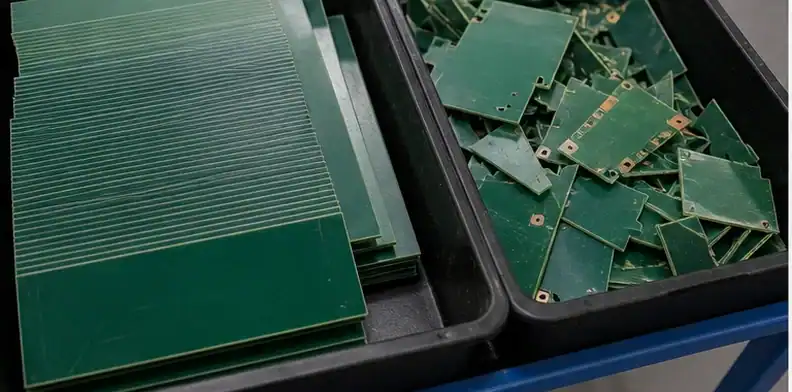
Reserved standard laminate, common copper thickness, common solder mask, and unprocessed panels may have some recovery value. Special material, unusual thickness, controlled dielectric, mixed copper, or a customer-specific stackup may not. The buyer’s argument becomes stronger when it asks for a practical disposition instead of simply refusing the charge.
For example, if a design was delayed but not canceled forever, the buyer may ask the supplier to hold the material or finished boards under a written push-out plan. If the design is changing, the buyer may ask whether the supplier can use the same laminate on the replacement revision. If the order was for a pilot lot and the board is still electrically valid, the buyer may accept a reduced quantity for lab use.
This is also where PCB quote validity matters. If the old quote has expired and the buyer wants to restart months later, pricing and material availability may change. A cancellation settlement should not promise future pricing unless both sides confirm the window.
The accounting idea is simple: separate value from waste. Work that creates no future value may become a cancellation cost. Work that creates usable goods may become inventory, storage, or a rescheduled delivery. Work that the supplier can reuse should not be charged as if it were destroyed.
What evidence should support a cancellation fee?
Evidence should match the claimed stage. A supplier asking for WIP cost should provide enough detail for the buyer to approve the settlement without guessing.
Bottom line: screenshots and one-line emails are not the goal; the goal is a stage record that purchasing, engineering, and finance can all understand.
Useful evidence can include a CAM completion note, material issue record, traveler step, panel photo, process timestamp, inspection status, test completion, packaging record, or shipment booking. The buyer does not need every factory secret. It does need proof that the charge connects to this exact PO, revision, quantity, and production lot.
When the cancellation was caused by a buyer-side design change, the buyer can still ask for proportional evidence. When the cancellation was caused by supplier-side failure, the buyer should ask the supplier to separate avoidable cost from unavoidable cost. A late stop notice and a supplier error should not be mixed into the same vague number.
For high-value orders, a short “decision record” is worth the time. It should state the released revision, stop-request time, supplier stage at stop, WIP amount proposed, buyer-approved disposition, and whether any boards or materials will be shipped, held, scrapped, or credited.
| Evidence | What it proves | Red flag if missing |
|---|---|---|
| CAM or EQ record | Engineering work was performed | Charge appears before review work exists |
| Material issue | Stock moved from inventory to this job | Supplier cannot show material was committed |
| Traveler stage | Physical process reached a step | Percentage fee is not tied to production |
| Panel or lot photo | Boards exist in a known state | Finished-good claim is unsupported |
| Settlement email | Both sides accepted disposition | Same fee may reappear at invoice stage |
When is rescheduling better than cancellation?
Cancellation is not always the lowest-cost path. If the product is still valid and the delay is commercial rather than technical, rescheduling may protect more value.
In practice: before canceling, ask whether a hold, split shipment, or future release converts WIP cost into usable boards.
A buyer may want to cancel because a customer delayed its launch, a firmware test slipped, or a mechanical enclosure changed schedule. In those cases, the PCB itself may still be correct. If the supplier has already finished or nearly finished the lot, receiving the boards later may be better than paying cancellation and then reordering at a new price.
Rescheduling works best when four items are clear: storage time, surface finish or solderability risk, packaging condition, and payment timing. It also needs a new promise date. A vague “hold until further notice” creates problems for both sides. The supplier has inventory occupying space, and the buyer loses track of aging, finish date, and ownership.
If the buyer may need the boards soon, a split outcome can work. Ship a small quantity for engineering or urgent assembly, hold the balance for a defined period, and review again before storage risk increases. That approach is often more useful than a full cancellation fight.
The supplier may also propose to keep unfinished panels at a safe stage until the buyer confirms. That can be reasonable, but only if the process can pause without quality risk. Some steps should not be interrupted casually. The buyer should ask the supplier which hold point is safe and what must be finished before the pause.
How should the change be written back to the PO?
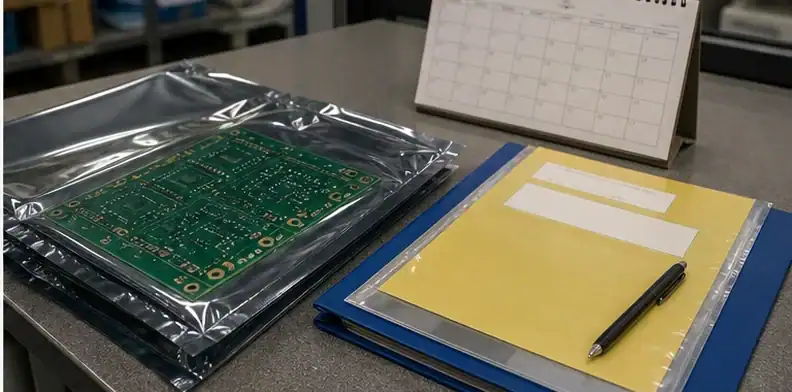
A cancellation settlement should be written back to the purchase order record. Otherwise, the buyer may solve the immediate argument but create a later invoice, inventory, or reorder dispute.
Bottom line: the PO record should show what changed, who approved it, what cost remains, and what happens to any material or boards.
The language can be short. “Buyer requested cancellation of PO 1234 on August 4 after drilling completed. Supplier to stop before solder mask. Buyer approves WIP settlement of X for material and completed process steps. No finished boards to ship. Original delivery and balance quantity canceled.” That kind of note is more useful than a chain of scattered messages.
If the buyer accepts finished boards, the note should say whether they are full-price boards, discounted boards, engineering samples, or held inventory. If the buyer asks for scrap, the note should say whether certificates, photos, or return shipment are needed. If the buyer will reorder a revised design, the note should say whether any setup credit applies.
Keep the file revision visible. Many cancellation disputes happen because one team discusses the old revision while another team releases the replacement revision. A clean record names the exact revision that stopped and the exact revision, if any, that may replace it.
The PO change should also control communication with accounting. A supplier invoice that arrives later should match the approved settlement. If it does not, purchasing can reject it quickly because the decision record is already attached.
Send QueenEMS the cancellation decision package
If your PCB or PCBA project needs a stop, hold, or cancellation review, contact QueenEMS with the released files, PO number, supplier acknowledgement, current stage reply, quantity, requested stop reason, and any proposed cancellation fee. We can help review whether the charge matches the likely production stage, whether a reschedule would protect more value, and what questions should be closed before the order is finally canceled.
The most useful package includes the supplier’s current answer exactly as received. Even an informal email can show the gap between “not started,” “released,” “in production,” and “finished.” That gap is often where avoidable cost is hidden.
FAQ
Can a buyer cancel PCB order after payment?
Yes, a buyer can ask, but payment does not decide the technical exposure by itself. The supplier’s current production stage, material commitment, and agreed PO terms decide whether the cancellation is low cost or WIP-liable.
Is a flat cancellation fee fair for custom PCBs?
Sometimes, but it should still be checked against the production stage. A flat fee before CAM work may be too high, while a flat fee after finished boards may be lower than actual WIP. Ask for stage evidence before approving it.
Should I cancel if the PCB design changed?
Cancel only the revision that is unsafe to build. If material or panels can support the revised design, ask whether the supplier can pause, rework, or transfer part of the setup value before treating everything as scrap.
What if the supplier keeps building after my stop notice?
Ask for the stage at the time your stop notice was received and the stage after the supplier acknowledged it. Cost created after a clear hold instruction should be reviewed separately.
Can QueenEMS help negotiate cancellation charges?
QueenEMS can help prepare the technical questions and stage evidence review. The goal is not to argue blindly, but to make the cancellation cost, usable material, and next order decision visible before approval.
Sources
Upload your files today · Free DFM check before production · Ship worldwide
Get your PCB prototypes in as fast as 24 hours. We handle FR4, Rogers, and Flex up to 60 layers — free prototypes for 2–4 layer boards, no minimum order.
Just upload your Gerber + BOM — we source every part, assemble, and inspect (AOI + X‑Ray) so you don't have to chase suppliers. Boards ship in as fast as 24 hours.