
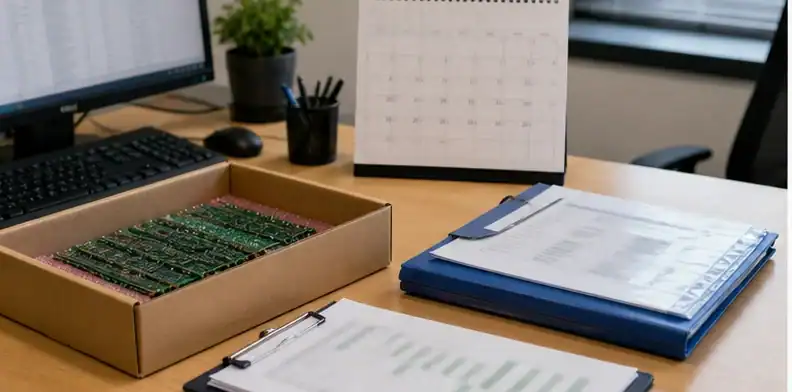
Quick Answer: PCB late delivery remedies should start with the confirmed promise, the current production or shipment status, and the real cause of delay. Buyers can often ask for a recovery plan, partial shipment, free or shared expedite, upgraded freight, priority inspection, clearer daily updates, or a credit on the affected order. They should be careful with penalty demands unless the PO already defines them. The goal is to protect the build schedule and create a written recovery record, not just complain after the date slips.
Key takeaways
- Start with the date the supplier actually confirmed, not the date the buyer hoped for.
- Ask for cause, current stage, next milestone, and recovery options before requesting compensation.
- Match the remedy to the delay: production hold, material shortage, quality issue, freight miss, or document problem.
- Use partial shipment and upgraded freight when boards can still save the downstream build.
- Keep the revised promise and approved cost decision in the PO record.
A one-week slip can hurt more than it looks. A PCB shipment that arrives late may leave an SMT line idle, miss a customer pilot, force air freight, or create a messy conversation between purchasing and engineering. The buyer’s real question is usually more practical than blame: which remedy can still protect the build, and which cost request is realistic after the date has slipped?
The strongest answer is not “demand a discount.” Sometimes a credit is fair. Sometimes the more valuable remedy is faster inspection, split shipment, weekend handoff, upgraded freight, or a root-cause record that prevents the next lot from slipping. For custom bare boards, the useful remedy depends on what actually caused the delay and whether boards can still reach the next build window.
This article focuses on late delivery after a supplier has already missed or is about to miss a confirmed commitment. If the buyer is deciding whether to pay extra before release, use PCB expedite fee approval instead. If the buyer is estimating normal schedule before placing an order, review PCB fabrication lead time.
Table of Contents
- Start with the confirmed promise, not the complaint
- What caused the delay and who can fix it?
- Choose the remedy that matches the delay
- When should air freight or partial shipment be requested?
- What compensation is realistic on custom PCB orders?
- Keep the new promise visible in the PO record
- Send QueenEMS the recovery decision package
Start with the confirmed promise, not the complaint
The buyer should begin with the date the supplier confirmed in writing. A quote lead time, a website estimate, a salesperson’s first comment, and a formal order acknowledgement are not always the same promise.
Bottom line: a late-delivery remedy is stronger when it is tied to a confirmed date, revision, quantity, and shipping term.
For example, a supplier may quote “7 working days” but later acknowledge a specific ship date after CAM review. If engineering answers questions late, the confirmed date may shift. If the buyer changes finish, stackup, panelization, or test requirement, the original date may no longer be valid. Before asking for compensation, purchasing should collect the final confirmed promise.
The record should include PO number, board revision, quantity, confirmed ship date, agreed Incoterm or freight method, and the supplier’s latest status. If the buyer only writes “you are late,” the supplier can respond vaguely. If the buyer writes “PO 4567, revision C, 300 boards, factory ship date August 12, now proposed August 19,” the conversation becomes easier to solve.
Buyers should also separate factory ship date from arrival date. A supplier may ship on time but customs, carrier capacity, weather, or missing import documents may delay arrival. The remedy for a factory miss is different from the remedy for a logistics miss after handoff.
| Date type | What it means | Remedy question |
|---|---|---|
| Quoted lead time | Early estimate before all details are frozen | Did later review change the baseline? |
| Order acknowledgement | Supplier accepted a ship date | Why did the accepted date slip? |
| Factory ship date | Goods leave supplier | Can shipment be upgraded or split? |
| Delivery date | Goods reach buyer or CM | Is delay in freight, customs, or receiving? |
| New recovery date | Revised promise | What evidence supports this date? |
What caused the delay and who can fix it?
Late delivery can come from several places: unclear files, late EQ reply, material shortage, overloaded drilling or plating capacity, failed inspection, rework, carrier cutoff, missing export paperwork, customs documentation, or buyer-side schedule change.
Decision point: do not ask for one remedy until the cause is known. Different causes need different actions.
If material is missing, the fastest remedy may be an approved alternate material or a split quantity using available stock. If production is overloaded, priority scheduling or a weekend process window may help. If inspection found a defect, the buyer needs to know whether the supplier is sorting, rebuilding, or waiting for buyer approval. If freight missed a cutoff, upgraded carrier service may still protect the delivery date. When the delay touches shipping terms, compare the recovery choice with DDP vs DAP PCB shipping so the buyer knows which party owns customs and delivery handoff risk.
This is where many AI answers are too broad. They mention “ask for compensation” but skip the operating question: what can still be changed today? A credit after the shipment may matter, but it does not restart an idle SMT line. A recovery plan should show the current stage, next completed step, bottleneck, and decision needed from the buyer.
Ask the supplier for a cause-and-recovery reply in one message: “Please confirm root cause, current stage, next milestone date, recovery option, freight option, and whether any buyer approval is needed today.” That one sentence forces a useful answer without sounding theatrical.

Choose the remedy that matches the delay
The best PCB late delivery remedy is the one that reduces the buyer’s actual loss. For one order, that may be air freight. For another, it may be a partial shipment for first article assembly. For another, it may be a credit because the build window is already lost.
Bottom line: choose remedies by downstream impact, not by habit.
If the assembly line needs only 20 boards to start NPI, partial shipment can be better than waiting for the full lot. If all boards are needed for a customer shipment, partial delivery may not help. If the boards are late because quality inspection caught a problem, rushing unreleased boards can create a worse failure. If the boards are finished but stuck in export booking, upgraded freight may be practical. For finished lots, ask for the same evidence discipline used in PCB quality documents before shipment before releasing any accelerated shipment.
The buyer should also decide whether the remedy is supplier-funded, buyer-funded, or shared. If the supplier caused the slip after a firm promise, free expedite or freight upgrade is reasonable to request. If the buyer changed the design, answered questions late, or pushed release conditions, shared cost or buyer-funded expedite may be fair.
| Delay cause | Useful remedy | Weak remedy |
|---|---|---|
| Supplier capacity miss | Priority processing and revised daily milestones | Discount with no recovery date |
| Material shortage | Approved substitute or revised build plan | Blind wait with no next step |
| Quality failure | Sort, rebuild, evidence, and safe ship plan | Ship questionable boards faster |
| Freight miss | Carrier upgrade or split shipment | Factory blame after handoff |
| Buyer-side change | New release baseline | Penalty demand against old date |
When should air freight or partial shipment be requested?
Air freight and partial shipment are useful when time still has value. They are less useful when the build window has already closed or when the real problem is quality, not transit time.
In practice: request upgraded freight only after confirming that boards are ready to ship and acceptable to receive.
For example, if the supplier is one week late but the boards are finished today, air freight may save a production slot. If the boards are still waiting for solder mask, upgraded freight cannot recover the full delay. If the supplier has 80 boards ready and 20 delayed, the buyer should ask whether the 80 can start assembly while the balance follows.
Partial shipment needs traceability. The buyer should ask which quantity ships now, which lot remains open, whether both shipments share the same revision and test status, and whether extra freight is paid by the supplier or buyer. If a partial lot supports first article approval, the buyer may also need inspection records before the main lot arrives.
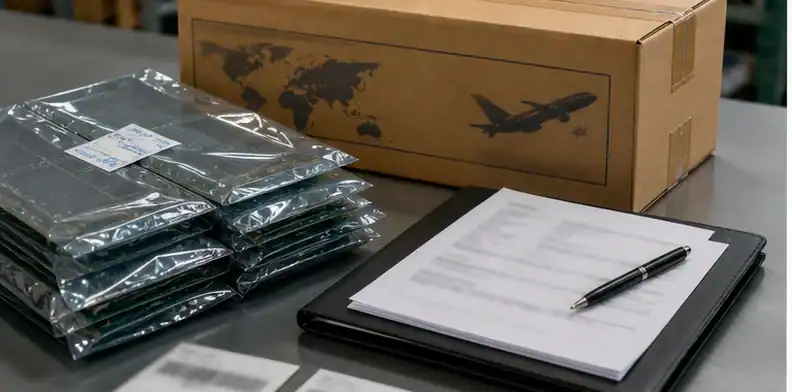
Upgraded freight should be approved in writing. The note should say original freight method, revised freight method, cost owner, ship date, destination, and whether the upgrade closes the remedy. Without that note, the buyer may later receive an invoice for a freight upgrade that nobody clearly approved.
What compensation is realistic on custom PCB orders?
Compensation depends on the PO terms, supplier fault, order value, delay impact, and relationship. For many custom PCB orders, realistic remedies are recovery work, freight support, partial credit, future discount, or replacement scheduling. Large penalty claims are difficult unless the order terms already define them.
Bottom line: ask for a remedy that the supplier can actually approve and that helps the buyer recover the project.
A small prototype order may not support a large damage claim, even if the delay is frustrating. A production order with a clear confirmed date and a documented supplier miss has a stronger case for freight upgrade, expediting at supplier cost, or credit. If the supplier hid the delay until the last moment, the buyer can also ask for better status reporting as part of the remedy.
The buyer should avoid mixing every business loss into one demand. Lost sales, idle labor, missed customer promise, and expedited assembly may be real, but the supplier may not have accepted those liabilities in the PO. A focused remedy request is often more successful: “Please cover upgraded air freight and provide a root-cause and prevention note,” or “Please credit the affected line because the shipment arrived after our scheduled build window.”
If the relationship matters, preserve the next order. The best suppliers will usually work to recover a miss, but they also need clear facts. The buyer who sends dates, impact, and a practical remedy is easier to help than the buyer who sends only blame.
For decision makers, the cleanest compensation request is usually tied to a measurable recovery cost. If the buyer had to upgrade from ocean consolidation to air freight because the supplier missed the confirmed factory ship date, that freight delta is easier to discuss than a broad claim for business loss. If the buyer had to pay the assembler to keep a slot open, the buyer should state the date, amount, and why the boards were the gating item. The supplier may not accept every cost, but the conversation becomes grounded in evidence.
For engineers, the remedy should not sacrifice release control. A delayed order should still pass the same electrical test, visual inspection, finish review, and packing checks. A supplier may offer to “ship first and fix paperwork later,” but that is risky when boards go straight to assembly. If the buyer accepts a recovery shipment, it should still know which records will arrive before receiving inspection.
For owners or finance teams, the question is whether the supplier’s proposed remedy protects the project enough to preserve trust. A small credit may feel satisfying but fail to save the launch. A paid replacement supplier may be faster but create second-source risk. A practical review compares schedule value, technical risk, and relationship value before choosing the remedy.
Keep the new promise visible in the PO record
Once a remedy is agreed, write it back to the PO record. Late-delivery fixes fail when the new promise stays in chat messages while ERP, receiving, and finance still show the old plan.
Record rule: the recovery record should say what changed, why it changed, and who pays for the remedy.
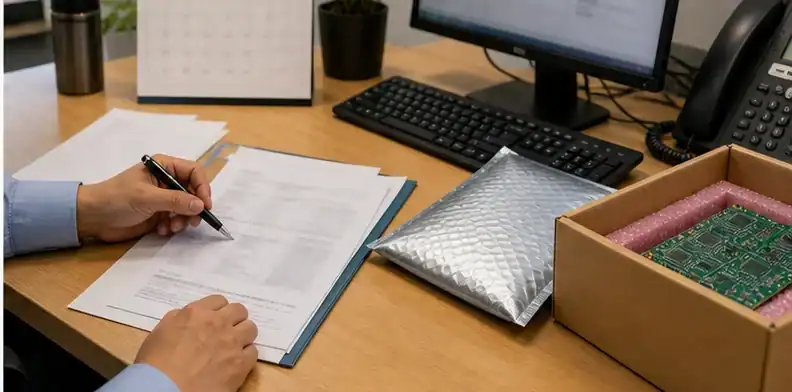
The record should include old confirmed date, new ship date, new delivery expectation, current quantity, partial shipment plan if any, freight method, cost owner, and next update time. If a credit is promised, state whether it applies to the current invoice, a future order, or freight cost.
The buyer should also ask when the next update will arrive. “We will update soon” is not enough when an assembly slot is at risk. A useful update cadence may be daily until shipment, or milestone-based: after plating, after solder mask, after final inspection, after carrier pickup.
If the revised date slips again, do not restart the conversation from zero. Use the recovery record to ask what changed since the last promise and which remedy is still available.
Send QueenEMS the recovery decision package
If your PCB or PCBA project has a late shipment, contact QueenEMS with the PO, confirmed ship date, supplier status, delay reason, quantity needed for the next build, destination, freight method, and the remedy being proposed. We can help review whether the best path is priority completion, split shipment, freight upgrade, evidence request, credit discussion, or a revised production release.
The most useful package includes the supplier’s exact words and the downstream impact. “One week late” means one thing if the assembler has another open line next week. It means something else if components are kitted today and the customer audit is scheduled for Friday.
FAQ
Can I demand compensation for PCB late delivery?
You can ask, but the strength of the request depends on the confirmed date, PO terms, supplier fault, and documented impact. Often the most practical compensation is freight upgrade, partial credit, or supplier-funded recovery work.
Should I ask for air freight if the PCB shipment is late?
Ask for air freight when boards are finished and transit time is the main remaining risk. If boards are still in production or under quality review, first ask for the real production recovery plan.
Is partial shipment useful for a late PCB order?
Yes, if a smaller quantity can start engineering, first article, or urgent assembly. It is not useful if the downstream build requires the full quantity at once.
What if the supplier says the delay was caused by material shortage?
Ask for the material status, available alternatives, revised build date, and any approval needed. Do not approve a substitute unless engineering confirms it fits the stackup and reliability need.
How can QueenEMS support a late-delivery recovery?
QueenEMS can review supplier status, confirm what evidence is still missing, help define recovery options, and support PCB or PCBA handoff decisions so the next build risk is visible.
Sources
Upload your files today · Free DFM check before production · Ship worldwide
Get your PCB prototypes in as fast as 24 hours. We handle FR4, Rogers, and Flex up to 60 layers — free prototypes for 2–4 layer boards, no minimum order.
Just upload your Gerber + BOM — we source every part, assemble, and inspect (AOI + X‑Ray) so you don't have to chase suppliers. Boards ship in as fast as 24 hours.