
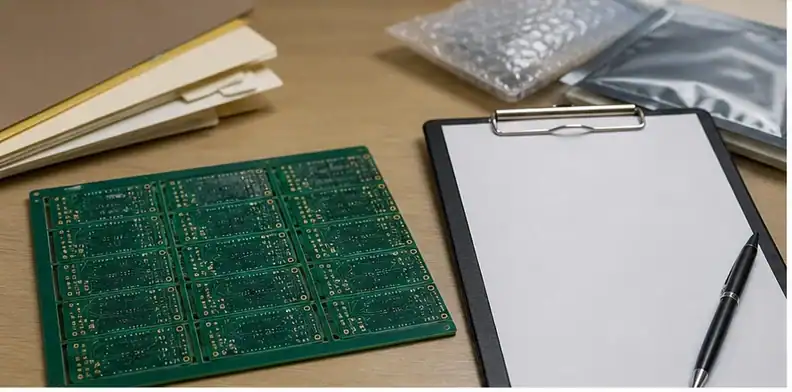
Quick Answer: PCB deviation request approval is a controlled decision to accept, reject, sort, rework, or conditionally use a PCB lot that does not fully match the drawing, PO, or quality requirement. It should be temporary, lot-specific, evidence-based, and approved by the right engineering or quality owner before shipment or assembly use.
Key takeaways – A deviation is not the same as a design change or permanent relaxation. – The supplier must describe the actual nonconformance, affected quantity, cause, and containment. – Approval should include limits, conditions, records, and whether future lots are blocked from repeating it. – High-risk deviations should trigger engineering review, not purchasing-only acceptance.
A PCB deviation request usually arrives at an uncomfortable moment. The boards may already be built, the delivery date may be close, and the supplier may ask whether the buyer will accept a condition outside the original requirement. The wrong answer can either scrap usable boards or release a latent reliability problem. A controlled approval path turns that pressure into a documented decision.
This article is written for the moment when a supplier asks for permission to ship or use boards that do not exactly match the agreed requirement. The buyer may be under delivery pressure, and the supplier may be trying to avoid scrap. That pressure is normal, but it should not decide the answer. The decision should be based on evidence, product risk, approval authority, and whether the deviation is limited to a named lot.
It is also different from a quality claim. In a claim, the buyer usually discovered the nonconformance and asks for remedy. In a deviation request, the supplier is asking for a controlled exception, often before shipment or before the lot is consumed. The article therefore focuses on pre-use decision control rather than blame. That makes it useful for RFQ and production relationships: buyers can tell suppliers what kind of deviation evidence is required before a concession is even considered.
Table of Contents
- Confirm Whether This Is Really a Deviation
- Classify the Risk Before Saying Yes
- Ask for Evidence, Not Just an Explanation
- Write Conditions Into the Approval
- Protect Future Lots From Silent Repeat
- Connect the Decision to Claims and Reorders
Confirm Whether This Is Really a Deviation
First confirm that the issue is truly a deviation request. A deviation is a temporary request to use or ship material that does not fully meet a defined requirement. It is not a design change, not a supplier preference, not a material substitution for future use, and not a casual waiver of inspection.
For PCB fabrication, deviations can involve cosmetic appearance, solder mask condition, dimensional limits, surface finish appearance, marking, panel condition, X-outs, missing documentation, minor overbuild or underbuild, shipment timing, or process evidence. Some are low risk. Some affect assembly yield, fit, electrical function, or field reliability.
If the issue is caused by a buyer revision or unclear file release, review the PCB purchase order review and CAM records first. If the supplier is proposing a different laminate, use the PCB material substitution approval path instead. Keeping those paths separate prevents a one-time deviation from becoming uncontrolled change.
A clear definition prevents misuse. Suppliers sometimes use “deviation” for anything that feels inconvenient: late records, substitute materials, missing tests, or a drawing interpretation. The buyer should push the request into the right lane. If the requirement was wrong, use change control. If the supplier did not meet the requirement, use deviation or nonconformance disposition. If the problem affects future builds, do not solve it with a one-lot approval.
Classify the Risk Before Saying Yes
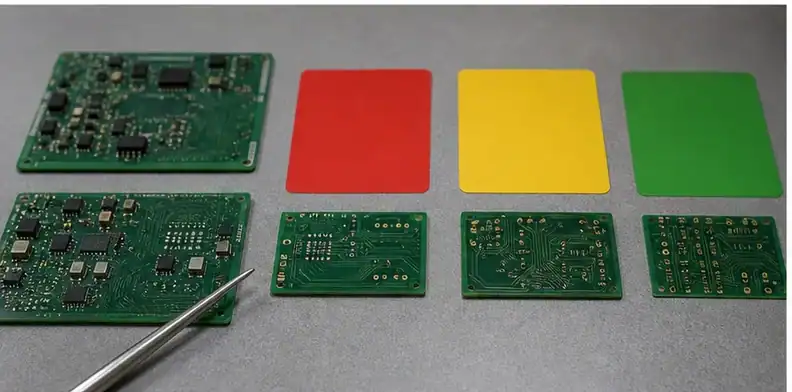
Classify risk before responding. The same visible issue can be harmless on a low-risk prototype and unacceptable on a production board with fine-pitch assembly, high voltage spacing, controlled impedance, harsh environment exposure, or customer-specific appearance requirements. The approver should understand how the board will be used.
Use four questions. Does the condition affect fit? Does it affect soldering or assembly yield? Does it affect electrical performance or reliability? Does it violate a customer, regulatory, or contractual requirement? If the answer to any question is yes or unknown, purchasing should not approve alone.
The approval owner should match the risk. Engineering should review design, stack-up, impedance, holes, and geometry. Quality should review acceptance, records, traceability, and concessions. Purchasing can coordinate price, delivery, and supplier communication, but the decision itself should come from the technical owner when product risk is involved.
Risk classification should consider where the board sits in the product lifecycle. A one-off engineering build may tolerate a cosmetic condition that a customer shipment cannot. A qualification build may be stricter than early prototypes because it is intended to prove the supplier’s normal process. A production lot used in a regulated or high-reliability product may require customer approval even when the buyer’s internal team is comfortable with the risk.

Ask for Evidence, Not Just an Explanation
A supplier explanation is not enough. The request should include the part number, revision, PO, lot quantity, affected quantity, clear description of the nonconformance, photos or measurements, inspection method, suspected cause, containment action, and proposed disposition. If the supplier cannot identify the affected population, the buyer cannot understand the risk.
For visual or dimensional deviations, request evidence that shows the worst condition, not only the best sample. For documentation deviations, ask whether the missing record can be reconstructed, whether it was never created, or whether the test was not performed. For surface finish or solderability concerns, ask whether additional testing is needed before assembly.
The buyer’s own incoming data matters too. If the deviation is discovered after receipt, preserve samples and connect the evidence to PCB incoming inspection. A strong deviation decision compares supplier evidence with receiving evidence instead of relying on whichever email arrived first.
The evidence package should be specific enough for someone outside the email thread to understand. A photo named with the defect location, a count of affected boards, and a drawing reference is far better than “see attached.” If the supplier says the condition has no functional effect, ask what evidence supports that conclusion. The answer may be visual criteria, measurement data, solderability testing, electrical test, or engineering reasoning, depending on the defect.
Write Conditions Into the Approval
Approval should state the disposition and the conditions. Possible outcomes include reject, return, sort, rework, use-as-is for a named lot, approve with additional inspection, approve for prototype only, approve after customer signoff, or hold pending engineering test. A vague “approved” is too weak for production control.
Write the limits clearly. Name the lot, quantity, revision, customer or internal order, expiration of the approval, required labels or records, and whether the condition may recur. If the deviation affects only nonfunctional cosmetic appearance, say that it does not approve changes to material, copper, stack-up, finish, or future lots.
If the deviation changes cost, lead time, or shipment responsibility, tie it to the commercial record. If the deviation affects delivery documents or final shipment release, link it to the PCB quality documents before shipment so the accepted exception travels with the lot.
Approval conditions are where many teams lose control. If the buyer accepts boards for prototype use only, the record should say prototype only. If additional inspection is required before assembly, say who performs it and what result is needed. If accepted boards must be labeled or segregated, say how. If the supplier owes corrective action before the next lot, put that next-lot blocker in writing.
Protect Future Lots From Silent Repeat
A deviation approval should protect future lots. Many supplier problems become repeated problems because the first concession was treated as a new normal. The approval should state whether corrective action is required, whether the next lot must show added evidence, and whether the drawing, PO note, or inspection plan needs clarification.
Do not use deviation approval to rewrite the design permanently. If the requirement is no longer needed, create an engineering change. If the supplier’s alternate material is acceptable, define it in the approved material list. If the inspection limit is unrealistic, update the drawing or acceptance note. If the supplier made an avoidable process error, request containment and corrective action.
This is also where a golden sample can help or mislead. If the deviation is compared against a retained sample, make sure the sample is controlled through PCB golden sample approval and represents the current revision. A random old board should not override the drawing.
Future protection also includes pricing and schedule behavior. A supplier should not receive the message that deviations are a normal way to ship faster. If the deviation saved scrap but created buyer review work, record that cost in supplier performance. If the buyer’s unclear drawing caused the issue, fix the drawing before blaming the supplier. The best deviation systems are fair, but not casual.
Connect the Decision to Claims and Reorders
Deviation decisions should be stored with claims, reorders, and supplier performance data. If the lot later fails in assembly, the team must know whether the accepted condition could be related. If a repeat order is placed, the team must know that the old deviation was temporary and not automatically approved again.
For supplier management, track frequency, severity, response quality, and repeat occurrence. One low-risk deviation from a transparent supplier may be acceptable. Repeated deviation requests from the same process area may indicate weak control and justify a supplier review.
For QueenEMS review, send the deviation description, photos, affected quantity, original requirement, application risk, required delivery date, and whether the lot is prototype, qualification, or production. QueenEMS can help separate use-as-is, sort, rework, reject, and future corrective-action decisions before shipment or assembly.
Deviation records become important during claims. If an assembly defect appears later, the team will ask whether an accepted deviation contributed. If the record is specific, the answer may be quick. If the approval was vague, the team may lose days reconstructing what was approved, who approved it, and whether the condition was present in the failed units. That is why the record should travel with the lot history.
Before future RFQs, tell suppliers how deviations must be handled. State that approval is required before shipment, that the request must name affected quantity and evidence, and that one-time acceptance does not approve recurrence. This keeps the relationship practical. It does not punish suppliers for being transparent; it rewards clear evidence and prevents avoidable surprises.
For urgent builds, define an escalation path in advance. If the deviation affects delivery but not function, purchasing may coordinate quickly. If it affects solderability, dimensions, material, impedance, or customer acceptance, engineering and quality should review. That rule saves time because everyone already knows who owns the decision when pressure appears.
For suppliers, a clear rule is helpful rather than hostile. It tells them what evidence to collect before asking for a concession and prevents the awkward situation where finished boards are waiting while the buyer asks basic questions. A good supplier deviation request should already include the requirement, the measured condition, affected quantity, containment status, root-cause hypothesis, and proposed next-lot prevention. When that information is missing, the buyer is not ready to approve.
Buyers should also decide whether commercial compensation belongs in the same conversation. A low-risk cosmetic deviation may be acceptable with no price change, while a documentation miss, sorting burden, or late disclosure may deserve credit or corrective-action commitment. Keep the technical disposition separate from the commercial negotiation. First decide whether the boards can be used safely. Then decide whether the supplier performance record, price, or schedule should reflect the deviation.
If the buyer needs customer approval, do not paraphrase the supplier request loosely. Send a controlled summary with photos, measured data, proposed disposition, and the exact limit of the approval. Customer-facing deviation language should be narrower than internal discussion because it may become part of the product history.
When responding to the supplier, use a decision format rather than a conversation format. State “rejected,” “approved for this lot only,” “approved after sorting,” “approved for prototype use only,” or “hold pending additional evidence.” Then name the condition, affected quantity, required record, and whether the next lot is blocked until corrective action. This makes the supplier answer usable by production, quality, and purchasing instead of leaving everyone to interpret the tone of an email. It also gives the buyer a clean record if the same issue appears in receiving inspection, assembly yield review, customer complaint, or field failure analysis after the boards have already been consumed in a larger build. That written trail is often the difference between a controlled concession and an undocumented supplier escape during production ramp.
FAQ
Can purchasing approve a PCB deviation request?
Only for commercial or delivery-only issues. Technical deviations should be approved by engineering, quality, or the customer authority responsible for the requirement.
Is a deviation the same as an ECN?
No. A deviation is temporary and lot-specific. An ECN changes the approved design or requirement for future builds.
Should an approved deviation ship with the boards?
Yes, when the deviation affects acceptance records or customer traceability. The shipment should identify the approved condition and the lot it applies to.
Can a supplier repeat an approved deviation on the next lot?
No, unless the approval explicitly allows it. Most deviations should be one-time concessions with corrective action or requirement clarification.
Sources
Written by the QueenEMS Engineering Team
Upload your files today · Free DFM check before production · Ship worldwide
Get your PCB prototypes in as fast as 24 hours. We handle FR4, Rogers, and Flex up to 60 layers — free prototypes for 2–4 layer boards, no minimum order.
Just upload your Gerber + BOM — we source every part, assemble, and inspect (AOI + X‑Ray) so you don't have to chase suppliers. Boards ship in as fast as 24 hours.