

Quick Answer: Hybrid PCB desmear plating control should prove that drilled holes were prepared and plated for the actual mix of PTFE, low-loss material, and FR4. The buyer should ask for process limits, representative microsections, copper evidence, and a production hold rule before the supplier starts a build that cannot be easily reworked.
Key takeaways
- Mixed dielectrics can need different hole-wall preparation than ordinary FR4.
- Electrical continuity alone does not prove that plated barrels are ready for stress, storage, or assembly.
- Microsection evidence should represent the risky hole groups, not only the easiest coupon.
- The RFQ should state which desmear or plating change must return to engineering or quality.
The desmear and plating question sits between design theory and factory process. A layout may be correct, and a stackup may be approved, yet the holes still depend on drilling quality, resin or smear removal, surface activation, copper deposition, and final plating thickness. A hybrid board makes that path less forgiving because the hole wall can pass through materials that do not respond the same way to preparation chemistry.
This page is narrower than hybrid PCB via reliability. That article asks whether vias are proven for release. This article asks what the buyer should request before the build so the desmear and plating process is visible, comparable, and recorded.
Table of Contents
- Map the hole groups before the supplier quotes
- Separate drilling quality from desmear control
- Confirm how non-FR4 surfaces are activated
- Specify copper evidence that supports release
- Choose representative microsection locations
- Define what stops production
- Compare supplier replies by process scope
- Connect the evidence to shipment documents
- Lock the process answer for repeat production
Map the hole groups before the supplier quotes
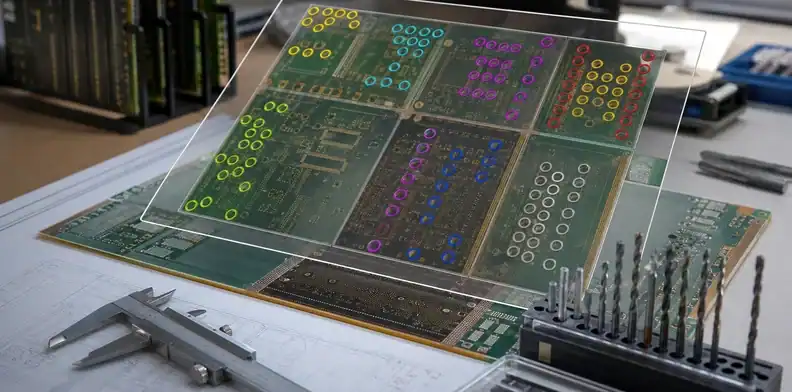
Start with a hole map, not a general request for good plating. Hybrid boards may contain through holes, buried structures, RF launch vias, shield vias, press-fit holes, castellations, plated slots, or dense ground fences. Each group may have different diameter, aspect ratio, layer span, material exposure, and plating consequence.
The buyer should ask the supplier to identify which hole groups carry special process risk. A small low-current tooling hole does not deserve the same evidence as a plated RF launch via that crosses a low-loss core and FR4 support layer. The quote can then include the right review without turning every feature into an expensive qualification.
| Hole group | Process question | Buyer evidence |
|---|---|---|
| RF launch via | Does the barrel cross a sensitive dielectric boundary? | Local microsection or launch review |
| Through via | Is aspect ratio within normal capability? | Panel coupon section |
| Blind or buried via | Is the sub-lamination plated before final press? | Build sequence and section |
| Plated slot | Are corners and sidewalls covered? | Slot section or photo evidence |
Process rule: Name the risky hole groups before asking for desmear and plating proof.
Separate drilling quality from desmear control
Drilling creates the starting condition. Desmear or hole preparation cleans and activates that condition. Do not merge those steps into one supplier claim. A hole can have acceptable location and diameter while the wall condition is still poor for copper adhesion. A different hole can show smear or roughness that no plating thickness can fully rescue.
Ask for the drill stack, tool control, entry or backup method, and any special treatment for the material set. For hybrid boards, the buyer is not trying to dictate every factory recipe. The buyer is asking whether the supplier has recognized that PTFE-like and glass-epoxy surfaces may need different preparation discipline.
Use processed Gerber approval after CAM if the supplier changes hole size, annular ring, or drill strategy. That keeps manufacturing fixes from becoming silent design changes.
Drill check: A clean quote separates drill capability from the later hole-wall preparation step.
Confirm how non-FR4 surfaces are activated
FR4 processing habits cannot always be applied to low-loss or PTFE-based materials without review. Some dielectric surfaces may need plasma treatment, sodium-based treatment, adjusted chemistry, or supplier-specific controls before reliable copper deposition. The buyer does not need to approve the chemistry formula, but it should know whether the supplier has a defined route for the material set.
Ask the supplier to state whether the process is standard for that laminate combination or whether engineering review is needed. A useful answer mentions the material family, affected layers, hole groups, and evidence returned. A weak answer says only that the factory can make high-frequency boards.
This is also where material substitution can change the process path. If the laminate or bond system changes, the hole preparation answer may need to be repeated, not copied from the old quote.
Activation signal: The supplier should identify whether the actual exposed dielectric surfaces are inside its controlled preparation process.
The buyer should not ask for proprietary bath settings, but it can ask for a process statement that is specific enough to be trusted. “Controlled PTFE or low-loss preparation route used for affected holes” is more useful than “standard process.” The statement should connect to the material set and hole group, not only to a general factory capability.
If the supplier cannot answer without checking with process engineering, that is not a failure. It is useful evidence that the topic is technical and should be resolved before release. A fast but vague answer can be riskier than a slower answer that names the process boundary.
Specify copper evidence that supports release
Plating evidence should answer continuity, thickness, coverage, and local acceptability. A final electrical test confirms that a network conducts at the test moment. It does not show whether the copper barrel is thin at one knee, poorly bonded to a treated surface, or weak at a material transition.
For a production release, ask for the evidence that matches risk: microsection photos, copper thickness measurement, plating record, traveler reference, or first-article report. The evidence can be simple for low-risk work and fuller for RF, high-reliability, thick boards, small vias, or first production after a material change.
| Evidence | What it supports | What it does not prove alone |
|---|---|---|
| Electrical test | Open/short status | Barrel condition or adhesion |
| Microsection | Local barrel and dielectric interface | Every hole location |
| Plating record | Process batch control | Feature-specific geometry |
| First article report | Release baseline | Future changes unless tied to revision |
Evidence check: Use electrical test as one release input, not as the only proof of hybrid hole reliability.
For high-value assemblies, the buyer should decide whether evidence is needed before shipment or before the remaining production quantity. A first article hold can catch plating concerns while the lot is still small. A shipment-only report may be acceptable when the construction is already known and the supplier history is strong.
The PO should also state whether missing evidence delays release. Without that rule, the supplier may ship boards and send the report later, leaving receiving to decide whether to hold assembly. That is a poor place to discover a process question.
Choose representative microsection locations
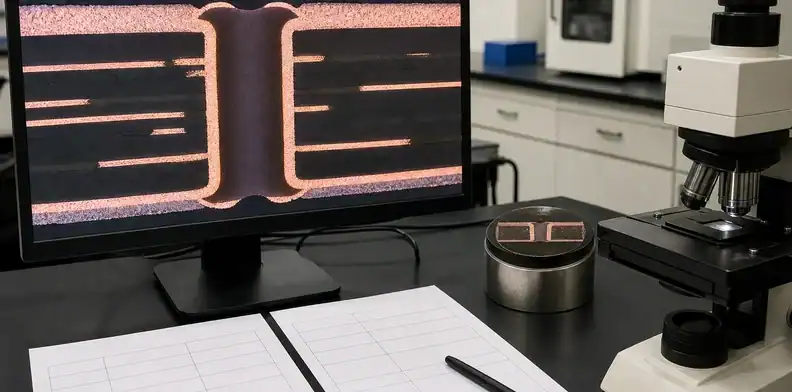
A microsection should represent the construction risk, not the easiest place to cut. For a hybrid board, the buyer may need a section through the smallest critical hole, the highest aspect-ratio through hole, a via near an RF transition, a plated slot, or a hole that crosses the mixed-material interface.
Ask the supplier how the section location is selected. If the section is only a generic panel coupon, engineering should decide whether that is enough. The general format belongs in the PCB microsection report requirements article; here the decision is which hybrid feature the section should represent.
The report should identify part, revision, lot, panel or coupon, location, scale, result, and disposition. Without those fields, the buyer receives an image but not a release record.
Section call: Representative location matters as much as the microsection image itself.
Define what stops production
A hold rule prevents the supplier from continuing after a hole-preparation question becomes visible. The rule can be simple: pause if the material set differs from the approved stackup, if the supplier cannot identify the controlled preparation process, if a critical microsection is rejected, or if CAM changes hole geometry without engineering approval.
This does not mean every minor process adjustment needs buyer signoff. The supplier should retain normal process control. The buyer needs signoff only when the change affects released geometry, material identity, evidence scope, or acceptance condition.
For a first order, place the hold point before final production quantity or before shipment, depending on the risk. For repeat orders, the hold point should trigger only when the prior approved process path changes.
Hold point: Stop for changed product definition or failed evidence, not for routine factory controls already inside the approved process.
Compare supplier replies by process scope
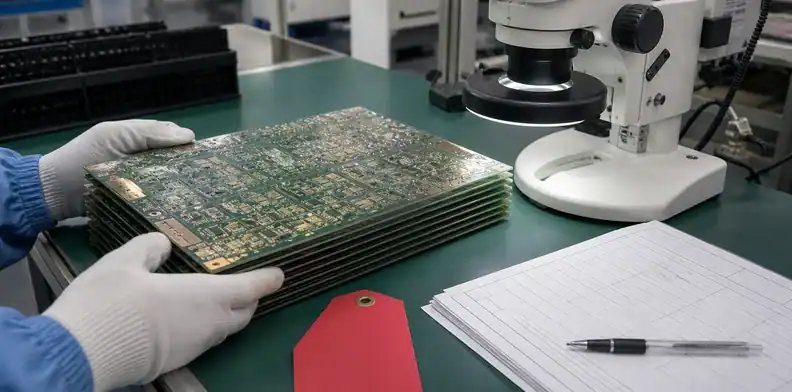
Two suppliers may both say they can plate hybrid boards. The useful comparison is whether they identify the material route, hole groups, evidence, and hold rule. A confident but vague answer is weaker than a shorter answer that names the actual process boundary.
Purchasing can compare replies with four questions: What hole groups are special? What preparation process family is used? What evidence is included? What condition pauses production? Those four answers keep the buyer from choosing based only on price.
| Reply | Buyer reading | Action |
|---|---|---|
| “We make RF PCBs” | Capability claim only | Ask for hole process evidence |
| “Plasma route for this material set” | Better process match | Ask for report and hold rule |
| “Microsection included” | Good start | Confirm location and fields |
| “No extra evidence” | May fit low-risk work | Engineering should accept the lighter scope |
Quote signal: Prefer the supplier reply that describes the process boundary, not the reply that only states capability.
The comparison should include lead time. A supplier that includes microsection review may look slower in the quote, but it may be faster than building the full lot and then holding boards at receiving because evidence is missing. A second supplier may be faster for a familiar material set but weaker for a PTFE or low-loss interface it rarely builds.
For a purchasing manager, the right question is not “Which supplier says yes?” It is “Which supplier has defined the hole groups, process route, evidence, and release timing clearly enough for this order?”
Connect the evidence to shipment documents
Shipment evidence should connect the built lot to the released process decision. The package may include electrical test, microsection, material traceability, plating records, first article evidence, and any accepted deviation. The buyer should define which files ship with the boards and which remain available on request.
Tie the package to PCB quality documents before shipment so receiving knows what to expect. If the quote says microsection is included, the receiving team should not have to chase it after the boards arrive.
For startup and low-volume orders, this can be a compact folder. The key is not paperwork volume; the key is that the evidence points to the correct part, revision, lot, and decision.
Shipment rule. The hole evidence is useful only when receiving can match it to the shipped boards.
A short receiving note can state whether the lot is released, held for missing evidence, or accepted with a recorded exception. That note is often more useful than a long email chain because it tells assembly whether it may proceed.
Lock the process answer for repeat production
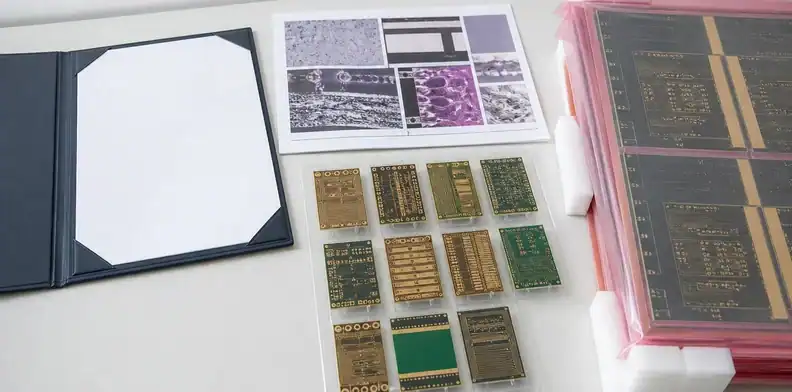
The first accepted build should create a controlled process baseline. Save the material set, hole map, evidence returned, accepted deviations, and any supplier process note that affects release. On the next order, ask whether the same route and evidence level apply.
This protects the buyer when quantity grows, materials change, or a second supplier is introduced. A repeated order should not restart the entire engineering debate, but it also should not silently inherit a different desmear or plating route.
Record rule. Repeat production should either reuse the accepted hole-preparation evidence path or reopen the approval before release.
For a second build, do not simply ask whether the board is the same part number. Ask whether the same material set, drill strategy, preparation route, plating evidence, and accepted microsection location are unchanged. A supplier may keep the part number while changing a process detail that matters to the buyer.
If a second supplier is added, the old evidence becomes a comparison baseline. It does not prove the new supplier’s process, but it tells engineering which questions were worth controlling the first time.
Sources
FAQ
Is electrical test enough for hybrid PCB plated holes?
No. Electrical test confirms continuity at the test moment, but it does not show local barrel condition, adhesion, or copper quality at a mixed-material interface.
Should the buyer specify plasma or chemistry?
Usually not in recipe detail. The buyer should ask the supplier to state whether the chosen material set is covered by a controlled preparation route and what evidence will prove it.
Which holes need microsection review?
Select the hole groups that carry risk: smallest critical vias, high aspect-ratio holes, RF launch vias, plated slots, or holes crossing material interfaces.
Can a material substitution change desmear risk?
Yes. A different laminate, bond system, or copper foil can change drilling and preparation assumptions, so the process answer may need to be repeated.
If your PCB or PCBA project has mixed dielectrics, plated-hole risk, RF launch holes, plated slots, or first-order evidence requirements, send QueenEMS the stackup, drill table, Gerber or ODB++ files, and required report format through the contact page. QueenEMS can help review whether the RFQ asks for the right desmear, plating, microsection, and shipment evidence.
Written by the QueenEMS Engineering Team
Upload your files today · Free DFM check before production · Ship worldwide
Get your PCB prototypes in as fast as 24 hours. We handle FR4, Rogers, and Flex up to 60 layers — free prototypes for 2–4 layer boards, no minimum order.
Just upload your Gerber + BOM — we source every part, assemble, and inspect (AOI + X‑Ray) so you don't have to chase suppliers. Boards ship in as fast as 24 hours.