
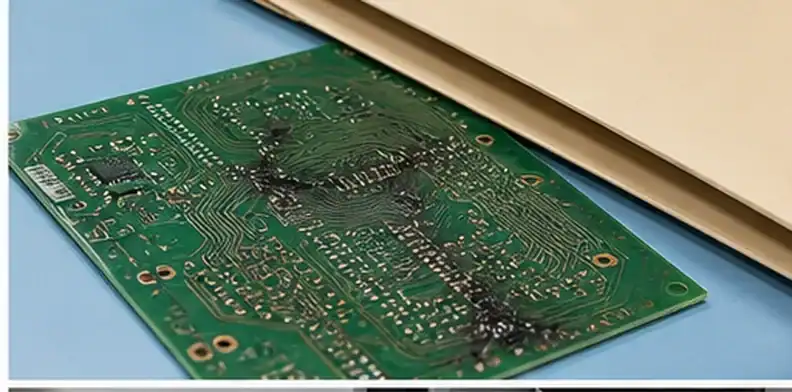
Quick Answer: PCB defect liability terms should separate bare-board remake, board credit, assembly labor, component scrap, evidence, and approval limits before release. The safest PO also says which photos, inspection records, lot labels, and supplier responses are enough to open or close a claim.
Key takeaways
- Define the remedy before high-value components are assembled.
- Separate confirmed bare-board defects from assembly-process losses.
- Preserve photos, samples, lot labels, and test readings before arguing cost.
- Put the claim cap, claim window, and approval owner in the PO.
The hard question usually appears after value has already been added: defective boards may have consumed components, labor, and schedule. A useful liability term decides before release which losses are board-only remedies, which need joint technical review, and which are outside the supplier’s responsibility.
Table of Contents
- Define the liability question before assembly starts
- Separate board defect from assembly process loss
- What evidence proves the defect caused the loss?
- Set remedy levels before the PO is released
- Decide when component and assembly cost can be discussed
- Use incoming inspection as the first filter
- How should first article protect the production lot?
- What should the claim package include?
- Send QueenEMS the defect-liability review package
Define the liability question before assembly starts
The buyer should decide whether the product justifies a stronger clause before assembly value is added. A low-cost lab build may accept board replacement only, while a build with scarce ICs or programmed modules may need a defined review path for added-value loss.
This boundary should be visible before the buyer releases high-value components. Once components are soldered, the dispute has more money attached and less room for calm root-cause work.
A clear cap protects both sides because it prevents a quality discussion from becoming an unlimited commercial argument. Buyers with expensive components should decide early whether board-only remedy is enough or whether the project needs a different supplier qualification path.
PCB defect liability should be discussed before production, not after a failed lot. A purchase order should define the normal remedy for a confirmed board defect and the evidence needed before any larger cost discussion starts.
This article is not legal advice. It gives a practical purchasing and quality framework for custom PCB and PCBA buyers. Contract language and local law should be reviewed by qualified counsel when the exposure is large.
The practical boundary is simple: board remake or credit is usually easier to discuss than consequential losses. Component scrap, assembly labor, and customer penalties need stronger evidence and clearer pre-agreed terms.
| Remedy layer | When it applies | Buyer decision |
|---|---|---|
| Board remake | Confirmed fabrication defect | Common base remedy |
| Freight support | Supplier-caused urgent replacement | Useful schedule remedy |
| Assembly labor | Added-value loss | Needs stronger evidence |
| Component scrap | High-value exposure | Needs pre-agreed review rule |
Claim boundary: Treat board remake as the base remedy and require stronger evidence before moving into component scrap, assembly labor, or customer-delay cost.
Separate board defect from assembly process loss
Board-defect liability should be separated from assembly-process loss before the project reaches SMT. A bare-board supplier can reasonably answer for confirmed fabrication defects, but component scrap and assembly labor need stronger evidence because other process steps may have contributed.
The supplier should also know the buyer’s inspection plan. If the buyer will run incoming inspection, first article, or sample assembly, the defect-liability wording can use those checkpoints instead of waiting for a full-lot failure.
A mixed PCB and PCBA supplier can make the boundary easier to manage, but it does not remove the need for evidence. The buyer should still know whether the issue is bare-board fabrication, assembly processing, or design data.
Root-cause language should avoid guessing. A solder joint failure, lifted pad, or intermittent circuit may involve fabrication, assembly, handling, design margin, or test method. The first response should preserve samples and stop new value from being added until the evidence is stable.
A board defect and an assembly process loss are different claims. A bare-board short, open, wrong finish, hole defect, or wrong revision may come from fabrication. Tombstoning, overheating, wrong stencil, wrong profile, or component polarity may come from assembly.
The buyer should not combine all losses into one number before root cause is known. If a defect appears after assembly, pause the lot, preserve failed boards, and record which process step exposed the issue.
A good PCB supplier quality claim separates symptom, evidence, suspected cause, requested remedy, and affected quantity.
| Evidence type | What it proves | How it supports the claim |
|---|---|---|
| Photos | Visible defect or damage | Good first proof |
| Electrical readings | Open/short or intermittent fault | Connects symptom to net |
| Retained samples | Supplier confirmation | Preserves claim |
| Lot labels | Traceability | Prevents mixed-lot dispute |
Proof rule: A claim becomes credible when the evidence shows defect location, lot identity, discovery timing, and the point where added value was consumed.
What evidence proves the defect caused the loss?
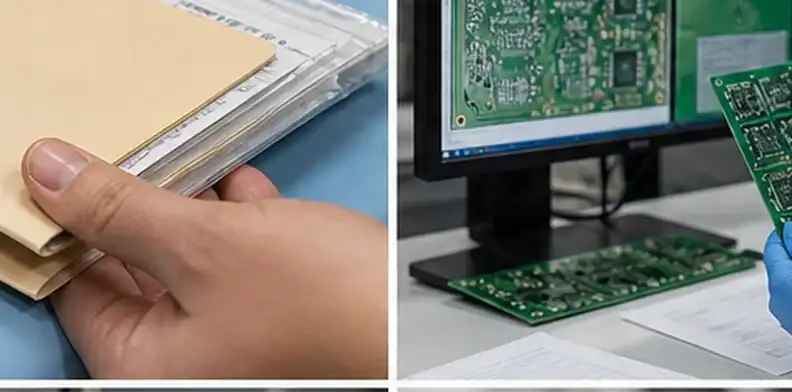
Useful evidence connects the defect to the lot, location, timing, and process step where the loss occurred. Photos alone rarely settle the claim; the buyer also needs failed samples, inspection readings, lot labels, and a record showing whether the issue existed before added-value work.
When evidence is incomplete, the buyer can still request containment. Containment means stop shipment, isolate remaining boards, hold components, and prevent more cost while root cause is being reviewed.
When the defect is intermittent, the evidence plan should include handling and environmental notes. A problem that appears only after thermal cycling or flexing needs a different review than a visible open found at receiving.
The strongest claim packages show the defect location on the board and the moment it was discovered. A location map tied to reference designator, net name, panel position, or lot label helps the supplier reproduce the issue instead of debating broad descriptions.
Evidence decides whether a larger claim is credible. The buyer should connect the defect to the order revision, lot, board location, test result, photos, cross-section, assembly step, and failed quantity.
A via open found before assembly may support remake or credit. The same via open found after expensive BGAs are placed needs a stronger chain showing that the defect existed before assembly and caused the loss.
Avoid shipping the entire dispute as photos only. Photos help, but electrical readings, location map, inspection record, and retained samples give the supplier a fair chance to confirm root cause.
| Control point | When to use it | Liability effect |
|---|---|---|
| Incoming inspection | Before value is added | Find obvious issues |
| First article | Before full assembly | Protect expensive kits |
| Supplier RCA | After confirmed defect | Prevents repeat |
| PO cap | Before release | Defines commercial boundary |
Set remedy levels before the PO is released
A remedy level should be written before the PO is released, not invented after a failure. The buyer can choose board remake, credit, expedited replacement, joint review of assembly loss, or a capped commercial remedy depending on product value and evidence strength.
A claim window also matters. Defects reported months later after storage, handling, or assembly changes are harder to separate from later process effects.
A cap can be written as a commercial ceiling while still allowing joint review for special cases. That gives purchasing a known approval limit and prevents engineering from promising compensation that finance cannot approve.
For critical builds, the PO can include a staged remedy without promising impossible compensation. For example, confirmed bare-board defect may trigger remake and expedited freight, while added-value loss requires joint review with retained samples and documented assembly records.
Remedy levels should be written in layers. The base layer can be remake, repair, credit, or refund for defective boards. The second layer can define whether expedited remake or freight support applies. The third layer can state when assembly labor or component loss is eligible for review.
Some suppliers limit liability to board value. Some buyers require broader terms for critical builds. The mistake is leaving the question silent until the first high-value defect appears.
The PO needs a clear cap, evidence rule, claim window, and owner for approving exceptions.
| Decision owner | What they control | Record to keep |
|---|---|---|
| Engineering | Root cause and usability | Approves technical risk |
| Quality | Evidence and containment | Controls quarantine |
| Purchasing | Commercial remedy | Owns PO record |
| Supplier | Corrective action | Confirms factory response |
Decision rule: Remedy language works best when engineering owns the cause, quality owns containment, and purchasing owns the commercial ceiling.

Decide when component and assembly cost can be discussed
Component and assembly cost should be discussed only when the buyer can show a credible connection between the board defect and the added-value loss. A pre-assembly hold point, supplier confirmation, incoming inspection, or first article gives both sides a fair evidence trail before the full expensive kit is consumed.
A buyer should also decide what loss is outside the supplier’s control. Incorrect component selection, unapproved rework, over-temperature profile, or skipped incoming inspection can weaken a broader claim even when the board has a defect.
Component and assembly cost should be discussed only when the buyer can show that reasonable incoming inspection would not have caught the defect, the board defect caused the loss, and the assembly step followed the agreed process.
If a buyer skipped reasonable inspection on a high-risk lot, the claim becomes weaker. If a supplier provided false test data or shipped the wrong revision, the buyer’s position becomes stronger.
For expensive components, ask before release whether first article, sample assembly, or extra bare-board testing is required.
The buyer should also define what evidence stops the line. A suspected bare-board defect found during placement may justify pausing the remaining kit, while a cosmetic concern found after full assembly may require a different review path. That boundary should be practical enough for production staff to follow under schedule pressure.
Use incoming inspection as the first filter
Incoming inspection is the first practical filter because it happens before expensive components and labor are consumed. The inspection does not need to be excessive, but it should match the known risk: revision, quantity, visible damage, finish, board thickness, critical mechanical features, and any supplier-noted exception.
Incoming inspection also protects the supplier from unfair claims. A documented receiving pass or fail gives both sides a timestamp for when the problem was visible.
Incoming inspection does not need to be excessive. It needs to be proportional to what will happen next. Boards receiving low-cost hand soldering may need a lighter gate than boards receiving expensive BGAs or automotive-grade components.
Incoming inspection is the first defense against uncontrolled liability. It should verify quantity, revision, obvious damage, finish, key dimensions, and any high-risk features before boards enter SMT.
Use PCB incoming inspection to decide what can be checked at receiving and what requires supplier records or lab support.
When inspection finds a possible issue, isolate the lot. Mixing suspect boards with good boards destroys traceability and makes cost recovery harder.
Acceptance rule: Receiving inspection should be strong enough to protect high-value assembly, but not so broad that it turns every board into a laboratory project.

How should first article protect the production lot?
First article should include the risks that matter for the product, not only a visual pass. For boards with fine-pitch parts, impedance, or programming, the first article record may need electrical and functional checks.
First article works best when the stop point is real. If the line continues building while the first unit is still under review, the buyer has not reduced liability exposure; it has only created documentation after risk has already expanded.
First article protects the production lot when board risk and component value are high. It gives the buyer a controlled point to find board or assembly interaction issues before the full kit is consumed.
A first article is not the same as AOI. AOI sees visible placement and solder features; first article can check fit, electrical behavior, documentation, programming, and special requirements. Link this to first article inspection vs AOI when the build is high risk.
The PO can require approval after first article before the remaining boards are assembled.
What should the claim package include?
A clean claim package should be calm enough that a new quality engineer can understand it without reading the whole email history.
The claim package should include what remedy the buyer wants now. Replacement, credit, sort, repair, root-cause report, freight upgrade, or component-cost review are different requests and should not be buried in one angry message.
The claim package should contain PO, revision, lot labels, shipment records, inspection result, failure location, affected quantity, photos, test readings, assembly step, component cost if relevant, and requested remedy.
The buyer should also state what has been paused: boards quarantined, components retained, assembly stopped, or samples held for supplier review.
For a major loss, ask for root-cause review and prevention action before negotiating numbers.
A good package also separates facts from requests. The facts describe the lot, symptom, location, and evidence; the request describes remake, credit, freight support, sorting, or broader added-value review. Mixing those two parts makes the claim harder for the supplier’s quality team to process.
Buyer call: Send facts first and remedy requests second; that order keeps the claim technical before it becomes a commercial argument.
Send QueenEMS the defect-liability review package
QueenEMS can help separate technical evidence from commercial demand so the claim does not lose credibility by asking for everything before proving the defect.
The most useful review separates confirmed board defect, suspected process issue, added-value loss, and remedy request. That separation makes a difficult claim possible to evaluate without turning every defect into an unlimited commercial argument.
If your PCB or PCBA project has a defect claim or needs liability terms before release, contact QueenEMS with the PO, Gerbers, supplier quality response, incoming inspection notes, assembly status, failed samples, and claimed cost boundary.
FAQ
Can PCB defect liability exceed the board price?
Sometimes, but it should not be assumed. Liability beyond board value usually needs a pre-agreed clause, retained samples, clear root cause, and proof that the defect existed before assembly and caused the added-value loss.
What evidence do I need before claiming component scrap?
Prepare failed samples, defect photos, lot labels, inspection records, electrical readings, assembly step notes, and the affected BOM cost. The stronger package shows when the defect was found and why normal incoming inspection could not reasonably catch it earlier.
Should I inspect every board before assembly?
Not every project needs a full board-by-board inspection, but every high-value assembly needs a receiving gate proportional to the risk. At minimum, check revision, quantity, visible damage, finish, labels, and any known critical features before expensive components are consumed.
Can first article reduce defect-liability risk?
Yes. A real first article hold gives the buyer a chance to catch board or assembly interaction problems before the full kit is consumed. It only works if production actually pauses until the first article evidence is reviewed.
Can QueenEMS help prepare a supplier quality claim?
QueenEMS can help organize the claim into symptom, lot, location, evidence, suspected cause, requested remedy, and next containment step. That structure keeps the discussion technical before it becomes a commercial argument.
Sources
Upload your files today · Free DFM check before production · Ship worldwide
Get your PCB prototypes in as fast as 24 hours. We handle FR4, Rogers, and Flex up to 60 layers — free prototypes for 2–4 layer boards, no minimum order.
Just upload your Gerber + BOM — we source every part, assemble, and inspect (AOI + X‑Ray) so you don't have to chase suppliers. Boards ship in as fast as 24 hours.