
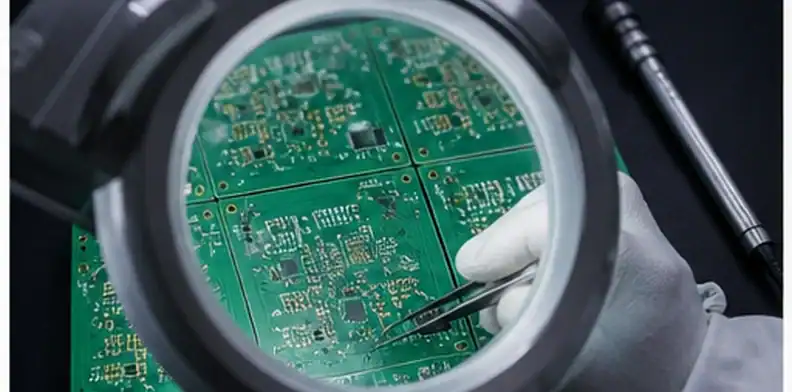
Quick Answer: A PCB supplier quality claim should connect the defect, the original requirement, the affected lot, objective evidence, containment action, root cause, corrective action, and repeat-order prevention. The minimum package usually has 6–8 items: photos, inspection data, lot ID, specification, sample status, quantity affected, requested remedy, and approval history.
Key takeaways – Start with evidence, not anger; a claim without lot and specification data is weak. – Preserve physical samples before returning, reworking, or scrapping boards. – Ask for containment first, then root cause and corrective action. – Tie replacement, refund, or rework to the approved requirement and commercial terms.
A PCB supplier quality claim is strongest when it shows exactly how the delivered boards failed the approved requirement.
Overseas disputes become messy when the buyer sends only a photo and the supplier answers with a vague promise. A useful claim package separates evidence, responsibility, remedy, and prevention.
This guide explains what to document, when to request 8D-style corrective action, and how to protect the next PCB order.
Table of Contents
- What Counts as a PCB Supplier Quality Claim?
- What Evidence Should You Collect First?
- How Should Nonconforming Boards Be Preserved?
- When Should You Request Containment Action?
- What Should an 8D or Corrective Action Include?
- How Do You Decide Replacement, Rework, or Credit?
- What If Responsibility Is Shared?
- How Do You Prevent the Same Defect Next Time?
- When Should You Stop Using the Supplier?
- What Should You Send for a Claim Review?
What Counts as a PCB Supplier Quality Claim?
A quality claim is a documented request to resolve boards that do not meet the agreed drawing, specification, purchase order, inspection requirement, or approved sample.
If the dispute depends on acceptance level, align the claim with the QueenEMS guide to IPC Class 2 vs Class 3 PCB assembly before deciding whether the finding is cosmetic, functional, or reliability-critical.
It is not the same as general dissatisfaction. The claim should identify the lot, part number, revision, defect, requirement, affected quantity, and requested response. A clear claim lets both sides decide whether the issue is supplier-caused, design-caused, shipping-caused, or still unknown.
Keep the claim factual enough that engineering, quality, and purchasing can all act on it.
What Evidence Should You Collect First?
Collect evidence before the lot is mixed with good inventory.
For a practical evidence format, compare your photos, measurements, and lot records with the QueenEMS PCB QC report sample instead of sending only a defect description.
| Evidence | Why it matters |
|---|---|
| Lot number and shipment record | Identifies scope |
| Drawing/specification revision | Shows the approved requirement |
| Photos or microscope images | Shows visible condition |
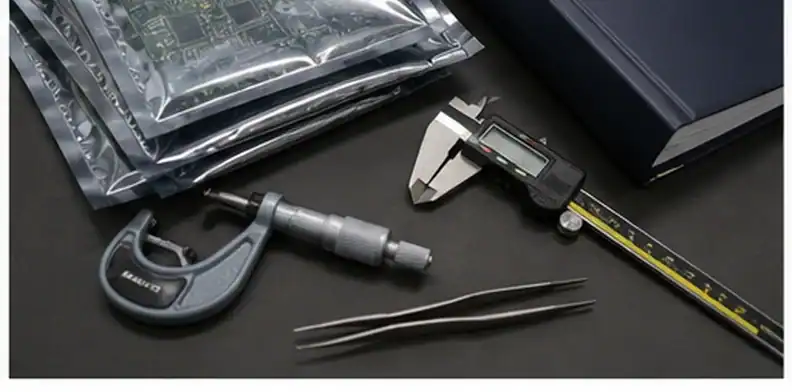
| Measurement or test data | Supports objective failure |
| Quantity inspected and quantity failed | Shows severity |
| Sample retention status | Protects failure analysis |
| Packaging condition | Separates shipping damage from build defect |
| Requested remedy | Frames the commercial decision |
Do not send only one dramatic photo. A supplier needs enough context to confirm whether the issue is isolated or systemic.

How Should Nonconforming Boards Be Preserved?
Preserve samples in the received condition until the review path is agreed.
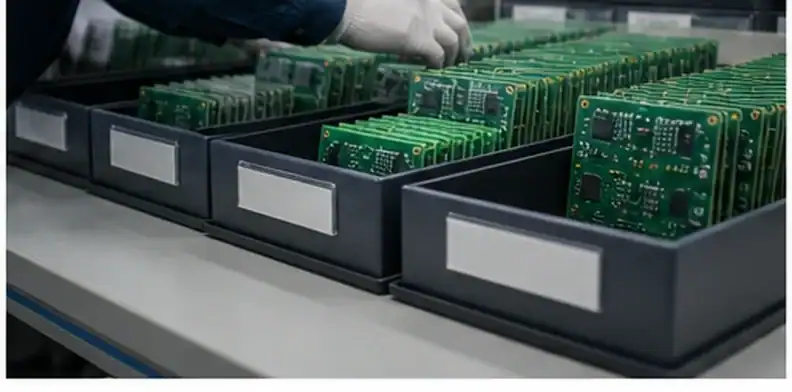
If boards are washed, reworked, depanelized, soldered, or returned without records, important evidence may disappear. Keep failed samples, borderline samples, and at least one apparently good sample from the same lot. Record who handled them and what tests were performed.
For PCBA failures, keep firmware version, test log, and environmental conditions with the sample.
When Should You Request Containment Action?
Request containment when the defect might affect current inventory, boards still at the supplier, or repeat orders already in progress.
Containment is the short-term action that stops more bad boards from reaching the buyer while root cause is investigated. It may include shipment hold, 100% sorting, additional inspection, segregation of suspect lots, or temporary process limits.
Containment should be dated and measurable; vague promises do not protect the next shipment.

What Should an 8D or Corrective Action Include?
An 8D-style response should identify the team, problem, containment, root cause, corrective action, verification, prevention, and closure.
If the problem has already caused functional failure, the QueenEMS article on reading a PCBA failure analysis report can help separate symptom evidence from root-cause proof.
The 8D method is widely used in supplier quality because it forces teams to move beyond replacement. The most useful parts for PCB buyers are problem definition, root cause evidence, corrective action owner, effectiveness check, and documentation update.
If the issue is small, you may not need a full 8D form, but you still need root cause and prevention.
How Do You Decide Replacement, Rework, or Credit?
Replacement, rework, credit, or refund should be decided from the requirement, evidence, urgency, and risk of using repaired boards.
A cosmetic solder-mask defect may allow concession if function and customer requirements are unaffected. A plated-hole defect, impedance failure, wrong material, or hidden solder-joint issue may require replacement rather than rework. Return freight should be discussed with the cause still in view.
Separate technical disposition from commercial negotiation so the engineering decision stays clear.

What If Responsibility Is Shared?
Responsibility can be shared when the drawing was unclear, the supplier missed a requirement, and the buyer approved a risky change.
Examples include ambiguous material notes, unclear acceptance class, missing impedance requirements, insufficient packaging instructions, or a buyer-approved substitute that later fails system validation. Shared responsibility does not mean no one acts; it means the corrective plan must fix both documentation and process.
Use the claim to improve the next RFQ package, not only to argue about the last invoice.
How Do You Prevent the Same Defect Next Time?
Prevent repeat defects by changing the controlled requirement, inspection plan, supplier process, or release evidence.
For production release, tie the corrective action to a future PCB supplier qualification order so the next lot has explicit inspection and evidence requirements.
Ask which document will change: fabrication drawing, CAM checklist, material approval, inspection record, test plan, packaging instruction, or supplier work instruction. If no document changes after a serious defect, the same failure can return with the next order.
For repeat builds, link the corrective action to revision control and approved quality records.
When Should You Stop Using the Supplier?
Stop using the supplier when the pattern shows weak evidence, repeated escapes, unclear responsibility, or pressure to ship before questions are closed.
One defect can be recoverable. A pattern of missing records, unapproved substitutions, poor containment, contradictory explanations, or repeated delays is a supplier-risk signal. The decision should consider product criticality, available alternates, and customer risk.
If the supplier cannot connect quality claims to evidence, do not scale production with that process.
What Should You Send for a Claim Review?
For a claim review, send the defect description, lot data, photos, measurements, test results, original drawing/specification, PO terms, sample status, and requested decision.
If you want QueenEMS to review the evidence package, use the QueenEMS contact page after collecting the lot data, photos, measurements, and original requirements.
If the product includes assembly, also send BOM, placement, reflow, test, firmware, and failure symptoms. QueenEMS can review whether the issue looks like fabrication, assembly, design, shipping, or documentation risk and what evidence should close the claim.
Use the QueenEMS remote quality evaluation guide to build the evidence package before release.
Related QueenEMS resources
- IPC class decision guide
- PCB QC report sample
- PCBA failure analysis report guide
FAQ
Can I reject a PCB lot based on photos only?
No, photos help, but the claim is stronger when tied to lot data, drawings, measurements, test results, and inspected quantity.
Should I ask for an 8D report for every defect?
No, small issues may need a simpler corrective action. Request 8D-style depth when the defect is repeated, serious, customer-visible, or production-blocking.
What samples should I keep?
Keep failed samples, borderline samples, and at least one good sample from the same lot, with handling and test history.
Who pays return freight for defective boards?
It depends on cause and contract terms. Decide after evidence shows whether the issue is supplier-caused, buyer-caused, shipping-caused, or shared.
Can I use boards under concession?
Yes, only if engineering and customer requirements allow it and the concession is documented before use.
Sources
- ISO 9001 external providers guidance
- MAHLE 8D process supplier quality manual
- IPC-A-600 program
- IPC-A-610
Written by the QueenEMS Engineering Team
Upload your files today · Free DFM check before production · Ship worldwide
Get your PCB prototypes in as fast as 24 hours. We handle FR4, Rogers, and Flex up to 60 layers — free prototypes for 2–4 layer boards, no minimum order.
Just upload your Gerber + BOM — we source every part, assemble, and inspect (AOI + X‑Ray) so you don't have to chase suppliers. Boards ship in as fast as 24 hours.