
Quick Answer: PCB supplier payment terms should define the deposit, NRE or tooling charge, milestone trigger, final balance, and shipment-release rule before the PO is approved. The safest first order also names who can release goods if payment, inspection, or carrier timing changes after production starts.
Key takeaways
- Treat payment as a release control, not only a finance line.
- Separate NRE, material deposit, production balance, and shipment release.
- Ask what proof the supplier provides before each payment trigger.
- Keep the accepted payment rule in the PO so reorders do not restart negotiation.
The real buyer question is simple: is full upfront payment reasonable, or is it a sign of supplier risk? For custom PCB work, the answer depends on order value, first-order trust, NRE, material exposure, and what evidence the buyer receives before shipment.
Table of Contents
- Start with order risk, not a universal payment rule
- Which payment structure fits a first PCB order?
- Separate NRE, tooling, material, and production balance
- Tie payment release to files, evidence, and shipment control
- Watch the cash-flow signal from both sides
- How should payment terms change after trust is built?
- What wording belongs in the PO?
- Send QueenEMS the payment-risk package
Start with order risk, not a universal payment rule
A first PCB order should be paid according to custom-order risk, not according to a universal “normal” rule. Small prototype lots may justify full or high prepayment, while production orders with special material, fixtures, or downstream assembly value need clearer milestone terms.
For a founder or purchasing manager, the useful checkpoint is whether the next payment gives the supplier permission to spend money that cannot be recovered. If the answer is yes, the payment trigger should include the exact revision, quantity, and supplier acknowledgement that will protect the buyer later.
One safe way to reduce payment risk is to separate a first article or pilot lot from the production lot. Paying a higher percentage on a small pilot is often safer than forcing weak terms on a large unproven order.
For a buyer, the payment term is part of supplier qualification. Review it beside capability, delivery promise, quality evidence, and communication speed. If the supplier asks for full payment before any production evidence exists, ask what risk that payment covers and what proof follows.
Keep cash and evidence moving together. Payment can release CAM, material purchase, production, shipment, or final documents. The safest PO names the trigger for each step.
| Payment structure | When it fits | Buyer control point |
|---|---|---|
| Full prepayment | Small first order or high supplier risk | Ask what proof arrives before shipment |
| Deposit + balance | Common first-order compromise | Tie balance to evidence |
| Milestone | Higher value or longer build | Name each release trigger |
| Net terms | Established credit relationship | Confirm credit owner |
Which payment structure fits a first PCB order?
The best first-order term is the one both sides can actually operate. If accounting, engineering, and logistics all understand the trigger, the order is less likely to stall at balance payment or shipment release.
Engineering should also read the payment line when the deposit is tied to NRE or material. A payment that releases tooling may lock the team into a footprint, panel outline, or fixture assumption earlier than expected, so the drawing package should be frozen enough to support that spend.
Common structures include full prepayment, deposit plus balance before shipment, milestone payment, and open account after credit approval. None is automatically right for every buyer; the structure should match order value, supplier history, material risk, and whether the factory has already been qualified.
For first overseas orders, full prepayment can appear when the order is small or the supplier has no credit history with the buyer. The buyer can still protect itself by asking for acknowledgement, CAM questions, production status, test evidence, and shipment documents before balance release.
Very loose terms from an unqualified supplier are not always good news. They may hide margin, quality, or schedule risk. A balanced term is easier to trust when tied to a clear PCB supplier qualification order.
| Payment line | What it pays for | What to confirm |
|---|---|---|
| NRE | Engineering/setup before boards exist | Define ownership and reuse |
| Material deposit | Special laminate or heavy copper | Ask if it is returnable |
| Production balance | Boards completed or ready to ship | Link to quality evidence |
| Freight/payment | Shipment handoff | Match Incoterm and release rule |
Payment rule: Use full prepayment only when the order risk is small enough to accept; use milestone or balance terms when file control, evidence, or shipment release still carries real value.
Separate NRE, tooling, material, and production balance
NRE, tooling, material deposit, and production balance should be treated as separate payment objects because they release different work. A clear PO avoids the common dispute where the buyer believes one payment covers production while the supplier believes it only covers engineering preparation.
When NRE is tied to a reusable tool or program, ask whether a later reorder receives any credit. If the answer is no, the buyer should know that before treating the payment as an investment in future production.
A practical first order can use a small paid trial, but the buyer should not confuse small value with low risk. If the first lot feeds a customer demo, certification sample, or investor milestone, the evidence before balance payment may matter more than the dollar amount.
NRE, tooling, material, and production balance should not be mixed into one vague payment line. NRE may be due early because the supplier must perform engineering work before boards exist. Production balance can be tied to finished goods, quality evidence, or shipment release.
If the quote includes setup or tooling, compare it with your understanding of NRE cost in PCB manufacturing. The buyer should know whether the fee is one-time, reusable, revision-specific, refundable, credited against production, or lost if the design changes.
Special laminate, heavy copper, controlled impedance coupons, or outside processes can change the deposit discussion. Ask for material name, quantity exposure, and cancellation rule before approving that deposit.
| Order document | What it should lock | Why it matters |
|---|---|---|
| Quote | Payment split and validity | Compare with PO |
| PO | Final approved terms | Controls invoice |
| Evidence | Documents before balance | Protects release |
| Credit review | Future net terms | Earned after history |
Tie payment release to files, evidence, and shipment control
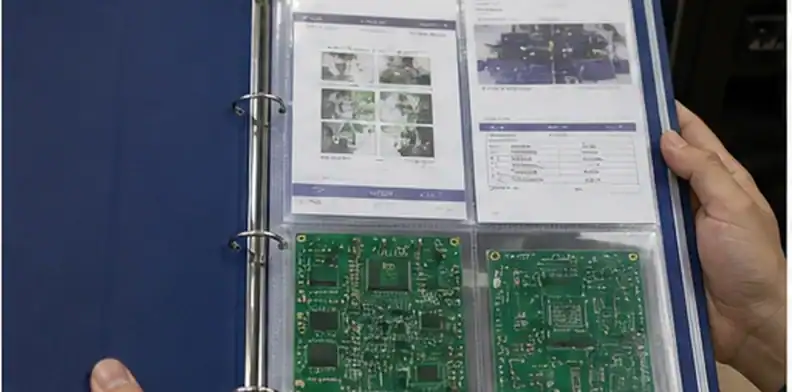
Payment release should follow observable order milestones: file acceptance, CAM closure, production completion, inspection evidence, packing, and shipment booking. The buyer should not rely on a vague “balance before delivery” phrase when a board revision, quality hold, or carrier change could still block the shipment.
Before the final balance, the buyer should know whether the supplier has open engineering questions. Paying final balance while an unresolved CAM or quality question remains can make the next conversation harder.
The payment method itself should match the buyer’s internal controls. Wire transfer, credit card, escrow-like arrangements, and bank instruments create different proof trails, fees, and dispute paths. The PO should say which method is accepted and which party pays bank charges.
Payment release should be tied to what the buyer can verify. Before CAM release, the buyer needs confirmed revision, stackup, material, quantity, finish, lead time, and open engineering questions. Before shipment, the buyer needs quality evidence that matches the order risk.
For bare PCB orders, evidence can include electrical test confirmation, final inspection record, packaging photo, lot label, and shipment booking. For PCBA, evidence may include BOM exception closure, placement program readiness, first article result, programming file status, and packed quantity.
For a buyer close to release, the cleanest internal rule is simple: no payment trigger should depend on memory. Finance should see the same release condition that engineering and logistics see, such as “balance after final inspection record and shipment booking,” rather than a vague note that the supplier will “send proof later.”
Shipping terms matter because payment timing and freight responsibility can collide. If the buyer pays balance before shipment, it should also know whether the order is DDP, DAP, or another term. Use DDP vs DAP PCB shipping to keep payment and handoff risk aligned.
Release rule: A payment trigger is safe only when finance can verify the same file, evidence, and shipment condition that engineering and logistics are using.

Watch the cash-flow signal from both sides
A payment request is also a supplier-behavior signal. A reasonable supplier explains material exposure, credit policy, and shipment release clearly; a risky supplier pushes urgency without saying what the payment will actually release.
A supplier that explains payment risk clearly may be a better long-term partner than one that says yes to every buyer request. Payment terms are one part of trust, not a substitute for supplier qualification.
When cash pressure appears, do not solve it by making the technical release vague. It is safer to reduce quantity, split the shipment, or create a smaller pilot order than to pay a large deposit against unfinished engineering details.
A payment request is also a behavior signal. Good suppliers explain what the money releases, what evidence follows, and who approves exceptions. Weak suppliers pressure payment while leaving revision, delivery, or quality terms vague.
Buyers should not punish a supplier for asking for a deposit on custom work. The better response is to make the deposit conditional on clear order data. A supplier that explains the boundary is often safer than one that accepts poor terms and later recovers cost through delay or hidden exclusions.
From the supplier side, payment discipline protects capacity. From the buyer side, payment discipline protects leverage. The PO should make both needs visible.
Buyer call: Treat payment pressure as a review signal, not as automatic proof of supplier risk; the deciding question is whether the supplier can name what the money releases.
How should payment terms change after trust is built?
Credit improvement should be documented. If the supplier grants better terms after three clean lots, write the condition into the account record so the next buyer does not restart negotiation from zero.
After the first successful lot, update the term deliberately instead of letting it drift. A supplier that earned better terms should also keep the same evidence discipline, because trust should reduce friction without removing traceability.
Payment terms can relax after repeated successful orders. A supplier may move from full prepayment to deposit plus balance, then to net terms after credit review and stable monthly volume. The buyer should earn that change through predictable release, clean files, and timely payment.
Do not jump to net terms simply because another supplier offered them. Compare order value, material commitment, quality history, rework record, claim response, and whether the buyer has a local entity or credit references.
If the supplier handles both PCB and PCBA, payment stages may need to separate bare-board fabrication from assembly components. Consigned kits, NCNR parts, and programming work can require different timing from the PCB lot itself.
Decision rule: Better terms should be earned by clean lots and clear records, not granted simply because the next order is urgent.
What wording belongs in the PO?
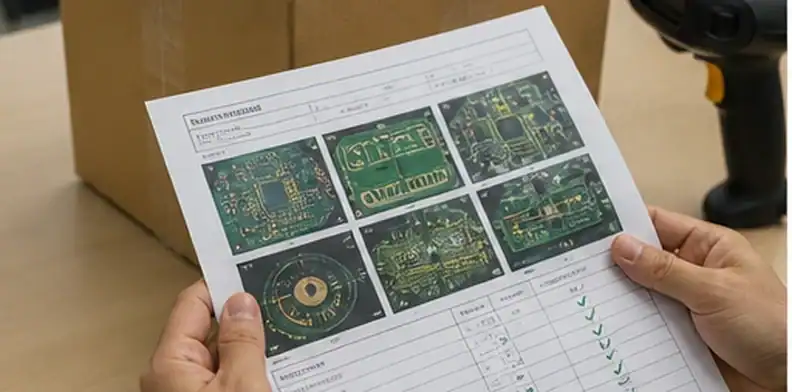
The PO wording should name the documents and authority needed before each payment trigger. For controlled orders, that can include final invoice, packing list, test statement, shipment booking, and photos for high-risk lots.
A good payment clause is readable by finance without asking engineering to translate it. It should connect deposit, NRE, production balance, and shipment release to simple events that can be checked in the order folder.
The PO should say deposit amount, balance trigger, NRE ownership, cancellation exposure, shipment hold rule, quality evidence, and payment method. It should also say who can approve a change.
A short RFQ sentence can prevent a later dispute: “Please quote deposit, balance trigger, NRE ownership, material prebuy exposure, and documents required before final payment release.” This asks for commercial clarity without turning the RFQ into a legal document.
For larger orders, add a hold rule: if quality evidence is incomplete or shipment data does not match the PO, balance payment waits for buyer review. That protects the buyer without forcing the supplier to guess what proof is expected.
If the buyer uses an ERP approval flow, copy the accepted payment trigger into the purchase record. That small step prevents a later reorder from depending on the original buyer’s email thread or a salesperson’s memory of what was approved.
RFQ signal: The best PO wording is short enough for purchasing to reuse and specific enough to stop shipment or payment when evidence is missing.
Send QueenEMS the payment-risk package
QueenEMS can review whether the payment request is aligned with the build stage, but the buyer still controls commercial approval. The most valuable outcome is a PO that keeps engineering, purchasing, and finance looking at the same risk.
This review should end with a reusable payment decision: what the deposit releases, what proof is needed before balance payment, and who can approve a change if shipment or evidence does not match the PO.
If your PCB or PCBA project needs payment-term review, contact QueenEMS with the quote, PO draft, deposit request, NRE line, material exposure, shipment term, and quality evidence requirement. We can help review whether the payment plan fits the order risk and what should be closed before PO release.

FAQ
Is 100% upfront normal for a first PCB supplier order?
It can be normal for a small first custom PCB order, especially when the supplier has no credit history with the buyer. For a production order, the buyer should ask what the upfront payment releases, what evidence will follow, and whether a smaller pilot or milestone structure would control the risk better.
Should NRE be paid before the production balance?
Usually yes. NRE or tooling work often happens before boards exist, so it may be due earlier than the production balance. The PO should still say whether the NRE is one-time, reusable, revision-specific, credited to production, or lost if the design changes.
Can I ask for net terms on the first overseas PCB order?
You can ask, but many suppliers will reserve net terms for repeat customers with clean payment history and predictable monthly volume. A practical compromise is deposit plus balance before shipment, with better terms reviewed after several successful lots.
What proof should I request before final payment?
Ask for proof that matches the order risk: final revision confirmation, CAM question closure, quantity status, electrical test or inspection evidence when applicable, packing photos, invoice, and shipment booking. For PCBA, add BOM exception closure, first article status, programming file readiness, and packed quantity.
How can QueenEMS help review PCB payment risk?
QueenEMS can review the quote, PO draft, NRE line, deposit request, material exposure, shipment term, and evidence requirement before the buyer releases payment. The output should be a clear payment trigger list that purchasing, engineering, and finance can all use.
Sources
Upload your files today · Free DFM check before production · Ship worldwide
Get your PCB prototypes in as fast as 24 hours. We handle FR4, Rogers, and Flex up to 60 layers — free prototypes for 2–4 layer boards, no minimum order.
Just upload your Gerber + BOM — we source every part, assemble, and inspect (AOI + X‑Ray) so you don't have to chase suppliers. Boards ship in as fast as 24 hours.