
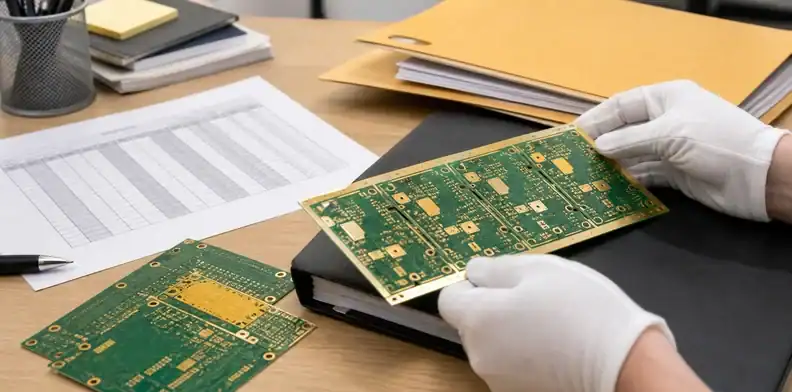
Quick Answer: A CMRT PCB supplier response should identify the template version, company scope, 3TG metals covered, smelter information, and the responsible supplier entity. For PCB orders, the usual attention points are copper, gold finish or plating, solder if PCBA is included, and whether the customer wants company-level or product-level reporting. The buyer should not treat an old or unsigned CMRT as a final customer file.
Key takeaways
- CMRT stands for Conflict Minerals Reporting Template and focuses on 3TG supply-chain reporting.
- Bare PCB and PCBA scopes can differ because solder and components may add exposure.
- The template version, reporting year, supplier entity, and smelter list need review.
- Keep CMRT evidence tied to supplier qualification and lot traceability, not only email history.
A customer request for a CMRT can arrive after the buyer thinks the PCB order is only a technical purchase. The supplier then sends a spreadsheet, purchasing forwards it, and nobody checks whether the scope, version, and smelter information actually answer the customer’s question. This article gives buyers a practical way to review a CMRT PCB supplier response before customer submission. It avoids legal conclusions and focuses on the evidence package, scope boundary, and questions to close before RFQ or shipment.
Table of Contents
- Clarify what the customer means by CMRT
- Check template version, date, and supplier entity
- Map 3TG exposure to the actual PCB scope
- Review smelter information without overclaiming proof
- Decide what to do with incomplete answers
- Connect CMRT evidence with lot traceability
- Write the supplier request clearly
Clarify what the customer means by CMRT
CMRT usually refers to the Conflict Minerals Reporting Template used for 3TG reporting: tin, tantalum, tungsten, and gold. A PCB customer may ask for it as part of supplier due diligence, corporate reporting, or customer compliance files. The buyer should first confirm whether the customer wants a company-level supplier response or a product-level response for the specific PCB or PCBA.
Scope call: Before forwarding a CMRT, confirm whether the customer wants company-level or product-level evidence.
That distinction matters for PCB. Bare boards may involve copper foil and surface finishes such as ENIG, hard gold, or immersion tin. PCBA may add solder alloy, components, connectors, shields, cables, and other sourced parts. The CMRT scope should match what QueenEMS or the supplier actually provides.
If the request is vague, ask the customer whether the CMRT must cover bare PCB only, assembled product, or the supplier’s full company sourcing. A two-line clarification can prevent a week of spreadsheet revision.
The clarification email should be saved with the CMRT. If the customer later questions the scope, the buyer can show why the response was company-level, product-level, bare-board only, or PCBA-inclusive.
Check template version, date, and supplier entity
A CMRT response should identify the template version, reporting period, supplier entity, contact, date, and whether the response is complete. An old spreadsheet may not satisfy a current customer request even if the supply chain did not change.
The buyer should also check that the entity name matches the supplier being qualified. A response from a parent company, trading company, or unrelated factory may be acceptable only if the customer accepts that scope.
| Field | Buyer check | Red flag |
|---|---|---|
| Template version | Matches current customer request | Old template without explanation |
| Supplier entity | Matches quoted supplier or approved group | Different company name |
| Reporting period | Current enough for audit file | No date or stale date |
| Completion status | Questions answered consistently | Blank or contradictory fields |
Version rule: A CMRT without version and date control is weak customer evidence.
Template version control matters because customers often build automated review flows around a specific workbook. A supplier may think an older form is close enough, while the customer system rejects it before a human reads the content.

Map 3TG exposure to the actual PCB scope
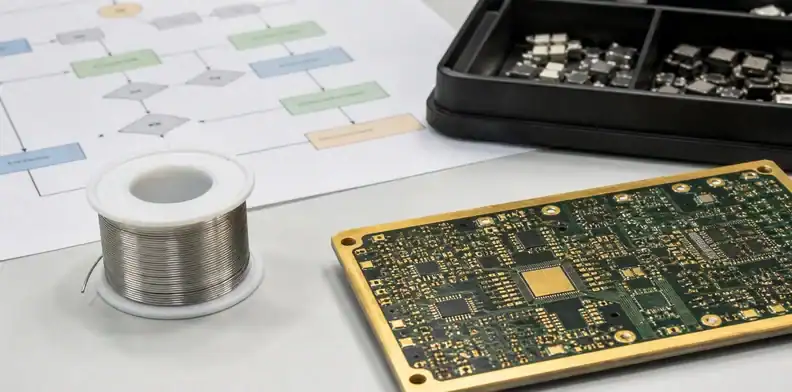
The 3TG metals are tin, tantalum, tungsten, and gold. For PCB-related orders, gold may appear in ENIG, ENEPIG, hard gold, soft gold, or edge connector plating. Tin may appear in solder or certain finishes. Tantalum and tungsten may become relevant through assembled components more than bare-board fabrication.
A bare-board supplier response may not cover the full assembled product. If QueenEMS supplies PCBA, the component sourcing route and BOM scope can change the CMRT request. The buyer should decide whether to request supplier-level CMRTs from component sources or use the assembled-product process required by the customer.
Material signal: Match the CMRT scope to bare PCB, PCBA, or full supplied product before judging the smelter list.
This scope mapping can sit beside PCB supplier qualification order because conflict-minerals reporting is a supplier evidence issue, not only a spreadsheet task.
Bare PCB scope should not be inflated into component compliance. If the purchase is only bare boards, the supplier should not be asked to certify components it never sourced. If QueenEMS supplies PCBA, the scope expands and the evidence path changes.
Review smelter information without overclaiming proof
A CMRT smelter list is due-diligence evidence, not a laboratory proof that each atom in a specific PCB lot came from one named smelter. The buyer should use the list to assess completeness, reasonableness, and whether the supplier has a process for tracing 3TG sources.
Look for blank smelter fields, inconsistent answers, unsupported unknowns, and responses that claim no 3TG even when the board has gold finish or the PCBA includes solder. Those signals do not automatically prove wrongdoing, but they do justify a clarification request.
| Review point | Useful signal | Follow-up question |
|---|---|---|
| Gold finish | Gold source should be considered | Does the response include gold smelters? |
| Tin-bearing solder | PCBA scope may add tin | Is solder in scope? |
| Unknown smelters | Process maturity may be low | What review is in progress? |
| Company-level answer | May not map to product | Will customer accept company scope? |
Smelter information should be reviewed for reasonableness, not rewritten. A buyer can ask the supplier to clarify blank fields, but the supplier must own its submitted response.
Decide what to do with incomplete answers
An incomplete CMRT does not always mean the order should stop. It means the buyer needs a decision owner. If the customer requires a complete response before PO release, the missing fields become a commercial hold. If the customer allows supplier due diligence to continue, the order may proceed with a documented open item.
The safe approach is to separate technical release from customer compliance submission. Engineering can approve the board design while purchasing or quality keeps the CMRT question open until the customer accepts the evidence.
Hold rule: Treat missing CMRT fields as a customer-evidence issue with an owner, deadline, and release condition.
Do not rewrite supplier answers to make them look cleaner. If a supplier writes unknown, leave it visible and ask for clarification. Editing the substance of a CMRT can damage trust with the customer.
An open CMRT item should have a deadline and owner. Without that, the issue tends to sit between purchasing, quality, and the customer account team until shipment pressure forces a weak answer.
Connect CMRT evidence with lot traceability
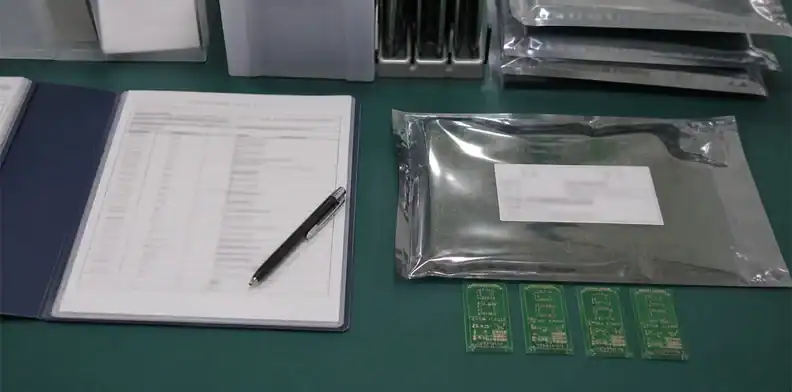
CMRT is often company-level, but the buyer still needs order traceability. Keep the supplier response, supplier entity, PO, PCB revision, finish, lot number, and shipment record together. That way a customer can see which order used which compliance evidence.
This is especially useful when a customer asks about a shipment months later. PCB lot traceability helps connect the paperwork to the delivered boards without claiming that the CMRT is a lot-specific chemical test.
| Record | Why it matters | Where to store |
|---|---|---|
| CMRT file | Supplier due-diligence response | Compliance folder |
| Supplier entity | Matches qualification record | Vendor master |
| PCB revision and finish | Defines product scope | PO package |
| Lot and shipment | Links evidence to delivery | Receiving record |
Record point: Keep CMRT evidence with supplier and lot records so customer questions do not depend on email memory.
Traceability does not convert a CMRT into lot-specific chemistry proof. It simply keeps the customer evidence, supplier entity, finish choice, and shipment record together for later review.
Write the supplier request clearly
A useful request can say: Please provide the current CMRT for the quoted PCB or PCBA supply scope, including template version, reporting period, supplier entity, 3TG coverage, smelter information, and contact owner. State whether the response is company-level or product-level and whether it covers bare PCB only or assembled product.
This wording gives the supplier a clear target. It also gives the customer a cleaner explanation if the first response needs revision.
RFQ signal: Ask for scope and version in the first message; most CMRT delays come from vague requests.
When the order uses gold finish, immersion tin, solder, or sourced components, mention those items in the request so the supplier does not assume a narrower scope.
The first request should mention any gold finish, immersion tin, solder, or assembly scope. Those details help the supplier decide whether a narrow bare-board response is enough or whether component sourcing evidence is also needed.
For purchasing teams, the CMRT request should be part of supplier onboarding when the customer base cares about conflict minerals. Waiting until the customer sends a spreadsheet can turn a manageable evidence request into a shipment blocker.
For engineering teams, the useful contribution is scope clarity. State whether the product uses ENIG, hard gold, immersion tin, soldered assembly, tantalum capacitors, tungsten parts, or customer-supplied components. Compliance teams can then ask the right suppliers instead of chasing every vendor blindly.
For quality teams, the review should flag contradictions. A supplier that says no gold exposure while quoting ENIG needs clarification. A PCBA response that ignores solder needs clarification. These are not accusations; they are scope checks before customer submission.
For founders, the practical question is whether the customer can accept the evidence package without a second round. A current template, clear supplier entity, visible scope, and organized lot record reduce back-and-forth and show that the supply chain is being handled deliberately.
If the CMRT remains incomplete, record the exact open item and customer decision. The order may still proceed in some cases, but the buyer should know whether it is proceeding with customer acceptance, internal risk approval, or a pending supplier correction.
The buyer should also decide whether the CMRT is needed before quote, before PO, before shipment, or before customer submission. Those timing choices create different actions. Before quote, the supplier may only confirm capability to provide a response. Before shipment, the buyer may need the actual completed template in hand.
A practical release note can say that CMRT evidence is required for customer file, not for electrical or mechanical acceptance of the PCB. That wording keeps compliance review visible without confusing it with board inspection, solderability, or dimensional approval.
When the customer asks for supplier due diligence, do not answer with only a material declaration. RoHS, REACH, and CMRT serve different filing needs. Keeping those files separate helps the customer reviewer find the right evidence quickly and prevents one incomplete document from weakening the rest of the package.
If the customer accepts company-level reporting, save that acceptance with the order. If the customer asks for product-level detail, save that requirement too. The difference affects how much work the supplier, component sourcing team, and quality owner must do before the response can be sent.
The CMRT review should also state what is not being claimed. A supplier response may support conflict-minerals due diligence, but it does not prove RoHS status, REACH SVHC status, solderability, finish thickness, or incoming quality. Keeping those boundaries clear prevents one compliance spreadsheet from being reused as proof for unrelated customer questions.
When several suppliers are involved, assign one owner to merge the responses. Bare PCB, assembly solder, consigned components, and customer-supplied parts may come from different evidence paths. A single owner reduces the chance that one supplier’s missing answer is hidden until the customer asks for a final file.
FAQ
What is a CMRT for PCB suppliers?
A CMRT is a conflict-minerals reporting template used to collect 3TG due-diligence information from suppliers. For PCB orders, it may cover bare boards, assembly materials, or the supplier’s company-level sourcing.
Does a bare PCB need a CMRT?
It can, if the customer requires conflict-minerals due diligence. Gold finish, immersion tin, and other process details can make the request more relevant.
Should CMRT cover PCBA components too?
Yes, when the customer request covers the assembled product. Components and solder may add scope beyond the bare PCB supplier response.
Can I accept an old CMRT?
Accept it only if the customer allows that version and date. Otherwise ask the supplier for a current template response or a dated update.
Can QueenEMS help review CMRT evidence?
Yes, QueenEMS can help organize the supplier CMRT, product scope, finish and assembly boundary, lot traceability, and customer response package.
Related QueenEMS articles
- PCB supplier qualification order
- PCB lot traceability
Send QueenEMS the CMRT review package
If your PCB or PCBA customer requests a CMRT, contact QueenEMS with the customer wording, bare-board or PCBA scope, finish, BOM if assembled, supplier response, shipment timing, and required submission date. We can help review whether the evidence package is clear enough for customer review.
The fastest useful review includes the spreadsheet exactly as received. Do not clean it up first; the gaps, blank fields, and scope wording are often the parts that need attention.
Sources
Written by the QueenEMS Engineering Team
Upload your files today · Free DFM check before production · Ship worldwide
Get your PCB prototypes in as fast as 24 hours. We handle FR4, Rogers, and Flex up to 60 layers — free prototypes for 2–4 layer boards, no minimum order.
Just upload your Gerber + BOM — we source every part, assemble, and inspect (AOI + X‑Ray) so you don't have to chase suppliers. Boards ship in as fast as 24 hours.