
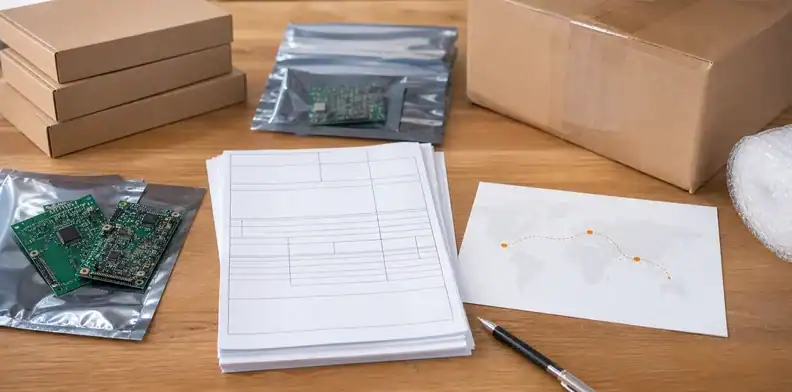
Quick Answer: A pcb supplier israel decision should not be based on a promised transit time alone. Before release, confirm shipment route, commercial invoice, packing list, Incoterm, customs-document handoff, payment timing, inspection evidence, and whether any customer or standards review applies to the actual board or PCBA scope.
Key takeaways
- Do not quote Shenzhen-to-Israel delivery from memory; ask for route and handoff evidence.
- Commercial invoice, packing list, and Incoterm should be ready before shipment booking.
- Bare PCB, PCBA, and telecom or finished-product scope can require different review.
- Payment terms and communication cadence matter more when the shipment path is time-sensitive.
An Israel buyer choosing a pcb supplier israel option usually asks two practical questions: can the supplier build the board correctly, and can the shipment arrive with the documents needed for customs and receiving? The risky answer is a fixed delivery promise without route detail, document owner, or customs handoff. International shipment timing can change, so the supplier should state the route assumption and evidence package instead of pretending every order moves the same way. This article shows what to request before production release when boards or assemblies are moving from China to Israel.
Table of Contents
- Review the supplier as a release partner
- Separate build lead time from shipment time
- Prepare customs documents before pickup
- Check when standards or customer review applies
- Tie payment terms to shipment risk
- Write an Israel shipment RFQ paragraph
- Decide what should hold shipment
Review the supplier as a release partner
The supplier decision should cover capability, communication, shipment readiness, and evidence control. A good factory answer is not only ‘we can build it’; it explains what proof will be available before the boards leave.
For telecom or communication hardware, connect the sourcing decision to QueenEMS telecom PCB support so the project file reflects the application environment instead of treating the board as a generic commodity.
Supplier call: Choose a supplier that can support release evidence and logistics communication, not only fabrication price.
Separate build lead time from shipment time
Build lead time and international shipping time should be quoted separately. Fabrication or assembly completion does not mean the buyer has usable boards in Israel.
The RFQ should ask for production lead time, packing date, shipping method, Incoterm, document handoff, and expected route at quote time. Avoid unsupported fixed transit promises; ask the supplier to update the route when booking occurs.
| Timing item | Supplier should state | Buyer should record |
|---|---|---|
| Build lead time | Fabrication or PCBA days | Release date basis |
| Packing date | Ready-to-ship point | Inspection and label status |
| Shipment method | Courier, air, or forwarder route | Cost and risk owner |
| Customs handoff | Invoice and packing-list timing | Broker or importer contact |
Timing rule: Treat delivery as production plus shipment plus customs handoff, not one blended promise.
Prepare customs documents before pickup
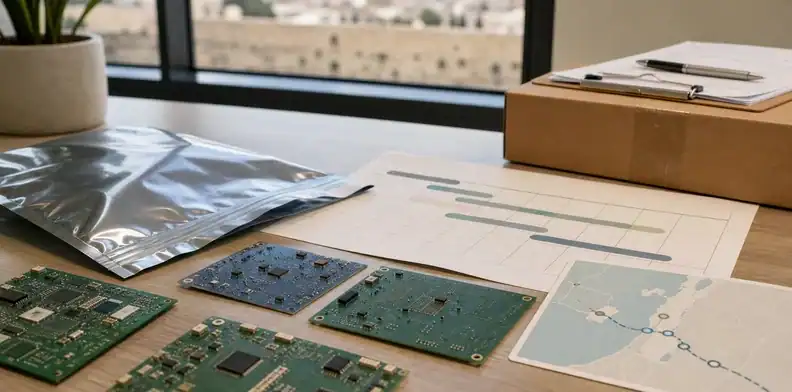
The basic shipment file should include commercial invoice, packing list, PO reference, shipment value, product description, quantity, weight, country of origin where applicable, and contact details for the importer or broker.
For responsibility boundaries, DDP vs DAP PCB shipping helps the buyer decide whether QueenEMS, the buyer, or a broker controls clearance steps. The article should not be used as a substitute for local customs advice, but it keeps the quote conversation precise.
Customs signal: Documents should be checked before pickup, because correcting them after export creates delay and trust risk.
Check when standards or customer review applies
Bare PCBs may only need board-level evidence for the buyer’s file. PCBAs, telecom assemblies, power products, or customer-ready devices can raise additional documentation questions that should be handled by the product owner or importer.
The supplier should state the evidence it controls: board material, finish, inspection, test, assembly process, labels, and packaging. The buyer should separately confirm any product-level standard, customer acceptance, or local import review that sits outside supplier scope.
Scope boundary: Supplier evidence supports the order; product or market approval belongs with the buyer’s compliance owner.
Tie payment terms to shipment risk
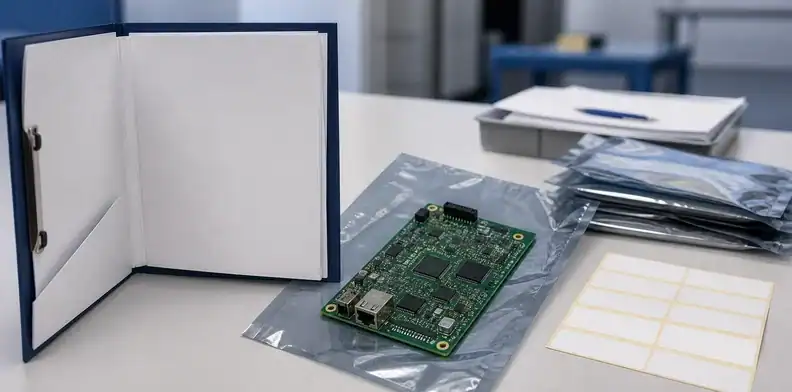
Payment terms become more sensitive when a long-distance shipment is urgent. The buyer should know whether final payment is due before production, before pickup, after inspection evidence, or after freight booking.
A safe first order can connect payment milestone to an objective proof point: completed inspection, packing photos, commercial invoice draft, or courier booking. This is cleaner than arguing over payment after the goods are ready.
Payment rule: Link final payment to a visible release milestone, not to a vague promise that the order is almost ready.
Write an Israel shipment RFQ paragraph
Useful wording: Please quote PCB or PCBA supply for shipment to Israel, separating build lead time from shipping estimate. Include Incoterm, commercial invoice and packing-list assumptions, packing evidence, inspection record, payment milestone, and the documents QueenEMS expects the buyer or broker to confirm before pickup.
This paragraph gives the supplier a chance to name missing items early. It also keeps purchasing from comparing a full shipment package against a bare ex-works price.
RFQ signal: Ask for shipment documents and release milestones in the same message as price and lead time.
Decide what should hold shipment
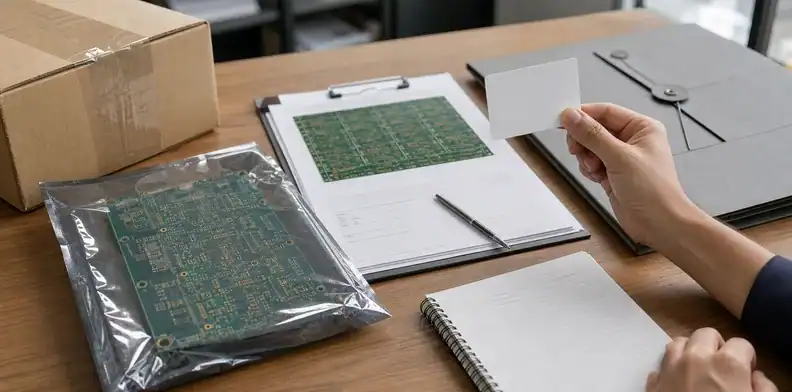
Hold shipment when invoice wording, packing list, importer contact, payment milestone, inspection evidence, or customer document requirement is unclear. Do not hold shipment for vague anxiety; hold it for a named missing record with an owner.
A clean release note can say which documents were approved and which questions remain open. If a customer accepts later evidence, record that acceptance so the shipment decision is not challenged after arrival.
Release point: A shipment hold should name the missing document and the person who can clear it.
For engineering, the useful handoff is proof that the shipped build matches the approved files. A logistics delay is frustrating, but a wrong-revision shipment is worse because it wastes the import effort.
For purchasing, compare supplier quotes by what they include: production lead time, packing proof, document support, communication rhythm, and shipment-term clarity. A cheap quote without a document plan can be the riskier option.
For founders, the main risk is customer expectation. If the Israeli customer expects boards by a date, the promise should include production completion, freight booking, customs handoff, and receiving margin.
For quality, save the inspection record and packing evidence together. If a shipment arrives with missing or damaged packages, the buyer can compare what was released with what was received.
For engineering, shipment readiness starts with the approved build record. A fast route does not help if the boards are packed before the final revision, finish, or test requirement is confirmed.
For purchasing, compare suppliers by response quality during pre-shipment review. A supplier that answers invoice, packing, and inspection questions clearly is often easier to work with on urgent international orders.
For quality, ask for packing photos or packing confirmation when the order contains fragile panels, mixed revisions, or assembled boards. The goal is not decoration; it is a reference if receiving finds damage or count differences.
For logistics, do not let one email contain both production completion and shipment approval if documents are still missing. Separate ready to pack, documents approved, and ready for pickup as three states.
For telecom or defense-adjacent hardware, the buyer may have customer restrictions beyond ordinary customs paperwork. State those restrictions before quote so the supplier can decide what evidence it can support.
Payment timing should also be visible. If the supplier requires balance before pickup, the buyer should know what proof will be available before that payment is made.
The first Israel-bound order should create a contact map. Record supplier contact, buyer contact, broker or importer contact, and the person who can approve a document correction quickly.
When a shipment misses the expected date, the first question should be where it is held: production, packing, export pickup, transit, customs, or receiving. That diagnosis is only possible when each handoff was recorded.
For mixed shipments, ask whether all boards or assemblies can travel under one invoice and packing list. Mixed revisions or product families may need clearer line descriptions so receiving can separate them correctly. For urgent engineering samples, decide whether speed justifies a smaller first shipment. Splitting one urgent design from a larger support batch can protect the customer date while the remaining boards ship more economically. The supplier should not guess the buyer’s customs classification or local rule. It can provide product description, material, quantity, value, and shipment data so the importer or broker can make the local decision. For assembled boards, add test status and programming status to the shipment file. A board that clears customs quickly is still a problem if the buyer cannot prove which firmware or test revision was shipped. When the customer expects delivery to Tel Aviv, Haifa, Jerusalem, or another site, include the final delivery address and receiving hours early. Local delivery details can affect courier handoff even after import clearance. If the shipment uses customer freight account, define pickup responsibility. The buyer may own the carrier booking while QueenEMS owns packing readiness and export document preparation. A shipment delay review should not start with blame. Start by identifying the handoff point: supplier packing, export pickup, air transit, import clearance, local delivery, or customer receiving. The repeat-order record should keep the successful route and document set. If a later order changes carrier, Incoterm, destination, or product scope, the buyer can spot the change before it causes delay. For regulated or customer-sensitive hardware, keep product-level compliance questions out of the shipping email until the owner is clear. Mixing market-approval questions with packing-list corrections can confuse both supplier and broker. The final buyer decision is whether the shipment is ready to leave, not whether everyone hopes it will arrive. Ready means build accepted, documents checked, payment milestone cleared, and pickup responsibility assigned.
For a first order, ask the supplier how shipment updates will be sent. A simple update rhythm, such as build complete, packed, documents ready, picked up, and tracking issued, prevents anxious status chasing. For purchasing, compare the payment and shipment terms together. A supplier asking full payment before pickup may still be acceptable, but the buyer should receive agreed proof before releasing funds. For engineering samples, decide whether the supplier should include extra boards for lab damage, destructive test, or customer evaluation. That quantity decision affects the invoice, packing list, and receiving count. For PCBA, make sure ESD packaging, moisture-sensitive components, and programming records are discussed before shipment. These details may matter more than the bare-board route when assemblies travel internationally. A buyer should also record whether the delivery is for engineering evaluation, customer pilot, or production use. The evidence needed for a lab sample can be lighter than the evidence needed for customer-facing product. The supplier’s best answer may be a range plus booking confirmation, not a fixed promise. That is acceptable when the supplier states which pieces are firm and which depend on carrier, route, or customs handoff.
| Shipment state | Proof to request | Release use |
|---|---|---|
| Build accepted | Inspection or test record | Confirms technical release |
| Documents ready | Invoice and packing list draft | Confirms customs handoff |
| Pickup approved | Carrier or forwarder instruction | Confirms shipment start |
If the Israeli customer has its own receiving process, request that process before the supplier packs the order. Label placement, carton count, packing protection, and document copies can be adjusted before pickup much more easily than after arrival. For repeat supply, the buyer should track which route and document set worked. That does not guarantee future timing, but it gives the next order a proven starting point instead of a new guess. A practical release status can use three states: build accepted, shipment documents ready, and pickup approved. Keeping those states separate helps the buyer identify exactly what is blocking shipment.
When the order supports a customer pilot, ask whether a small early shipment and a later balance shipment make sense. The buyer may accept extra freight when it protects a customer date, but that decision should be visible in the PO and packing record. If the buyer changes destination after production, recheck shipment documents before pickup. A new receiver, broker, or delivery city can change the handoff even when the PCB build itself is unchanged.
FAQ
How long does PCB shipping from China to Israel take?
Do not rely on a fixed generic number. Ask for production lead time, shipping method, route assumption, customs handoff, and booking update at the time of shipment.
What documents are needed for PCB shipment to Israel?
Request commercial invoice, packing list, PO reference, product description, quantity, weight, value, shipment term, and importer or broker contact details.
Should SII or local standards be checked for bare PCBs?
Check the actual product scope. Bare boards, PCBAs, and finished devices can trigger different customer or standards questions.
Can payment be linked to shipment evidence?
Yes. First-order payment can be tied to inspection completion, packing evidence, invoice draft, or freight booking when both sides agree before production.
Can QueenEMS help prepare an Israel shipment package?
Yes, QueenEMS can help organize the release evidence, packing proof, invoice assumptions, and supplier handoff before shipment.
Related QueenEMS articles
- QueenEMS telecom PCB support
- DDP vs DAP PCB shipping
- PCB incoming inspection
Send QueenEMS the Israel shipment requirement
If your pcb supplier israel search is tied to a real shipment date, contact QueenEMS with the PCB or PCBA files, quantity, destination, shipment term, customer evidence request, payment milestone, and any broker instructions. We can help prepare a quote-ready release package without inventing transit promises.
Include any delivery date your customer has given you. The review can then separate build time, packing readiness, freight booking, customs-document handoff, and receiving risk.
Sources
Written by the QueenEMS Engineering Team
Upload your files today · Free DFM check before production · Ship worldwide
Get your PCB prototypes in as fast as 24 hours. We handle FR4, Rogers, and Flex up to 60 layers — free prototypes for 2–4 layer boards, no minimum order.
Just upload your Gerber + BOM — we source every part, assemble, and inspect (AOI + X‑Ray) so you don't have to chase suppliers. Boards ship in as fast as 24 hours.