
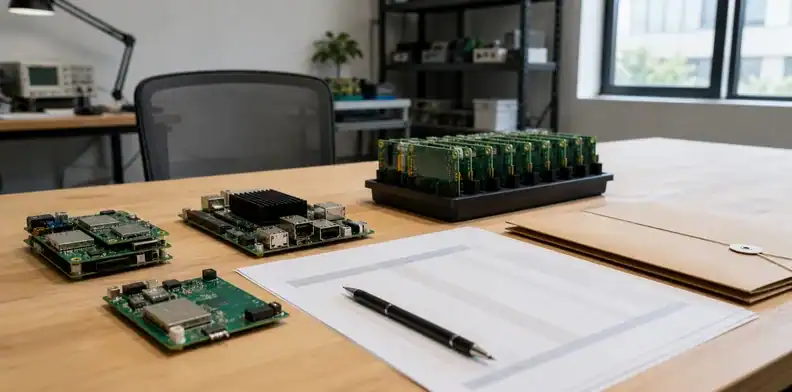
Quick Answer: Startup pcb production usually breaks first at the boundary between prototype habits and production discipline. Before a 500-unit order, freeze the released files, quantity model, tariff/import assumptions, supplier fit, DFM change rule, PCBA handoff, and evidence needed for investor, customer, or receiving review.
Key takeaways
- Prototype success does not prove the first production order is ready.
- Quantity, tariffs, delivery date, and cash timing should be reviewed beside DFM risk.
- The supplier decision should match the next 6-12 months, not only the first 500 units.
- A founder needs a release file that engineering, purchasing, and investors can understand.
Startup pcb production is a different problem from getting twenty prototypes to work. The first 500-unit order forces the team to make decisions about files, supplier fit, tariff exposure, assembly handoff, payment, test, packaging, and schedule. The painful failures are often not exotic technical defects. They are ordinary release gaps: an old Gerber, a BOM not frozen, a prototype-only supplier, an unpriced tariff assumption, a missing PCBA test plan, or a payment milestone that blocks shipment. This article gives founders, hardware leads, and buyers a practical way to decide whether the first real PCB or PCBA order is ready.
Table of Contents
- Treat 500 units as a production decision
- Freeze the files before chasing unit price
- Model quantity, tariff, and cash together
- Choose a supplier for the next stage
- Control DFM changes before PO release
- Connect PCB and PCBA before the order scales
- Create a founder-readable release record
- Set the reorder owner before the next PO
Treat 500 units as a production decision
Five hundred units is large enough to expose process, cash, and customer-delivery risk. It may still be small compared with mature production, but it should not be managed like a lab prototype.
The first question is not whether the board works once. The question is whether the same released package can be built, assembled, tested, packed, shipped, and reordered without heroic founder intervention.
For startup context, connect the order to QueenEMS hardware startup support so the discussion includes business timing as well as fabrication details.
Founder call: Treat the first 500 units as a controlled production release, not a bigger prototype buy.
Freeze the files before chasing unit price
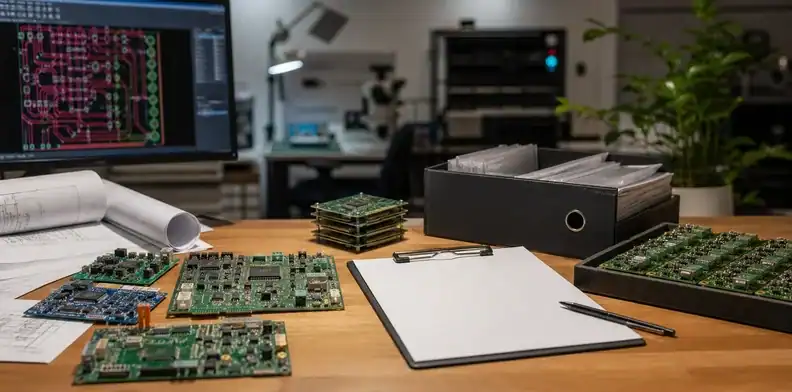
Unit price is useful only after the files are stable enough to quote. Freeze Gerber or ODB++, stackup, drawing notes, BOM if assembled, panel preference, test requirement, and packaging expectation before comparing suppliers.
The switch from prototype to production is covered in PCB prototype vs production order signals. For a startup, the extra step is to decide whether the files support customer delivery and investor timeline, not only engineering curiosity.
| Release item | Founder risk | Buyer action |
|---|---|---|
| Gerber/ODB++ | Wrong revision built | Freeze and archive |
| BOM/AVL | Unpriced sourcing changes | Approve alternates |
| Test plan | Failures found too late | Define pass/fail |
| Packaging | Receiving or customer damage | Set label and protection rule |
Release rule: Do not use supplier price to hide unfinished product decisions.
Model quantity, tariff, and cash together
A startup should compare 100, 250, 500, and 1,000 units as cash and risk scenarios. The lowest unit price may require cash, storage, or tariff exposure the company cannot comfortably absorb.
For US-bound projects, import duties and route assumptions should be reviewed before the PO. PCB tariff China 2026 can support the commercial model, but the startup still needs its own landed-cost assumption.
A useful board-level quote should show unit price, setup, tooling, test, packaging, freight, and any buyer-owned import cost assumption separately.
Cash signal: Choose the order size that protects launch learning, not only the size with the best unit price.
Choose a supplier for the next stage
A prototype supplier may be fast and helpful but weak at production records, repeatability, component sourcing, or shipment evidence. A production supplier may be stronger at process control but need cleaner files before starting.
The startup should ask whether the supplier can support the next few builds: first 500 units, repeat order, small design change, component shortage, customer documentation, and possible PCBA scale-up.
If a supplier change is likely, transfer PCB assembly to a new manufacturer helps frame what files and evidence must move cleanly.
Supplier decision: Pick the supplier that can support the next stage of the company, not only the first emergency build.
Control DFM changes before PO release
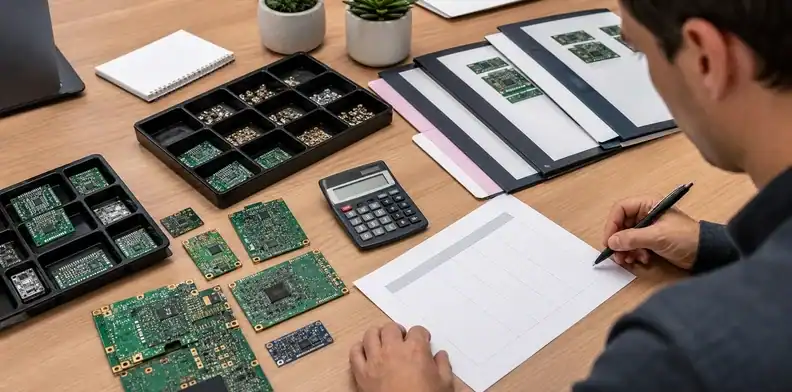
DFM feedback is useful before the PO and dangerous when it becomes an uncontrolled redesign after the order starts. The buyer should define which changes the supplier may make, which require engineering approval, and which require a revised quote.
Examples include panel rails, fiducials, solder mask clearance, copper-to-edge spacing, via tenting, finish substitution, and routing method. Each can be harmless in one design and risky in another.
| DFM item | Supplier may suggest | Engineering must approve |
|---|---|---|
| Panel rails | Manufacturing preference | Array outline and breakoff |
| Solder mask | Clearance improvement | Pad exposure change |
| Finish | Available alternative | Solderability and shelf life |
| Routing | Tooling method | Mechanical fit and edge quality |
DFM rule: Let suppliers propose manufacturability changes, but keep product-function approval with engineering.
Connect PCB and PCBA before the order scales
If the startup will assemble the boards, PCB decisions should be reviewed with PCBA needs before production. Fiducials, panel rails, finish, stencil plan, component sourcing, test access, firmware programming, and packaging can change the real success of the first 500 units.
A bare-board quote that ignores assembly can look cheaper and still create delay later. The buyer should ask QueenEMS to review the bare PCB and assembly assumptions together when PCBA is part of the launch path.
Assembly signal: A production PCB is not ready if the assembler cannot place, test, program, pack, and release it cleanly.
Create a founder-readable release record
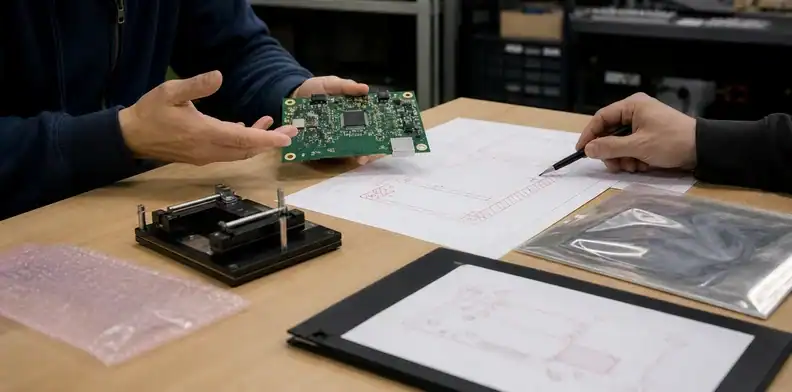
The final release record should be understandable to a founder, not only to the layout engineer. It should show what is frozen, what is open, who approves changes, what the supplier will build, what evidence will return, and what shipment or tariff assumptions remain.
This record is useful for investors and customers because it shows the company is moving from prototype excitement to controlled production. It also helps the next hire understand why the first production decisions were made.
Record point: Keep one release note that connects engineering files, supplier quote, business quantity, and shipment assumptions.
Set the reorder owner before the next PO
The first production order should name who owns the reorder file. That person or team keeps the approved Gerber or ODB++, BOM/AVL, supplier answers, DFM approvals, test record, packaging notes, and shipment evidence in one controlled location.
This matters because a successful 500-unit order often creates urgency for the next build. Without a clear owner, the company may ask for a reorder while engineering, purchasing, and quality each hold a different part of the evidence.
The reorder owner should also record which assumptions may change before the next PO: quantity, customer label, component availability, tariff route, shipment term, or test coverage. Those changes should be reviewed deliberately instead of being treated as a repeat of the first order.
Reorder rule: A startup is ready to scale when the next PO can be built from a controlled file, not from founder memory.
For the hardware lead, the strongest review is an issue list that separates must-fix design changes from supplier-preference changes. This prevents a supplier from turning a production quote into uncontrolled engineering work.
For the founder, the order-size decision should include learning value. A 500-unit run may be right when demand is validated and the file package is stable. A smaller bridge build may be smarter when customer feedback could still change the design.
For purchasing, supplier comparison should include payment terms, lead time, evidence, communication, and repeat-order support. The lowest quote is not the best if it leaves the startup without a usable release record.
For quality, the first production order should define incoming inspection and failure handling before shipment. A startup does not need a huge quality department, but it does need a clear answer when the first batch arrives.
For engineering, the first production review should list which prototype shortcuts are no longer allowed. Hand-solder touchups, informal rework, unrecorded BOM swaps, and undocumented firmware steps can hide real production risk. For purchasing, the supplier quote should be compared against the cash runway and customer promise. A startup can damage itself by ordering too many boards before the product feedback loop is stable. For the founder, the release package is also a communication tool. It shows investors, customers, and new team members that the company knows what is frozen, what is open, and what decision would stop the order. For quality, define acceptance before arrival. Decide who checks dimensions, appearance, solderability, assembly yield, programming success, and packaging condition. Waiting until the boxes arrive turns every issue into a founder emergency. For PCBA, component availability can break the plan before the PCB supplier ever starts. Review AVL, approved alternates, NCNR parts, long-lead parts, and consigned-kit responsibility as part of the first production decision. For import and landed cost, the startup should not rely on the prototype order’s shipping assumption. Production quantities can change carton count, customs value, freight method, duty exposure, and cash timing. The first production PO should include a change rule. It should say whether DFM suggestions, material substitutions, finish changes, panel changes, or BOM alternates require written approval before work continues. After the first lot ships, keep a short lessons-learned record. The next order should not rediscover the same approval gaps, test questions, or packaging assumptions that appeared in the first 500 units.
The first production quote should also state how supplier questions will be handled. A startup without a response owner can lose days because CAM questions, BOM substitutions, and packaging decisions sit in different inboxes. If the startup has a customer pilot, separate customer-critical units from engineering spare units. The same PCB build may serve both, but packaging, test evidence, and receiving priority can differ. A founder should decide what result would justify the next order. Is the first 500-unit run meant to prove yield, fulfill paid orders, support certification, or validate field reliability? That answer affects how much evidence the supplier should return. The buyer should also decide whether to keep some boards unassembled for debugging or future rework. That choice should be made before the PCBA order, not after every board has been built into finished units. For cash planning, include inspection delays and rework reserve. A startup can survive a small schedule slip when it has margin; it struggles when every unit, payment, and customer promise assumes perfection. For repeatability, ask the supplier to preserve the approved stackup, panel plan, stencil assumption, and test requirement. The second order should not become a new prototype because the first order’s decisions were never recorded. A production-ready startup package should make trade-offs explicit. If the team accepts a cheaper finish, looser cosmetic rule, split shipment, or alternate component, the reason should be visible beside the approval. The best final review is short enough for a founder to read and detailed enough for engineering to trust. It should show the accepted files, open risks, owner for each risk, and the exact condition that allows the PO to be released.
For supplier communication, set a decision deadline for each open item. A startup may move fast, but the supplier still needs written answers before it changes panelization, material, finish, component, or test assumptions. For customer commitments, decide whether the first production order ships all at once or in a controlled partial release. A partial release can satisfy early customers while preserving time to review the remaining lot. For board-level design risk, keep a small list of changes that are not allowed without a new prototype. High-current paths, impedance structures, connector fit, RF layout, and safety spacing should not be changed casually in the first production order. For operations, decide where the production record will live. A shared folder, ERP entry, or sourcing spreadsheet is enough if it stores the approved files, quote, supplier responses, and shipment evidence in one place. The startup’s best first production decision is usually conservative. It should protect customer delivery and learning speed while avoiding an order so large that one untested assumption becomes a company-level cash problem.
If the startup expects certification, pilot customers, or investor review, decide which production evidence should be saved from the first lot. Inspection records, test results, firmware version, and packaging photos can be useful later even if no one asks for them on day one. The team should also decide who owns the reorder file. When the first 500 units are successful, the next order should not depend on the original engineer remembering which supplier questions were answered. A practical release status can use three states: design frozen, supplier assumptions accepted, and business quantity approved. The PO should wait until all three are true or until the founder accepts the open risk in writing.
FAQ
When should a startup move from prototype to PCB production?
Move when the design files, BOM, test plan, supplier assumptions, and customer need are stable enough for repeatable build and receiving review.
Is 500 units still a prototype order?
No. It may be a small production run, but it needs production controls for files, DFM approval, testing, packaging, and shipment evidence.
Should a startup choose the cheapest PCB supplier?
No. Choose the supplier that fits the next stage, provides usable evidence, and can support repeat orders or PCBA needs.
What should be frozen before the first production PO?
Freeze Gerber or ODB++, drawing notes, BOM/AVL, stackup, finish, test requirement, packaging, quantity, and approval rules.
Can QueenEMS help review a startup production package?
Yes, QueenEMS can review the files, supplier assumptions, quantity plan, assembly handoff, and quote evidence before first production release.
Related QueenEMS articles
- QueenEMS hardware startup support
- PCB prototype vs production order signals
- Transfer PCB assembly to a new manufacturer
Send QueenEMS the first production release package
If your startup pcb production plan is moving from prototypes to a first 500-unit order, contact QueenEMS with the released files, BOM or assembly scope, target quantity, landed-cost concern, DFM questions, test requirement, packaging plan, and launch date. We can help review what is ready for quote and what should be closed before PO.
Attach the prototype supplier’s latest quote if you have one. Comparing that quote with the production release package often reveals which assumptions are still prototype-only.
Sources
Written by the QueenEMS Engineering Team
Upload your files today · Free DFM check before production · Ship worldwide
Get your PCB prototypes in as fast as 24 hours. We handle FR4, Rogers, and Flex up to 60 layers — free prototypes for 2–4 layer boards, no minimum order.
Just upload your Gerber + BOM — we source every part, assemble, and inspect (AOI + X‑Ray) so you don't have to chase suppliers. Boards ship in as fast as 24 hours.